The Survivability Question: Can Cities Endure the Incoming Global Climate?
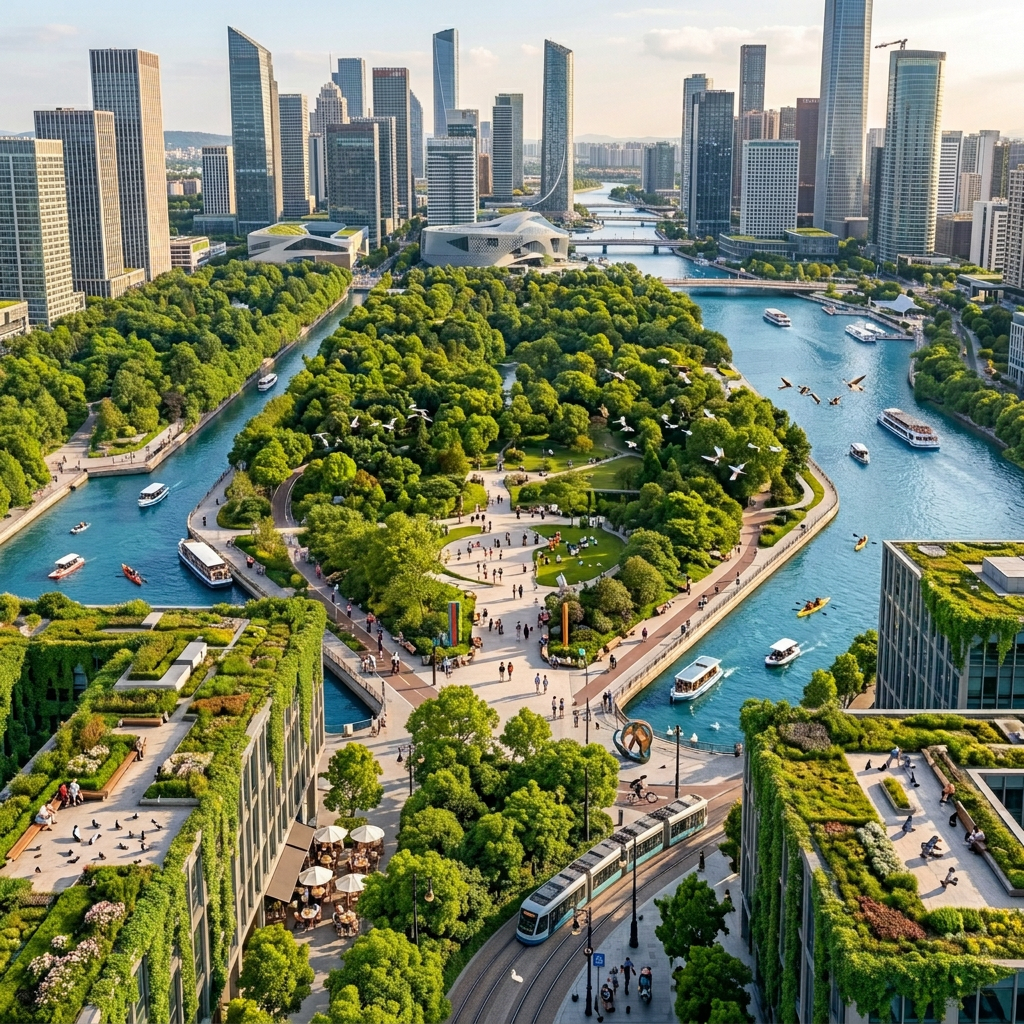
Can large urban environments continue to be survivable for humans in a world where climate change is disrupting global and local supply chains, where extreme heat, fires, and violent floods are becoming ever more prevalent?
This is no longer a speculative question. It is an operational one — posed in real time by city planners, emergency managers, public health officials, and the hundreds of millions of urban residents already living with its consequences.
The Scale of Urban Exposure
More than half of the world’s population now lives in cities, and that proportion is projected to reach nearly 70% by 2050. Urban environments concentrate people, infrastructure, economic output, and critical services into geographically compact zones — zones that, by their very density, amplify the impacts of climate disruption. Cities absorb and radiate heat through concrete, asphalt, and dark rooftops, creating urban heat islands that can be 2–8°C warmer than surrounding rural areas. This temperature differential — once an inconvenience — is becoming a lethal liability as heat waves grow longer, more intense, and more frequent.
Extreme Heat: The Silent Emergency
Extreme heat is already the deadliest weather-related hazard in many countries, killing more people annually than hurricanes, floods, and tornadoes combined. In dense urban environments, the compounding effects of the urban heat island, thermal mass in buildings, limited nighttime cooling, and inadequate tree canopy mean that vulnerable populations — the elderly, outdoor workers, those without air conditioning, and residents of limited infrastructure/income neighbourhoods with the least green cover — face sustained physiological stress that can become fatal within hours. The question is no longer whether cities will experience lethal heat events, but whether their physical form and infrastructure can buffer residents adequately enough for those events to remain non-catastrophic.
Flooding and Water Extremes
Urban surfaces are largely impervious. Concrete, asphalt, and compacted ground prevent rainfall from infiltrating the soil, converting what would be manageable precipitation into rapid surface runoff, flash flooding, and overwhelmed drainage systems. As extreme rainfall events intensify, the consequences cascade: transit systems flood, power infrastructure fails, contaminated water mixes with potable supplies, and low-lying neighbourhoods face repeated inundation. Cities built on coastlines, river deltas, and floodplains — which includes many of the world’s largest — face the additional existential threat of rising sea levels compounding storm surge and tidal flooding.
Fire and Smoke
Urban-adjacent wildfires, once confined to rural and peri-urban contexts, are increasingly penetrating the edges of metropolitan areas, destroying homes and infrastructure in zones previously considered safe. But the more pervasive urban impact of fire is smoke. Wildfire smoke can blanket cities thousands of kilometres from the fire source, degrading air quality to hazardous levels for days or weeks at a time. For urban residents with respiratory conditions, cardiovascular disease, or limited access to indoor air filtration, prolonged smoke exposure becomes a significant health crisis layered on top of existing urban air pollution from traffic and industry.
Supply Chain Fragility and Urban Self-Reliance
Cities are fundamentally dependent systems. They rely on continuous, uninterrupted flows of food, water, energy, building materials, medical supplies, and consumer goods transported over vast distances through global supply chains. Climate disruption — through drought-reduced agricultural output, flood-damaged transport corridors, extreme weather events halting shipping and logistics, and energy system failures during peak demand — threatens to break these flows with increasing regularity.
This dependency exposes a critical vulnerability in the conventional urban model: most cities were designed under the assumption of stable, predictable supply chains and moderate climatic conditions. Neither assumption holds in the current trajectory. The question of urban survivability therefore extends beyond managing heat, water, and fire to a deeper structural challenge — whether cities can develop sufficient local self-reliance in food production, water management, energy generation, and material sourcing to function when global systems are disrupted.
The Density Paradox
High-density urban development is widely recognised as the most environmentally efficient form of human settlement. Compact cities consume less land per capita, generate lower per-capita carbon emissions from transport, enable more efficient infrastructure networks, and protect surrounding ecosystems from sprawl-driven fragmentation. Yet this same density concentrates risk. When a flood, heat wave, or supply disruption strikes a dense city, it affects millions of people simultaneously, strains emergency response capacity to its limits, and can overwhelm systems designed for far lower stress loads.
This is the central paradox the document addresses: the form of settlement most necessary for mitigating climate change at the global scale is also the form most exposed to its impacts at the local scale. Resolving this paradox — making dense cities not merely efficient but genuinely resilient and survivable — requires a fundamental rethinking of how urban environments are designed, built, and operated.
From Livability to Survivability
Much of the existing discourse on urban green spaces and ecological design frames these interventions in terms of livability — improved comfort, better aesthetics, enhanced property values, and healthier residents. These benefits are real and well-documented throughout this report. But the climate crisis is re-framing the conversation at a much more urgent level. Canopy cover that reduces surface temperatures by 10–20°C is not merely a comfort amenity — it is a life-safety intervention during a lethal heat wave. Rain gardens and bioswales that absorb 15–40% of rainfall are not landscape features — they are flood defence infrastructure. Local food production through urban farming is not a lifestyle trend — it is a buffer against supply chain collapse.
The strategies examined in this article — biophilic urbanism, vertical greening, nature-positive planning, the 3-30-300 rule, superblocks, green-blue infrastructure, bioregional design, and the nine innovative approaches outlined in Section 5 — are therefore presented not as aspirational enhancements but as the foundational requirements for urban environments to remain functional, equitable, and habitable under conditions of accelerating climate disruption.
The question is not whether cities should adopt these strategies. It is whether they can afford not to.
As global urbanisation accelerates and the imperative to mitigate climate change intensifies, cities face a profound spatial and ecological dilemma. On one hand, containing urban sprawl through high-density and high-rise housing is widely recognised as essential for preserving regional ecosystems, reducing per capita carbon emissions, and curbing land conversion [1] [2].
On the other hand, intense vertical concentration risks severing humans from daily contact with nature, potentially exacerbating psychological stress, mental fatigue, and biodiversity degradation within the built environment [15] [16].
More essentially, can large urban environments continue to be survivable for humans in a world where climate change is disrupting global and local supply chains, where extreme heat, fires and violent floods are becoming ever more prevalent.
We examine the trade-offs between high-density development and human connection to nature, and outline the emerging urban planning strategies necessary to maximise both imperatives simultaneously.
1. The Environmental Imperative: High-Density Housing vs. Urban Sprawl
Urban sprawl — characterised by low-density, automobile-dependent suburban expansion — is a primary driver of habitat fragmentation, loss of arable land, and rising greenhouse gas emissions [3]. To combat these threats, planners increasingly advocate for compact city models.
1.1 Advantages of High-Density and High-Rise Housing
- Curbing Land Consumption and Sprawl: High-density vertical development accommodates growing populations within a fraction of the geographical footprint required by suburban sprawl, protecting surrounding agricultural lands, forests, and sensitive watersheds from fragmentation [1] [6].
- Energy and Infrastructure Efficiency: Compact urban forms enable centralised, highly efficient infrastructure networks, including district heating and cooling, water distribution, and public transit systems. Per capita energy consumption for heating and cooling in multi-family apartments is generally lower than in detached single-family homes due to shared thermal boundaries [1].
- Transportation Emissions Reduction: By concentrating populations near transit nodes and commercial amenities, high-density living shortens daily commutes, encourages active mobility (walking and cycling), and reduces reliance on private vehicles [1].
1.2 Disadvantages and Environmental Trade-Offs
- Intensified Urban Heat Island (UHI) Effect: Replacing permeable vegetated land with impervious concrete, asphalt, and towering glass facades significantly increases surface and air temperatures, requiring higher cooling loads [17].
- Microclimate Disruption: High-rise clusters can alter local wind patterns, creating severe wind tunnels at street level while trapping air pollution in stagnant urban canyons [18].
- Localized Resource Intensity: Although multi-family homes share thermal efficiency, high-rise towers often require energy-intensive vertical transport (elevators), mechanical ventilation, and complex pumping systems, which can elevate per capita electricity consumption if poorly designed [2].
2. Urban Green Spaces: Livability Benefits
Urban green spaces — parks, street trees, green roofs, vertical gardens, and urban forests — deliver a wide range of livability benefits that address many of the environmental trade-offs associated with high-density development.
2.1 Temperature Regulation (Urban Heat Island Mitigation)
Cities absorb and radiate heat through concrete, asphalt, and dark rooftops, creating UHIs that can be 2–8°C warmer than surrounding rural areas. Green spaces counteract this through:
- Evapotranspiration — Trees and plants release moisture into the air, actively cooling their surroundings. A single large tree can transpire up to 400 litres of water per day, equivalent to several kilowatts of cooling.
- Shade Canopies — Tree canopies intercept solar radiation before it reaches pavement and buildings. Surface temperatures under trees can be 10–20°C cooler than exposed asphalt.
- Green Roofs and Walls — Vegetated surfaces on buildings reduce rooftop temperatures by 20–40°C compared to conventional dark roofs, lowering indoor cooling demand by 25–80%.
- Park Cool Islands — Large parks create their own microclimate “cool islands” that extend benefits into surrounding neighbourhoods.
A mature urban tree provides cooling equivalent to roughly 2–5 room air conditioners running continuously.
2.2 Shade and Comfort
- A mature deciduous tree can block 60–90% of solar radiation in summer, dramatically improving pedestrian thermal comfort.
- Tree-lined streets create shaded microclimate corridors that make walking and cycling viable even on hot days, encouraging active transport.
- Shade prevents hard surfaces from absorbing and re-radiating heat, keeping the thermal environment comfortable even hours after peak sun.
- Studies consistently show that perceived comfort improves significantly with even modest tree canopy cover (20–30%), reducing heat-related complaints and health incidents.
2.3 Stormwater and Rain Impact Management
Urban surfaces are largely impervious, causing rapid runoff, flash flooding, and overwhelmed drainage systems. Green infrastructure addresses this through:
- Canopy Interception — Tree canopies intercept 15–40% of rainfall, slowing and reducing the volume reaching the ground, thereby delaying peak runoff and reducing flood risk.
- Infiltration — Parks, rain gardens, bioswales, and permeable green areas allow water to soak into the ground, recharging groundwater and reducing surface flow.
- Flood Attenuation — Urban parks and green corridors can act as temporary floodplains during extreme rain events.
- Water Quality Improvement — Vegetated areas filter pollutants from runoff (heavy metals, oils, sediments) before they reach waterways.
- Reduced Infrastructure Burden — By absorbing and slowing runoff, green spaces reduce the load on stormwater systems, delaying or avoiding costly upgrades.
Examples: Singapore’s “ABC (Active, Beautiful, Clean) Waters” programme integrates green infrastructure for stormwater management, and Copenhagen’s Cloudburst Management Plan uses parks and green boulevards as flood retention spaces.
2.4 Air Quality Improvement
- Trees and vegetation filter particulate matter (PM2.5, PM10), absorb gaseous pollutants (NO₂, SO₂, O₃), and produce oxygen.
- A single urban tree can remove 5–20 kg of air pollutants per year.
- Green barriers along roadsides can reduce near-road pollutant concentrations by 15–50%.
2.5 Biodiversity and Ecological Services
- Urban green spaces serve as habitat patches and corridors for birds, insects, pollinators, and small mammals.
- Pollinator-friendly plantings support urban food production (community gardens, urban farms).
- Biodiversity itself improves human wellbeing — exposure to diverse natural environments is linked to reduced stress and improved mental health.
2.6 Health and Wellbeing (Table 1)
| Benefit | Mechanism |
|---|---|
| Mental health | Exposure to green spaces reduces cortisol, anxiety, and depression; improves mood and cognitive function |
| Physical activity | Parks and greenways encourage walking, cycling, sports, and play |
| Cardiovascular health | Reduced heat stress, improved air quality, and increased activity lower heart disease risk |
| Psychiatric resilience | Longitudinal studies show people living closer to green spaces have a 55% lower risk of developing psychiatric disorders, including stress and anxiety, compared to those in sterile urban environments [22] |
| Chronic disease reduction | Proximity to urban nature is linked to lower rates of cardiovascular disease, obesity, and heat-related illnesses; residents in neighbourhoods with higher tree density report significantly better health perceptions and fewer cardio-metabolic conditions [23] [25] |
| Noise reduction | Trees and vegetation absorb and deflect urban noise, reducing perceived noise levels by 5–10 dB |
| Restorative effects | According to Attention Restoration Theory (ART), natural environments provide “soft fascination” that allows directed attention mechanisms to rest and recover [11] |
2.7 Crime Reduction and Public Safety
- Research indicates a strong correlation between well-maintained urban green spaces and a reduction in violent crime [20]. Tree canopy coverage, in particular, has been shown to create “cold spots” for criminal activity in dense urban centres [21].
- Functional green spaces encourage residents to spend more time outdoors, increasing natural surveillance and fostering a sense of community ownership that deters vandalism and loitering — the “eyes on the street” effect [20].
2.8 Social Cohesion, Equity, and Cultural Livability
- Social interaction — Urban green spaces serve as vital “third places” where diverse populations interact, promoting social support, place attachment, and a sense of belonging [24].
- Equity and inclusion — Strategically distributed green infrastructure ensures that the benefits of nature are not restricted to affluent enclaves, reducing health disparities and fostering a more equitable urban society [24]. Lower income communities often have the least canopy cover and suffer the greatest heat exposure.
- Recreation and play — Essential for child development, community events, and informal gathering.
- Sense of place — Mature trees and distinctive landscapes give neighbourhoods character and identity.
2.9 Economic and Property Value Effects
- Properties near well-maintained parks and tree-lined streets see 5–20% higher values.
- Reduced energy costs from shade and green roof insulation.
- Lower healthcare costs from improved population health.
- Reduced stormwater infrastructure spending.
- Green roofs last significantly longer than traditional roofing materials by protecting underlying surfaces against UV degradation and thermal stress, thereby reducing replacement costs and insurance risks [14].
2.10 Key Design Considerations
For maximum livability impact, effective urban greening should be:
- Strategically located — prioritising the hottest, most flood-prone, and most under-served areas.
- Diverse in form — combining street trees, pocket parks, green roofs, rain gardens, and urban forests.
- Maintained — unmanaged green spaces can become safety concerns; long-term stewardship is essential.
- Species-appropriate — using drought-tolerant, climate-adapted species that thrive in urban conditions.
- Equitably distributed — so benefits reach all residents, not just affluent neighbourhoods.
3. The Human Need for Nature: Psychological, Physiological, and Social Impacts
The human evolutionary predisposition to affiliate with nature — known as biophilia — underscores the psychological necessity of natural contact in daily life [7]. When high-density development ignores this fundamental need, significant costs to public health emerge.
3.1 The Psychological and Physiological Toll of Disconnection
- Mental Health Vulnerabilities: Individuals living in dense environments devoid of natural elements experience higher rates of psychological distress, anxiety, and mental fatigue [15] [16]. Chronic exposure to noise, crowding, and artificial surfaces elevates cortisol levels.
- Restoration Deficits: According to Attention Restoration Theory (ART), natural environments provide “soft fascination” that allows directed attention to rest and recover. High-rise living without adequate green views deprives residents of this restorative mechanism [11].
- Social Disconnection: High-rise towers can inadvertently foster social isolation if communal spaces are poorly designed, weakening community cohesion compared to traditional low-rise neighbourhoods.
3.2 The Benefits of Urban Nature Integration
- Stress Reduction and Mood Enhancement: Even brief, passive exposure to greenspaces — such as viewing trees from a high-rise window or spending fifteen minutes in a pocket park — has been proven to lower blood pressure, reduce heart rates, and improve cognitive function [11] [14].
- Ecosystem Services for Health: Urban greenery acts as a natural air filter, capturing particulate matter (PM₂.₅), attenuating ambient noise, and providing psychological relief that buffers against urban stressors.
4. Comparative Matrix (Table 2)
| Dimension | Sprawl / Low-Density Suburbanisation | Conventional High-Rise Development | Biophilic Compact Urbanism (Integrated Model) |
|---|---|---|---|
| Land Efficiency | Low; consumes vast natural and agricultural land [3] | High; minimises geographical footprint [5] | High; optimises land use while integrating multi-layered greenery |
| Carbon & Energy Profile | High per capita transport emissions; inefficient infrastructure [1] | Low transport emissions; potential high building mechanical loads [1] [2] | Low transport emissions; net-zero energy buildings with passive cooling |
| Ecological Impact | Severe habitat fragmentation and biodiversity loss [3] | Localised habitat destruction, minimal ground-level nature [18] | Regenerative; enhances urban biodiversity and wildlife corridors [1] |
| Human-Nature Connection | High immediate access to private yards, but drives regional ecosystem destruction | Very low; distant from ground-level nature unless specifically designed [15] | High integration; living facades, vertical forests, and accessible sky-gardens [8] [10] |
| Societal Impact | Social isolation; high infrastructure costs per capita | Potential for high crime and low cohesion if nature is absent | Reduced crime; high social cohesion; improved public health outcomes [20] [24] |
5. New Urban Planning Strategies
To resolve the tension between vertical density and human-nature connection, modern urban planning has shifted from traditional zoning toward regenerative, multi-dimensional paradigms.
A. Biophilic Urbanism and Vertical Greening
Rather than treating nature as a ground-level afterthought, biophilic urbanism embeds ecology directly into the vertical dimension of the built environment [8] [10].
- Vertical Forests and Living Façades: Integrating dense plantings, trees, and hanging gardens onto balconies and building envelopes — exemplified by Milan’s Bosco Verticale and Singapore’s Oasia Hotel — transforms inert towers into living ecosystems [10].
- Benefits: These installations sequester carbon, filter air, reduce the UHI effect by up to 2°C, and provide immediate psychological and visual contact with nature for high-rise residents [10].
B. The 3-30-300 Rule for Urban Forestry
Developed by urban forestry expert Cecil Konijnendijk, this evidence-based framework establishes clear spatial benchmarks for balancing density with nature access:
- 3 Trees: Every resident must be able to see at least 3 mature trees from their home or workplace.
- 30% Canopy Cover: Every neighbourhood must maintain a minimum of 30% tree canopy coverage.
- 300 Metres: Every citizen must live no more than 300 metres from the nearest high-quality public park or greenspace.
In high-density districts, this rule compels planners to utilise pocket parks, green roofs, and courtyard gardens to meet the 300-metre threshold.
C. Nature-Positive Urbanism and the AR3T Framework
Rooted in the World Economic Forum’s guidelines, nature-positive urbanism moves beyond sustainability (doing less harm) toward net-positive ecological regeneration [1] [19].
- Avoid and Reduce: Restricting development in ecologically sensitive zones while optimising density in already-urbanised brownfield sites.
- Restore and Regenerate: Transforming grey infrastructure into living networks — constructing wetlands for natural stormwater filtration, converting sterile rooftops into pollinator habitats, and establishing wildlife “eco-passages” (green bridges, retrofitted underpasses) that reconnect fragmented habitats across dense urban grids [10].
D. The Superblock and Green Axis Model
Pioneered in Barcelona, the Superblock model reorganises urban traffic by grouping multiple city blocks into larger macro-blocks, restricting through-traffic to the perimeter [12].
- Reclaiming Public Space: Interior streets are reclaimed from automobiles and converted into pedestrian-first zones heavily planted with trees and permeable soils.
- Synergy: This strategy drastically reduces noise and air pollution while creating continuous green corridors that link high-density residential zones directly to regional nature networks [13].
E. Additional Innovative Approaches
The following emerging strategies represent further frontiers for integrating organic green living into dense urban environments.
E1. AI-Driven Ecological Programming
Pioneered by OXMAN, this approach uses artificial intelligence and environmental data to design buildings as living, biodiverse ecosystems rather than static structures. The conceptual “Eden Tower” features concentric platforms hosting distinct ecosystems, with each level tailored to specific environmental factors such as sunlight, wind patterns, and moisture levels. This data-driven methodology represents a paradigm shift from conventional green building design — where vegetation is added as an afterthought — toward architecture where ecological performance is the primary generative logic of the design itself [4].
E2. Biomimetic Design Patterns — Phyllotaxis and Nature-Inspired Geometry
Vincent Callebaut Architectures’ “PHYLLOTAXIS” approach applies the mathematical rules of phyllotaxis — the arrangement of leaves on a stem — to building layout and orientation. Every residential unit is positioned algorithmically to receive maximum direct sunlight, much as every leaf on a plant captures light efficiently [6]. Eco-devices such as sunbreakers, adaptive facades, and bio-inspired shading systems are integrated into the phyllotactic layout, reducing the need for mechanical heating and cooling. This moves beyond surface-level greening toward the fundamental geometry of buildings being shaped by biological logic [6].
E3. Living Microalgae Bioreactors and Biotechnological Architecture
The “AirBubble” system by ecoLogicStudio combines timber, ETFE membranes, living microalgae bioreactors, cork, and Corten steel to create a regenerative garden embedded within the building itself. The microalgae actively purify surrounding air, support biodiversity, and enhance workplace well-being. Unlike traditional green walls that rely on higher plants, microalgae bioreactors offer continuous air purification and oxygen production at significantly higher rates per unit area, making them particularly suited to space-constrained high-density settings [7].
E4. Adaptive Intelligent Systems — Responsive Urban Environments
The LAVA (Laboratory for Visionary Architecture) practice develops buildings and urban master plans as “adaptive systems responsive to data, ecology, and human dynamics” [3]. Their “Conscious City” concept imagines the master plan as a living organism capable of anticipating change to enhance life in harmony with nature. Practical applications include Masdar Plaza in Abu Dhabi, where dynamic solar canopies, intelligent shading, and porous climate-adaptive design create a responsive public space, and the K.A.CARE project in Riyadh, designed to be lightweight, adaptive, and interconnected [3]. This approach moves beyond static green features toward buildings and urban spaces that actively modulate their environmental performance in real time.
E5. Multi-Layered Vegetation and the SLAMS Approach
The “Some Large and Many Small” (SLAMS) strategy distributes multi-layered vegetation across both vertical building surfaces and ground-level contexts [12]. Rather than relying solely on large parks (which require scarce horizontal space), this approach prioritises a network of many small-scale green interventions — pocket parks, courtyard gardens, green roofs, and vegetated balconies — supplemented by a smaller number of larger green areas. This hybrid configuration has been shown to support biodiversity outcomes comparable to much larger conventional green spaces. Critically, this framework also addresses the management dimension: decisions about irrigation, pruning, pesticide use, and public access interact with spatial configuration to shape biodiversity and ecosystem service delivery within dense urban settings [12].
E6. Green-Blue Infrastructure — Water-Sensitive Organic Design
Green-blue infrastructure integrates vegetation with water management systems to create living infrastructure serving dual ecological and hydrological functions. Key elements include:
- Rain gardens and bioswales — vegetated channels that filter and slow stormwater runoff while providing habitat.
- Permeable pavements — surfaces that allow water infiltration and support root systems of adjacent plantings.
- Constructed wetlands within urban settings — serving as both natural stormwater filtration systems and biodiverse green spaces [1].
- Water-sensitive urban design combining green infrastructure with integrated water management, including decentralised greywater treatment and reuse to sustain vertical greening systems without relying on potable water — a critical consideration for the long-term sustainability of vertical forests and living facades in water-limited cities [12].
This approach is particularly significant because the long-term viability of many vertical greening systems depends on sustainable water supply. Systems like the Bosco Verticale can be resource-intensive, relying on potable water unless coupled with water management strategies such as greywater reuse with appropriate substrates [12].
E7. Green as Architectural Material — Architecture Shaped by Vegetation
An emerging design philosophy uses vegetation itself as a primary architectural material and spatial design element. The Synthetic Architecture practice explores residential complexes that “form their own green topography,” where green fundamentally shapes the architecture and its spatial experience [11]. Similarly, the “Green Utopia” project by ODA strengthens the connection between residents and adjacent parkland by designing interior spaces that intentionally draw the outdoors in, with balconies overlooking the landscape and materials inspired by Feng Shui principles — such as wood and metal — used to echo the natural character of the surroundings [9]. This philosophy moves beyond adding planters to balconies toward an architectural language where building form, materiality, and spatial organization are fundamentally determined by the desire to maximize living green space.
E8. Community-Led Green Production — Urban Farming and Rooftop Gardens
Beyond ornamental and ecological greening, productive urban greenery — community gardens, rooftop farms, and urban agriculture — simultaneously provides food security, cooling, and social cohesion [1]. These are functional green living spaces where residents actively participate in cultivation, strengthening the human-nature connection while addressing practical needs. UN-Habitat specifically recommends supporting urban farming and rooftop gardens to boost local food production and cooling, and fostering grassroots climate action by involving residents directly in city greening projects [1].
E9. The Economic Case — Green as Infrastructure Investment
Research from Utrecht University demonstrates that green roofs last significantly longer than traditional roofing materials by protecting underlying surfaces against UV degradation and thermal stress, thereby reducing replacement costs and insurance risks [14]. Greener streets have been shown to significantly increase real estate values, and investing in nature-based solutions is increasingly framed as an investment in long-term economic stability rather than a cost item [14]. This reframing — from green space as amenity to green space as infrastructure — is essential for persuading developers and municipalities in high-density contexts to integrate organic green living at scale.
F. Bioregionalism in Urban Environments — Localising Design, Materials, and Systems for Climate Resilience
Bioregionalism is a planning and design philosophy that aligns human settlements — their architecture, infrastructure, food systems, energy networks, and governance — with the ecological boundaries, climatic conditions, cultural patterns, and material resources of the specific region in which they are situated (citation:8). Rather than applying universalised, globalised building models to every context, bioregional urbanism asks: what does this particular place already offer, and how can its built environment work with — rather than against — its living systems? (citation:9)
In an era of intensifying climate threats — heat waves, flooding, supply chain disruption, and resource scarcity — this approach is transitioning from a niche philosophy to a practical necessity for enabling urban living to continue sustainably (citation:9).
F1. Defining Bioregional Urbanism
At its core, bioregional design “aligns human habitat development, such as architecture, landscapes and infrastructure, with regional materials, culturally relevant applications and climate-appropriate strategies” (citation:9). In the span of human history, bioregional design was the default mode of building — settlements were shaped by local stone, timber, earth, climate, and cultural tradition. The globalisation of industrial materials such as concrete, glass, and steel supplanted these artisanal practices, particularly as modernism became a signifier of wealth and progress (citation:9). Today, the return to bioregionalism is driven by the dual imperatives of carbon reduction and improved self-reliance in the face of global instability (citation:9).
Applied to urban environments, bioregionalism encompasses:
- Material sourcing — prioritising locally available, low-embodied-carbon construction materials
- Energy systems — designing around regional renewable energy potential (solar, wind, biomass, geothermal)
- Water management — working with local hydrology rather than against it
- Food systems — integrating urban agriculture suited to regional growing conditions
- Cultural and ecological identity — embedding local heritage, craft traditions, and native ecosystems into the urban fabric
- Governance and planning — using bioregional boundaries (watersheds, ecosystems) rather than purely administrative ones to guide spatial planning (citation:8)
F2. Proven Positive Impacts: The BedZED Case Study
The most extensively documented demonstration of bioregional principles applied to urban housing is BedZED (Beddington Zero Energy Development) in Sutton, South London — the UK’s first large-scale, mixed-use sustainable community, completed in 2002 (citation:1).
Initiated by Bioregional and developed by Peabody Trust in partnership with Bioregional and ZEDfactory architects, BedZED comprises 100 homes, office space, a college, and community facilities (citation:1). Its proven positive impacts include:
Local Material Sourcing:
- Just over half (52%) of construction materials by weight were sourced within 35 miles — considerably closer than the construction industry average. The bricks used on the outside walls came from just 20 miles away (citation:1).
- 3,400 tonnes of construction material (15% of the total) were reclaimed or recycled products. Nearly all the steel in the building was reused, much of it originating from refurbishment work at Brighton Railway Station (citation:1).
- Even the land itself was repurposed — previously used for spreading sludge from the nearby sewage works (citation:1).
Energy Performance and Comfort:
- Most homes are heated primarily by solar gain and high insulation, with distinctive wind cowls facilitating natural ventilation (citation:1).
- A biomass boiler (installed 2017, replacing the original wood-powered system) combined with a green electricity tariff maintains the zero-carbon operational vision (citation:1).
- Extensive solar panels provide on-site electricity generation, while efficient appliances reduce resident energy bills (citation:1).
Sustainable Transport:
- An on-site car club was introduced as a major success, reducing private vehicle dependency — a principle now replicated in sustainable developments worldwide (citation:1).
Community and Livability:
- BedZED has maintained above-market sale prices, demonstrating that sustainability and property value are not in tension (citation:1).
- Residents report a strong sense of community: “There’s a real sense of shared values as well as a strong community feel at BedZED. Combined with the green space nearby and the layout of our streets, it makes it a special place to live, and quite unique to London living” — Dave Tchilingirian, BedZED resident (citation:1).
- BedZED inspired the creation of the One Planet Living framework, which has since been adopted by over 350 organisations across 22 countries, shaping the lives of more than 7.3 million people through 71 real-estate projects, 86 businesses, 38 city/regional districts, and 39 educational institutions (citation:2).
F3. Bioregional Planning at the Urban and Regional Scale: Carbon Modelling for Local Authorities
Beyond individual developments, bioregional principles are being applied at the metropolitan and regional planning scale to help local authorities achieve net-zero targets. Bioregional, alongside Etude, Currie & Brown, and Mode Transport, created a spatial carbon modelling tool for Central Lincolnshire and Greater Cambridgeshire that identifies the lowest-carbon pathway for new development (citation:7).
Key findings from this work demonstrate the urban relevance of bioregional thinking:
- Location profoundly shapes carbon outcomes. The tool models the annual carbon footprint of new development depending on where it is sited, what policies are applied, and the transport patterns that will result. Six categories of location were established for Greater Cambridge, from dense urban areas through to dispersed villages (citation:7).
- Transport is decisive. The modelling revealed that “in a location where cars will realistically be the main transport choice, even with ‘zero carbon’ policies applied, the carbon emissions from transport are so high that this is still a worse option than if new homes were built in a dense urban area or public transport corridor even without zero carbon policies” (citation:7). This directly validates the bioregional principle of building where existing infrastructure and natural transit corridors already exist.
- Policy dials can be tested. The tool allows authorities to model the impact of various policies — best-in-class energy efficiency, heat pump adoption, on-site solar PV, embodied carbon reduction, and sustainable transport measures — and to rearrange spatial distribution to find the least carbon-intensive growth options (citation:7).
- Existing patterns matter. Real-life data on typical development types, household sizes, transport modes, and infrastructure needs for representative locations were gathered to ground the tool in bioregional reality rather than abstract assumptions (citation:7).
This approach demonstrates that bioregionalism at the planning scale is not merely philosophical — it produces quantifiable, policy-actionable data that directly informs how cities can grow under climate constraints (citation:7).
F4. Regenerative Development: Beyond Sustainability to Bioregional Restoration
The sustainability paradigm itself has come under significant critique. Despite three decades since the publication of Our Common Future and the adoption of Agenda 21 at the 1992 Earth Summit, “environmental degradation continues to threaten livelihoods across the globe; climate change is driving more and more extreme weather events; and inequality between the haves and the have-nots is greater than ever” (citation:4). Biodiversity and ecosystem services are under such serious threat that geologists have named the current era the Anthropocene, and approximately 90% of existing languages are expected to be dead or unrecoverable by the end of the current century (citation:4).
Regenerative development pushes beyond sustainability by applying “holistic processes to create feedback loops between physical, natural, economic and social capital that are mutually supportive and contain the capacity to restore equitable, healthy and prosperous relationships among these forms of capital” (citation:4). In the urban context, this means:
- Moving from “doing less harm” to actively restoring the ecological systems that cities depend upon
- Embedding local networks and bioregional contexts into every level of planning and governance
- Requiring “every level of society to adopt a new set of values and to reorganize in ways that facilitate collaboration, evolution, and innovation” (citation:4)
This regenerative orientation aligns directly with the bioregional imperative: cities that understand and work within their ecological carrying capacity can restore, rather than merely sustain, the natural capital upon which urban livability depends.
F5. Scaling Bioregional Design: Knowledge Transfer and Local Application
A key insight from contemporary practice is that scaling bioregional design “paradoxically requires global knowledge exchange of traditional practices and innovations combined with local applications and policies” (citation:9). Three principles guide this scaling:
- Global knowledge exchange is essential. Bioregional building practices depend on transferring knowledge between regions with similar climate conditions and material resources. For example, the transfer of mass timber construction knowledge from Europe to North America succeeded because production processes and material performance remained consistent across bioregions with similar forestry resources (citation:9).
- Regional applications require robust, place-specific policy. Customised building codes and policies are necessary to ensure quality and trust. The Framework Building in Portland, for instance, underwent rigorous fire, blast, and seismic tests to gain approval, which then informed building codes across other US regions (citation:9).
- Material diversity strengthens resilience. While mass timber is the most commercially advanced bioregional material, similar trajectories are underway with stone and other bio-based materials, each following the pattern of international knowledge transfer, local experimentation, and technological innovation (citation:9).
In Bhutan, the planned Gelephu International Airport — designed by BIG in collaboration with NACO — demonstrates bioregional design at civic scale, using local materials and cultural references to create infrastructure that is both climate-appropriate and culturally resonant (citation:9).
F6. Relevance to Urban Climate Resilience
The convergence of bioregionalism with the urban planning strategies outlined elsewhere in this document creates a powerful framework for climate-resilient cities:
Bioregional Concepts (Table 3)
| Bioregional Principle | Urban Application | Climate Resilience Outcome |
|---|---|---|
| Local material sourcing | Using regionally available, low-carbon building materials (timber, stone, earth) | Reduced embodied carbon; reduced supply chain vulnerability; support for local economies (citation:1)(citation:9) |
| Place-based energy design | Siting development for solar access, wind patterns, and district energy potential | Lower operational emissions; reduced dependence on distant energy infrastructure (citation:7) |
| Working with local hydrology | Green-blue infrastructure, rain gardens, constructed wetlands, greywater reuse | Flood resilience; water security; reduced strain on centralised systems |
| Bioregional spatial planning | Concentrating growth in locations with existing transit, infrastructure, and ecological connectivity | Minimised transport emissions; preserved open land; reduced per-capita infrastructure costs (citation:7) |
| Cultural and ecological identity | Embedding native species, local craft, and regional landscape character into urban design | Stronger place attachment and community cohesion; maintenance of biodiversity corridors (citation:8)(citation:9) |
| Regenerative feedback loops | Restoring degraded urban ecosystems as part of development, not as an afterthought | Net-positive ecological outcomes; long-term self-sufficiency of urban natural systems (citation:4) |
Bioregional Approaches (Table 4)
| Approach | Core Concept | Exemplar |
|---|---|---|
| Bioregional urbanism | Aligning urban design, materials, energy, and planning with regional ecology, climate, and culture for climate resilience | BedZED, Sutton (citation:1); One Planet Living global network (citation:7); Gelephu Airport, Bhutan (citation:9); Central Lincolnshire & Greater Cambridge carbon modelling (citation:7) |
| AI-driven ecological programming | Data-generated building forms that maximize biodiversity | OXMAN Eden Tower [4] |
| Phyllotactic biomimetic design | Nature-derived geometric rules for sunlight and ventilation | Vincent Callebaut PHYLLOTAXIS [6] |
| Living microalgae bioreactors | Biotechnology for continuous air purification and oxygenation | ecoLogicStudio AirBubble [7] |
| Adaptive intelligent responsive systems | AI + ecology merging into living urban organisms | LAVA Conscious City, Masdar Plaza [3] |
| SLAMS approach to green space | “Some Large and Many Small” distributed biodiversity network | Research on dense green cities [12] |
| Green-blue water-sensitive infrastructure | Integrated vegetation and stormwater/water management | Rain gardens, bioswales, greywater reuse [1] [12] |
| Green as primary architectural material | Buildings shaped by vegetation rather than green applied to buildings | Synthetic Architecture, ODA Green Utopia [9] [11] |
| Productive urban greenery | Community farming and rooftop gardens for food + cooling | UN-Habitat recommendations [1] |
| Economic valuation of green infrastructure | Green roofs as long-life infrastructure, property value uplift | Utrecht University research [14] |
References to Table 4
- BedZED — https://www.bioregional.com/projects-and-services/case-studies/bedzed-the-uks-first-large-scale-eco-village (citation:1)
- One Planet Living — https://www.bioregional.com/one-planet-living (citation:2)
- The Path to a Regenerative Future — https://www.resilience.org/stories/2018-05-14/the-path-to-a-regenerative-future-the-importance-of-local-networks-and-bioregional-contexts/ (citation:4)
- Bioregional Spatial Planning and Carbon Modelling — https://www.bioregional.com/projects-and-services/built-environment-consultancy/local-authorities/net-zero-spatial-planning-tool (citation:7)
- Sustainable Urban Development: Bioregionalistic Vision for Small Towns — published in academic journal via OpenEdition (citation:8)
- Bioregional Design and Global Knowledge Exchange — https://www.weforum.org/stories/2025/05/bioregional-design-climate-change-global-challenges/ (citation:9)
6. Conclusion
The dichotomy between high-density housing and human connection to nature is a false trade-off born of outdated, compartmentalized zoning practices. While urban sprawl destroys regional ecosystems under the guise of providing personal green space, conventional high-rise development risks alienating humans from the natural world.
Urban green spaces are not amenities — they are critical infrastructure. They simultaneously cool cities, shade streets, absorb stormwater, clean air, support biodiversity, improve public health, reduce crime, build community, and raise property values.
By embracing regenerative planning frameworks — biophilic architectural design, the 3-30-300 rule, nature-positive urbanism, pedestrian-priority green networks, and the innovative approaches outlined above — cities can achieve the compact density required to combat climate change while enveloping urban dwellers in restorative, life-affirming nature. These approaches collectively represent a shift from viewing nature as something to be retrofitted onto dense buildings toward a paradigm where ecological systems are the foundational logic of high-density urban design — where buildings are not merely adorned with greenery but are themselves living, adaptive, productive, and ecologically integrated organisms.
Addendum
Green Space, Human Heritage,
and the Cost of Concrete
Building Cities Where People and Nature Can Thrive
Human beings did not evolve in environments dominated by sealed roads, glass towers, artificial light, and continuous noise. For most of human history, daily life was inseparable from soils, weather, plants, animals, waterways, and seasonal change. Modern cities can provide education, culture, employment, and community, yet the built environments of concrete, tar, and high-rise development can also obscure this deeper relationship. When natural systems become physically and psychologically distant, it becomes easier to overlook how completely human wellbeing still depends upon them.
Green Space Is Essential, Not Decorative
Green space is far more than an aesthetic feature of urban design. Parks, trees, gardens, wetlands, riverbanks, and vegetated streets give people direct contact with living systems. They create places to walk, rest, play, meet others, and experience variation beyond the controlled surfaces of buildings and roads. A city without meaningful green space can make nature seem like a destination reserved for weekends or holidays rather than an essential part of ordinary life. In contrast, everyday exposure to trees, birds, insects, soil, shade, and changing seasons can remind people that they belong to a wider ecological community.
The Environmental Cost of Sealed Surfaces
Dense urban landscapes often replace permeable ground with concrete and tar. This separation has practical consequences as well as cultural ones. Hard surfaces absorb and radiate heat, while the removal of vegetation reduces shade and natural cooling. Water that might otherwise soak into soil can run rapidly across paved areas, increasing pressure on drainage systems and contributing to flooding. As cities become more sealed and built-up, the services once quietly provided by trees, wetlands, and healthy soils become more visible precisely because they are missing.
Designing Density Without Losing Nature
High-rise environments can deepen this sense of separation when residents live far above the ground and have limited access to nearby natural spaces. From a window, nature may appear as a distant patch of green rather than a living environment to be explored and cared for. This is not an argument against housing density or urban living; both are necessary parts of a sustainable future. It is, however, an argument for cities that place green space at their centre rather than treating it as leftover land. Well-planned density should be accompanied by accessible parks, tree-lined streets, rooftop gardens, restored waterways, and public spaces where people of all ages can encounter nature directly.
| “A liveable city is not one that excludes nature in the name of progress. It is one that recognises green space as essential infrastructure—supporting health, resilience, memory, belonging, and the living systems on which the planet depends.” |
Why Biodiversity Must Be Visible
This disconnection also affects how society understands biodiversity. If people rarely see pollinators, native plants, birds, fungi, or healthy waterways, biodiversity can become an abstract concept associated only with remote forests and endangered animals. Yet biodiversity exists within and around cities, and it supports the ecological processes upon which people rely. A diverse urban landscape can help sustain pollinators, improve soil and water health, support wildlife, and make neighbourhoods more resilient to heat and extreme weather. Protecting biodiversity is not only about preserving beautiful or rare species; it is about sustaining the web of life that supports human societies.
Reconnection as an Environmental and Social Priority
Reconnecting people with green space is therefore both an environmental and a social priority. Equitable access matters: every neighbourhood should have safe, welcoming, and well-maintained natural areas, not only wealthier parts of a city. Community gardens, native planting projects, school outdoor-learning programmes, tree-canopy protection, and wetland restoration can all help people recognise nature as a shared inheritance.
Such efforts build a clearer understanding that climate action, biodiversity protection, and human health are interconnected rather than separate concerns.
Highly built-up environments can make nature appear distant, managed, or unimportant. For many people, everyday life is shaped by screens, traffic, indoor work, and consumer spaces rather than contact with soil, wildlife, trees, waterways, and seasonal change.
When nature is viewed as unused land rather than a living community, it becomes easier to accept its conversion for development and thus normalising loss of habitats and farmland beyond city boundaries.
A More Liveable Urban Future
Ultimately, concrete and high-rise buildings need not sever people from their natural heritage. The choice lies in how cities are designed, governed, and experienced. When urban environments make room for green space and biodiversity, they do more than beautify the landscape: they help people understand their place within nature and their responsibility to protect it.
Key message: Green space is essential urban infrastructure. It connects people to their natural heritage while supporting resilience, biodiversity, and a healthier relationship with the planet.
A finite planet cannot support unlimited material extraction, land conversion, consumption, and urban sprawl. A sustainable future requires cities and economies to prioritise wellbeing, resilience, repair, and ecological restoration—not perpetual material ‘growth’. Human prosperity must operate within ecological limits. Cities should meet people’s needs while protecting farmland, restoring ecosystems, reducing resource use, and making space for other species.
The Myth of Endless Growth in a Finite World
Countries’ economies measure ‘success’ by continual growth in production, consumption, housing construction, and land development, yet the planet has finite land, water, minerals, soils, and ecological capacity.While cities can create opportunity and cultural life, their expansion also has material consequences: it replaces forests, wetlands, habitats, and productive farmland with roads, buildings, car parks, and infrastructure.
If cities continue to grow outward and consume more resources, how can humans survive without undermining the living systems on which all species depend?
“A sustainable society is not one that simply grows more efficiently. It is one that learns to meet human needs while staying within ecological limits and allowing the rest of life to flourish.”
The Hidden Costs of Bigger Cities and Constant Consumption
Explain that urban growth is not merely a question of where people live. New construction requires materials, energy, water, transport networks, and waste systems; high-consumption lifestyles also create environmental pressure far beyond city limits. At the same time, low-density urban sprawl can fragment habitats, increase car dependence, and place development pressure on fertile agricultural land.
Clarify that the solution is not to deny people safe, affordable homes or essential services. Instead, it is to question development models that treat endless expansion, demolition, and resource use as inevitable signs of progress.
| Pressure created by unchecked growth | Consequences for people and ecosystems |
| Conversion of farmland and habitat | Reduced local food security, habitat loss, fragmented ecosystems, and fewer opportunities for species to move and recover. |
| Car-dependent sprawl | Greater land use, emissions, air pollution, household transport costs, and barriers to wildlife movement. |
| High material consumption | More extraction, waste, energy demand, and pollution across global supply chains. |
| Loss of mature trees and wetlands | Hotter neighbourhoods, higher flood risk, reduced water quality, and declining urban wildlife. |
| Unequal access to green space | Environmental benefits are concentrated in some communities while others bear more heat, pollution, and environmental risk. |
Redefining Prosperity: From More Consumption to Better Lives
Economic growth and human wellbeing are not identical. A society can improve quality of life through good housing, healthcare, education, public transport, secure livelihoods, culture, leisure, and access to nature without continually increasing material consumption and land conversion.
A wellbeing economy can exist in a post-growth perspective. Rather than asking how cities can keep expanding, communities can ask whether everyone has enough: enough housing, clean air, time, mobility, food, green space, security, and connection. This re-frames prosperity around meeting needs fairly while reducing pressure on ecosystems.
Climate Change and Biodiversity Are One Shared Crisis
Climate stability and biodiversity areinextricably connected. Healthy forests, soils, wetlands, rivers, grasslands, and oceans store carbon, regulate water, cool landscapes, and support the diversity of life that keeps ecosystems functioning. Destroying these systems worsens climate risks, while climate change itself makes it harder for species and ecosystems to survive.
A city that reduces emissions but destroys wetlands, replaces mature trees, or isolates wildlife habitats is not a sustainable city. Climate action must therefore include protection and restoration of living systems.
A Sustainable Living Environment: Designing for Humans and Other Species
Present the core vision: cities should be designed as parts of larger ecological landscapes, not as separate zones that push nature to the margins. The goal is compact, liveable, equitable communities surrounded by protected farmland and functioning ecosystems, with abundant nature woven through neighbourhoods.
Homes need to be able access nearby everyday services; reliable public transport, cycling, and walking routes; protect existing habitat (particularly large old trees), reuse and retrofitt older buildings; tree-lined streets; connected parks and waterways; habitat-rich gardens; restore wetlands; and urban planning that protects important habitats must all be factored into planning before before urban ‘development’ is implemented.
| Strategy | How it supports people | How it supports other species and biodiversity |
| Prioritise existing buildings, vacant sites, and brownfield land | Can provide homes and services while revitalising established areas. | Reduces pressure to clear farmland, forests, wetlands, and undeveloped habitat. |
| Create compact, complete neighbourhoods | Makes daily needs accessible by walking, cycling, and public transport. | Limits sprawl and leaves more continuous land for ecosystems and food production. |
| Protect prime farmland and urban food-growing space | Strengthens food security, local livelihoods, and access to fresh food. | Preserves soil ecosystems, pollinators, and open landscapes. |
| Restore blue-green infrastructure | Trees, wetlands, green roofs, and shaded streets cool cities and reduce flooding. | Creates habitat, food, nesting sites, and movement routes for many species. |
| Build connected ecological corridors | Gives residents accessible paths and restorative green spaces. | Enables wildlife to move between habitats, improving ecological resilience. |
| Use native and diverse planting | Creates more distinctive, climate-adapted public spaces. | Supports local insects, birds, fungi, and other species that depend on native ecosystems. |
| Shift to a circular economy | Encourages repair, reuse, durable products, and lower household waste. | Reduces extraction, pollution, landfill, and pressure on ecosystems elsewhere. |
| Make sustainability socially fair | Ensures good homes, cooling, transport, and green space are available to all. | Builds public support for durable conservation rather than creating environmental privilege. |
Retaining and Restoring Biodiversity: Protection First, Restoration Second
Make a crucial distinction: restoration is valuable, but it cannot always replace an intact ecosystem that has been destroyed. The most effective approach is to avoid ecological damage in the first place, protect remaining habitats, and then restore degraded land and waterways where possible.
This includes:protecting mature trees and old-growth habitats; preventing development in wetlands and floodplains; restoring native vegetation along rivers; removing barriers to fish and wildlife movement (including opening up buried streams to the light of day), eliminating pesticide and herbicide use; converting low-value lawn areas into native meadows; and giving and resourcing communities to have a meaningful role in habitat stewardship (kaitiaki).
Balcony plants, school grounds, street verges, private gardens, roofs, local streams, and vacant land can all contribute to a network of habitat when managed with ecological care.
Food, Land, and the Limits of Urban Sprawl
Soil is not an empty ‘resource’ for future development; it is a living system essential for biodiversity, food production, carbon storage, and water regulation. When cities spread over productive land, society becomes more dependent on distant, vulnerable and high energy dependent food supply chains.
Protecting high-quality agricultural land through clear urban boundaries, land-use planning, support for regenerative farming, local food systems, and opportunities for community food growing is vital. But accessible food should not become a luxury reserved for wealthier neighbourhoods.
Who Is Responsible? From Personal Choices to Collective Change
Personal actions matter, particularly when they build awareness and community, but governments, developers, businesses, investors, and planners shape the systems within which people live.
There is a vital need too support policies that favour building reuse, affordable low-carbon housing, strong protections for farmland and wetlands and protection of remaining big trees that provide vital ecosystems and seedlings , expanded public transport, biodiversity requirements written into planning legislation, and access to green space in every community. Sustainable urban design however must not displace lower-income residents or turn nature-rich neighbourhoods into exclusive enclaves.
| Level of action | Meaningful examples |
| Personal | Spend time in local nature, reduce avoidable consumption, repair and reuse goods, grow native plants, and learn about nearby species and habitats. |
| Community | Join restoration projects, community gardens, tree-care groups, food cooperatives, or campaigns protecting a local waterway, green space, or farm. |
| City and regional government | Set growth boundaries, protect biodiversity corridors and farmland, fund public transport, restore waterways, and require development to avoid ecological harm. |
| Businesses and institutions | Use less material, design for reuse, protect land in supply chains, reduce pollution, and invest in ecological restoration alongside real emissions reductions. |
Conclusion: A Future of Enough
Humanity does not need and will not survive a future defined by ever-larger cities, ever-greater consumption, and ever-less space for the rest of life. A better future is one of enough—just enough human ‘products and things’ for everyone, enough housing and security for people, enough protected land for food production, enough living space for wildlife, and enough ecological resilience to face climate change.
Cities can be places of innovation, cooperation, and renewal when they stop treating nature as an obstacle to growth. By protecting what remains, restoring what has been damaged, and designing within ecological limits, people can create communities that are healthier, fairer, and richer in life for humans and other species alike.
References
[1] Construction21 (2022). High-density construction is better for the environment.
[2] Journal of Green Building (2023). Cities, energy and climate: Seven reasons to question the dense high-rise city.
[3] Resnik, D. B. (2010). Urban Sprawl, Smart Growth, and Deliberative Democracy. PMC National Institutes of Health.
[4] Northspyre (2023). Going Vertical: Pros and Cons of High-Rise Development.
[5] Housing Consortium (2020). Pro-Environment, Pro-Density.
[6] Hung, S. H. et al. (2022). How do humans value urban nature? Developing the biophilic urbanism framework. ScienceDirect.
[7] Integris Health (2024). What Are the Benefits of Biophilic Design?
[8] Frontier Group (2025). Designing with nature: How biophilic infrastructure makes our cities more resilient.
[9] Neumann Monson (2026). How Biophilic Design Supports Human Well-Being.
[10] World Economic Forum (2025). How to create nature-positive urbanism beyond green spaces.
[11] DeLauer, V. et al. (2022). The Impact of Natural Environments and Biophilic Design as Restorative Agents. PMC.
[12] Nature (2023). Effects of urban living environments on mental health in adults.
[13] ScienceDirect (2023). Exploring the influence path of high-rise residential environment on mental health.
[14] Harvard T.H. Chan School of Public Health (2025). For city dwellers, even 15 minutes in nature can improve mental health.
[15] Smart Cities Dive (2017). The mental-health impact of high-rise living.
[16] Elsadek, M., Deshun, Z., & Liu, B. (2024). High-rise window views: Evaluating the physiological and psychological impacts of green, blue, and built environments. Building and Environment, Elsevier.
[17] Tony, I. (2020). Urban living with nature: design for human-nature interactions in communal green spaces at residential high-rises. IOP Conference Series.
[18] Aslanoğlu, R. et al. (2025). Ten questions concerning the role of urban greenery in high-density cities. ScienceDirect.
[19] Springer (2025). Nature-Positive: Transforming Cities and Landscapes with Scalable Strategies and Projects.
[20] Shepley, M. et al. (2019). The Impact of Green Space on Violent Crime in Urban Environments. PMC.
[21] SIAM News (2026). Modeling the Effects of Urban Green Spaces on Crime Rates.
[22] Earth.Org (2020). Data Proves the Health Benefits of Green Spaces.
[23] USDA (2017). Improving Urban Health through Green Space.
[24] MDPI (2024). The Dynamic Relationship between Social Cohesion and Urban Green Space.
[25] Kardan, O. et al. (2015). Neighborhood greenspace and health in a large urban center. Scientific Reports, Nature.
[26] Theis, J. et al .(2025). The New Zealand Biodiversity Factor—Residential (NZBF-R): A Tool to Rapidly Score the Relative Biodiversity Value of Urban Residential Developments