Human and Animal

How Humans Convinced Themselves They Deserve the Earth — and What It’s Costing Us

   I. The Oldest Lie We Tell Ourselves

There is a story so deeply embedded in human civilisation that most of us have never thought to question it. It goes something like this: ‘We are special. We are chosen. We are superior.’ Above the animals, above the ecosystems that sustain us, above the very planet that holds us in its gravitational embrace. This story is not new — it is as old as written philosophy, as old as most organised religion, as old as the first human who looked at a creature breathing beside them and decided, without evidence, that their own breath mattered more.

But a story repeated for millennia is not the same thing as a truth. And the consequences of this particular story — human supremacy — have been catastrophic not only for the billions of sentient beings we slaughter each year, but for the biosphere itself, and ultimately, for our own survival.

This is the story we need to dismantle. Not gently, but honestly- and quickly!

   II. The Philosophical Foundations of Human Exceptionalism

To understand how deeply the belief in human superiority is woven into Western thought, we have to go back to the foundations. The philosophical tradition did not merely ‘allow’ for human dominance — it ‘demanded’ it.

    Aristotle’s Chain of Being

Aristotle (384–322 B.C.E.) articulated one of the earliest and most influential expressions of what we now call the “natural hierarchy” of living beings. In his framework, plants, animals, and humans each occupy distinct rungs on a ladder of being, determined by their innate capacities (citation:10). Plants exist to serve animals. Animals exist to serve humans. The logic was tidy, elegant, and completely self-serving. It gave intellectual permission for exploitation by dressing it up as cosmic order.

    Aquinas and the Instrumentalist View

St. Thomas Aquinas (1225–1274) extended Aristotle’s framework into Christian theology with devastating consequences for non-human life. Aquinas argued that only rational beings — beings capable of directing their own actions — deserved moral consideration “for their own sakes” (citation:10). Animals, lacking reason, were mere ‘instruments’. They existed for the sake of human beings who directed their actions. This wasn’t cruelty, in Aquinas’s view — it was the divine architecture of creation. God had placed animals beneath us, and to use them was simply to honour the design.

The implications were enormous. By defining moral worth as contingent on rationality — a capacity conveniently defined in human terms — the entire edifice of Western moral philosophy was built on a foundation that excluded most life on Earth from ethical consideration.

    The Kantian Trap

Immanuel Kant further entrenched this view, arguing that animals, lacking rationality and autonomy, had no direct moral claims upon us (citation:10). Our duties regarding animals were, in Kant’s framework, indirect — we should not be cruel to them not because they mattered, but because cruelty to animals might corrupt our character and make us cruel to ‘other humans’. The animal’s suffering was morally irrelevant in itself. What mattered was only its effect on us.

This is the architecture of anthropocentrism — the belief that human beings are the central or most important entity on the planet, that we are separate from nature and superior to it, and that other beings and systems exist as resources for human use (citation:6). It is not merely a philosophical position. It has been, and remains, the false operating system of industrial civilisation.

   III. Religion as Enabler: When God Gave Us Permission

If philosophy built the intellectual framework for human supremacy, religion sanctified it.

    The ‘Dominion’ Doctrine

The Judeo-Christian tradition, which has profoundly shaped Western civilisation’s relationship with the natural world, contains within it a specific and widely invoked mandate. In Genesis, humanity is given “dominion” over the fish of the sea, the birds of the air, and every living thing that moves upon the earth. This single passage has been cited for centuries as divine authorisation for the exploitation of animals and ecosystems alike.

The word “dominion” has been interpreted by many theologians and scholars as a form of stewardship — a responsibility of care. But in practice, across millennia of civilisational development, dominion has overwhelmingly meant ‘domination’. The animals were placed here ‘for us’. The forests were given to us. The oceans were ours to empty. This was not abuse — it was entitlement, sanctioned by the highest authority imaginable.

    The Encyclical that Changed Nothing

In 2015, Pope Francis issued ‘Laudato Si’’, an encyclical letter that represented a significant shift in tone from the Catholic Church. Francis wrote with urgency about the ecological crisis, acknowledging that “we have come to see ourselves as her lords and masters, entitled to plunder her at will” (citation:2). He recognised that “the violence present in our hearts, wounded by sin, is also reflected in the symptoms of sickness evident in the soil, in the water, in the air and in all forms of life” (citation:2).

Francis traced the trajectory of papal concern on this issue — from Paul VI’s warning about “ecological catastrophe” in 1971, to John Paul II’s call for “global ecological conversion,” to Benedict XVI’s recognition that “the book of nature is one and indivisible” (citation:2). Each successive pope acknowledged, with increasing urgency, that our relationship with the natural world was fundamentally broken.

And yet the encyclical, for all its beauty and moral force, did not fundamentally challenge the hierarchy. It did not question whether animals have inherent rights. It did not call for the abolition of industrial animal agriculture. It asked for ‘better stewardship’ — not a revolution in how we conceive of our relationship with other living beings.

This is the pattern that repeats across many religious traditions. Even in their most progressive moments, even in their most ecologically sensitive articulations, the major religions of the world have overwhelmingly maintained that humans occupy a special, elevated position in the moral universe. We may be flawed stewards, but we are stewards nonetheless — and the world remains, fundamentally, ours to manage.

     IV. The Animist Alternative: Kinship Over Dominion

In stark contrast to the Western architecture of supremacy, many animist and indigenous cultures have long operated within frameworks of profound respect for the intrinsic rights and personhood of other species. For Māori of Aotearoa New Zealand, the principle of ‘kaitiakitanga’ (guardianship) is not a mandate for domination, but a reciprocal responsibility rooted in ‘whakapapa’—a genealogical connection that links humans, animals, and the land as part of a single, extended family. Similarly, the Lakota and other North American indigenous nations live by the philosophy of ‘Mitakuye Oyasin’ (‘All My Relations’), a prayerful acknowledgement that every animal, plant, and stone is a relative deserving of moral consideration.

In these worldviews, animals are not ‘instruments’ or ‘resources,’ but ‘nations’ or ‘peoples’ with their own sovereignty and spiritual significance. By recognizing the ‘mauri’ (life force) that flows through all beings, these cultures offer a model of existence where human survival is contingent upon the health and dignity of the non-human world, rather than its subjugation.

V. The Great Denial: How We Refuse to Be What We Are

The philosopher and writer Melanie Challenger, in her landmark work ‘How to Be Animal’ (2021), identifies something even more fundamental than philosophical error or religious enablement at the root of our ecological and moral crisis. She argues that human beings have a unique and deeply destructive capacity: the ability to ‘deny that we are animals at all’ (citation:12).

This is not a minor psychological quirk. It is, in Challenger’s analysis, the foundational act of civilisational self-deception — the cognitive sleight of hand from which all other forms of environmental and moral devastation flow.

    The Animal We Cannot Face

Challenger traces how, throughout history, humans have constructed elaborate systems of thought — religious, philosophical, scientific, cultural — to separate ourselves from the animal kingdom. We are the creature that ‘imagines itself to not be a creature’. We build identities, societies, and entire civilisations on the premise that our consciousness, our culture, our capacity for abstract thought places us in a fundamentally different category from every other living thing. We are not merely different in degree — we are different in ‘kind’. Or so we tell ourselves.

But the biological reality is stubborn and indifferent to our stories. As Challenger emphasises, drawing on evolutionary biology and neuroscience, we are animals — mammals, primates, evolved organisms shaped by the same processes of natural selection that produced every other species on Earth. Our consciousness did not descend from some transcendent realm. It emerged from the same biological substrate — the same neurochemistry, the same sensory apparatus, the same drives for survival, reproduction, and social bonding — that governs the lives of the creatures we exploit.

The denial of this reality has consequences. When we refuse to acknowledge our animality, we simultaneously devalue the animality of every other species. If being an animal is something we are desperate to transcend, then animals themselves become symbols of everything we are trying to escape — base, instinctual, disposable. The hierarchy is not merely philosophical. It is ‘psychological’. We need animals to be beneath us because, if they are not, we are forced to confront our own creaturely nature — our vulnerability, our mortality, our dependence on the same fragile ecosystems we are destroying.

    The Neuroscience of Denial

Challenger draws on contemporary neuroscience and psychology to explore how this denial operates at a cognitive level. Humans are remarkably skilled at compartmentalisation — at holding contradictory beliefs simultaneously without experiencing discomfort. We can mourn the death of a pet dog while eating a factory-farmed pig. We can express concern for endangered species while funding, through our consumption habits, the industrial systems that drive them to extinction.

This is not hypocrisy in the simple sense. It is something more profound and more troubling. It is a feature of the human cognitive architecture — the ability to draw moral boundaries around the familiar and the loved, while placing the unfamiliar and the inconvenient outside those boundaries entirely. The psychologist Melanie Joy has termed the ideology that sustains this “carnism” — a belief system in which eating certain animals is considered normal, natural, and necessary, simply because it is the dominant cultural norm (citation:11). Challenger extends this analysis, arguing that the denial of animality is not just a cultural phenomenon but a deeply embedded psychological defence mechanism against the existential terror of our own biological nature.

    Mortality, Meaning, and the Animal Body

One of Challenger’s most penetrating insights concerns the relationship between our treatment of animals and our relationship with death. Humans are, as far as we know, the only animals capable of comprehending their own mortality — of understanding, in abstract terms, that they will die. This awareness, Challenger suggests, drives much of our desperate effort to separate ourselves from the animal world. Animals die. Animals are bodies. Animals are flesh and blood and decay. By positioning ourselves ‘above’ the animal kingdom, we position ourselves, symbolically at least, above death itself.

The consequences of this existential manoeuvre are staggering. If animals are merely bodies — merely biological machines — then their suffering is not morally significant. Their deaths are not morally meaningful. They become, in Challenger’s framing, the raw material of our denial, the collateral damage of our refusal to accept what we are. We do not exploit animals ‘despite’ knowing they are sentient, feeling beings. We exploit them ‘because’ acknowledging their sentience would force us to confront the uncomfortable truth of our own animal embodiment — and our own vulnerability.

This is the deepest root of the crisis. Not ignorance, not cruelty in the conventional sense, but a civilisational-scale act of psychological projection: we project onto animals everything we fear and reject about ourselves, and then we destroy what we have projected.

   VI. The Selective Logic of Superiority

The selective logic  of ‘superiority’ is underpinned by a human-constructed hierarchy of sophistication, a mental ladder that places humanity at the apex, followed by mammals, then reptiles, birds, fish, and finally, the vast world of insects and invertebrates.

This taxonomy is less about objective complexity and more about a radial map of biological empathy. The further a species diverges from the human template—in anatomy, sensory experience, and life cycle—the more ‘alien’ they become to our collective consciousness. We have conditioned ourselves to view biological difference as a measure of threat and a justification for devaluation.

Mammals, with their familiar faces and nursing behaviors, are granted a degree of kinship; however, as we descend this arbitrary ladder toward the cold-blooded or the exoskeletal, the creatures become increasingly perceived as unworthy of moral consideration. In this framework, strangeness is equated with lack of value, and the ‘alien’ nature of a species becomes the very evidence used to exclude them from the circle of protection.

    The Architecture of Biological Distance

The claim that humans are superior to other animals rests on a set of assumptions that, when examined closely, reveal themselves to be remarkably selective and internally contradictory.

The claim that humans are superior to other animals rests on a set of assumptions that, when examined closely, reveal themselves to be remarkably selective and internally contradictory.

    The Rationality Argument

The most common justification for human supremacy is our capacity for reason, abstract thought, language, and moral reasoning. We can plan, reflect, create symphonies, and write philosophical treatises. Animals cannot (or so the argument goes). Therefore, we matter more.

But this argument commits a fundamental logical error: it defines the criteria for moral worth by the very capacities that humans happen to possess. As philosopher Peter Singer has pointedly observed, “If possessing a higher degree of intelligence does not entitle one human to use another for his or her own ends, how can it entitle humans to exploit non-humans?” (citation:9).

If we accept that a human with severe cognitive disabilities retains full moral status — which we do, without hesitation — then rationality cannot be the basis on which we deny moral status to animals. We don’t strip moral consideration from human beings who lack the capacity for complex reasoning. Why do we strip it from non-human beings who lack it?

Challenger adds a further dimension to this critique. She argues that the very faculties we use to claim superiority — consciousness, self-awareness, the ability to reflect on our own existence — are not uniquely human traits that appeared from nowhere. They are ‘evolved capacities’, products of the same biological processes that produced echolocation in bats and migration patterns in monarch butterflies. We did not transcend nature by developing these capacities. We expressed nature in a particular way. The idea that our particular evolutionary adaptations make us fundamentally different from — and superior to — the evolutionary adaptations of other species is, as Challenger demonstrates, not a scientific conclusion but a psychological need dressed up as one.

Additionally,  human researchers are finding that many (or perhaps all) non-human species have what was hitherto  deemed to be unlikely and unexpected rational  traits of rationality, consciousness  and communication;  eg honey bees.  Humans have largely till now been  determined not to find those commonalities.

    The Suffering Double Standard

Here is where the selective logic becomes genuinely grotesque. We acknowledge, without controversy, that dogs feel pain, that elephants grieve, that primates experience fear and joy. We express outrage at “puppy mills” and demand accountability for those who harm companion animals (citation:10). And yet, when confronted with the conditions in factory farms — which are as bad as, and often far worse than, the conditions in puppy mills — the response is a collective shrug. “They’re just animals” (citation:10).

Peter Singer captured the hypocrisy with surgical precision:

“To protest about bullfighting in Spain, the eating of dogs in South Korea, or the slaughter of baby seals in Canada while continuing to eat eggs from hens who have spent their lives crammed into cages, or veal from calves who have been deprived of their mothers, is like denouncing apartheid in South Africa while asking your neighbours not to sell their houses to blacks.” (citation:9)

The boundary we draw between animals we love and animals we eat is not drawn by logic. It is drawn by culture, habit, and convenience. We have decided that some suffering matters and some doesn’t — and we have made that decision based entirely on what is easiest for us to continue doing.

Challenger’s analysis deepens this point. The distinction between “pet” and “livestock,” between the animal whose suffering moves us and the animal whose suffering we ignore, is not a reasoned ethical position. It is a cultural artefact of the denial of animality. When we pet a dog, we momentarily acknowledge a shared sentience. When we eat a pig, we deny it. The inconsistency is not a failure of logic — it is the ‘success’ of denial. The denial is working exactly as intended, shielding us from the cognitive dissonance that would otherwise make our food systems unbearable.

    The Morality of the Marketplace

Singer is unsparing in his assessment of what our food choices actually require:

“People may hope that the meat they buy came from an animal who died without pain, but they do not really want to know about it. Yet those who, by their purchases, require animals to be killed do not deserve to be shielded from this or any other aspect of the production of the meat they buy.” (citation:9)

We have constructed elaborate systems of invisibility — supply chains, packaging, marketing — to ensure that the reality of what we do to animals never reaches our consciousness. The supermarket aisle is the final act in a production process designed to keep the horror out of sight and out of mind. This is not ignorance. It is ‘chosen’ ignorance, maintained at enormous cost to the beings whose suffering we have decided not to see.

Challenger would add that this chosen ignorance is itself a manifestation of the denial of animality. By rendering the animal invisible — by transforming a living, breathing, feeling creature into a shrink-wrapped product — we complete the erasure. The animal’s body is processed, sanitised, and renamed (we say “beef” and “pork,” not “cow flesh” and “pig flesh”). The entire system is designed to sever the connection between the food on our plate and the sentient being who suffered and died to produce it. We are not merely exploiting animals. We are ‘erasing’ them.

   VII. The Paradox of the ‘Pest’: Engineering Survival and Selective Slaughter

The human relationship with the natural world is further complicated by the arbitrary definitions we impose upon other species. We have created a moral and ecological taxonomy that labels certain creatures as ‘worthy’ and others as ‘pests.’ This binary creates a profound paradox: we exert immense energy to encourage the survival of specific species in unnatural ways while simultaneously conducting the mass slaughter of others, often in the name of ‘environmental protection.’

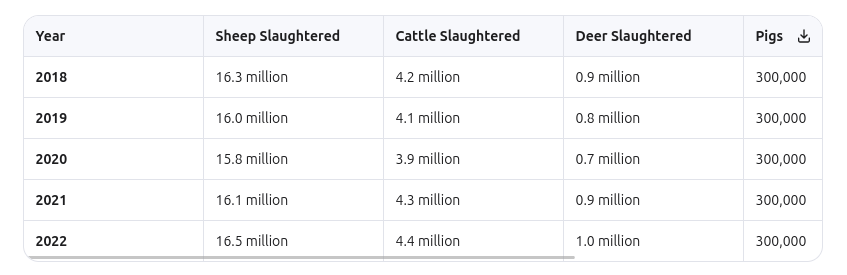
A poignant example of this contradiction is found in the New Zealand conservation model. In an effort to protect the ‘indigenous environment,’ millions of rats, pigs, goats, possums, and cats are targeted for eradication. Yet, these are the very species that humans themselves introduced to the islands. Having already devastated the original landscape through extensive forest clearing and the destruction of natural food sources, we now seek to ‘save’ what remains by waging a war against the creatures we brought with us. It is a form of ecological penance performed through the systematic killing of ‘invaders’ that we invited.

This selective logic extends to our management of lower trophic levels. We deploy chemical and biological warfare against ‘insect pests’ to protect our crops or our comfort, often ignoring the cascading effects.

By eliminating these insects, we inadvertently starve the insect-eating predators that depend on them, leading to a collapse of the very biodiversity we claim to value. We are caught in a cycle of violent intervention, where every attempt to ‘fix’ an ecosystem requires a new round of destruction to maintain a version of nature that is, ultimately, a human construct.

VIII. The Scale of What We’ve Done

Let us be specific about what human supremacy looks like in practice, because abstraction is part of the problem.

We kill animals by the billions every year — not for survival, not for necessity, but for profit, convenience, and palate preference (citation:1). Industrial animal agriculture subjects living, breathing, feeling beings to conditions that would constitute torture if applied to humans.

Animals are confined in spaces so small they cannot turn around. They are mutilated without anaesthesia. They are bred into bodies so distorted by genetic manipulation that they can barely stand, let alone live anything resembling a natural life.

And then there is the environmental cost — the part that loops back, with bitter irony, to damage us as well.

    The Environmental Reckoning

Singer laid out the mathematics of ecological destruction with devastating clarity:

“As far as food is concerned, the great extravagance is not caviar or truffles, but beef, pork and poultry. Some 38 percent of the world’s grain crop is now fed to animals, as well as large quantities of soybeans. There are three times as many domestic animals on this planet as there are human beings.” (citation:9)

The numbers are staggering. Since 1960, 25 percent of the forests of Central America have been cleared for cattle grazing. Once cleared, the poor soils support grazing for only a few years before the graziers move on, and the forest does not return. The world’s cattle produce approximately 20 percent of the methane released into the atmosphere, and methane traps twenty-five times as much heat as carbon dioxide (citation:9).

We are, as Singer wrote, “quite literally, gambling with the future of our planet — for the sake of hamburgers” (citation:9).

Pope Francis, drawing on decades of papal teaching, framed the same crisis in moral terms: “Due to an ill-considered exploitation of nature, humanity runs the risk of destroying it and becoming in turn a victim of this degradation” (citation:2). He quoted Paul VI’s warning about the need for “a radical change in the conduct of humanity,” because “the most extraordinary scientific advances, the most amazing technical abilities, the most astonishing economic growth, unless they are accompanied by authentic social and moral progress, will definitively turn against man” (citation:2).

The exploitation of animals and the exploitation of the planet are not separate crises. They are the same crisis, born from the same foundational error: the belief that the world exists for us, and that our appetites take precedence over everything else.

Challenger connects these dots with particular force. The ecological crisis is not simply a technical problem to be solved with better technology or more efficient resource management. It is the ‘inevitable consequence’ of a species that refuses to see itself as part of nature. When we deny our animality, we deny our embeddedness in the living systems of the Earth. And when we deny that embeddedness, we can exploit those systems without guilt, because we no longer recognise them as the conditions of our own survival. We are not destroying nature “out there.” We are destroying the very systems that sustain us — and we are doing it because we have convinced ourselves, against all evidence, that we are separate from them.

 IX. The Hubris at the Heart of It All

There is a word for the kind of thinking that has brought us to this precipice, and the word is ‘hubris’. Not merely arrogance — hubris in the classical Greek sense: an overweening pride that blinds us to our own limitations and, in its blindness, invites catastrophe.

We have built civilisations on the assumption that we are the masters of nature, only to discover — repeatedly, and with increasing urgency — that nature does not recognise our authority.

Climate change, biodiversity collapse, pandemic diseases emerging from our encroachment on wild ecosystems — these are not random misfortunes. They are consequences. They are the predictable outcomes of a species that believed itself exempt from the systems that govern all life on Earth.

Richard Powers captured this dynamic with painful clarity: humans have made the planet “our amusement park” without taking “proper care of our toys” (citation:3). The metaphor is apt, and it cuts deep. We have treated the Earth as something that exists for our entertainment and consumption, something infinitely resilient, something that will always be there to provide, no matter how much we take. We were wrong.

Challenger frames this hubris in explicitly psychological terms. The denial of animality is, at its core, a denial of limitation. If we are not animals, then we are not subject to the ecological constraints that govern animal life. We do not need clean air, clean water, stable climates, or functioning ecosystems — or rather, we need them only insofar as they serve our purposes, not as the existential preconditions of our existence. The hubris is not simply that we think we are better than other animals. It is that we think we are ‘not subject to the same rules’. We believe we can extract without limit, consume without consequence, and expand without boundary. And the Earth is now providing us with a very expensive education in the error of that belief.

   X. The Moral Equality We Refuse to See

The alternative to human supremacy is not some radical, untested philosophy. It is simply this: ‘extending equal consideration to beings who can suffer’.

Singer and Tom Regan, among others, have argued for moral equality theories that extend consideration and moral status to animals by refuting the supposed moral relevance of traits unique to humans (citation:10). The argument is not that animals are identical to humans. It is that the capacity to suffer — to experience pain, fear, distress, and deprivation — is morally relevant regardless of the species of the being experiencing it. All the arguments to prove human superiority cannot change “this hard fact: in suffering the animals are our equals” (citation:9).

Challenger takes this argument further by grounding it not in abstract philosophy but in evolutionary biology and neuroscience. If our capacity for suffering is an evolved trait — if it emerged from the same biological processes that produce suffering in other mammals — then there is no principled basis for treating human suffering as morally significant while dismissing animal suffering as morally irrelevant.

The neurological substrates of pain, fear, and distress are remarkably consistent across mammalian species. Just  because humans have yet to fully understand the capacity of non mamallian species to experience pain, fear, and distress does not at all mean they do not exist. 

The capacity to suffer did not begin with us. It is ancient, shared, and deeply rooted in the biology of sentient life. To deny moral significance to animal suffering while affirming it for human suffering is not a reasoned ethical position. It is species prejudice — the arbitrary privileging of one’s own kind, dressed up in the language of philosophy and religion.

Challenger argues that accepting our animality — truly accepting it, not as an abstract fact but as a lived reality that shapes our ethics — would transform our relationship with the natural world. If we are animals among animals, embedded in the same ecosystems, subject to the same biological imperatives, dependent on the same planetary systems, then the exploitation of other species is not merely wrong in an abstract moral sense. It is ‘self-destructive’. It is a creature sawing off the branch it sits on, while congratulating itself on its superior grip.

   XI. What This Means for Our Future

We stand at a crossroads. The systems we have built — industrial agriculture, extractive economies, consumption-driven growth — are not merely cruel to animals. They are unsustainable for ‘us’. The planet is not infinitely forgiving. The atmosphere does not care about our economic models. The oceans do not negotiate.

Challenger is unflinching in her assessment of what lies ahead if we continue on our current trajectory. The denial of animality that has enabled our exploitation of animals and ecosystems is now threatening the viability of human civilisation itself. We are not separate from the web of life. We are embedded in it — utterly, inescapably, whether we acknowledge it or not. And the web is unravelling.

The choices we make in the coming decades will determine not only the fate of billions of animals but the viability of human civilisation itself. This is not hyperbole. It is the considered assessment of scientists, theologians, ethicists, and economists across every tradition and discipline.

Singer warned us: “We are, quite literally, gambling with the future of our planet — for the sake of hamburgers” (citation:9).

Francis warned us: our “common home” is crying out because of “the harm we have inflicted on her by our irresponsible use and abuse of the goods with which God has endowed her” (citation:2).

Challenger warned us: the denial of our own animal nature is not a harmless psychological quirk — it is a civilisational pathology that is destroying the conditions of our own existence (citation:12).

The frameworks for sustainable, equitable food systems already exist — diets that “respect the welfare and rights of individuals, communities, cultures, animals, and the environment” (citation:4). What has been lacking is not knowledge, but will.

   XII. A Reckoning Long Overdue

Singer offered a prediction that history has consistently vindicated:

“What one generation finds ridiculous, the next accepts; and the third shudders when it looks back on what the first did.” (citation:9)

Future generations will look back on factory farming, on the industrial-scale slaughter of sentient beings, on the willful destruction of ecosystems for short-term profit, and they will not understand how we allowed it to happen. They will not understand how we knew — ‘we knew’ — and did nothing. They will not understand the selective logic, the convenient blindness, the philosophical contortions we used to justify what cannot be justified.

Challenger’s work suggests that the transformation required is not merely behavioural but existential. It is not enough to change what we ‘do’ to animals. We must change what we ‘believe’ about ourselves. We must stop pretending that we are something other than what we are — animals, mammals, primates, evolved creatures embedded in a living world that does not exist for our benefit.

Only then can we begin to build a relationship with the natural world based not on domination and denial, but on honesty, humility, and genuine care.

We have told ourselves, for thousands of years, that we are ‘special’. That the world was made for us. That our intelligence, our reason, our capacity for moral reflection set us apart from every other living thing. And yet, in the one test that truly matters — whether we can extend moral consideration beyond ourselves, whether we can act with compassion toward beings who are different from us — we have failed, comprehensively and repeatedly, at a scale that defies comprehension.

The question is not whether we are superior to other animals. The question is whether we are capable of living up to the values we claim to hold. The question is whether we can stop telling ourselves that oldest lie — and start telling the truth.

The animals cannot write this argument. The planet cannot file a complaint. That is precisely why it falls to us — to the species that prides itself on reason, on reflection, on moral imagination — to finally, ‘finally’, act as though these things matter.

_______________________________________________

References

Melanie Challenger, ‘How to Be Animal: What It Means to Be Human’ (Penguin, 2021) — ‘melaniechallenger.com; (https://www.melaniechallenger.com)

Pope Francis, ‘Laudato Si’: On Care for Our Common Home’ (2015) — ‘vatican.va; (https://www.vatican.va/content/francesco/en/encyclicals/documents/papa-francesco_20150524_enciclica-laudato-si.html)

Peter Singer, ‘Animal Liberation’ (1975, updated 2018) — ‘Animal Liberation by Peter Singer; (https://www.goodreads.com/work/quotes/animal-liberation)

Melanie Joy, ‘Why We Love Dogs, Eat Pigs, and Wear Cows: An Introduction to Carnism’ (Conari Press, 2010) — ‘carnism.org; (https://carnism.org)

“Animals and Ethics,” ‘Internet Encyclopedia of Philosophy’ — ‘iep.utm.edu](https://iep.utm.edu/anim-eth/)

Richard Powers’ reflections on humanity and the planet — ‘richardpowers.net’ (https://www.richardpowers.net)

“Anthropocentrism,” ‘Wikipedia’ — ‘en.wikipedia.org/wiki/Anthropocentrism; (https://en.wikipedia.org/wiki/Anthropocentrism)

Sustainable diets and food equity — ‘sustainabletable.org; (https://www.sustainabletable.org)

Val Plumwood, ‘Environmental Culture: The Ecological Crisis of Reason’ (2002)

Tom Regan, ‘The Case for Animal Rights’ (1983)

Charles Foster, ‘Being a Beast: Adventures Across the Species Divide’ (Profile Books, 2016)

Jonathan Safran Foer, ‘Eating Animals’ (Little, Brown, 2009)

J.M. Coetzee, ‘The Lives of Animals’ (Princeton University Press, 1999)

Yuval Noah Harari, ‘Sapiens: A Brief History of Humankind’ (Harper, 2015) — on the Agricultural Revolution and human domination of other species
Ecological Connectivity/Climate Change and Urban Environments

The Survivability Question: Can Cities Endure the Incoming Global Climate?

Can large urban environments continue to be survivable for humans in a world where climate change is disrupting global and local supply chains, where extreme heat, fires, and violent floods are becoming ever more prevalent?

This is no longer a speculative question. It is an operational one — posed in real time by city planners, emergency managers, public health officials, and the hundreds of millions of urban residents already living with its consequences.

The Scale of Urban Exposure

More than half of the world’s population now lives in cities, and that proportion is projected to reach nearly 70% by 2050. Urban environments concentrate people, infrastructure, economic output, and critical services into geographically compact zones — zones that, by their very density, amplify the impacts of climate disruption. Cities absorb and radiate heat through concrete, asphalt, and dark rooftops, creating urban heat islands that can be 2–8°C warmer than surrounding rural areas. This temperature differential — once an inconvenience — is becoming a lethal liability as heat waves grow longer, more intense, and more frequent.

Extreme Heat: The Silent Emergency

Extreme heat is already the deadliest weather-related hazard in many countries, killing more people annually than hurricanes, floods, and tornadoes combined. In dense urban environments, the compounding effects of the urban heat island, thermal mass in buildings, limited nighttime cooling, and inadequate tree canopy mean that vulnerable populations — the elderly, outdoor workers, those without air conditioning, and residents of limited infrastructure/income neighbourhoods with the least green cover — face sustained physiological stress that can become fatal within hours. The question is no longer whether cities will experience lethal heat events, but whether their physical form and infrastructure can buffer residents adequately enough for those events to remain non-catastrophic.

Flooding and Water Extremes

Urban surfaces are largely impervious. Concrete, asphalt, and compacted ground prevent rainfall from infiltrating the soil, converting what would be manageable precipitation into rapid surface runoff, flash flooding, and overwhelmed drainage systems. As extreme rainfall events intensify, the consequences cascade: transit systems flood, power infrastructure fails, contaminated water mixes with potable supplies, and low-lying neighbourhoods face repeated inundation. Cities built on coastlines, river deltas, and floodplains — which includes many of the world’s largest — face the additional existential threat of rising sea levels compounding storm surge and tidal flooding.

Fire and Smoke

Urban-adjacent wildfires, once confined to rural and peri-urban contexts, are increasingly penetrating the edges of metropolitan areas, destroying homes and infrastructure in zones previously considered safe. But the more pervasive urban impact of fire is smoke. Wildfire smoke can blanket cities thousands of kilometres from the fire source, degrading air quality to hazardous levels for days or weeks at a time. For urban residents with respiratory conditions, cardiovascular disease, or limited access to indoor air filtration, prolonged smoke exposure becomes a significant health crisis layered on top of existing urban air pollution from traffic and industry.

Supply Chain Fragility and Urban Self-Reliance

Cities are fundamentally dependent systems. They rely on continuous, uninterrupted flows of food, water, energy, building materials, medical supplies, and consumer goods transported over vast distances through global supply chains. Climate disruption — through drought-reduced agricultural output, flood-damaged transport corridors, extreme weather events halting shipping and logistics, and energy system failures during peak demand — threatens to break these flows with increasing regularity.

This dependency exposes a critical vulnerability in the conventional urban model: most cities were designed under the assumption of stable, predictable supply chains and moderate climatic conditions. Neither assumption holds in the current trajectory. The question of urban survivability therefore extends beyond managing heat, water, and fire to a deeper structural challenge — whether cities can develop sufficient local self-reliance in food production, water management, energy generation, and material sourcing to function when global systems are disrupted.

The Density Paradox

High-density urban development is widely recognised as the most environmentally efficient form of human settlement. Compact cities consume less land per capita, generate lower per-capita carbon emissions from transport, enable more efficient infrastructure networks, and protect surrounding ecosystems from sprawl-driven fragmentation. Yet this same density concentrates risk. When a flood, heat wave, or supply disruption strikes a dense city, it affects millions of people simultaneously, strains emergency response capacity to its limits, and can overwhelm systems designed for far lower stress loads.

This is the central paradox the document addresses: the form of settlement most necessary for mitigating climate change at the global scale is also the form most exposed to its impacts at the local scale. Resolving this paradox — making dense cities not merely efficient but genuinely resilient and survivable — requires a fundamental rethinking of how urban environments are designed, built, and operated.

From Livability to Survivability

Much of the existing discourse on urban green spaces and ecological design frames these interventions in terms of livability — improved comfort, better aesthetics, enhanced property values, and healthier residents. These benefits are real and well-documented throughout this report. But the climate crisis is re-framing the conversation at a much more urgent level. Canopy cover that reduces surface temperatures by 10–20°C is not merely a comfort amenity — it is a life-safety intervention during a lethal heat wave. Rain gardens and bioswales that absorb 15–40% of rainfall are not landscape features — they are flood defence infrastructure. Local food production through urban farming is not a lifestyle trend — it is a buffer against supply chain collapse.

The strategies examined in this article — biophilic urbanism, vertical greening, nature-positive planning, the 3-30-300 rule, superblocks, green-blue infrastructure, bioregional design, and the nine innovative approaches outlined in Section 5 — are therefore presented not as aspirational enhancements but as the foundational requirements for urban environments to remain functional, equitable, and habitable under conditions of accelerating climate disruption.

The question is not whether cities should adopt these strategies. It is whether they can afford not to.

As global urbanisation accelerates and the imperative to mitigate climate change intensifies, cities face a profound spatial and ecological dilemma. On one hand, containing urban sprawl through high-density and high-rise housing is widely recognised as essential for preserving regional ecosystems, reducing per capita carbon emissions, and curbing land conversion [1] [2].

On the other hand, intense vertical concentration risks severing humans from daily contact with nature, potentially exacerbating psychological stress, mental fatigue, and biodiversity degradation within the built environment [15] [16].

More essentially, can large urban environments continue to be survivable for humans in a world where climate change is disrupting global and local supply chains, where extreme heat, fires and violent floods are becoming ever more prevalent.

We examine the trade-offs between high-density development and human connection to nature, and outline the emerging urban planning strategies necessary to maximise both imperatives simultaneously.

1. The Environmental Imperative: High-Density Housing vs. Urban Sprawl

Urban sprawl — characterised by low-density, automobile-dependent suburban expansion — is a primary driver of habitat fragmentation, loss of arable land, and rising greenhouse gas emissions [3]. To combat these threats, planners increasingly advocate for compact city models.

1.1 Advantages of High-Density and High-Rise Housing

  • Curbing Land Consumption and Sprawl: High-density vertical development accommodates growing populations within a fraction of the geographical footprint required by suburban sprawl, protecting surrounding agricultural lands, forests, and sensitive watersheds from fragmentation [1] [6].
  • Energy and Infrastructure Efficiency: Compact urban forms enable centralised, highly efficient infrastructure networks, including district heating and cooling, water distribution, and public transit systems. Per capita energy consumption for heating and cooling in multi-family apartments is generally lower than in detached single-family homes due to shared thermal boundaries [1].
  • Transportation Emissions Reduction: By concentrating populations near transit nodes and commercial amenities, high-density living shortens daily commutes, encourages active mobility (walking and cycling), and reduces reliance on private vehicles [1].

1.2 Disadvantages and Environmental Trade-Offs

  • Intensified Urban Heat Island (UHI) Effect: Replacing permeable vegetated land with impervious concrete, asphalt, and towering glass facades significantly increases surface and air temperatures, requiring higher cooling loads [17].
  • Microclimate Disruption: High-rise clusters can alter local wind patterns, creating severe wind tunnels at street level while trapping air pollution in stagnant urban canyons [18].
  • Localized Resource Intensity: Although multi-family homes share thermal efficiency, high-rise towers often require energy-intensive vertical transport (elevators), mechanical ventilation, and complex pumping systems, which can elevate per capita electricity consumption if poorly designed [2].

2. Urban Green Spaces: Livability Benefits

Urban green spaces — parks, street trees, green roofs, vertical gardens, and urban forests — deliver a wide range of livability benefits that address many of the environmental trade-offs associated with high-density development.

2.1 Temperature Regulation (Urban Heat Island Mitigation)

Cities absorb and radiate heat through concrete, asphalt, and dark rooftops, creating UHIs that can be 2–8°C warmer than surrounding rural areas. Green spaces counteract this through:

  • Evapotranspiration — Trees and plants release moisture into the air, actively cooling their surroundings. A single large tree can transpire up to 400 litres of water per day, equivalent to several kilowatts of cooling.
  • Shade Canopies — Tree canopies intercept solar radiation before it reaches pavement and buildings. Surface temperatures under trees can be 10–20°C cooler than exposed asphalt.
  • Green Roofs and Walls — Vegetated surfaces on buildings reduce rooftop temperatures by 20–40°C compared to conventional dark roofs, lowering indoor cooling demand by 25–80%.
  • Park Cool Islands — Large parks create their own microclimate “cool islands” that extend benefits into surrounding neighbourhoods.

A mature urban tree provides cooling equivalent to roughly 2–5 room air conditioners running continuously.

2.2 Shade and Comfort

  • A mature deciduous tree can block 60–90% of solar radiation in summer, dramatically improving pedestrian thermal comfort.
  • Tree-lined streets create shaded microclimate corridors that make walking and cycling viable even on hot days, encouraging active transport.
  • Shade prevents hard surfaces from absorbing and re-radiating heat, keeping the thermal environment comfortable even hours after peak sun.
  • Studies consistently show that perceived comfort improves significantly with even modest tree canopy cover (20–30%), reducing heat-related complaints and health incidents.

2.3 Stormwater and Rain Impact Management

Urban surfaces are largely impervious, causing rapid runoff, flash flooding, and overwhelmed drainage systems. Green infrastructure addresses this through:

  • Canopy Interception — Tree canopies intercept 15–40% of rainfall, slowing and reducing the volume reaching the ground, thereby delaying peak runoff and reducing flood risk.
  • Infiltration — Parks, rain gardens, bioswales, and permeable green areas allow water to soak into the ground, recharging groundwater and reducing surface flow.
  • Flood Attenuation — Urban parks and green corridors can act as temporary floodplains during extreme rain events.
  • Water Quality Improvement — Vegetated areas filter pollutants from runoff (heavy metals, oils, sediments) before they reach waterways.
  • Reduced Infrastructure Burden — By absorbing and slowing runoff, green spaces reduce the load on stormwater systems, delaying or avoiding costly upgrades.

Examples: Singapore’s “ABC (Active, Beautiful, Clean) Waters” programme integrates green infrastructure for stormwater management, and Copenhagen’s Cloudburst Management Plan uses parks and green boulevards as flood retention spaces.

2.4 Air Quality Improvement

  • Trees and vegetation filter particulate matter (PM2.5, PM10), absorb gaseous pollutants (NO₂, SO₂, O₃), and produce oxygen.
  • A single urban tree can remove 5–20 kg of air pollutants per year.
  • Green barriers along roadsides can reduce near-road pollutant concentrations by 15–50%.

2.5 Biodiversity and Ecological Services

  • Urban green spaces serve as habitat patches and corridors for birds, insects, pollinators, and small mammals.
  • Pollinator-friendly plantings support urban food production (community gardens, urban farms).
  • Biodiversity itself improves human wellbeing — exposure to diverse natural environments is linked to reduced stress and improved mental health.

2.6 Health and Wellbeing (Table 1)

BenefitMechanism
Mental healthExposure to green spaces reduces cortisol, anxiety, and depression; improves mood and cognitive function
Physical activityParks and greenways encourage walking, cycling, sports, and play
Cardiovascular healthReduced heat stress, improved air quality, and increased activity lower heart disease risk
Psychiatric resilienceLongitudinal studies show people living closer to green spaces have a 55% lower risk of developing psychiatric disorders, including stress and anxiety, compared to those in sterile urban environments [22]
Chronic disease reductionProximity to urban nature is linked to lower rates of cardiovascular disease, obesity, and heat-related illnesses; residents in neighbourhoods with higher tree density report significantly better health perceptions and fewer cardio-metabolic conditions [23] [25]
Noise reductionTrees and vegetation absorb and deflect urban noise, reducing perceived noise levels by 5–10 dB
Restorative effectsAccording to Attention Restoration Theory (ART), natural environments provide “soft fascination” that allows directed attention mechanisms to rest and recover [11]

2.7 Crime Reduction and Public Safety

  • Research indicates a strong correlation between well-maintained urban green spaces and a reduction in violent crime [20]. Tree canopy coverage, in particular, has been shown to create “cold spots” for criminal activity in dense urban centres [21].
  • Functional green spaces encourage residents to spend more time outdoors, increasing natural surveillance and fostering a sense of community ownership that deters vandalism and loitering — the “eyes on the street” effect [20].

2.8 Social Cohesion, Equity, and Cultural Livability

  • Social interaction — Urban green spaces serve as vital “third places” where diverse populations interact, promoting social support, place attachment, and a sense of belonging [24].
  • Equity and inclusion — Strategically distributed green infrastructure ensures that the benefits of nature are not restricted to affluent enclaves, reducing health disparities and fostering a more equitable urban society [24]. Lower income communities often have the least canopy cover and suffer the greatest heat exposure.
  • Recreation and play — Essential for child development, community events, and informal gathering.
  • Sense of place — Mature trees and distinctive landscapes give neighbourhoods character and identity.

2.9 Economic and Property Value Effects

  • Properties near well-maintained parks and tree-lined streets see 5–20% higher values.
  • Reduced energy costs from shade and green roof insulation.
  • Lower healthcare costs from improved population health.
  • Reduced stormwater infrastructure spending.
  • Green roofs last significantly longer than traditional roofing materials by protecting underlying surfaces against UV degradation and thermal stress, thereby reducing replacement costs and insurance risks [14].

2.10 Key Design Considerations

For maximum livability impact, effective urban greening should be:

  • Strategically located — prioritising the hottest, most flood-prone, and most under-served areas.
  • Diverse in form — combining street trees, pocket parks, green roofs, rain gardens, and urban forests.
  • Maintained — unmanaged green spaces can become safety concerns; long-term stewardship is essential.
  • Species-appropriate — using drought-tolerant, climate-adapted species that thrive in urban conditions.
  • Equitably distributed — so benefits reach all residents, not just affluent neighbourhoods.

3. The Human Need for Nature: Psychological, Physiological, and Social Impacts

The human evolutionary predisposition to affiliate with nature — known as biophilia — underscores the psychological necessity of natural contact in daily life [7]. When high-density development ignores this fundamental need, significant costs to public health emerge.

3.1 The Psychological and Physiological Toll of Disconnection

  • Mental Health Vulnerabilities: Individuals living in dense environments devoid of natural elements experience higher rates of psychological distress, anxiety, and mental fatigue [15] [16]. Chronic exposure to noise, crowding, and artificial surfaces elevates cortisol levels.
  • Restoration Deficits: According to Attention Restoration Theory (ART), natural environments provide “soft fascination” that allows directed attention to rest and recover. High-rise living without adequate green views deprives residents of this restorative mechanism [11].
  • Social Disconnection: High-rise towers can inadvertently foster social isolation if communal spaces are poorly designed, weakening community cohesion compared to traditional low-rise neighbourhoods.

3.2 The Benefits of Urban Nature Integration

  • Stress Reduction and Mood Enhancement: Even brief, passive exposure to greenspaces — such as viewing trees from a high-rise window or spending fifteen minutes in a pocket park — has been proven to lower blood pressure, reduce heart rates, and improve cognitive function [11] [14].
  • Ecosystem Services for Health: Urban greenery acts as a natural air filter, capturing particulate matter (PM₂.₅), attenuating ambient noise, and providing psychological relief that buffers against urban stressors.

4. Comparative Matrix (Table 2)

DimensionSprawl / Low-Density SuburbanisationConventional High-Rise DevelopmentBiophilic Compact Urbanism (Integrated Model)
Land EfficiencyLow; consumes vast natural and agricultural land [3]High; minimises geographical footprint [5]High; optimises land use while integrating multi-layered greenery
Carbon & Energy ProfileHigh per capita transport emissions; inefficient infrastructure [1]Low transport emissions; potential high building mechanical loads [1] [2]Low transport emissions; net-zero energy buildings with passive cooling
Ecological ImpactSevere habitat fragmentation and biodiversity loss [3]Localised habitat destruction, minimal ground-level nature [18]Regenerative; enhances urban biodiversity and wildlife corridors [1]
Human-Nature ConnectionHigh immediate access to private yards, but drives regional ecosystem destructionVery low; distant from ground-level nature unless specifically designed [15]High integration; living facades, vertical forests, and accessible sky-gardens [8] [10]
Societal ImpactSocial isolation; high infrastructure costs per capitaPotential for high crime and low cohesion if nature is absentReduced crime; high social cohesion; improved public health outcomes [20] [24]

5. New Urban Planning Strategies

To resolve the tension between vertical density and human-nature connection, modern urban planning has shifted from traditional zoning toward regenerative, multi-dimensional paradigms.

A. Biophilic Urbanism and Vertical Greening

Rather than treating nature as a ground-level afterthought, biophilic urbanism embeds ecology directly into the vertical dimension of the built environment [8] [10].

  • Vertical Forests and Living Façades: Integrating dense plantings, trees, and hanging gardens onto balconies and building envelopes — exemplified by Milan’s Bosco Verticale and Singapore’s Oasia Hotel — transforms inert towers into living ecosystems [10].
  • Benefits: These installations sequester carbon, filter air, reduce the UHI effect by up to 2°C, and provide immediate psychological and visual contact with nature for high-rise residents [10].

B. The 3-30-300 Rule for Urban Forestry

Developed by urban forestry expert Cecil Konijnendijk, this evidence-based framework establishes clear spatial benchmarks for balancing density with nature access:

  • 3 Trees: Every resident must be able to see at least 3 mature trees from their home or workplace.
  • 30% Canopy Cover: Every neighbourhood must maintain a minimum of 30% tree canopy coverage.
  • 300 Metres: Every citizen must live no more than 300 metres from the nearest high-quality public park or greenspace.

In high-density districts, this rule compels planners to utilise pocket parks, green roofs, and courtyard gardens to meet the 300-metre threshold.

C. Nature-Positive Urbanism and the AR3T Framework

Rooted in the World Economic Forum’s guidelines, nature-positive urbanism moves beyond sustainability (doing less harm) toward net-positive ecological regeneration [1] [19].

  • Avoid and Reduce: Restricting development in ecologically sensitive zones while optimising density in already-urbanised brownfield sites.
  • Restore and Regenerate: Transforming grey infrastructure into living networks — constructing wetlands for natural stormwater filtration, converting sterile rooftops into pollinator habitats, and establishing wildlife “eco-passages” (green bridges, retrofitted underpasses) that reconnect fragmented habitats across dense urban grids [10].

D. The Superblock and Green Axis Model

Pioneered in Barcelona, the Superblock model reorganises urban traffic by grouping multiple city blocks into larger macro-blocks, restricting through-traffic to the perimeter [12].

  • Reclaiming Public Space: Interior streets are reclaimed from automobiles and converted into pedestrian-first zones heavily planted with trees and permeable soils.
  • Synergy: This strategy drastically reduces noise and air pollution while creating continuous green corridors that link high-density residential zones directly to regional nature networks [13].

E. Additional Innovative Approaches

The following emerging strategies represent further frontiers for integrating organic green living into dense urban environments.

E1. AI-Driven Ecological Programming

Pioneered by OXMAN, this approach uses artificial intelligence and environmental data to design buildings as living, biodiverse ecosystems rather than static structures. The conceptual “Eden Tower” features concentric platforms hosting distinct ecosystems, with each level tailored to specific environmental factors such as sunlight, wind patterns, and moisture levels. This data-driven methodology represents a paradigm shift from conventional green building design — where vegetation is added as an afterthought — toward architecture where ecological performance is the primary generative logic of the design itself [4].

E2. Biomimetic Design Patterns — Phyllotaxis and Nature-Inspired Geometry

Vincent Callebaut Architectures’ “PHYLLOTAXIS” approach applies the mathematical rules of phyllotaxis — the arrangement of leaves on a stem — to building layout and orientation. Every residential unit is positioned algorithmically to receive maximum direct sunlight, much as every leaf on a plant captures light efficiently [6]. Eco-devices such as sunbreakers, adaptive facades, and bio-inspired shading systems are integrated into the phyllotactic layout, reducing the need for mechanical heating and cooling. This moves beyond surface-level greening toward the fundamental geometry of buildings being shaped by biological logic [6].

E3. Living Microalgae Bioreactors and Biotechnological Architecture

The “AirBubble” system by ecoLogicStudio combines timber, ETFE membranes, living microalgae bioreactors, cork, and Corten steel to create a regenerative garden embedded within the building itself. The microalgae actively purify surrounding air, support biodiversity, and enhance workplace well-being. Unlike traditional green walls that rely on higher plants, microalgae bioreactors offer continuous air purification and oxygen production at significantly higher rates per unit area, making them particularly suited to space-constrained high-density settings [7].

E4. Adaptive Intelligent Systems — Responsive Urban Environments

The LAVA (Laboratory for Visionary Architecture) practice develops buildings and urban master plans as “adaptive systems responsive to data, ecology, and human dynamics” [3]. Their “Conscious City” concept imagines the master plan as a living organism capable of anticipating change to enhance life in harmony with nature. Practical applications include Masdar Plaza in Abu Dhabi, where dynamic solar canopies, intelligent shading, and porous climate-adaptive design create a responsive public space, and the K.A.CARE project in Riyadh, designed to be lightweight, adaptive, and interconnected [3]. This approach moves beyond static green features toward buildings and urban spaces that actively modulate their environmental performance in real time.

E5. Multi-Layered Vegetation and the SLAMS Approach

The “Some Large and Many Small” (SLAMS) strategy distributes multi-layered vegetation across both vertical building surfaces and ground-level contexts [12]. Rather than relying solely on large parks (which require scarce horizontal space), this approach prioritises a network of many small-scale green interventions — pocket parks, courtyard gardens, green roofs, and vegetated balconies — supplemented by a smaller number of larger green areas. This hybrid configuration has been shown to support biodiversity outcomes comparable to much larger conventional green spaces. Critically, this framework also addresses the management dimension: decisions about irrigation, pruning, pesticide use, and public access interact with spatial configuration to shape biodiversity and ecosystem service delivery within dense urban settings [12].

E6. Green-Blue Infrastructure — Water-Sensitive Organic Design

Green-blue infrastructure integrates vegetation with water management systems to create living infrastructure serving dual ecological and hydrological functions. Key elements include:

  • Rain gardens and bioswales — vegetated channels that filter and slow stormwater runoff while providing habitat.
  • Permeable pavements — surfaces that allow water infiltration and support root systems of adjacent plantings.
  • Constructed wetlands within urban settings — serving as both natural stormwater filtration systems and biodiverse green spaces [1].
  • Water-sensitive urban design combining green infrastructure with integrated water management, including decentralised greywater treatment and reuse to sustain vertical greening systems without relying on potable water — a critical consideration for the long-term sustainability of vertical forests and living facades in water-limited cities [12].

This approach is particularly significant because the long-term viability of many vertical greening systems depends on sustainable water supply. Systems like the Bosco Verticale can be resource-intensive, relying on potable water unless coupled with water management strategies such as greywater reuse with appropriate substrates [12].

E7. Green as Architectural Material — Architecture Shaped by Vegetation

An emerging design philosophy uses vegetation itself as a primary architectural material and spatial design element. The Synthetic Architecture practice explores residential complexes that “form their own green topography,” where green fundamentally shapes the architecture and its spatial experience [11]. Similarly, the “Green Utopia” project by ODA strengthens the connection between residents and adjacent parkland by designing interior spaces that intentionally draw the outdoors in, with balconies overlooking the landscape and materials inspired by Feng Shui principles — such as wood and metal — used to echo the natural character of the surroundings [9]. This philosophy moves beyond adding planters to balconies toward an architectural language where building form, materiality, and spatial organization are fundamentally determined by the desire to maximize living green space.

E8. Community-Led Green Production — Urban Farming and Rooftop Gardens

Beyond ornamental and ecological greening, productive urban greenery — community gardens, rooftop farms, and urban agriculture — simultaneously provides food security, cooling, and social cohesion [1]. These are functional green living spaces where residents actively participate in cultivation, strengthening the human-nature connection while addressing practical needs. UN-Habitat specifically recommends supporting urban farming and rooftop gardens to boost local food production and cooling, and fostering grassroots climate action by involving residents directly in city greening projects [1].

E9. The Economic Case — Green as Infrastructure Investment

Research from Utrecht University demonstrates that green roofs last significantly longer than traditional roofing materials by protecting underlying surfaces against UV degradation and thermal stress, thereby reducing replacement costs and insurance risks [14]. Greener streets have been shown to significantly increase real estate values, and investing in nature-based solutions is increasingly framed as an investment in long-term economic stability rather than a cost item [14]. This reframing — from green space as amenity to green space as infrastructure — is essential for persuading developers and municipalities in high-density contexts to integrate organic green living at scale.


F. Bioregionalism in Urban Environments — Localising Design, Materials, and Systems for Climate Resilience

Bioregionalism is a planning and design philosophy that aligns human settlements — their architecture, infrastructure, food systems, energy networks, and governance — with the ecological boundaries, climatic conditions, cultural patterns, and material resources of the specific region in which they are situated (citation:8). Rather than applying universalised, globalised building models to every context, bioregional urbanism asks: what does this particular place already offer, and how can its built environment work with — rather than against — its living systems? (citation:9)

In an era of intensifying climate threats — heat waves, flooding, supply chain disruption, and resource scarcity — this approach is transitioning from a niche philosophy to a practical necessity for enabling urban living to continue sustainably (citation:9).

F1. Defining Bioregional Urbanism

At its core, bioregional design “aligns human habitat development, such as architecture, landscapes and infrastructure, with regional materials, culturally relevant applications and climate-appropriate strategies” (citation:9). In the span of human history, bioregional design was the default mode of building — settlements were shaped by local stone, timber, earth, climate, and cultural tradition. The globalisation of industrial materials such as concrete, glass, and steel supplanted these artisanal practices, particularly as modernism became a signifier of wealth and progress (citation:9). Today, the return to bioregionalism is driven by the dual imperatives of carbon reduction and improved self-reliance in the face of global instability (citation:9).

Applied to urban environments, bioregionalism encompasses:

  • Material sourcing — prioritising locally available, low-embodied-carbon construction materials
  • Energy systems — designing around regional renewable energy potential (solar, wind, biomass, geothermal)
  • Water management — working with local hydrology rather than against it
  • Food systems — integrating urban agriculture suited to regional growing conditions
  • Cultural and ecological identity — embedding local heritage, craft traditions, and native ecosystems into the urban fabric
  • Governance and planning — using bioregional boundaries (watersheds, ecosystems) rather than purely administrative ones to guide spatial planning (citation:8)

F2. Proven Positive Impacts: The BedZED Case Study

The most extensively documented demonstration of bioregional principles applied to urban housing is BedZED (Beddington Zero Energy Development) in Sutton, South London — the UK’s first large-scale, mixed-use sustainable community, completed in 2002 (citation:1).

Initiated by Bioregional and developed by Peabody Trust in partnership with Bioregional and ZEDfactory architects, BedZED comprises 100 homes, office space, a college, and community facilities (citation:1). Its proven positive impacts include:

Local Material Sourcing:

  • Just over half (52%) of construction materials by weight were sourced within 35 miles — considerably closer than the construction industry average. The bricks used on the outside walls came from just 20 miles away (citation:1).
  • 3,400 tonnes of construction material (15% of the total) were reclaimed or recycled products. Nearly all the steel in the building was reused, much of it originating from refurbishment work at Brighton Railway Station (citation:1).
  • Even the land itself was repurposed — previously used for spreading sludge from the nearby sewage works (citation:1).

Energy Performance and Comfort:

  • Most homes are heated primarily by solar gain and high insulation, with distinctive wind cowls facilitating natural ventilation (citation:1).
  • A biomass boiler (installed 2017, replacing the original wood-powered system) combined with a green electricity tariff maintains the zero-carbon operational vision (citation:1).
  • Extensive solar panels provide on-site electricity generation, while efficient appliances reduce resident energy bills (citation:1).

Sustainable Transport:

  • An on-site car club was introduced as a major success, reducing private vehicle dependency — a principle now replicated in sustainable developments worldwide (citation:1).

Community and Livability:

  • BedZED has maintained above-market sale prices, demonstrating that sustainability and property value are not in tension (citation:1).
  • Residents report a strong sense of community: “There’s a real sense of shared values as well as a strong community feel at BedZED. Combined with the green space nearby and the layout of our streets, it makes it a special place to live, and quite unique to London living” — Dave Tchilingirian, BedZED resident (citation:1).
  • BedZED inspired the creation of the One Planet Living framework, which has since been adopted by over 350 organisations across 22 countries, shaping the lives of more than 7.3 million people through 71 real-estate projects, 86 businesses, 38 city/regional districts, and 39 educational institutions (citation:2).

F3. Bioregional Planning at the Urban and Regional Scale: Carbon Modelling for Local Authorities

Beyond individual developments, bioregional principles are being applied at the metropolitan and regional planning scale to help local authorities achieve net-zero targets. Bioregional, alongside Etude, Currie & Brown, and Mode Transport, created a spatial carbon modelling tool for Central Lincolnshire and Greater Cambridgeshire that identifies the lowest-carbon pathway for new development (citation:7).

Key findings from this work demonstrate the urban relevance of bioregional thinking:

  • Location profoundly shapes carbon outcomes. The tool models the annual carbon footprint of new development depending on where it is sited, what policies are applied, and the transport patterns that will result. Six categories of location were established for Greater Cambridge, from dense urban areas through to dispersed villages (citation:7).
  • Transport is decisive. The modelling revealed that “in a location where cars will realistically be the main transport choice, even with ‘zero carbon’ policies applied, the carbon emissions from transport are so high that this is still a worse option than if new homes were built in a dense urban area or public transport corridor even without zero carbon policies” (citation:7). This directly validates the bioregional principle of building where existing infrastructure and natural transit corridors already exist.
  • Policy dials can be tested. The tool allows authorities to model the impact of various policies — best-in-class energy efficiency, heat pump adoption, on-site solar PV, embodied carbon reduction, and sustainable transport measures — and to rearrange spatial distribution to find the least carbon-intensive growth options (citation:7).
  • Existing patterns matter. Real-life data on typical development types, household sizes, transport modes, and infrastructure needs for representative locations were gathered to ground the tool in bioregional reality rather than abstract assumptions (citation:7).

This approach demonstrates that bioregionalism at the planning scale is not merely philosophical — it produces quantifiable, policy-actionable data that directly informs how cities can grow under climate constraints (citation:7).

F4. Regenerative Development: Beyond Sustainability to Bioregional Restoration

The sustainability paradigm itself has come under significant critique. Despite three decades since the publication of Our Common Future and the adoption of Agenda 21 at the 1992 Earth Summit, “environmental degradation continues to threaten livelihoods across the globe; climate change is driving more and more extreme weather events; and inequality between the haves and the have-nots is greater than ever” (citation:4). Biodiversity and ecosystem services are under such serious threat that geologists have named the current era the Anthropocene, and approximately 90% of existing languages are expected to be dead or unrecoverable by the end of the current century (citation:4).

Regenerative development pushes beyond sustainability by applying “holistic processes to create feedback loops between physical, natural, economic and social capital that are mutually supportive and contain the capacity to restore equitable, healthy and prosperous relationships among these forms of capital” (citation:4). In the urban context, this means:

  • Moving from “doing less harm” to actively restoring the ecological systems that cities depend upon
  • Embedding local networks and bioregional contexts into every level of planning and governance
  • Requiring “every level of society to adopt a new set of values and to reorganize in ways that facilitate collaboration, evolution, and innovation” (citation:4)

This regenerative orientation aligns directly with the bioregional imperative: cities that understand and work within their ecological carrying capacity can restore, rather than merely sustain, the natural capital upon which urban livability depends.

F5. Scaling Bioregional Design: Knowledge Transfer and Local Application

A key insight from contemporary practice is that scaling bioregional design “paradoxically requires global knowledge exchange of traditional practices and innovations combined with local applications and policies” (citation:9). Three principles guide this scaling:

  1. Global knowledge exchange is essential. Bioregional building practices depend on transferring knowledge between regions with similar climate conditions and material resources. For example, the transfer of mass timber construction knowledge from Europe to North America succeeded because production processes and material performance remained consistent across bioregions with similar forestry resources (citation:9).
  2. Regional applications require robust, place-specific policy. Customised building codes and policies are necessary to ensure quality and trust. The Framework Building in Portland, for instance, underwent rigorous fire, blast, and seismic tests to gain approval, which then informed building codes across other US regions (citation:9).
  3. Material diversity strengthens resilience. While mass timber is the most commercially advanced bioregional material, similar trajectories are underway with stone and other bio-based materials, each following the pattern of international knowledge transfer, local experimentation, and technological innovation (citation:9).

In Bhutan, the planned Gelephu International Airport — designed by BIG in collaboration with NACO — demonstrates bioregional design at civic scale, using local materials and cultural references to create infrastructure that is both climate-appropriate and culturally resonant (citation:9).

F6. Relevance to Urban Climate Resilience

The convergence of bioregionalism with the urban planning strategies outlined elsewhere in this document creates a powerful framework for climate-resilient cities:

Bioregional Concepts (Table 3)

Bioregional PrincipleUrban ApplicationClimate Resilience Outcome
Local material sourcingUsing regionally available, low-carbon building materials (timber, stone, earth)Reduced embodied carbon; reduced supply chain vulnerability; support for local economies (citation:1)(citation:9)
Place-based energy designSiting development for solar access, wind patterns, and district energy potentialLower operational emissions; reduced dependence on distant energy infrastructure (citation:7)
Working with local hydrologyGreen-blue infrastructure, rain gardens, constructed wetlands, greywater reuseFlood resilience; water security; reduced strain on centralised systems
Bioregional spatial planningConcentrating growth in locations with existing transit, infrastructure, and ecological connectivityMinimised transport emissions; preserved open land; reduced per-capita infrastructure costs (citation:7)
Cultural and ecological identityEmbedding native species, local craft, and regional landscape character into urban designStronger place attachment and community cohesion; maintenance of biodiversity corridors (citation:8)(citation:9)
Regenerative feedback loopsRestoring degraded urban ecosystems as part of development, not as an afterthoughtNet-positive ecological outcomes; long-term self-sufficiency of urban natural systems (citation:4)

Bioregional Approaches (Table 4)

ApproachCore ConceptExemplar
Bioregional urbanismAligning urban design, materials, energy, and planning with regional ecology, climate, and culture for climate resilienceBedZED, Sutton (citation:1); One Planet Living global network (citation:7); Gelephu Airport, Bhutan (citation:9); Central Lincolnshire & Greater Cambridge carbon modelling (citation:7)
AI-driven ecological programmingData-generated building forms that maximize biodiversityOXMAN Eden Tower [4]
Phyllotactic biomimetic designNature-derived geometric rules for sunlight and ventilationVincent Callebaut PHYLLOTAXIS [6]
Living microalgae bioreactorsBiotechnology for continuous air purification and oxygenationecoLogicStudio AirBubble [7]
Adaptive intelligent responsive systemsAI + ecology merging into living urban organismsLAVA Conscious City, Masdar Plaza [3]
SLAMS approach to green space“Some Large and Many Small” distributed biodiversity networkResearch on dense green cities [12]
Green-blue water-sensitive infrastructureIntegrated vegetation and stormwater/water managementRain gardens, bioswales, greywater reuse [1] [12]
Green as primary architectural materialBuildings shaped by vegetation rather than green applied to buildingsSynthetic Architecture, ODA Green Utopia [9] [11]
Productive urban greeneryCommunity farming and rooftop gardens for food + coolingUN-Habitat recommendations [1]
Economic valuation of green infrastructureGreen roofs as long-life infrastructure, property value upliftUtrecht University research [14]

References to Table 4


6. Conclusion

The dichotomy between high-density housing and human connection to nature is a false trade-off born of outdated, compartmentalized zoning practices. While urban sprawl destroys regional ecosystems under the guise of providing personal green space, conventional high-rise development risks alienating humans from the natural world.

Urban green spaces are not amenities — they are critical infrastructure. They simultaneously cool cities, shade streets, absorb stormwater, clean air, support biodiversity, improve public health, reduce crime, build community, and raise property values.

By embracing regenerative planning frameworks — biophilic architectural design, the 3-30-300 rule, nature-positive urbanism, pedestrian-priority green networks, and the innovative approaches outlined above — cities can achieve the compact density required to combat climate change while enveloping urban dwellers in restorative, life-affirming nature. These approaches collectively represent a shift from viewing nature as something to be retrofitted onto dense buildings toward a paradigm where ecological systems are the foundational logic of high-density urban design — where buildings are not merely adorned with greenery but are themselves living, adaptive, productive, and ecologically integrated organisms.

Addendum

Green Space, Human Heritage,
 and the Cost of Concrete

Building Cities Where People and Nature Can Thrive

Human beings did not evolve in environments dominated by sealed roads, glass towers, artificial light, and continuous noise. For most of human history, daily life was inseparable from soils, weather, plants, animals, waterways, and seasonal change. Modern cities can provide education, culture, employment, and community, yet the built environments of concrete, tar, and high-rise development can also obscure this deeper relationship. When natural systems become physically and psychologically distant, it becomes easier to overlook how completely human wellbeing still depends upon them.

Green Space Is Essential, Not Decorative

Green space is far more than an aesthetic feature of urban design. Parks, trees, gardens, wetlands, riverbanks, and vegetated streets give people direct contact with living systems. They create places to walk, rest, play, meet others, and experience variation beyond the controlled surfaces of buildings and roads. A city without meaningful green space can make nature seem like a destination reserved for weekends or holidays rather than an essential part of ordinary life. In contrast, everyday exposure to trees, birds, insects, soil, shade, and changing seasons can remind people that they belong to a wider ecological community.

The Environmental Cost of Sealed Surfaces

Dense urban landscapes often replace permeable ground with concrete and tar. This separation has practical consequences as well as cultural ones. Hard surfaces absorb and radiate heat, while the removal of vegetation reduces shade and natural cooling. Water that might otherwise soak into soil can run rapidly across paved areas, increasing pressure on drainage systems and contributing to flooding. As cities become more sealed and built-up, the services once quietly provided by trees, wetlands, and healthy soils become more visible precisely because they are missing.

Designing Density Without Losing Nature

High-rise environments can deepen this sense of separation when residents live far above the ground and have limited access to nearby natural spaces. From a window, nature may appear as a distant patch of green rather than a living environment to be explored and cared for. This is not an argument against housing density or urban living; both are necessary parts of a sustainable future. It is, however, an argument for cities that place green space at their centre rather than treating it as leftover land. Well-planned density should be accompanied by accessible parks, tree-lined streets, rooftop gardens, restored waterways, and public spaces where people of all ages can encounter nature directly.

“A liveable city is not one that excludes nature in the name of progress. It is one that recognises green space as essential infrastructure—supporting health, resilience, memory, belonging, and the living systems on which the planet depends.”

Why Biodiversity Must Be Visible

This disconnection also affects how society understands biodiversity. If people rarely see pollinators, native plants, birds, fungi, or healthy waterways, biodiversity can become an abstract concept associated only with remote forests and endangered animals. Yet biodiversity exists within and around cities, and it supports the ecological processes upon which people rely. A diverse urban landscape can help sustain pollinators, improve soil and water health, support wildlife, and make neighbourhoods more resilient to heat and extreme weather. Protecting biodiversity is not only about preserving beautiful or rare species; it is about sustaining the web of life that supports human societies.

Reconnection as an Environmental and Social Priority

Reconnecting people with green space is therefore both an environmental and a social priority. Equitable access matters: every neighbourhood should have safe, welcoming, and well-maintained natural areas, not only wealthier parts of a city. Community gardens, native planting projects, school outdoor-learning programmes, tree-canopy protection, and wetland restoration can all help people recognise nature as a shared inheritance.

Such efforts build a clearer understanding that climate action, biodiversity protection, and human health are interconnected rather than separate concerns.

Highly built-up environments can make nature appear distant, managed, or unimportant. For many people, everyday life is shaped by screens, traffic, indoor work, and consumer spaces rather than contact with soil, wildlife, trees, waterways, and seasonal change.

When nature is viewed as unused land rather than a living community, it becomes easier to accept its conversion for development  and thus normalising loss of habitats and farmland beyond city boundaries.

A More Liveable Urban Future

Ultimately, concrete and high-rise buildings need not sever people from their natural heritage. The choice lies in how cities are designed, governed, and experienced. When urban environments make room for green space and biodiversity, they do more than beautify the landscape: they help people understand their place within nature and their responsibility to protect it.

Key message: Green space is essential urban infrastructure. It connects people to their natural heritage while supporting resilience, biodiversity, and a healthier relationship with the planet.

A finite planet cannot support unlimited material extraction, land conversion, consumption, and urban sprawl. A sustainable future requires cities and economies to prioritise wellbeing, resilience, repair, and ecological restoration—not perpetual material ‘growth’. Human prosperity must operate within ecological limits. Cities should meet people’s needs while protecting farmland, restoring ecosystems, reducing resource use, and making space for other species.

The Myth of Endless Growth in a Finite World

Countries’  economies  measure ‘success’ by continual growth in production, consumption, housing construction, and land development, yet the planet has finite land, water, minerals, soils, and ecological capacity.While cities can create opportunity and cultural life, their expansion also has material consequences: it  replaces forests, wetlands, habitats, and productive farmland with roads, buildings, car parks, and infrastructure.

If cities continue to grow outward and consume more resources, how can humans survive without undermining the living systems on which all species depend?

“A sustainable society is not one that simply grows more efficiently. It is one that learns to meet human needs while staying within ecological limits and allowing the rest of life to flourish.”

The Hidden Costs of Bigger Cities and Constant Consumption

Explain that urban growth is not merely a question of where people live. New construction requires materials, energy, water, transport networks, and waste systems; high-consumption lifestyles also create environmental pressure far beyond city limits. At the same time, low-density urban sprawl can fragment habitats, increase car dependence, and place development pressure on fertile agricultural land.

Clarify that the solution is not to deny people safe, affordable homes or essential services. Instead, it is to question development models that treat endless expansion, demolition, and resource use as inevitable signs of progress.

Pressure created by unchecked growthConsequences for people and ecosystems
Conversion of farmland and habitatReduced local food security, habitat loss, fragmented ecosystems, and fewer opportunities for species to move and recover.
Car-dependent sprawlGreater land use, emissions, air pollution, household transport costs, and barriers to wildlife movement.
High material consumptionMore extraction, waste, energy demand, and pollution across global supply chains.
Loss of mature trees and wetlandsHotter neighbourhoods, higher flood risk, reduced water quality, and declining urban wildlife.
Unequal access to green spaceEnvironmental benefits are concentrated in some communities while others bear more heat, pollution, and environmental risk.

Redefining Prosperity: From More Consumption to Better Lives

Economic growth and human wellbeing are not identical. A society can improve quality of life through good housing, healthcare, education, public transport, secure livelihoods, culture, leisure, and access to nature without continually increasing material consumption and land conversion.

A wellbeing economy can  exist in a post-growth perspective. Rather than asking how cities can keep expanding, communities can ask whether everyone has enough: enough housing, clean air, time, mobility, food, green space, security, and connection. This re-frames prosperity around meeting needs fairly while reducing pressure on ecosystems.

Climate Change and Biodiversity Are One Shared Crisis

Climate stability and biodiversity areinextricably connected. Healthy forests, soils, wetlands, rivers, grasslands, and oceans store carbon, regulate water, cool landscapes, and support the diversity of life that keeps ecosystems functioning. Destroying these systems worsens climate risks, while climate change itself makes it harder for species and ecosystems to survive.

A city that reduces emissions but destroys wetlands, replaces mature trees, or isolates wildlife habitats is not a sustainable city. Climate action must therefore include protection and restoration of living systems.

A Sustainable Living Environment: Designing for Humans and Other Species

Present the core vision: cities should be designed as parts of larger ecological landscapes, not as separate zones that push nature to the margins. The goal is compact, liveable, equitable communities surrounded by protected farmland and functioning ecosystems, with abundant nature woven through neighbourhoods.

Homes need to  be able access nearby everyday services; reliable public transport, cycling, and walking routes; protect existing habitat (particularly large old  trees), reuse and retrofitt older buildings; tree-lined streets; connected parks and waterways; habitat-rich gardens; restore wetlands; and urban planning that protects important habitats must  all  be factored into  planning before  before urban  ‘development’ is implemented.

StrategyHow it supports peopleHow it supports other species and biodiversity
Prioritise existing buildings, vacant sites, and brownfield landCan provide homes and services while revitalising established areas.Reduces pressure to clear farmland, forests, wetlands, and undeveloped habitat.
Create compact, complete neighbourhoodsMakes daily needs accessible by walking, cycling, and public transport.Limits sprawl and leaves more continuous land for ecosystems and food production.
Protect prime farmland and urban food-growing spaceStrengthens food security, local livelihoods, and access to fresh food.Preserves soil ecosystems, pollinators, and open landscapes.
Restore blue-green infrastructureTrees, wetlands, green roofs, and shaded streets cool cities and reduce flooding.Creates habitat, food, nesting sites, and movement routes for many species.
Build connected ecological corridorsGives residents accessible paths and restorative green spaces.Enables wildlife to move between habitats, improving ecological resilience.
Use native and diverse plantingCreates more distinctive, climate-adapted public spaces.Supports local insects, birds, fungi, and other species that depend on native ecosystems.
Shift to a circular economyEncourages repair, reuse, durable products, and lower household waste.Reduces extraction, pollution, landfill, and pressure on ecosystems elsewhere.
Make sustainability socially fairEnsures good homes, cooling, transport, and green space are available to all.Builds public support for durable conservation rather than creating environmental privilege.

Retaining and Restoring Biodiversity: Protection First, Restoration Second

Make a crucial distinction: restoration is valuable, but it cannot always replace an intact ecosystem that has been destroyed. The most effective approach is to avoid ecological damage in the first place, protect remaining habitats, and then restore degraded land and waterways where possible.

This includes:protecting mature trees and old-growth habitats; preventing development in wetlands and floodplains; restoring native vegetation along rivers; removing barriers to fish and wildlife movement (including opening up buried streams to  the light of day),  eliminating pesticide and herbicide use; converting low-value lawn areas into native meadows; and giving and resourcing communities to  have a meaningful role in habitat stewardship (kaitiaki).

Balcony plants, school grounds, street verges, private gardens, roofs, local streams, and vacant land can all contribute to a network of habitat when managed with ecological care.

Food, Land, and the Limits of Urban Sprawl

Soil is not an empty ‘resource’ for future development; it is a living system essential for biodiversity, food production, carbon storage, and water regulation. When cities spread over productive land, society becomes more dependent on distant, vulnerable and high  energy  dependent  food supply chains.

Protecting high-quality agricultural land through clear urban boundaries, land-use planning, support for regenerative farming, local food systems, and opportunities for community food growing is vital. But accessible food should not become a luxury reserved for wealthier neighbourhoods.

Who Is Responsible? From Personal Choices to Collective Change

Personal actions matter, particularly when they build awareness and community, but governments, developers, businesses, investors, and planners shape the systems within which people live.

There is a vital  need too support policies that favour building reuse, affordable low-carbon housing, strong protections for farmland and wetlands and protection of remaining big trees that  provide vital  ecosystems and seedlings , expanded public transport, biodiversity requirements  written into  planning legislation, and access to green space in every community. Sustainable urban design however must not displace lower-income residents or turn nature-rich neighbourhoods into exclusive enclaves.

Level of actionMeaningful examples
PersonalSpend time in local nature, reduce avoidable consumption, repair and reuse goods, grow native plants, and learn about nearby species and habitats.
CommunityJoin restoration projects, community gardens, tree-care groups, food cooperatives, or campaigns protecting a local waterway, green space, or farm.
City and regional governmentSet growth boundaries, protect biodiversity corridors and farmland, fund public transport, restore waterways, and require development to avoid ecological harm.
Businesses and institutionsUse less material, design for reuse, protect land in supply chains, reduce pollution, and invest in ecological restoration alongside real emissions reductions.

Conclusion: A Future of Enough

Humanity does not need and will  not survive a future defined by ever-larger cities, ever-greater consumption, and ever-less space for the rest of life. A better future is one of enough—just  enough  human  ‘products and things’ for everyone, enough housing and security for people, enough protected land for food production, enough living space for wildlife, and enough ecological resilience to face climate change.

Cities can be places of innovation, cooperation, and renewal when they stop treating nature as an obstacle to growth. By protecting what remains, restoring what has been damaged, and designing within ecological limits, people can create communities that are healthier, fairer, and richer in life for humans and other species alike.


References

[1] Construction21 (2022). High-density construction is better for the environment.

[2] Journal of Green Building (2023). Cities, energy and climate: Seven reasons to question the dense high-rise city.

[3] Resnik, D. B. (2010). Urban Sprawl, Smart Growth, and Deliberative Democracy. PMC National Institutes of Health.

[4] Northspyre (2023). Going Vertical: Pros and Cons of High-Rise Development.

[5] Housing Consortium (2020). Pro-Environment, Pro-Density.

[6] Hung, S. H. et al. (2022). How do humans value urban nature? Developing the biophilic urbanism framework. ScienceDirect.

[7] Integris Health (2024). What Are the Benefits of Biophilic Design?

[8] Frontier Group (2025). Designing with nature: How biophilic infrastructure makes our cities more resilient.

[9] Neumann Monson (2026). How Biophilic Design Supports Human Well-Being.

[10] World Economic Forum (2025). How to create nature-positive urbanism beyond green spaces.

[11] DeLauer, V. et al. (2022). The Impact of Natural Environments and Biophilic Design as Restorative Agents. PMC.

[12] Nature (2023). Effects of urban living environments on mental health in adults.

[13] ScienceDirect (2023). Exploring the influence path of high-rise residential environment on mental health.

[14] Harvard T.H. Chan School of Public Health (2025). For city dwellers, even 15 minutes in nature can improve mental health.

[15] Smart Cities Dive (2017). The mental-health impact of high-rise living.

[16] Elsadek, M., Deshun, Z., & Liu, B. (2024). High-rise window views: Evaluating the physiological and psychological impacts of green, blue, and built environments. Building and Environment, Elsevier.

[17] Tony, I. (2020). Urban living with nature: design for human-nature interactions in communal green spaces at residential high-rises. IOP Conference Series.

[18] Aslanoğlu, R. et al. (2025). Ten questions concerning the role of urban greenery in high-density cities. ScienceDirect.

[19] Springer (2025). Nature-Positive: Transforming Cities and Landscapes with Scalable Strategies and Projects.

[20] Shepley, M. et al. (2019). The Impact of Green Space on Violent Crime in Urban Environments. PMC.

[21] SIAM News (2026). Modeling the Effects of Urban Green Spaces on Crime Rates.

[22] Earth.Org (2020). Data Proves the Health Benefits of Green Spaces.

[23] USDA (2017). Improving Urban Health through Green Space.

[24] MDPI (2024). The Dynamic Relationship between Social Cohesion and Urban Green Space.

[25] Kardan, O. et al. (2015). Neighborhood greenspace and health in a large urban center. Scientific Reports, Nature.

[26]  Theis, J. et al .(2025). The New Zealand Biodiversity Factor—Residential (NZBF-R): A Tool to Rapidly Score the Relative Biodiversity Value of Urban Residential Developments


The Killing Fields of Aotearoa/New Zealand

Just as Britain lead the world out of the evils of slavery in the 19th century, Aotearoa has the opportunity to lead the world out of the dark age of extraction and into an era of inter-species harmony. The choice, ultimately, is whether we will continue to be a hunter-killer state, or finally become the peaceful, harmonious society we claim to be.

The Hunter-Killer State and the Illusion of Species Supremacy: Re-imagining Aotearoa’s Relationship with the Living World

Globally, Aotearoa New Zealand is marketed as a pristine, peaceful utopia. It is the “clean, green” paradise of  the ‘Lord of the Rings’, a nuclear-free haven, and a progressive society nestled in a breathtaking natural environment.

But this carefully curated branding masks a dark, systemic reality. Beneath the rolling green hills and the pristine marketing campaigns lies a society deeply structured around violence, domination, and killing.

Nowhere is this more evident than in the government’s recent $2.7 billion defense package to purchase five MH-60R Seahawk “Romeo” helicopters. This purchase is not merely a military upgrade; it is the ultimate, multi-billion-dollar manifestation of a national psyche addicted to violence. From the slaughterhouses that drive our export economy to the poisoned forests of our biodiversity projects, and our eager enlistment in foreign wars, New Zealand is not a peaceful nation. It is a profoundly violent one.

But to truly change this, we must look beyond the policies and confront the philosophical root of our violence: our arrogant  and foolish belief in human supremacy.

The $2.7 Billion “Hunter-Killer”: Servicing Empire Over the Pacific

The MH-60R Seahawk is a premier “hunter-killer” helicopter, heavily optimized for Anti-Submarine and Anti-Surface Warfare. It is a weapon of war, designed to track and destroy enemies in the deep ocean.

Yet, the New Zealand government justifies this recent exorbitant purchase by claiming it will help with Pacific Humanitarian Assistance and Disaster Relief (HADR). This is a profound deception. The MH-60R’s cabin is packed with mission computers and weapons systems, not optimized for carrying bulk disaster relief. With only five air-frames, NZ may only ever have one or two fully operational at any given time—leaving almost zero surge capacity for a major Pacific cyclone.

If the government genuinely cared about Pacific civil defence, they would have purchased heavy-lift, utility-focused aircraft like the Boeing CH-47F Chinook or the utility variant MH-60S “Sierra”. But we didn’t buy those. We bought hunter-killer choppers. Why? Because New Zealand has a long, sycophantic history of enthusiastically joining UK and US wars of aggression. The MH-60R ensures the Royal  New Zealand Navy  can act as a subordinate, interoperable asset for the US and Australian navies to  thwart  a mythical  Chinese invasion thereat. It is a tool of empire, bought with money that could have been used to genuinely protect the Pacific.

The Slaughterhouse Economy: Millions of Lives, Objectified as “Products”

We know that  those exposed to  military violence abroad, bringtheir violence and trauma home with  them This militarism abroad mirrors our violence at home. The foundation of New Zealand’s rural economy is built on the industrialized killing of sentient beings. Each year, the agricultural sector slaughters tens of millions of animals. While the industry uses sterile, bureaucratic language to  desensitize the  public to  the terror and cruelty they inflict —referring to living, feeling individuals as “stock,” “meat,” “carcasses,” and “products”—the reality is visceral and brutal.

Recent scientific consensus has thoroughly dismantled the Cartesian illusion that animals are unfeeling automatons. The 2012 Cambridge Declaration on Consciousness formally acknowledged that non-human animals possess the neurological substrates of consciousness. Research has proven that cows experience grief, pigs possess complex problem-solving skills and emotional depth, sheep  and even bees recognize human faces. They have full cognition, social structures, and a desire to live.

Yet our legal and economic systems maintain a staggering cognitive dissonance. While the NZ Animal Welfare Act was amended in 2015 to formally recognize animals as “sentient,” this very same state sanctions their mass slaughter. Below is a table illustrating the sheer scale of this killing over a recent five-year period (excluding the additional 100+ million poultry killed annually):

The methods of this killing are inherently violent: captive bolt guns, electrical water-bath stunning, and ex-sanguination. We normalize this daily, systemic bloodshed because it lines the pockets of big business and the export economy.

The “Pest” Paradigm: Militarizing Conservation

This culture of killing extends deep into our native bush. New Zealand’s biodiversity sector is dominated by a lethal paradigm: the obsession with killing introduced mammals to save indigenous birds.

Under the banner of “Predator Free 2050,” the state sanctions the killing of roughly 8 to 10 million  possums annually, alongside millions of rats, stoats, and ferrets. We use military tactics—bombing the forests with 1080 poison, which causes a slow, agonizing death by internal organ failure, and deploying steel-jawed leg-hold traps.

This approach relies heavily on the sanctification of the hunter and the trapper as the heroes  of our natural  environment. But it requires a massive, willful blind spot. The NZ biodiversity movement rarely acknowledges the root cause of indigenous species decline: humans and our actions. The destruction of native habitats through rampant deforestation for grazing and dairy conversion, and urban sprawl is the primary driver of extinction.

Yet, rather than addressing the unsustainable expansion of the human footprint, or transitioning to true re-wilding, the conservation establishment defaults to endless culling. We are attempting to bomb, poison, and trap our way to ecological health, just as we buy hunter-killer helicopters to strafe our way to geopolitical relevance.

Beyond Human Supremacy: The Inherent Equality of All Life

To break this cycle of violence, we must dismantle the philosophical foundation that makes it possible: anthropocentrism: the belief that human beings are the supreme rulers of the Earth, and that all other life exists merely as a resource for our consumption. That  belief is a destructive fiction and the key driving force for humans destruction of our natural  environment globally.

The reality of our shared existence demands the recognition of the inherent equality of all living beings. This does not mean that a human, a cow, or  a kauri tree are exactly the same; it means that their right to exist, to flourish, and to live free from unnecessary suffering is of equal moral weight. A pig is the center of its own universe, just as a human is. A possum, a rat, and a kiwi all possess an inherent value that is entirely independent of their utility—or perceived detriment—to human beings or our prioritising of one species over another because of our conservation ideology.

When we view the world through the lens of inherent equality, the language of “pests,” “stock,” and “resources” dissolves. We recognize that we are not the masters of the web of life, but merely one strand within it. The violence we inflict on the slaughterhouse and forest floor  is directly derived from the arrogant  and foolish delusion that we are somehow separate from, and superior to, the natural world.

Five Pillars for an Inter-species Aotearoa

To transition from a Hunter-Killer State to a society of inter-species harmony, we must move beyond identifying its failings and illogicality  to creating a new reality. New Zealand has the geographic isolation, the wealth, the innovation  and the progressive heritage to pioneer this shift. Such  a new paradigm  could look  something like the following…

1. The Parliament of All Beings: Expanding Legal Person-hood

New Zealand is already a global pioneer in the “Rights of Nature” movement, having granted legal person-hood to the Whanganui River (Te Awa Tupua) and Te Urewera. But we have stopped halfway. We must expand this legal framework to grant person-hood and inherent rights to all sentient species and ecosystems.

Imagine establishing an “Ecological Parliament” of equals. Just as the Whanganui River has human guardians to speak for it in court, every major species—the kiwi, the kauri, the honeybee, the cow—would have legally appointed, ecologically trained guardians. Their sole mandate would be to veto legislation, economic projects, or agricultural practices that harm their species’ right to flourish. This shifts our legal system from protecting human ‘property’ to protecting ecological kinship and inter-connectivity.

2. From the Slaughterhouse to a  Laboratory of Caring

The argument against ending animal agriculture is always economic: “We need the export revenue.” But this assumes we cannot innovate our way out of the slaughterhouse. New Zealand has world-class agricultural science and a highly skilled rural workforce.

We must redirect the billions in agricultural subsidies away from the meat and dairy export model, and invest heavily in new strategies like plant protein based agriculture, fruit and nut  tree proteins and precision fermentation using food-forest,  permaculture  and organic principles.

Our farmers wouldn’t be forced out of business; they would be retrained and subsidized to become “ecosystem stewards” and bio-technologists. NZ could transition from being the world’s slaughterhouse to the world’s “Laboratory of Caring,” exporting high-tech, cruelty-free, climate-positive food systems and proving that a vibrant rural economy doesn’t require a bloody foundation.

3. Healing the Hunter-Killer Psyche (Eco-Psychology)

We cannot change our external policies without addressing the internal, psychological conditioning that makes us comfortable with killing. New Zealand’s cultural identity is heavily tied to the “Hunter” (the bloke with the rifle and his pig-dogs  in the bush), the “Warrior” (the ANZAC mythos), and the “Conqueror” (the pioneer clearing the bush).

We must integrate ‘Eco-Psychology’ into our education system and public health initiatives. We need to actively deconstruct the “toughness” associated with killing animals and fighting in foreign wars, replacing the “Hunter-Killer” archetype with the “Cultivator-Healer” who  understands humanity’s  interconnection with the rest of the natural  world and our own dependence on it for our own  survival.  True inter-species harmony requires humans to heal their own disconnection from nature and their own internalized violence.

4. Aotearoa as the World’s First Inter-species Sanctuary

In 1984, New Zealand took a massive geopolitical risk and declared itself a Nuclear-Free Zone. It was mocked by superpowers at the time, but it ultimately became our greatest point of national pride and remains so to  this day. It is time to expand this legacy into an “Inter-species and Ecological Peace” Declaration’.

New Zealand should formally declare its Exclusive Economic Zone (EEZ) and landmass a “Sanctuary from Speciesism and Ecological Violence.” This would mean legally banning the importation of products derived from ecologically destructive practices, banning lethal conservation methods (like 1080 and leg-hold traps) on all public lands, and refusing to participate in international military alliances that project violence into the Pacific. It would be a beacon to the world, proving that a modern nation can choose coexistence over conquest.

5. Technological Symbiosis and Non-Invasive Conservation

Our current conservation model relies on brute force: poison, traps, and bullets. The future model must rely on deep listening and technological symbiosis. Instead of spending millions on helicopters to drop poison, we must invest in AI-driven bio-acoustic monitoring networks, drone-assisted native seed dispersal, and genetic research into disease  and predator resistance for native birds like the kiwi and kākāpō.

We must use technology to understand and facilitate nature’s own resilience, rather than using technology to bombard  nature into submission. In this new paradigm, we  can move from being the arrogant “managers” of the forest to its humble “students.”

Re-wilding the Budget and the Mind

New Zealand likes to look in the mirror and see a peaceful, progressive, nature-loving nation. But a society that slaughters 22 million sentient animals a year, poisons  and destroys its own forests, and eagerly spends billions on weapons of war is suffering from a profound moral sickness.

True environmentalism and true peace require us to lay down our weapons, our traps, and our poisons. We must abandon the arrogant illusion of human supremacy and embrace the inherent equality of all living beings.

Just as Britain lead the world out of the evils of slavery in the 19th century, Aotearoa has the opportunity to lead the world out of the dark age of extraction and into an era of inter-species harmony. The choice, ultimately, is whether we will continue to be a hunter-killer state, or finally become the peaceful, harmonious society we claim to be.

New Zealand’s Rapidly Deteriorating Marine Environment

A Submission to the New Zealand Parliament’s Select Committee on a proposed Amendment to the NZ Fisheries Bill.

Concerns Regarding the Fisheries Amendment Bill,  and Recommendations for Sustainable Fisheries Management.

Introduction

The New Zealand Government, through Fisheries Minister Shane Jones, frames the Fisheries Amendment Bill  as an ‘efficiency and productivity’ exercise—cutting red tape, giving industry “certainty,” and boosting seafood export value.

In reality, the Bill represents a systematic dismantling of safeguards at precisely the moment they are most needed.

Key concerns include:

  1. The completely inadequate timescale for consultation on  an issue that  is vital to New Zealanders and our marine world.
  2. Concentration of power:  The Minister gains greater authority to set catch limits independent of scientific advice, with the ability to rely on industry self-reported data rather than robust independent assessment.
  3. Erosion of oversight:   On-board camera footage—recently proven effective at exposing massive under-reporting of discards—would be exempt from the Official Information Act, with fines up to \$50,000 for sharing footage. The Minister can also allow operators to switch cameras off.
  4. Reduced accountability:   Legal challenges to fisheries decisions would be restricted to a 20-working day window, severely limiting judicial review that has historically held Ministers accountable to the Act’s sustainability purpose.
  5. Weakened environmental protections:   The Bill introduces more flexible, longer-term (up to 5-year) catch limits with minimal review, reduces penalties for exceeding catch limits and taking undersized fish, and effectively incentivizes destructive bottom trawling over cleaner methods.
  6. Privatization of a public resource:   Quota owners would gain ability to stockpile entitlements and delay catch reductions even when stocks are depleted, shifting the burden of ecological degradation onto the public while profits are exported—seafood exports average under \$6/kg, little of which benefits domestic consumers.

This proposed amendment occurs against a backdrop of well documented dramatic ecological marine decline. The Ministry for the Environment’s  ‘Our Marine Environment 2025’  report and other official data, note the following negative impacts:

Overfishing:   12% of assessed fish stocks (19 of 152) are over-fished or depleted, with 5 stocks collapsed. Bycatch continues to kill protected species—15 Hector’s dolphins in 2023/24 alone, thousands of seabirds annually, and tonnes of protected coral.

Ocean warming:   Sea-surface temperatures around New Zealand have risen 0.16–0.34°C per decade since 1982, warming faster than the global average. Marine heatwaves are becoming more frequent, intense and longer-lasting, with 2022 setting records causing both  marine species loss and shifting of migratory patterns

Acidification:   Ocean acidity has increased ~30% since 1750, with measurable increases off Otago. This threatens shell-forming species and disrupts food webs negatively impacting fish  nutrition.

Sea level rise:   Accelerating coastal inundation and erosion, compounded by vertical land movement in some areas, resulting in the elimination or reduction of many fish  breeding grounds.

Invasive species and habitat destruction:   428 non-native marine species have been identified in NZ waters, with outbreaks like  Caulerpa  algae spreading across 1,500+ hectares. Bottom trawling continues to bulldoze seafloor habitats.

Extinction risk:  More than half of indigenous marine invertebrate species are threatened or at risk.

Bottom Trawling: The long-term impacts of bottom trawling in New Zealand and the Southern Pacific represent a systematic  and catastrophic degradation of irreplaceable deep-sea ecosystems.  The combination of extreme physical destruction, centuries long destruction of marine habitats and in many cases irretrievable loss, and climate feedback effects is resulting in  permanent biodiversity loss.  Scientific  evidence confirms that protecting climate refugia and  high-vulnerability habitats—particularly seamounts—is essential to  prevent ecosystem collapse and maintain long-term fisheries  productivity, yet current management trends are moving in the opposite  direction.

This  Bill treats fisheries primarily as an export industry to be deregulated, while official reports confirm the marine environment is under compounding pressures from climate change, overfishing, habitat destruction and pollution. The timing is particularly damaging given that camera data revealed a 1,000%+ increase in reported snapper discards and 950% increase in kingfish discards once monitoring began—proof that the industry cannot be relied upon to self-regulate.

The Bill weakens transparency, scientific oversight, and public participation at the exact moment when marine ecosystems require stronger precautionary management and climate-resilient planning. Thus these ‘reforms’ do not represent “modernization”—they represent a privatization agenda that  locks in irreversible ecological damage for short-term commercial gain.

Key Concerns and Proposed Alternatives

1. Tiered Information Framework for Setting Catch Limits (Low-Information Stocks)

The Bill proposes a tiered framework for setting Total Allowable Catch (TAC), where for low-information stocks, the TAC only needs to be ‘not inconsistent’ with the objective of managing the stock at or above Maximum Sustainable Yield. This approach risks over-fishing and depletion of vulnerable or data-poor fish stocks, as management decisions are unable to be based on robust scientific evidence.

This could lead to the plundering of unknown stocks, with potentially irreversible ecological consequences.

Recommendation: The Precautionary Principle  be applied to all data-poor stocks. Instead of allowing higher catch limits, management should default to significantly lower, more conservative catch limits until robust scientific data is available to demonstrate sustainability. Any increases in catch limits should only occur when supported by comprehensive and peer-reviewed scientific assessments.

2. Multi-Year Catch Decisions

The Bill allows the Minister to set TACs for up to five consecutive fishing years . While the stated purposes is  to provide certainty for the industry, this provision introduces reduced flexibility to respond to rapid environmental changes, climate impacts, or unforeseen declines in fish populations. Such extended decision cycles could delay necessary adjustments to protect struggling stocks, potentially leading to collapses that are difficult to reverse.

Recommendation: We recommend implementing Adaptive Management with Frequent Reviews. Catch limits, especially for stocks vulnerable to environmental shifts or those showing signs of stress, should be reviewed annually or more frequently. Decision-making processes must incorporate real-time data and ecosystem indicators to ensure timely and effective responses to changing marine conditions.

3. Relaxed Rules on Discards and Returns

The Bill creates new circumstances under which commercial fishers are permitted to return or abandon fish or other aquatic animals . This relaxation of rules risks increasing the mortality of non-target species (by-catch) and juvenile fish, which are often discarded. This practice not only wastes marine resources but also masks the true impact of fishing on marine ecosystems and hinders accurate stock assessments, making effective management impossible [3].

Recommendation: We call for Mandatory By-catch Reduction and Full Accountability. The government should mandate the widespread use of best- practice by-catch mitigation technologies (e.g., seabird scaring devices, turtle excluder devices, selective fishing gear). In addition, all caught fish, regardless of size or species, must be landed and fully accounted for to ensure accurate data collection, minimize waste, and provide a true picture of fishing impacts [.

4. Confidentiality of Camera Footage

The Bill proposes new provisions that explicitly exclude on-board camera recordings from the Official Information Act 1982 and impose significant penalties for unauthorized release. There appears to be no valid reason for this change, other than  to decrease  public scrutiny of illegal  activities.

This measure represents a substantial reduction in transparency and public accountability of commercial fishing operations. It prevents independent verification of fishing practices, by-catch events, and compliance with regulations, increasing distrust among the public and environmental stakeholders at a time when  all  parties need to be working more collaboratively.

Recommendation: We urge the Committee to ensure Full Transparency and Public Access to on-board camera footage. While noting some issues around commercial sensitivity, this footage should be accessible under the Official Information Act, with redactions only occurring where absolutely necessary. Public oversight is crucial for building trust in the monitoring system and ensuring that fishing practices align with sustainability goals.

5. Revised Judicial Review Window

The Bill introduces a significantly shortened timeframe for challenging fisheries management decisions, requiring any legal challenge to be made within 20 working days of the decision being notified. This extremely short window severely weakens legal safeguards for environmental protection and public participation, making it nearly impossible for environmental organizations and the public to mount effective legal challenges against potentially unsustainable decisions.

Recommendation: We advocate for reasonable  and appropriate Judicial Review timeframes. It is essential to maintain adequate timeframes for judicial review, allowing sufficient time for legal preparation and ensuring that decisions can be properly scrutinized fortheir environmental impact and adherence to legal and scientific requirements.

6. Risks and Opportunities Related to Bottom Trawling

Bottom trawling is widely scientifically recognized for its devastating environmental impacts, including habitat destruction, by-catch, and disruption of marine ecosystems.

The Fisheries Amendment Bill, in not explicitly addressing bottom trawling with the proposed  new regulations, creates an environment where bottom  trawling and its devastating impacts on  the marine environment and fish  stocks, will  continue and could even incentivize this incredibly destructive practice through  the relaxation of camera footage processes and by-catch  rules.

New Zealand is:

  • The only country in the South Pacific that still allows bottom trawling on seamounts
  • The only country whose vessels have bottom trawled in the South Pacific Regional Fisheries Management Organisation (SPRFMO) regulatory area since 2019.
  • One of only seven countries still conducting bottom trawling in international waters

Recommendation: We urge the Committee to incorporate specific measures to address bottom trawling. These should include:

  • Ban all bottom trawling by New Zealand fishing companies in the medium and long  term.
  • In the short term ban Bottom Trawling on Seamounts and Vulnerable Marine Ecosystems (VMEs): Explicitly prohibit bottom-contact gear on seamounts and other identified VMEs to protect unique and fragile deep-sea habitats
  • Provide regulatory or financial incentives for fishers to transition to long-lining, potting, or other low-impact methods that minimize seabed disturbance and by-catch.
  • Mandatory Habitat Impact Assessments: Require comprehensive environmental impact assessments (EIAs) specifically for bottom trawling activities before any multi-year catch limits are set or renewed.
  • Public Transparency of Trawl Impacts: Ensure public access to camera footage of trawling operations to maintain transparency and accountability.
  • Spatial Closures for Recovery: Utilize management procedures to establish and enforce no-trawl zones in areas identified as critical habitats or those requiring ecological recovery.

7. Impact of Climate Change on Fisheries Management

Concern: New Zealand’s marine environment is rapidly  experiencing significant impacts from climate change, including rising sea temperatures, marine heatwaves, and shifting fish distributions.

The current Bill, with its emphasis on multi- year catch decisions and a tiered information framework that can be permissive for data-poor stocks, is ill-equipped to respond to the rapid and unpredictable changes driven by climate change. This lack of adaptive capacity risks exacerbating the vulnerability of fish stocks and marine ecosystems].

Recommendation: The Fisheries Amendment Bill must explicitly integrate climate change considerations into its core framework. This includes:

• Climate-Adaptive Catch Limits: Mandate that all catch limit decisions (TAC/TACC) explicitly account for climate change projections, marine heatwave data, and observed shifts in fish populations.

• Shorten Review Cycles for Vulnerable Stocks: Require annual or more frequent reviews for stocks identified as climate-vulnerable or those showing significant range shifts, moving away from rigid multi-year decisions.

• Protect Climate Refugia: Prohibit destructive fishing methods, such as bottom trawling, in areas that serve as thermal refuges or critical habitats for species displaced by warming waters.

• Dynamic Management Areas: Develop mechanisms to adjust management boundaries quickly as fish stocks shift their geographic ranges, ensuring that newly arrived or displaced stocks are not over-exploited due to outdated management zones.

Conclusion

The New Zealand Fisheries Amendment Bill, in its current form, contains provisions that threaten the short,  medium  and long-term  health and sustainability of New Zealand’s marine environment.

We believe that a truly sustainable and prosperous seafood sector depends on robust environmental protection, scientific integrity, and public trust.

We respectfully request the Committee to give due consideration to these concerns and recommendations.

When the Last Tree Falls

The vital importance of humans connecting to nature: for themselves and for the planet

“In every walk with nature one receives far more than he seeks.”
—John Muir

Muir’s century-old observation now reads like a medical prescription. A growing body of research shows that regular contact with living, biodiverse ecosystems is a non-negotiable pillar of human health—and the fastest way to make people care about the twin crises of biodiversity loss and climate change.

This post unpacks (1) what happens to our bodies and minds when we lose everyday nature, (2) how collapsing ecosystems ricochet back on us, and (3) the personal and collective actions that turn concern into meaningful response.

As the world’s rapidly expanding human population increasingly no longer lives in proximity to our living world- but instead is surrounded by concrete, tar and walled environments, and enclosed within self-defined technological walls of social media, AI and self-selected ‘entertainment’, we are losing both our vital connection with the rest of the natural world we are intrinsically part of, along with our unconscious understanding of its importance to us.

In doing so, we become less and less aware how the natural world is shrinking inexorably year by year, decade by decade, day by day, and what that means for both ourselves and our world, in terms of our wellbeing and our very survival.

Each new generation of humans normalise a poorer natural baseline, lowering conservation ambition and stabilising acceptance of biodiversity loss as the ‘norm’. Along with those changes of what is ‘naturally normal’, cultural definitions of ‘nature’ shift over time ( e.g. Wordsworth’s early 19th century poems vs. today’s TikTok hiking videos).

Reduced biodiversity means millions of people face a future where food supplies are more vulnerable to pests and disease, and where fresh water is in problematic supply.

As climate extremes intensify with climate change, the impacts of both floods and droughts are magnified from loss of tree cover.


The 30-Minute Cure: How Daily Green & Blue (aquatic)Time Rewires Us

DomainEvidence-Based Benefits of Frequent Nature Contact
PhysicalLower cortisol, heart-rate variability, blood pressure; stronger immunity (natural killer-cell activity up 50 % after a 3-day forest trip) .
MentalReduced risk of depression, anxiety and ADHD; restored “directed attention” capacity (Attention Restoration Theory) .
SocialHigher empathy, pro-social behavior, lower crime rates in neighborhoods with tree cover .
Spiritual / CulturalSense of identity and belonging, especially for Indigenous and rural communities tied to specific species and landscapes .

Dose–response sweet spot: Two hours per week in green or blue spaces (parks, coastlines, riverbanks) delivers optimal well-being gains .

The Flip Side: Nature-Deficit Disorder

When that contact disappears, we see the inverse—rising obesity, Type-2 diabetes, myopia in children, loneliness, and eco-anxiety. Urban populations already spend 90 % of their time indoors; in lower-income areas, unequal access to safe nature is a new axis of health inequity. Little data is available on the impact of nature deprivation in the Global South.

In countries where daily life is entangled with nature (smallholder farming, forest reliance), disconnection manifests differently—often as loss of traditional ecological knowledge (TEK) rather than park visits.


What Biodiversity Loss Actually Costs Us

Biodiversity is the planet’s operating system. Every lost species is a deleted line of code.

Every living thing: every individual fish, every insect, every bird every mammal, has its own intrinsic worth. Its ‘value’ is simply in its existence.

A. Health & Medicine

  • 70 % of anti-cancer drugs are natural or bio-inspired; 60 % of all new infectious diseases are zoonotic and surge when habitat edges fragment .
  • Traditional medicine—used by 80 % of people in developing countries—depends on intact ecosystems .

B. Food & Water Security

  • Pollinator decline already threatens crops worth US $235 billion annually .
  • Wetlands loss (35 % since 1970) has left >2 billion people with declining water quality and rising water-borne disease .

C. Climate Stability

  • Forests, peatlands and mangroves store more carbon than all human emissions from 2009–2018 combined. When biodiversity unravels, these sinks flip to sources, accelerating extreme weather that in turn wipes out more species .

D. Positive Impacts of Human Skin Contact with Soil

Regular, safe skin contact with biodiverse, uncontaminated soil—gardening, barefoot walking, forest play etc, rewilds the human microbiome, trains the immune system and supports mental well-being.

1. Immune-System Maturation
Finnish daycare study: children playing on forest-floor (soil-rich) yards had more diverse skin & gut microbiota and stronger immune regulation two years later. Nature 2024
2. Anti-inflammatory Response
Urban adults handling microbially-rich indoor potting soil for one month showed ↑ plasma IL-10 (anti-inflammatory cytokine) and ↑ skin bacterial diversity (Proteobacteria, Bacteroidetes, etc.). Environment International 2024
3. Immediate Skin Microbiome Boost
Just two minutes of rubbing hands with soil & plant materials produced an instant increase in skin microbial richness (Actinobacteria, Acidobacteria, etc.) that lasted several hours. Frontiers 2025
4. Gut Microbiome Support
Mice exposed to non-sterile soil developed higher gut microbial diversity than those on sterile soil, indicating that dermal/oral transfer of soil microbes reaches the intestine. NIH PMC 2019
5. Vaccine Response Enhancement
Adults with daily soil-moss skin contact mounted stronger cell-mediated responses to pneumococcal vaccine (higher IFN-γ, IL-17), suggesting soil exposure can improve vaccine efficacy.
Nature 2024
6. Mental-Health & Stress Reduction
Soil bacterium Mycobacterium vaccae triggers anti-neuroinflammatory pathways, lowers stress hormones and may improve mood via the gut-brain axis. New York Times 2024

E. Mental & Cultural Resilience

  • Coastal or forest communities displaced by fires, floods or coral bleaching lose livelihoods and ancestral stories, triggering inter-generational trauma .

Turning Contact into Commitment: The Feedback Loop That Matters

Every exposure to a thriving wild patch biophilically primes the brain. Here’s how to restore that effect:

Personal Practice

  1. Micro-dose daily: 10 minutes of exposure to tree canopy or moving water (even street trees count).
  2. Citizen science: Log birds, insects or plants on iNaturalist—data that feeds real conservation maps.
  3. Nature journaling: Sketching or photographing a leaf or shell deepens attention and memory encoding.

Community Action

  • Green prescriptions: Doctors in the U.K., New Zealand and Japan now write “green prescriptions” alongside statins . National pilots of green prescriptions in Scotland (2021) and Canada (2022).
  • Schoolyard biodiversity: Converting asphalt to mini-forests improves test scores and doubles local insect diversity within three years .
  • Urban rewilding: Pocket meadows, living walls and daylighted streams cool cities, cut AC demand and give residents daily wildlife encounters. Barcelona’s “Green Axes” programme is a great initiative.
  • Biodiverse botanic parks where people of all ages and ability can explore and learn about our natural green world.
  • Plant native trees in your own backyard- replace that lawn you mow!

Policy & Economy

Why the biodiversity decline matters for climate action

PathwayMechanismEvidence
Environmental behaviourHigher NCI (Nature Connection Index) predicts pro-environmental choices (diet, transport, donations).Martin et al., 2020, J. Environ. Psychol.
Biophilic policy supportIndividuals with strong nature connection are 2× more likely to back ambitious conservation funding.Mackay & Schmitt, 2019, Conserv. Lett.
Psychological resilienceNature connection buffers eco-anxiety; enables sustained activism.Whitburn et al., 2020, Climatic Change
Feedback loopShifting baseline syndrome: each generation normalises a poorer natural baseline, lowering conservation ambition.Papworth et al., 2009, Trends Ecol. Evol.

A Thought Experiment

Imagine the last dawn chorus on Earth: no birds, no insects, just human-made noise.
Now rewind the tape. Plant one native tree outside your window this month. Spend 30 undistracted minutes beside it each week. Listen.

Your nervous system will notice the difference within days.
Your neurons will start lobbying your choices.
And the planet will register one more caretaker.

When we experience how nature heals us, we finally understand that healing nature is self-defense.


References

Richardson, M., Dobson, J., Abson, D. J., Lumber, R., Hunt, A., & Young, R. (2020) Nature connectedness in decline: Evidence from 5000 English adults 2013-2019. People and Nature, 2(3), 821–835. https://doi.org/10.1002/pan3.10146

Richardson, M., Hunt, A., Hinds, J., Bragg, R., Fido, D., Petronzi, D., … & White, M. P. (2019) A measure of nature connectedness for children and adults: Validation, reliability and associations with well-being. PLoS ONE, 14(7), e0218641. https://doi.org/10.1371/journal.pone.0218641

7 Consequences of Biodiversity Loss for Humans: gaiacompany.io.

WWF: How does Biodiversity loss affect me and everyone else? Reduced biodiversity means millions of people face a future where food supplies are more vulnerable to pests and disease, and where fresh water is in irregular

Royal Society: What is the human impact on biodiversity? How do humans affect biodiversity? · Deforestation. · Habitat loss through pervasive, incremental encroachment such as that caused by urban sprawl.

thrivabilitymatters.org 2023/04/14: How do humans affect biodiversity? The Importance Of Contact With Nature For Well-Being. Spending time in nature, or mingling with a natural element has tremendous effects on physical, mental, social and spiritual wellness.

United Nations Foundation 2023/05/18: How Biodiversity Loss Harms Human Health. A higher risk of infectious outbreaks is just one of the many repercussions of biodiversity loss on human health.

Biodiversity loss can have significant direct health impacts if ecosystem services no longer meet societal needs.

World Health Organization (WHO) 2023/10/12: Climate change is directly contributing to humanitarian emergencies from heatwaves, wildfires, floods, tropical storms and hurricanes.

Mental Health Foundation(U.K.): How connecting with nature benefits our mental health. Research shows that people who are more connected with nature are usually happier in life and more likely to report feeling their lives are worthwhile.

US EPA impacts to human health: Climate Change; City of Chicago: Overview – Temperature Impacts – Air Quality Impacts – Extreme Events – Vector-borne Diseases – Water-Related Illnesses – Food Safety and Nutrition – Mental Health – Populations of Concern – Other Health Impacts.

American Psychological Association 2020/04/01: Nurtured by nature. Exposure to nature has been linked to a host of benefits, including improved attention, lower stress, better mood, & reduced risk of psychiatric disorders.

U.S. Environmental Protection Agency; Climate Change and Human Health | US EPA: This includes increasing the risk of extreme heat events and heavy storms, increasing the risk of asthma attacks and changing the spread of certain diseases .

LOSS OF BIODIVERSITY: THE BURGEONING THREAT TO HUMAN HEALTH: O Adebayo · 2019 · Mencionado — the loss of biological biodiversity appears to affect significantly human health.

Impact of Contact With Nature on the Wellbeing and Nature Connectedness Indicators After a Desertic Outdoor Experience on Isla Del Tiburon by G Garza-Terán · 2022 · Cited by 23 — Results show that both wellbeing and Nature Connectedness are positively influenced by performing activities out in the natural environment.nih.gov2024/05/24

Climate change impacts on health across the life course: The climate crisis results in new disorders such as eco-anxiety and solastalgia. Older people also experience adverse brain effects

Effects of Climate Change on Health – CDC: The health effects of these disruptions include increased respiratory and cardiovascular disease, injuries and premature deaths related to extreme weather .

UC Davis Health2023/05/03: 3 ways getting outside into nature helps improve your health. Research continues to show that being outside and experiencing nature can improve our mental health and increase our ability to focus.

Arizona Health Sciences2023/04/03: A look at the cost of climate change on human health. The evidence is clear – climate change is having a negative effect on our physical and mental health.

ScienceDirect: Natural environments improve parent-child communication by T Cameron-Faulkner · 2018 · Cited by 84 — In this study, natural environments influenced social interactions between parents and children by increasing connected, responsive communication.

The global human impact on biodiversity F Keck · 2025 · Mencionado por 37 — We show that human pressures distinctly shift community composition and decrease local diversity across terrestrial, freshwater and marine ecosystems.

Benefits for emotional regulation of contact with nature by ML Ríos-Rodríguez · 2024 · Cited by 15 — Exposure to natural environments, such as parks, forests, and green areas, is often linked to a decrease in stress, anxiety and depression.

National Oceanic and Atmospheric Administration: Climate change impacts –

Climate change impacts our society in many different ways. Drought can harm food production and human health. Flooding can lead to spread of disease, death, …

Universidad Veracruzana: Biodiversity loss and its impact on humanity. The impacts of diversity loss on ecological processes might be sufficiently large to rival the impacts of many other global drivers of environmental change.

Friends of the Earth2020/09/23Importance of nature. For children and adults alike, daily contact with nature is linked to better health, less stress, better mood, reduced obesity – an amazing list ..

U.S. Environmental Protection Agency Climate Change Impacts on Health | US EPA Climate change can disrupt access to health care services, threaten infrastructure, and pose physical and mental health risks.

United Nations: Five ways the climate crisis impacts human security

United Nations University2024/05/16: Understanding Humanity’s Role in Biodiversity Loss Losing species threatens our well-being. As we lose species, our ecosystems also lose genetic diversity.

Science Mission Directorate2024/10/23: The Causes of Climate Change – NASA Science. The greenhouse effect is essential to life on Earth, but human-made emissions in the atmosphere are trapping and slowing heat loss to space.

ScienceDirect: Modelling human influences on biodiversity at a global scale–A human ecology perspective M Cepic · 2022 · Mencionado — Globalised human interventions cause most biodiversity losses.


gaiacompany.io

7 Consequences of Biodiversity Loss for Humans – Gaia

1. Food Insecurity · 2. Health Impacts · 3. Loss of Medicinal Resources · 4. Reduced Ecosystem Services · 5. Economic Losses · 6. Climate Instability.WWFHow does Biodiversity loss affect me and everyone else?Reduced biodiversity means millions of people face a future where food supplies are more vulnerable to pests and disease, and where fresh water is in irregular …Royal SocietyWhat is the human impact on biodiversity?How do humans affect biodiversity? · Deforestation. · Habitat loss through pervasive, incremental encroachment such as that caused by urban sprawl · Pollution such …thrivabilitymatters.org2023/04/14The Importance Of Contact With Nature For Well-BeingSpending time in nature, or mingling with a natural element has tremendous effects on physical, mental, social and spiritual wellness.United Nations Foundation2023/05/18How Biodiversity Loss Harms Human HealthA higher risk of infectious outbreaks is just one of the many repercussions of biodiversity loss on human health. By disrupting the delicate …WHO2025/02/18BiodiversityBiodiversity loss can have significant direct health impacts if ecosystem services no longer meet societal needs. Changes in ecosystems can …WHO2023/10/12Climate change – World Health Organization (WHO)Climate change is directly contributing to humanitarian emergencies from heatwaves, wildfires, floods, tropical storms and hurricanes and …Mental Health FoundationNature: How connecting with nature benefits our mental healthResearch shows that people who are more connected with nature are usually happier in life and more likely to report feeling their lives are worthwhile.US EPAimpacts to human health – Climate Change – City of ChicagoOn This Page: – Overview – Temperature Impacts – Air Quality Impacts – Extreme Events – Vectorborne Diseases – Water-Related Illnesses – Food Safety and Nutrition – Mental Health – Populations of Concern – Other Health Impacts — Overview The impacts of climate change include warming temperatures, changes in precipitation, increases in the frequency or intensity of some extreme weather events, and rising sea levels. These impacts threaten our health by affecting the food we eat, the water we drink, the air we breathe, and the weather we experience. The severity of these health risks will depend on the ability of public health and safety systems to address or prepare for these changing threats, as well as factors such as an individual’s behavior, age, gender, and economic status. Impacts will vary based on a where a person lives, how sensitive they are to health threats, how much they are exposed to climate change impacts, and how well they andAmerican Psychological Association2020/04/01Nurtured by natureExposure to nature has been linked to a host of benefits, including improved attention, lower stress, better mood, reduced risk of psychiatric disorders and …U.S. Environmental Protection AgencyClimate Change and Human Health | US EPAThis includes increasing the risk of extreme heat events and heavy storms, increasing the risk of asthma attacks and changing the spread of certain diseases …nih.govLOSS OF BIODIVERSITY: THE BURGEONING THREAT TO HUMAN HEALTHpor O Adebayo · 2019 · Mencionado por 28 — While the loss of biological biodiversity appears to affect significantly human health, it has also been opined to be a significant threat to the attainment of …nih.govImpact of Contact With Nature on the Wellbeing and Nature Connectedness Indicators After a Desertic Outdoor Experience on Isla Del Tiburonby G Garza-Terán · 2022 · Cited by 23 — Results show that both wellbeing and Nature Connectedness are positively influenced by performing activities out in the natural environment.nih.gov2024/05/24Climate change impacts on health across the life course – PMCThe climate crisis results in new disorders such as eco-anxiety and solastalgia. Older people also experience adverse brain effects from the …CDC2024/02/29Effects of Climate Change on Health – CDCThe health effects of these disruptions include increased respiratory and cardiovascular disease, injuries and premature deaths related to extreme weather …UC Davis Health2023/05/033 ways getting outside into nature helps improve your healthResearch continues to show that being outside and experiencing nature can improve our mental health and increase our ability to focus.UArizona Health Sciences2023/04/03A look at the cost of climate change on human healthThe evidence is clear – climate change is having a negative effect on our physical and mental health. The scale of the impact is vast, with …ScienceDirectNatural environments improve parent-child communicationby T Cameron-Faulkner · 2018 · Cited by 84 — In this study, natural environments influenced social interactions between parents and children by increasing connected, responsive communication. These …NatureThe global human impact on biodiversitypor F Keck · 2025 · Mencionado por 37 — We show that human pressures distinctly shift community composition and decrease local diversity across terrestrial, freshwater and marine ecosystems.nih.govBenefits for emotional regulation of contact with natureby ML Ríos-Rodríguez · 2024 · Cited by 15 — Exposure to natural environments, such as parks, forests, and green areas, is often linked to a decrease in stress, anxiety and depression.National Oceanic and Atmospheric AdministrationClimate change impacts – NOAAClimate change impacts our society in many different ways. Drought can harm food production and human health. Flooding can lead to spread of disease, death, …Universidad VeracruzanaBiodiversity loss and its impact on humanity. Nature PDFThe impacts of diversity loss on ecological processes might be sufficiently large to rival the impacts of many other global drivers of environmental change.Friends of the Earth2020/09/23Importance of natureFor children and adults alike, daily contact with nature is linked to better health, less stress, better mood, reduced obesity – an amazing list …U.S. Environmental Protection AgencyClimate Change Impacts on Health | US EPAClimate change can disrupt access to health care services, threaten infrastructure, and pose physical and mental health risks.Naciones UnidasFive ways the climate crisis impacts human security | United Nations1. Climate change intensifies competition over land and water · 2. Climate change affects food production and drives up hunger · 3. Climate change forces people …United Nations University2024/05/16Understanding Humanity’s Role in Biodiversity LossLosing species threatens our well-being. As we lose species, our ecosystems also lose genetic diversity. This often negatively impacts the …Science Mission Directorate2024/10/23The Causes of Climate Change – NASA ScienceThe greenhouse effect is essential to life on Earth, but human-made emissions in the atmosphere are trapping and slowing heat loss to space.ScienceDirectModelling human influences on biodiversity at a global scale–A human ecology perspectivepor M Cepic · 2022 · Mencionado por 62 — Globalised human interventions cause most biodiversity losses.

Biocentrism (Kaitiakitanga): the only future we have

Bill Mollison , the brilliant developer of the concepts and actions of permaculture once said; “We are not superior to other life-forms; all living things are an expression of Life. If we could see that truth, we would see that everything we do to other life-forms we also do to ourselves. A culture which understands this does not, without absolute necessity, destroy any living thing” .

Biocentrism in environmental ethics emphasizes that all living things have intrinsic value and moral standing. It extends moral consideration beyond human beings to encompass the entire biosphere. This perspective suggests that every living organism, whether sentient or not, possesses a right to exist and be protected. 

Such a human culture, is able to live, sustainably alongside its fellow species. Able to acknowledge that all species are part of the web of life that also supports humans. Without that web, humanity, and most other current species, will inevitably die.

Anthropocentrism: the belief that human beings have superiority over nature has driven 6000 years of human’s ecological destruction, biodiversity loss, and now climate crises. This worldview contrasts sharply with Indigenous perspectives (like kaitiakitanga) and emerging ecological ethics that argue for biocentrism (all life has intrinsic value) or ecocentrism (whole ecosystems matter).

Anthropocentrism’s drivers appear to be derived from humanity’s view that the attributes that humans have- particularly the capacity to manipulate his/her environment, make humans a superior being to all other species on the planet. Our self-defined view of what is superior is derived from our own attributes; rather like an elephant determining that it is superior to all other species because it can reach high places with its trunk.

However our “superior” capacity to manipulate our environment is also our downfall; through 4000 years of manipulation of the natural world around us we have progressively destroyed the living world we rely on to survive.

Many like to think that if we did not have capitalism, we would somehow return to a world where humans could co-habitat in sustainable peace with other species – however it is clear that capitalism is simply one of many manifestations of anthropocentrism. Our belief in our inherent superiority allows us to consider capitalism and the pursuit of ‘wealth” by exploiting and destroying other living things as though that had no cost, as a sane objective.

6000 years ago, humanity’s anthroprocentric view of the world did not impact on the rest of the natural world as it does now. There were perhaps 7 million humans in the world, mainly hunter/gatherers who made use of the environment around them, but whose capacity to create systemic damage to the living world was limited in scale. As our capacity increased to not only defend ourselves against more ‘naturally’ efficient predators but also to kill and destroy other living things, so did the human population. Within two thousand years , the global human population had exploded to 160 million. In 2025 the global human population is estimated at around 8.2 billion people. Most humans now live in towns and cities ( what the Romans called ‘civis” – or ‘civilisation’). Surrounded by an inanimate world of asphalt and concrete we have lost our link with the rest of nature. We do not see its value because we cannot see it- except perhaps to see it as ‘entertainment on a hiking trip in the ‘wilds’.

Many of the world’s religions, particularly but not exclusively, the Abrahamaic religions of Judea, Christ and Mecca instruct their followers to believe in humanity as superior beings before their god.

Perhaps part of that wanton destruction has been because humans not only do not understand the inter-relationships between living things, but are also largely oblivious to the living things around us- the insects, the microbes, the fungi, the birds and mammals that help sustain our lives. We do not see how we are ourselves inextricably woven into that intricate web of life.

This sense of superiority has also led humans to become largely compassion-less for the suffering of others- except perhaps for those people and other animals that we focus our attention on and value for whatever reason. e.g. Cats, dogs, dolphins, whales are somehow living things to be valued- but sheep cattle, rats mice can be killed mercilessly; they do not suit our purposes. Or, as in New Zealand, humans may decide that this living animal is to be exterminated because we value this other living species – it is perhaps cuter, more indigenous, more suitable, more useful for exploitation.

Like most other species on earth, humans do not have the capacity to view the world long-term. We are oblivious to the ever encroaching tide year by year of concrete and asphalt into the living world, or of the one more old growth tree cut down to make way for ‘progress’. We cannot see what we have so tragically lost and the many lives we have destroyed.

If we are to save this planet from ourselves, we must re-learn how to value ALL living things; to see their beauty, their intrinsic value , their importance- and to act with compassion to all living things.

Without that compassion, we may continue to find fine and ultimately futile ways to lower our carbon footprint while we continue to destroy the rest of the living world, but we are nevertheless simply hastening our species’ (and many others) demise.

We can start now. Instead of our media pushing us to buy more and more ‘things’, or to travel here or there-we need our media to begin displaying how it is to become interlinked with our world. To grow trees in every back garden and park, to teach young people that they do not need to be ‘somebody’ important- but instead to be kind and caring to all, to learn how to be at ease with what we have; to ‘need’ less.

Politicians need to understand that GDP is a meaningless piece of garbage that does nothing to improve human’s quality of life and certainaly nothing to sustain our living world.

Politicians also need to be educated to understand the vital importance of bringing an end to anthroprocentrism; that given the destruction we have caused, we must now become true guardians of the natural world or ‘kaitiaki’ as New Zealand’s Maori say. We must make more and more of our living world legislatively sacred -that all of nature itself has rights or ‘personhood’, like the sacred Whanganui River in New Zealand.


Links

Introduction to Permaculture Bill Mollison Tagari Publications Tasmania, (2011) Page 1

Understanding Our Collapsing World- https://open.substack.com/pub/predicament/p/understanding-our-collapsing-world

https://www.theguardian.com/environment/2021/apr/14/rights-of-nature-laws-gaining-momentum

https://www.nature.com/scitable/knowledge/library/intrinsic-value-ecology-and-conservation-25815400/

https://link.springer.com/rwe/10.1007/978-3-319-09483-0_41

The Sacredness of Life

Life on our planet is a complex and often invisible intertwining of organisms; each  one dependant on many others for its survival.

The World Wildlife Fund states that half the planet’s wildlife population has vanished since 1970 as a result of human activity.   52 percent of Earth’s mammals, birds, reptiles, amphibians and fish disappeared over those 50 years, 40% of all insects species and 60% of birds are declining globally.

And those figures do not take into account the total populations of the different species of birds, insects and wild mammals that are being killed off or starved from lack of natural habitat. When did the moths last bang themselves against your lighted nightime windows?- when did the smashed insects last cover your windscreen with their bodies on that last holiday in the natural world?- when did you last see the huge flocks of birds that used to be everywhere?

That absence may seem of no  consequence (or even a relief!) to many humans (especially those who live in  urban spaces) but in  fact  we are all reliant on the multiplicity of other species for our survival-whether it be for pollination for our food, the birds that spread the seeds of life, the Mycorrhizal fungi  that  ensure plants and trees grow healthily, or the many predators and ‘pests” who keep life in  balance.

We need to  revive our lost understanding of our linkage to all other life on this planet. Not just  the species that humans ‘like’; our native fauna and flora and our pets, but ALL life. We must begin again to look and listen with respect and compassion to the living world around us and help  rebuild the natural  world that  sustains us. We are perilously close to cutting the remaining  threads that bind us to life on Earth.

Acknowledging that human ‘growth’ is in fact creating more dead spaces, (more concrete sealing over the soil, more trees felled, and fewer wild spaces to name just a few of our nature destruction options) . Planting trees, reviving diverse habitats and nurturing all other species  with compassion are just some of our key steps towards a better and sustainable world.