
How Humans Convinced Themselves They Deserve the Earth — and What It’s Costing Us
I. The Oldest Lie We Tell Ourselves
There is a story so deeply embedded in human civilisation that most of us have never thought to question it. It goes something like this: ‘We are special. We are chosen. We are superior.’ Above the animals, above the ecosystems that sustain us, above the very planet that holds us in its gravitational embrace. This story is not new — it is as old as written philosophy, as old as most organised religion, as old as the first human who looked at a creature breathing beside them and decided, without evidence, that their own breath mattered more.
But a story repeated for millennia is not the same thing as a truth. And the consequences of this particular story — human supremacy — have been catastrophic not only for the billions of sentient beings we slaughter each year, but for the biosphere itself, and ultimately, for our own survival.
This is the story we need to dismantle. Not gently, but honestly- and quickly!
II. The Philosophical Foundations of Human Exceptionalism
To understand how deeply the belief in human superiority is woven into Western thought, we have to go back to the foundations. The philosophical tradition did not merely ‘allow’ for human dominance — it ‘demanded’ it.
Aristotle’s Chain of Being
Aristotle (384–322 B.C.E.) articulated one of the earliest and most influential expressions of what we now call the “natural hierarchy” of living beings. In his framework, plants, animals, and humans each occupy distinct rungs on a ladder of being, determined by their innate capacities (citation:10). Plants exist to serve animals. Animals exist to serve humans. The logic was tidy, elegant, and completely self-serving. It gave intellectual permission for exploitation by dressing it up as cosmic order.
Aquinas and the Instrumentalist View
St. Thomas Aquinas (1225–1274) extended Aristotle’s framework into Christian theology with devastating consequences for non-human life. Aquinas argued that only rational beings — beings capable of directing their own actions — deserved moral consideration “for their own sakes” (citation:10). Animals, lacking reason, were mere ‘instruments’. They existed for the sake of human beings who directed their actions. This wasn’t cruelty, in Aquinas’s view — it was the divine architecture of creation. God had placed animals beneath us, and to use them was simply to honour the design.
The implications were enormous. By defining moral worth as contingent on rationality — a capacity conveniently defined in human terms — the entire edifice of Western moral philosophy was built on a foundation that excluded most life on Earth from ethical consideration.
The Kantian Trap
Immanuel Kant further entrenched this view, arguing that animals, lacking rationality and autonomy, had no direct moral claims upon us (citation:10). Our duties regarding animals were, in Kant’s framework, indirect — we should not be cruel to them not because they mattered, but because cruelty to animals might corrupt our character and make us cruel to ‘other humans’. The animal’s suffering was morally irrelevant in itself. What mattered was only its effect on us.
This is the architecture of anthropocentrism — the belief that human beings are the central or most important entity on the planet, that we are separate from nature and superior to it, and that other beings and systems exist as resources for human use (citation:6). It is not merely a philosophical position. It has been, and remains, the false operating system of industrial civilisation.
III. Religion as Enabler: When God Gave Us Permission
If philosophy built the intellectual framework for human supremacy, religion sanctified it.
The ‘Dominion’ Doctrine
The Judeo-Christian tradition, which has profoundly shaped Western civilisation’s relationship with the natural world, contains within it a specific and widely invoked mandate. In Genesis, humanity is given “dominion” over the fish of the sea, the birds of the air, and every living thing that moves upon the earth. This single passage has been cited for centuries as divine authorisation for the exploitation of animals and ecosystems alike.
The word “dominion” has been interpreted by many theologians and scholars as a form of stewardship — a responsibility of care. But in practice, across millennia of civilisational development, dominion has overwhelmingly meant ‘domination’. The animals were placed here ‘for us’. The forests were given to us. The oceans were ours to empty. This was not abuse — it was entitlement, sanctioned by the highest authority imaginable.
The Encyclical that Changed Nothing
In 2015, Pope Francis issued ‘Laudato Si’’, an encyclical letter that represented a significant shift in tone from the Catholic Church. Francis wrote with urgency about the ecological crisis, acknowledging that “we have come to see ourselves as her lords and masters, entitled to plunder her at will” (citation:2). He recognised that “the violence present in our hearts, wounded by sin, is also reflected in the symptoms of sickness evident in the soil, in the water, in the air and in all forms of life” (citation:2).
Francis traced the trajectory of papal concern on this issue — from Paul VI’s warning about “ecological catastrophe” in 1971, to John Paul II’s call for “global ecological conversion,” to Benedict XVI’s recognition that “the book of nature is one and indivisible” (citation:2). Each successive pope acknowledged, with increasing urgency, that our relationship with the natural world was fundamentally broken.
And yet the encyclical, for all its beauty and moral force, did not fundamentally challenge the hierarchy. It did not question whether animals have inherent rights. It did not call for the abolition of industrial animal agriculture. It asked for ‘better stewardship’ — not a revolution in how we conceive of our relationship with other living beings.
This is the pattern that repeats across many religious traditions. Even in their most progressive moments, even in their most ecologically sensitive articulations, the major religions of the world have overwhelmingly maintained that humans occupy a special, elevated position in the moral universe. We may be flawed stewards, but we are stewards nonetheless — and the world remains, fundamentally, ours to manage.
IV. The Animist Alternative: Kinship Over Dominion
In stark contrast to the Western architecture of supremacy, many animist and indigenous cultures have long operated within frameworks of profound respect for the intrinsic rights and personhood of other species. For Māori of Aotearoa New Zealand, the principle of ‘kaitiakitanga’ (guardianship) is not a mandate for domination, but a reciprocal responsibility rooted in ‘whakapapa’—a genealogical connection that links humans, animals, and the land as part of a single, extended family. Similarly, the Lakota and other North American indigenous nations live by the philosophy of ‘Mitakuye Oyasin’ (‘All My Relations’), a prayerful acknowledgement that every animal, plant, and stone is a relative deserving of moral consideration.
In these worldviews, animals are not ‘instruments’ or ‘resources,’ but ‘nations’ or ‘peoples’ with their own sovereignty and spiritual significance. By recognizing the ‘mauri’ (life force) that flows through all beings, these cultures offer a model of existence where human survival is contingent upon the health and dignity of the non-human world, rather than its subjugation.
V. The Great Denial: How We Refuse to Be What We Are
The philosopher and writer Melanie Challenger, in her landmark work ‘How to Be Animal’ (2021), identifies something even more fundamental than philosophical error or religious enablement at the root of our ecological and moral crisis. She argues that human beings have a unique and deeply destructive capacity: the ability to ‘deny that we are animals at all’ (citation:12).
This is not a minor psychological quirk. It is, in Challenger’s analysis, the foundational act of civilisational self-deception — the cognitive sleight of hand from which all other forms of environmental and moral devastation flow.
The Animal We Cannot Face
Challenger traces how, throughout history, humans have constructed elaborate systems of thought — religious, philosophical, scientific, cultural — to separate ourselves from the animal kingdom. We are the creature that ‘imagines itself to not be a creature’. We build identities, societies, and entire civilisations on the premise that our consciousness, our culture, our capacity for abstract thought places us in a fundamentally different category from every other living thing. We are not merely different in degree — we are different in ‘kind’. Or so we tell ourselves.
But the biological reality is stubborn and indifferent to our stories. As Challenger emphasises, drawing on evolutionary biology and neuroscience, we are animals — mammals, primates, evolved organisms shaped by the same processes of natural selection that produced every other species on Earth. Our consciousness did not descend from some transcendent realm. It emerged from the same biological substrate — the same neurochemistry, the same sensory apparatus, the same drives for survival, reproduction, and social bonding — that governs the lives of the creatures we exploit.
The denial of this reality has consequences. When we refuse to acknowledge our animality, we simultaneously devalue the animality of every other species. If being an animal is something we are desperate to transcend, then animals themselves become symbols of everything we are trying to escape — base, instinctual, disposable. The hierarchy is not merely philosophical. It is ‘psychological’. We need animals to be beneath us because, if they are not, we are forced to confront our own creaturely nature — our vulnerability, our mortality, our dependence on the same fragile ecosystems we are destroying.
The Neuroscience of Denial
Challenger draws on contemporary neuroscience and psychology to explore how this denial operates at a cognitive level. Humans are remarkably skilled at compartmentalisation — at holding contradictory beliefs simultaneously without experiencing discomfort. We can mourn the death of a pet dog while eating a factory-farmed pig. We can express concern for endangered species while funding, through our consumption habits, the industrial systems that drive them to extinction.
This is not hypocrisy in the simple sense. It is something more profound and more troubling. It is a feature of the human cognitive architecture — the ability to draw moral boundaries around the familiar and the loved, while placing the unfamiliar and the inconvenient outside those boundaries entirely. The psychologist Melanie Joy has termed the ideology that sustains this “carnism” — a belief system in which eating certain animals is considered normal, natural, and necessary, simply because it is the dominant cultural norm (citation:11). Challenger extends this analysis, arguing that the denial of animality is not just a cultural phenomenon but a deeply embedded psychological defence mechanism against the existential terror of our own biological nature.
Mortality, Meaning, and the Animal Body
One of Challenger’s most penetrating insights concerns the relationship between our treatment of animals and our relationship with death. Humans are, as far as we know, the only animals capable of comprehending their own mortality — of understanding, in abstract terms, that they will die. This awareness, Challenger suggests, drives much of our desperate effort to separate ourselves from the animal world. Animals die. Animals are bodies. Animals are flesh and blood and decay. By positioning ourselves ‘above’ the animal kingdom, we position ourselves, symbolically at least, above death itself.
The consequences of this existential manoeuvre are staggering. If animals are merely bodies — merely biological machines — then their suffering is not morally significant. Their deaths are not morally meaningful. They become, in Challenger’s framing, the raw material of our denial, the collateral damage of our refusal to accept what we are. We do not exploit animals ‘despite’ knowing they are sentient, feeling beings. We exploit them ‘because’ acknowledging their sentience would force us to confront the uncomfortable truth of our own animal embodiment — and our own vulnerability.
This is the deepest root of the crisis. Not ignorance, not cruelty in the conventional sense, but a civilisational-scale act of psychological projection: we project onto animals everything we fear and reject about ourselves, and then we destroy what we have projected.
VI. The Selective Logic of Superiority
The selective logic of ‘superiority’ is underpinned by a human-constructed hierarchy of sophistication, a mental ladder that places humanity at the apex, followed by mammals, then reptiles, birds, fish, and finally, the vast world of insects and invertebrates.
This taxonomy is less about objective complexity and more about a radial map of biological empathy. The further a species diverges from the human template—in anatomy, sensory experience, and life cycle—the more ‘alien’ they become to our collective consciousness. We have conditioned ourselves to view biological difference as a measure of threat and a justification for devaluation.
Mammals, with their familiar faces and nursing behaviors, are granted a degree of kinship; however, as we descend this arbitrary ladder toward the cold-blooded or the exoskeletal, the creatures become increasingly perceived as unworthy of moral consideration. In this framework, strangeness is equated with lack of value, and the ‘alien’ nature of a species becomes the very evidence used to exclude them from the circle of protection.
The Architecture of Biological Distance
The claim that humans are superior to other animals rests on a set of assumptions that, when examined closely, reveal themselves to be remarkably selective and internally contradictory.
The claim that humans are superior to other animals rests on a set of assumptions that, when examined closely, reveal themselves to be remarkably selective and internally contradictory.
The Rationality Argument
The most common justification for human supremacy is our capacity for reason, abstract thought, language, and moral reasoning. We can plan, reflect, create symphonies, and write philosophical treatises. Animals cannot (or so the argument goes). Therefore, we matter more.
But this argument commits a fundamental logical error: it defines the criteria for moral worth by the very capacities that humans happen to possess. As philosopher Peter Singer has pointedly observed, “If possessing a higher degree of intelligence does not entitle one human to use another for his or her own ends, how can it entitle humans to exploit non-humans?” (citation:9).
If we accept that a human with severe cognitive disabilities retains full moral status — which we do, without hesitation — then rationality cannot be the basis on which we deny moral status to animals. We don’t strip moral consideration from human beings who lack the capacity for complex reasoning. Why do we strip it from non-human beings who lack it?
Challenger adds a further dimension to this critique. She argues that the very faculties we use to claim superiority — consciousness, self-awareness, the ability to reflect on our own existence — are not uniquely human traits that appeared from nowhere. They are ‘evolved capacities’, products of the same biological processes that produced echolocation in bats and migration patterns in monarch butterflies. We did not transcend nature by developing these capacities. We expressed nature in a particular way. The idea that our particular evolutionary adaptations make us fundamentally different from — and superior to — the evolutionary adaptations of other species is, as Challenger demonstrates, not a scientific conclusion but a psychological need dressed up as one.
Additionally, human researchers are finding that many (or perhaps all) non-human species have what was hitherto deemed to be unlikely and unexpected rational traits of rationality, consciousness and communication; eg honey bees. Humans have largely till now been determined not to find those commonalities.
The Suffering Double Standard
Here is where the selective logic becomes genuinely grotesque. We acknowledge, without controversy, that dogs feel pain, that elephants grieve, that primates experience fear and joy. We express outrage at “puppy mills” and demand accountability for those who harm companion animals (citation:10). And yet, when confronted with the conditions in factory farms — which are as bad as, and often far worse than, the conditions in puppy mills — the response is a collective shrug. “They’re just animals” (citation:10).
Peter Singer captured the hypocrisy with surgical precision:
“To protest about bullfighting in Spain, the eating of dogs in South Korea, or the slaughter of baby seals in Canada while continuing to eat eggs from hens who have spent their lives crammed into cages, or veal from calves who have been deprived of their mothers, is like denouncing apartheid in South Africa while asking your neighbours not to sell their houses to blacks.” (citation:9)
The boundary we draw between animals we love and animals we eat is not drawn by logic. It is drawn by culture, habit, and convenience. We have decided that some suffering matters and some doesn’t — and we have made that decision based entirely on what is easiest for us to continue doing.
Challenger’s analysis deepens this point. The distinction between “pet” and “livestock,” between the animal whose suffering moves us and the animal whose suffering we ignore, is not a reasoned ethical position. It is a cultural artefact of the denial of animality. When we pet a dog, we momentarily acknowledge a shared sentience. When we eat a pig, we deny it. The inconsistency is not a failure of logic — it is the ‘success’ of denial. The denial is working exactly as intended, shielding us from the cognitive dissonance that would otherwise make our food systems unbearable.
The Morality of the Marketplace
Singer is unsparing in his assessment of what our food choices actually require:
“People may hope that the meat they buy came from an animal who died without pain, but they do not really want to know about it. Yet those who, by their purchases, require animals to be killed do not deserve to be shielded from this or any other aspect of the production of the meat they buy.” (citation:9)
We have constructed elaborate systems of invisibility — supply chains, packaging, marketing — to ensure that the reality of what we do to animals never reaches our consciousness. The supermarket aisle is the final act in a production process designed to keep the horror out of sight and out of mind. This is not ignorance. It is ‘chosen’ ignorance, maintained at enormous cost to the beings whose suffering we have decided not to see.
Challenger would add that this chosen ignorance is itself a manifestation of the denial of animality. By rendering the animal invisible — by transforming a living, breathing, feeling creature into a shrink-wrapped product — we complete the erasure. The animal’s body is processed, sanitised, and renamed (we say “beef” and “pork,” not “cow flesh” and “pig flesh”). The entire system is designed to sever the connection between the food on our plate and the sentient being who suffered and died to produce it. We are not merely exploiting animals. We are ‘erasing’ them.
VII. The Paradox of the ‘Pest’: Engineering Survival and Selective Slaughter
The human relationship with the natural world is further complicated by the arbitrary definitions we impose upon other species. We have created a moral and ecological taxonomy that labels certain creatures as ‘worthy’ and others as ‘pests.’ This binary creates a profound paradox: we exert immense energy to encourage the survival of specific species in unnatural ways while simultaneously conducting the mass slaughter of others, often in the name of ‘environmental protection.’
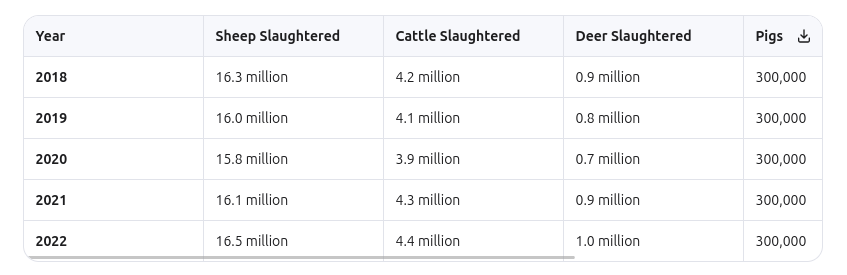
A poignant example of this contradiction is found in the New Zealand conservation model. In an effort to protect the ‘indigenous environment,’ millions of rats, pigs, goats, possums, and cats are targeted for eradication. Yet, these are the very species that humans themselves introduced to the islands. Having already devastated the original landscape through extensive forest clearing and the destruction of natural food sources, we now seek to ‘save’ what remains by waging a war against the creatures we brought with us. It is a form of ecological penance performed through the systematic killing of ‘invaders’ that we invited.
This selective logic extends to our management of lower trophic levels. We deploy chemical and biological warfare against ‘insect pests’ to protect our crops or our comfort, often ignoring the cascading effects.
By eliminating these insects, we inadvertently starve the insect-eating predators that depend on them, leading to a collapse of the very biodiversity we claim to value. We are caught in a cycle of violent intervention, where every attempt to ‘fix’ an ecosystem requires a new round of destruction to maintain a version of nature that is, ultimately, a human construct.
VIII. The Scale of What We’ve Done
Let us be specific about what human supremacy looks like in practice, because abstraction is part of the problem.
We kill animals by the billions every year — not for survival, not for necessity, but for profit, convenience, and palate preference (citation:1). Industrial animal agriculture subjects living, breathing, feeling beings to conditions that would constitute torture if applied to humans.
Animals are confined in spaces so small they cannot turn around. They are mutilated without anaesthesia. They are bred into bodies so distorted by genetic manipulation that they can barely stand, let alone live anything resembling a natural life.
And then there is the environmental cost — the part that loops back, with bitter irony, to damage us as well.
The Environmental Reckoning
Singer laid out the mathematics of ecological destruction with devastating clarity:
“As far as food is concerned, the great extravagance is not caviar or truffles, but beef, pork and poultry. Some 38 percent of the world’s grain crop is now fed to animals, as well as large quantities of soybeans. There are three times as many domestic animals on this planet as there are human beings.” (citation:9)
The numbers are staggering. Since 1960, 25 percent of the forests of Central America have been cleared for cattle grazing. Once cleared, the poor soils support grazing for only a few years before the graziers move on, and the forest does not return. The world’s cattle produce approximately 20 percent of the methane released into the atmosphere, and methane traps twenty-five times as much heat as carbon dioxide (citation:9).
We are, as Singer wrote, “quite literally, gambling with the future of our planet — for the sake of hamburgers” (citation:9).
Pope Francis, drawing on decades of papal teaching, framed the same crisis in moral terms: “Due to an ill-considered exploitation of nature, humanity runs the risk of destroying it and becoming in turn a victim of this degradation” (citation:2). He quoted Paul VI’s warning about the need for “a radical change in the conduct of humanity,” because “the most extraordinary scientific advances, the most amazing technical abilities, the most astonishing economic growth, unless they are accompanied by authentic social and moral progress, will definitively turn against man” (citation:2).
The exploitation of animals and the exploitation of the planet are not separate crises. They are the same crisis, born from the same foundational error: the belief that the world exists for us, and that our appetites take precedence over everything else.
Challenger connects these dots with particular force. The ecological crisis is not simply a technical problem to be solved with better technology or more efficient resource management. It is the ‘inevitable consequence’ of a species that refuses to see itself as part of nature. When we deny our animality, we deny our embeddedness in the living systems of the Earth. And when we deny that embeddedness, we can exploit those systems without guilt, because we no longer recognise them as the conditions of our own survival. We are not destroying nature “out there.” We are destroying the very systems that sustain us — and we are doing it because we have convinced ourselves, against all evidence, that we are separate from them.
IX. The Hubris at the Heart of It All
There is a word for the kind of thinking that has brought us to this precipice, and the word is ‘hubris’. Not merely arrogance — hubris in the classical Greek sense: an overweening pride that blinds us to our own limitations and, in its blindness, invites catastrophe.
We have built civilisations on the assumption that we are the masters of nature, only to discover — repeatedly, and with increasing urgency — that nature does not recognise our authority.
Climate change, biodiversity collapse, pandemic diseases emerging from our encroachment on wild ecosystems — these are not random misfortunes. They are consequences. They are the predictable outcomes of a species that believed itself exempt from the systems that govern all life on Earth.
Richard Powers captured this dynamic with painful clarity: humans have made the planet “our amusement park” without taking “proper care of our toys” (citation:3). The metaphor is apt, and it cuts deep. We have treated the Earth as something that exists for our entertainment and consumption, something infinitely resilient, something that will always be there to provide, no matter how much we take. We were wrong.
Challenger frames this hubris in explicitly psychological terms. The denial of animality is, at its core, a denial of limitation. If we are not animals, then we are not subject to the ecological constraints that govern animal life. We do not need clean air, clean water, stable climates, or functioning ecosystems — or rather, we need them only insofar as they serve our purposes, not as the existential preconditions of our existence. The hubris is not simply that we think we are better than other animals. It is that we think we are ‘not subject to the same rules’. We believe we can extract without limit, consume without consequence, and expand without boundary. And the Earth is now providing us with a very expensive education in the error of that belief.
X. The Moral Equality We Refuse to See
The alternative to human supremacy is not some radical, untested philosophy. It is simply this: ‘extending equal consideration to beings who can suffer’.
Singer and Tom Regan, among others, have argued for moral equality theories that extend consideration and moral status to animals by refuting the supposed moral relevance of traits unique to humans (citation:10). The argument is not that animals are identical to humans. It is that the capacity to suffer — to experience pain, fear, distress, and deprivation — is morally relevant regardless of the species of the being experiencing it. All the arguments to prove human superiority cannot change “this hard fact: in suffering the animals are our equals” (citation:9).
Challenger takes this argument further by grounding it not in abstract philosophy but in evolutionary biology and neuroscience. If our capacity for suffering is an evolved trait — if it emerged from the same biological processes that produce suffering in other mammals — then there is no principled basis for treating human suffering as morally significant while dismissing animal suffering as morally irrelevant.
The neurological substrates of pain, fear, and distress are remarkably consistent across mammalian species. Just because humans have yet to fully understand the capacity of non mamallian species to experience pain, fear, and distress does not at all mean they do not exist.
The capacity to suffer did not begin with us. It is ancient, shared, and deeply rooted in the biology of sentient life. To deny moral significance to animal suffering while affirming it for human suffering is not a reasoned ethical position. It is species prejudice — the arbitrary privileging of one’s own kind, dressed up in the language of philosophy and religion.
Challenger argues that accepting our animality — truly accepting it, not as an abstract fact but as a lived reality that shapes our ethics — would transform our relationship with the natural world. If we are animals among animals, embedded in the same ecosystems, subject to the same biological imperatives, dependent on the same planetary systems, then the exploitation of other species is not merely wrong in an abstract moral sense. It is ‘self-destructive’. It is a creature sawing off the branch it sits on, while congratulating itself on its superior grip.
XI. What This Means for Our Future
We stand at a crossroads. The systems we have built — industrial agriculture, extractive economies, consumption-driven growth — are not merely cruel to animals. They are unsustainable for ‘us’. The planet is not infinitely forgiving. The atmosphere does not care about our economic models. The oceans do not negotiate.
Challenger is unflinching in her assessment of what lies ahead if we continue on our current trajectory. The denial of animality that has enabled our exploitation of animals and ecosystems is now threatening the viability of human civilisation itself. We are not separate from the web of life. We are embedded in it — utterly, inescapably, whether we acknowledge it or not. And the web is unravelling.
The choices we make in the coming decades will determine not only the fate of billions of animals but the viability of human civilisation itself. This is not hyperbole. It is the considered assessment of scientists, theologians, ethicists, and economists across every tradition and discipline.
Singer warned us: “We are, quite literally, gambling with the future of our planet — for the sake of hamburgers” (citation:9).
Francis warned us: our “common home” is crying out because of “the harm we have inflicted on her by our irresponsible use and abuse of the goods with which God has endowed her” (citation:2).
Challenger warned us: the denial of our own animal nature is not a harmless psychological quirk — it is a civilisational pathology that is destroying the conditions of our own existence (citation:12).
The frameworks for sustainable, equitable food systems already exist — diets that “respect the welfare and rights of individuals, communities, cultures, animals, and the environment” (citation:4). What has been lacking is not knowledge, but will.
XII. A Reckoning Long Overdue
Singer offered a prediction that history has consistently vindicated:
“What one generation finds ridiculous, the next accepts; and the third shudders when it looks back on what the first did.” (citation:9)
Future generations will look back on factory farming, on the industrial-scale slaughter of sentient beings, on the willful destruction of ecosystems for short-term profit, and they will not understand how we allowed it to happen. They will not understand how we knew — ‘we knew’ — and did nothing. They will not understand the selective logic, the convenient blindness, the philosophical contortions we used to justify what cannot be justified.
Challenger’s work suggests that the transformation required is not merely behavioural but existential. It is not enough to change what we ‘do’ to animals. We must change what we ‘believe’ about ourselves. We must stop pretending that we are something other than what we are — animals, mammals, primates, evolved creatures embedded in a living world that does not exist for our benefit.
Only then can we begin to build a relationship with the natural world based not on domination and denial, but on honesty, humility, and genuine care.
We have told ourselves, for thousands of years, that we are ‘special’. That the world was made for us. That our intelligence, our reason, our capacity for moral reflection set us apart from every other living thing. And yet, in the one test that truly matters — whether we can extend moral consideration beyond ourselves, whether we can act with compassion toward beings who are different from us — we have failed, comprehensively and repeatedly, at a scale that defies comprehension.
The question is not whether we are superior to other animals. The question is whether we are capable of living up to the values we claim to hold. The question is whether we can stop telling ourselves that oldest lie — and start telling the truth.
The animals cannot write this argument. The planet cannot file a complaint. That is precisely why it falls to us — to the species that prides itself on reason, on reflection, on moral imagination — to finally, ‘finally’, act as though these things matter.
_______________________________________________
References
Melanie Challenger, ‘How to Be Animal: What It Means to Be Human’ (Penguin, 2021) — ‘melaniechallenger.com; (https://www.melaniechallenger.com)
Pope Francis, ‘Laudato Si’: On Care for Our Common Home’ (2015) — ‘vatican.va; (https://www.vatican.va/content/francesco/en/encyclicals/documents/papa-francesco_20150524_enciclica-laudato-si.html)
Peter Singer, ‘Animal Liberation’ (1975, updated 2018) — ‘Animal Liberation by Peter Singer; (https://www.goodreads.com/work/quotes/animal-liberation)
Melanie Joy, ‘Why We Love Dogs, Eat Pigs, and Wear Cows: An Introduction to Carnism’ (Conari Press, 2010) — ‘carnism.org; (https://carnism.org)
“Animals and Ethics,” ‘Internet Encyclopedia of Philosophy’ — ‘iep.utm.edu](https://iep.utm.edu/anim-eth/)
Richard Powers’ reflections on humanity and the planet — ‘richardpowers.net’ (https://www.richardpowers.net)
“Anthropocentrism,” ‘Wikipedia’ — ‘en.wikipedia.org/wiki/Anthropocentrism; (https://en.wikipedia.org/wiki/Anthropocentrism)
Sustainable diets and food equity — ‘sustainabletable.org; (https://www.sustainabletable.org)
Val Plumwood, ‘Environmental Culture: The Ecological Crisis of Reason’ (2002)
Tom Regan, ‘The Case for Animal Rights’ (1983)
Charles Foster, ‘Being a Beast: Adventures Across the Species Divide’ (Profile Books, 2016)
Jonathan Safran Foer, ‘Eating Animals’ (Little, Brown, 2009)
J.M. Coetzee, ‘The Lives of Animals’ (Princeton University Press, 1999)
Yuval Noah Harari, ‘Sapiens: A Brief History of Humankind’ (Harper, 2015) — on the Agricultural Revolution and human domination of other species