How Humans Convinced Themselves They Deserve the Earth — and What It’s Costing Us
I. The Oldest Lie We Tell Ourselves
There is a story so deeply embedded in human civilisation that most of us have never thought to question it. It goes something like this: ‘We are special. We are chosen. We are superior.’ Above the animals, above the ecosystems that sustain us, above the very planet that holds us in its gravitational embrace. This story is not new — it is as old as written philosophy, as old as most organised religion, as old as the first human who looked at a creature breathing beside them and decided, without evidence, that their own breath mattered more.
But a story repeated for millennia is not the same thing as a truth. And the consequences of this particular story — human supremacy — have been catastrophic not only for the billions of sentient beings we slaughter each year, but for the biosphere itself, and ultimately, for our own survival.
This is the story we need to dismantle. Not gently, but honestly- and quickly!
II. The Philosophical Foundations of Human Exceptionalism
To understand how deeply the belief in human superiority is woven into Western thought, we have to go back to the foundations. The philosophical tradition did not merely ‘allow’ for human dominance — it ‘demanded’ it.
Aristotle’s Chain of Being
Aristotle (384–322 B.C.E.) articulated one of the earliest and most influential expressions of what we now call the “natural hierarchy” of living beings. In his framework, plants, animals, and humans each occupy distinct rungs on a ladder of being, determined by their innate capacities (citation:10). Plants exist to serve animals. Animals exist to serve humans. The logic was tidy, elegant, and completely self-serving. It gave intellectual permission for exploitation by dressing it up as cosmic order.
Aquinas and the Instrumentalist View
St. Thomas Aquinas (1225–1274) extended Aristotle’s framework into Christian theology with devastating consequences for non-human life. Aquinas argued that only rational beings — beings capable of directing their own actions — deserved moral consideration “for their own sakes” (citation:10). Animals, lacking reason, were mere ‘instruments’. They existed for the sake of human beings who directed their actions. This wasn’t cruelty, in Aquinas’s view — it was the divine architecture of creation. God had placed animals beneath us, and to use them was simply to honour the design.
The implications were enormous. By defining moral worth as contingent on rationality — a capacity conveniently defined in human terms — the entire edifice of Western moral philosophy was built on a foundation that excluded most life on Earth from ethical consideration.
The Kantian Trap
Immanuel Kant further entrenched this view, arguing that animals, lacking rationality and autonomy, had no direct moral claims upon us (citation:10). Our duties regarding animals were, in Kant’s framework, indirect — we should not be cruel to them not because they mattered, but because cruelty to animals might corrupt our character and make us cruel to ‘other humans’. The animal’s suffering was morally irrelevant in itself. What mattered was only its effect on us.
This is the architecture of anthropocentrism — the belief that human beings are the central or most important entity on the planet, that we are separate from nature and superior to it, and that other beings and systems exist as resources for human use (citation:6). It is not merely a philosophical position. It has been, and remains, the false operating system of industrial civilisation.
III. Religion as Enabler: When God Gave Us Permission
If philosophy built the intellectual framework for human supremacy, religion sanctified it.
The ‘Dominion’ Doctrine
The Judeo-Christian tradition, which has profoundly shaped Western civilisation’s relationship with the natural world, contains within it a specific and widely invoked mandate. In Genesis, humanity is given “dominion” over the fish of the sea, the birds of the air, and every living thing that moves upon the earth. This single passage has been cited for centuries as divine authorisation for the exploitation of animals and ecosystems alike.
The word “dominion” has been interpreted by many theologians and scholars as a form of stewardship — a responsibility of care. But in practice, across millennia of civilisational development, dominion has overwhelmingly meant ‘domination’. The animals were placed here ‘for us’. The forests were given to us. The oceans were ours to empty. This was not abuse — it was entitlement, sanctioned by the highest authority imaginable.
The Encyclical that Changed Nothing
In 2015, Pope Francis issued ‘Laudato Si’’, an encyclical letter that represented a significant shift in tone from the Catholic Church. Francis wrote with urgency about the ecological crisis, acknowledging that “we have come to see ourselves as her lords and masters, entitled to plunder her at will” (citation:2). He recognised that “the violence present in our hearts, wounded by sin, is also reflected in the symptoms of sickness evident in the soil, in the water, in the air and in all forms of life” (citation:2).
Francis traced the trajectory of papal concern on this issue — from Paul VI’s warning about “ecological catastrophe” in 1971, to John Paul II’s call for “global ecological conversion,” to Benedict XVI’s recognition that “the book of nature is one and indivisible” (citation:2). Each successive pope acknowledged, with increasing urgency, that our relationship with the natural world was fundamentally broken.
And yet the encyclical, for all its beauty and moral force, did not fundamentally challenge the hierarchy. It did not question whether animals have inherent rights. It did not call for the abolition of industrial animal agriculture. It asked for ‘better stewardship’ — not a revolution in how we conceive of our relationship with other living beings.
This is the pattern that repeats across many religious traditions. Even in their most progressive moments, even in their most ecologically sensitive articulations, the major religions of the world have overwhelmingly maintained that humans occupy a special, elevated position in the moral universe. We may be flawed stewards, but we are stewards nonetheless — and the world remains, fundamentally, ours to manage.
IV. The Animist Alternative: Kinship Over Dominion
In stark contrast to the Western architecture of supremacy, many animist and indigenous cultures have long operated within frameworks of profound respect for the intrinsic rights and personhood of other species. For Māori of Aotearoa New Zealand, the principle of ‘kaitiakitanga’ (guardianship) is not a mandate for domination, but a reciprocal responsibility rooted in ‘whakapapa’—a genealogical connection that links humans, animals, and the land as part of a single, extended family. Similarly, the Lakota and other North American indigenous nations live by the philosophy of ‘Mitakuye Oyasin’ (‘All My Relations’), a prayerful acknowledgement that every animal, plant, and stone is a relative deserving of moral consideration.
In these worldviews, animals are not ‘instruments’ or ‘resources,’ but ‘nations’ or ‘peoples’ with their own sovereignty and spiritual significance. By recognizing the ‘mauri’ (life force) that flows through all beings, these cultures offer a model of existence where human survival is contingent upon the health and dignity of the non-human world, rather than its subjugation.
V. The Great Denial: How We Refuse to Be What We Are
The philosopher and writer Melanie Challenger, in her landmark work ‘How to Be Animal’ (2021), identifies something even more fundamental than philosophical error or religious enablement at the root of our ecological and moral crisis. She argues that human beings have a unique and deeply destructive capacity: the ability to ‘deny that we are animals at all’ (citation:12).
This is not a minor psychological quirk. It is, in Challenger’s analysis, the foundational act of civilisational self-deception — the cognitive sleight of hand from which all other forms of environmental and moral devastation flow.
The Animal We Cannot Face
Challenger traces how, throughout history, humans have constructed elaborate systems of thought — religious, philosophical, scientific, cultural — to separate ourselves from the animal kingdom. We are the creature that ‘imagines itself to not be a creature’. We build identities, societies, and entire civilisations on the premise that our consciousness, our culture, our capacity for abstract thought places us in a fundamentally different category from every other living thing. We are not merely different in degree — we are different in ‘kind’. Or so we tell ourselves.
But the biological reality is stubborn and indifferent to our stories. As Challenger emphasises, drawing on evolutionary biology and neuroscience, we are animals — mammals, primates, evolved organisms shaped by the same processes of natural selection that produced every other species on Earth. Our consciousness did not descend from some transcendent realm. It emerged from the same biological substrate — the same neurochemistry, the same sensory apparatus, the same drives for survival, reproduction, and social bonding — that governs the lives of the creatures we exploit.
The denial of this reality has consequences. When we refuse to acknowledge our animality, we simultaneously devalue the animality of every other species. If being an animal is something we are desperate to transcend, then animals themselves become symbols of everything we are trying to escape — base, instinctual, disposable. The hierarchy is not merely philosophical. It is ‘psychological’. We need animals to be beneath us because, if they are not, we are forced to confront our own creaturely nature — our vulnerability, our mortality, our dependence on the same fragile ecosystems we are destroying.
The Neuroscience of Denial
Challenger draws on contemporary neuroscience and psychology to explore how this denial operates at a cognitive level. Humans are remarkably skilled at compartmentalisation — at holding contradictory beliefs simultaneously without experiencing discomfort. We can mourn the death of a pet dog while eating a factory-farmed pig. We can express concern for endangered species while funding, through our consumption habits, the industrial systems that drive them to extinction.
This is not hypocrisy in the simple sense. It is something more profound and more troubling. It is a feature of the human cognitive architecture — the ability to draw moral boundaries around the familiar and the loved, while placing the unfamiliar and the inconvenient outside those boundaries entirely. The psychologist Melanie Joy has termed the ideology that sustains this “carnism” — a belief system in which eating certain animals is considered normal, natural, and necessary, simply because it is the dominant cultural norm (citation:11). Challenger extends this analysis, arguing that the denial of animality is not just a cultural phenomenon but a deeply embedded psychological defence mechanism against the existential terror of our own biological nature.
Mortality, Meaning, and the Animal Body
One of Challenger’s most penetrating insights concerns the relationship between our treatment of animals and our relationship with death. Humans are, as far as we know, the only animals capable of comprehending their own mortality — of understanding, in abstract terms, that they will die. This awareness, Challenger suggests, drives much of our desperate effort to separate ourselves from the animal world. Animals die. Animals are bodies. Animals are flesh and blood and decay. By positioning ourselves ‘above’ the animal kingdom, we position ourselves, symbolically at least, above death itself.
The consequences of this existential manoeuvre are staggering. If animals are merely bodies — merely biological machines — then their suffering is not morally significant. Their deaths are not morally meaningful. They become, in Challenger’s framing, the raw material of our denial, the collateral damage of our refusal to accept what we are. We do not exploit animals ‘despite’ knowing they are sentient, feeling beings. We exploit them ‘because’ acknowledging their sentience would force us to confront the uncomfortable truth of our own animal embodiment — and our own vulnerability.
This is the deepest root of the crisis. Not ignorance, not cruelty in the conventional sense, but a civilisational-scale act of psychological projection: we project onto animals everything we fear and reject about ourselves, and then we destroy what we have projected.
VI. The Selective Logic of Superiority
The selective logic of ‘superiority’ is underpinned by a human-constructed hierarchy of sophistication, a mental ladder that places humanity at the apex, followed by mammals, then reptiles, birds, fish, and finally, the vast world of insects and invertebrates.
This taxonomy is less about objective complexity and more about a radial map of biological empathy. The further a species diverges from the human template—in anatomy, sensory experience, and life cycle—the more ‘alien’ they become to our collective consciousness. We have conditioned ourselves to view biological difference as a measure of threat and a justification for devaluation.
Mammals, with their familiar faces and nursing behaviors, are granted a degree of kinship; however, as we descend this arbitrary ladder toward the cold-blooded or the exoskeletal, the creatures become increasingly perceived as unworthy of moral consideration. In this framework, strangeness is equated with lack of value, and the ‘alien’ nature of a species becomes the very evidence used to exclude them from the circle of protection.
The Architecture of Biological Distance
The claim that humans are superior to other animals rests on a set of assumptions that, when examined closely, reveal themselves to be remarkably selective and internally contradictory.
The claim that humans are superior to other animals rests on a set of assumptions that, when examined closely, reveal themselves to be remarkably selective and internally contradictory.
The Rationality Argument
The most common justification for human supremacy is our capacity for reason, abstract thought, language, and moral reasoning. We can plan, reflect, create symphonies, and write philosophical treatises. Animals cannot (or so the argument goes). Therefore, we matter more.
But this argument commits a fundamental logical error: it defines the criteria for moral worth by the very capacities that humans happen to possess. As philosopher Peter Singer has pointedly observed, “If possessing a higher degree of intelligence does not entitle one human to use another for his or her own ends, how can it entitle humans to exploit non-humans?” (citation:9).
If we accept that a human with severe cognitive disabilities retains full moral status — which we do, without hesitation — then rationality cannot be the basis on which we deny moral status to animals. We don’t strip moral consideration from human beings who lack the capacity for complex reasoning. Why do we strip it from non-human beings who lack it?
Challenger adds a further dimension to this critique. She argues that the very faculties we use to claim superiority — consciousness, self-awareness, the ability to reflect on our own existence — are not uniquely human traits that appeared from nowhere. They are ‘evolved capacities’, products of the same biological processes that produced echolocation in bats and migration patterns in monarch butterflies. We did not transcend nature by developing these capacities. We expressed nature in a particular way. The idea that our particular evolutionary adaptations make us fundamentally different from — and superior to — the evolutionary adaptations of other species is, as Challenger demonstrates, not a scientific conclusion but a psychological need dressed up as one.
Additionally, human researchers are finding that many (or perhaps all) non-human species have what was hitherto deemed to be unlikely and unexpected rational traits of rationality, consciousness and communication; eg honey bees. Humans have largely till now been determined not to find those commonalities.
The Suffering Double Standard
Here is where the selective logic becomes genuinely grotesque. We acknowledge, without controversy, that dogs feel pain, that elephants grieve, that primates experience fear and joy. We express outrage at “puppy mills” and demand accountability for those who harm companion animals (citation:10). And yet, when confronted with the conditions in factory farms — which are as bad as, and often far worse than, the conditions in puppy mills — the response is a collective shrug. “They’re just animals” (citation:10).
Peter Singer captured the hypocrisy with surgical precision:
“To protest about bullfighting in Spain, the eating of dogs in South Korea, or the slaughter of baby seals in Canada while continuing to eat eggs from hens who have spent their lives crammed into cages, or veal from calves who have been deprived of their mothers, is like denouncing apartheid in South Africa while asking your neighbours not to sell their houses to blacks.” (citation:9)
The boundary we draw between animals we love and animals we eat is not drawn by logic. It is drawn by culture, habit, and convenience. We have decided that some suffering matters and some doesn’t — and we have made that decision based entirely on what is easiest for us to continue doing.
Challenger’s analysis deepens this point. The distinction between “pet” and “livestock,” between the animal whose suffering moves us and the animal whose suffering we ignore, is not a reasoned ethical position. It is a cultural artefact of the denial of animality. When we pet a dog, we momentarily acknowledge a shared sentience. When we eat a pig, we deny it. The inconsistency is not a failure of logic — it is the ‘success’ of denial. The denial is working exactly as intended, shielding us from the cognitive dissonance that would otherwise make our food systems unbearable.
The Morality of the Marketplace
Singer is unsparing in his assessment of what our food choices actually require:
“People may hope that the meat they buy came from an animal who died without pain, but they do not really want to know about it. Yet those who, by their purchases, require animals to be killed do not deserve to be shielded from this or any other aspect of the production of the meat they buy.” (citation:9)
We have constructed elaborate systems of invisibility — supply chains, packaging, marketing — to ensure that the reality of what we do to animals never reaches our consciousness. The supermarket aisle is the final act in a production process designed to keep the horror out of sight and out of mind. This is not ignorance. It is ‘chosen’ ignorance, maintained at enormous cost to the beings whose suffering we have decided not to see.
Challenger would add that this chosen ignorance is itself a manifestation of the denial of animality. By rendering the animal invisible — by transforming a living, breathing, feeling creature into a shrink-wrapped product — we complete the erasure. The animal’s body is processed, sanitised, and renamed (we say “beef” and “pork,” not “cow flesh” and “pig flesh”). The entire system is designed to sever the connection between the food on our plate and the sentient being who suffered and died to produce it. We are not merely exploiting animals. We are ‘erasing’ them.
VII. The Paradox of the ‘Pest’: Engineering Survival and Selective Slaughter
The human relationship with the natural world is further complicated by the arbitrary definitions we impose upon other species. We have created a moral and ecological taxonomy that labels certain creatures as ‘worthy’ and others as ‘pests.’ This binary creates a profound paradox: we exert immense energy to encourage the survival of specific species in unnatural ways while simultaneously conducting the mass slaughter of others, often in the name of ‘environmental protection.’
A poignant example of this contradiction is found in the New Zealand conservation model. In an effort to protect the ‘indigenous environment,’ millions of rats, pigs, goats, possums, and cats are targeted for eradication. Yet, these are the very species that humans themselves introduced to the islands. Having already devastated the original landscape through extensive forest clearing and the destruction of natural food sources, we now seek to ‘save’ what remains by waging a war against the creatures we brought with us. It is a form of ecological penance performed through the systematic killing of ‘invaders’ that we invited.
This selective logic extends to our management of lower trophic levels. We deploy chemical and biological warfare against ‘insect pests’ to protect our crops or our comfort, often ignoring the cascading effects.
By eliminating these insects, we inadvertently starve the insect-eating predators that depend on them, leading to a collapse of the very biodiversity we claim to value. We are caught in a cycle of violent intervention, where every attempt to ‘fix’ an ecosystem requires a new round of destruction to maintain a version of nature that is, ultimately, a human construct.
VIII. The Scale of What We’ve Done
Let us be specific about what human supremacy looks like in practice, because abstraction is part of the problem.
We kill animals by the billions every year — not for survival, not for necessity, but for profit, convenience, and palate preference (citation:1). Industrial animal agriculture subjects living, breathing, feeling beings to conditions that would constitute torture if applied to humans.
Animals are confined in spaces so small they cannot turn around. They are mutilated without anaesthesia. They are bred into bodies so distorted by genetic manipulation that they can barely stand, let alone live anything resembling a natural life.
And then there is the environmental cost — the part that loops back, with bitter irony, to damage us as well.
The Environmental Reckoning
Singer laid out the mathematics of ecological destruction with devastating clarity:
“As far as food is concerned, the great extravagance is not caviar or truffles, but beef, pork and poultry. Some 38 percent of the world’s grain crop is now fed to animals, as well as large quantities of soybeans. There are three times as many domestic animals on this planet as there are human beings.” (citation:9)
The numbers are staggering. Since 1960, 25 percent of the forests of Central America have been cleared for cattle grazing. Once cleared, the poor soils support grazing for only a few years before the graziers move on, and the forest does not return. The world’s cattle produce approximately 20 percent of the methane released into the atmosphere, and methane traps twenty-five times as much heat as carbon dioxide (citation:9).
We are, as Singer wrote, “quite literally, gambling with the future of our planet — for the sake of hamburgers” (citation:9).
Pope Francis, drawing on decades of papal teaching, framed the same crisis in moral terms: “Due to an ill-considered exploitation of nature, humanity runs the risk of destroying it and becoming in turn a victim of this degradation” (citation:2). He quoted Paul VI’s warning about the need for “a radical change in the conduct of humanity,” because “the most extraordinary scientific advances, the most amazing technical abilities, the most astonishing economic growth, unless they are accompanied by authentic social and moral progress, will definitively turn against man” (citation:2).
The exploitation of animals and the exploitation of the planet are not separate crises. They are the same crisis, born from the same foundational error: the belief that the world exists for us, and that our appetites take precedence over everything else.
Challenger connects these dots with particular force. The ecological crisis is not simply a technical problem to be solved with better technology or more efficient resource management. It is the ‘inevitable consequence’ of a species that refuses to see itself as part of nature. When we deny our animality, we deny our embeddedness in the living systems of the Earth. And when we deny that embeddedness, we can exploit those systems without guilt, because we no longer recognise them as the conditions of our own survival. We are not destroying nature “out there.” We are destroying the very systems that sustain us — and we are doing it because we have convinced ourselves, against all evidence, that we are separate from them.
IX. The Hubris at the Heart of It All
There is a word for the kind of thinking that has brought us to this precipice, and the word is ‘hubris’. Not merely arrogance — hubris in the classical Greek sense: an overweening pride that blinds us to our own limitations and, in its blindness, invites catastrophe.
We have built civilisations on the assumption that we are the masters of nature, only to discover — repeatedly, and with increasing urgency — that nature does not recognise our authority.
Climate change, biodiversity collapse, pandemic diseases emerging from our encroachment on wild ecosystems — these are not random misfortunes. They are consequences. They are the predictable outcomes of a species that believed itself exempt from the systems that govern all life on Earth.
Richard Powers captured this dynamic with painful clarity: humans have made the planet “our amusement park” without taking “proper care of our toys” (citation:3). The metaphor is apt, and it cuts deep. We have treated the Earth as something that exists for our entertainment and consumption, something infinitely resilient, something that will always be there to provide, no matter how much we take. We were wrong.
Challenger frames this hubris in explicitly psychological terms. The denial of animality is, at its core, a denial of limitation. If we are not animals, then we are not subject to the ecological constraints that govern animal life. We do not need clean air, clean water, stable climates, or functioning ecosystems — or rather, we need them only insofar as they serve our purposes, not as the existential preconditions of our existence. The hubris is not simply that we think we are better than other animals. It is that we think we are ‘not subject to the same rules’. We believe we can extract without limit, consume without consequence, and expand without boundary. And the Earth is now providing us with a very expensive education in the error of that belief.
X. The Moral Equality We Refuse to See
The alternative to human supremacy is not some radical, untested philosophy. It is simply this: ‘extending equal consideration to beings who can suffer’.
Singer and Tom Regan, among others, have argued for moral equality theories that extend consideration and moral status to animals by refuting the supposed moral relevance of traits unique to humans (citation:10). The argument is not that animals are identical to humans. It is that the capacity to suffer — to experience pain, fear, distress, and deprivation — is morally relevant regardless of the species of the being experiencing it. All the arguments to prove human superiority cannot change “this hard fact: in suffering the animals are our equals” (citation:9).
Challenger takes this argument further by grounding it not in abstract philosophy but in evolutionary biology and neuroscience. If our capacity for suffering is an evolved trait — if it emerged from the same biological processes that produce suffering in other mammals — then there is no principled basis for treating human suffering as morally significant while dismissing animal suffering as morally irrelevant.
The neurological substrates of pain, fear, and distress are remarkably consistent across mammalian species. Just because humans have yet to fully understand the capacity of non mamallian species to experience pain, fear, and distress does not at all mean they do not exist.
The capacity to suffer did not begin with us. It is ancient, shared, and deeply rooted in the biology of sentient life. To deny moral significance to animal suffering while affirming it for human suffering is not a reasoned ethical position. It is species prejudice — the arbitrary privileging of one’s own kind, dressed up in the language of philosophy and religion.
Challenger argues that accepting our animality — truly accepting it, not as an abstract fact but as a lived reality that shapes our ethics — would transform our relationship with the natural world. If we are animals among animals, embedded in the same ecosystems, subject to the same biological imperatives, dependent on the same planetary systems, then the exploitation of other species is not merely wrong in an abstract moral sense. It is ‘self-destructive’. It is a creature sawing off the branch it sits on, while congratulating itself on its superior grip.
XI. What This Means for Our Future
We stand at a crossroads. The systems we have built — industrial agriculture, extractive economies, consumption-driven growth — are not merely cruel to animals. They are unsustainable for ‘us’. The planet is not infinitely forgiving. The atmosphere does not care about our economic models. The oceans do not negotiate.
Challenger is unflinching in her assessment of what lies ahead if we continue on our current trajectory. The denial of animality that has enabled our exploitation of animals and ecosystems is now threatening the viability of human civilisation itself. We are not separate from the web of life. We are embedded in it — utterly, inescapably, whether we acknowledge it or not. And the web is unravelling.
The choices we make in the coming decades will determine not only the fate of billions of animals but the viability of human civilisation itself. This is not hyperbole. It is the considered assessment of scientists, theologians, ethicists, and economists across every tradition and discipline.
Singer warned us: “We are, quite literally, gambling with the future of our planet — for the sake of hamburgers” (citation:9).
Francis warned us: our “common home” is crying out because of “the harm we have inflicted on her by our irresponsible use and abuse of the goods with which God has endowed her” (citation:2).
Challenger warned us: the denial of our own animal nature is not a harmless psychological quirk — it is a civilisational pathology that is destroying the conditions of our own existence (citation:12).
The frameworks for sustainable, equitable food systems already exist — diets that “respect the welfare and rights of individuals, communities, cultures, animals, and the environment” (citation:4). What has been lacking is not knowledge, but will.
XII. A Reckoning Long Overdue
Singer offered a prediction that history has consistently vindicated:
“What one generation finds ridiculous, the next accepts; and the third shudders when it looks back on what the first did.” (citation:9)
Future generations will look back on factory farming, on the industrial-scale slaughter of sentient beings, on the willful destruction of ecosystems for short-term profit, and they will not understand how we allowed it to happen. They will not understand how we knew — ‘we knew’ — and did nothing. They will not understand the selective logic, the convenient blindness, the philosophical contortions we used to justify what cannot be justified.
Challenger’s work suggests that the transformation required is not merely behavioural but existential. It is not enough to change what we ‘do’ to animals. We must change what we ‘believe’ about ourselves. We must stop pretending that we are something other than what we are — animals, mammals, primates, evolved creatures embedded in a living world that does not exist for our benefit.
Only then can we begin to build a relationship with the natural world based not on domination and denial, but on honesty, humility, and genuine care.
We have told ourselves, for thousands of years, that we are ‘special’. That the world was made for us. That our intelligence, our reason, our capacity for moral reflection set us apart from every other living thing. And yet, in the one test that truly matters — whether we can extend moral consideration beyond ourselves, whether we can act with compassion toward beings who are different from us — we have failed, comprehensively and repeatedly, at a scale that defies comprehension.
The question is not whether we are superior to other animals. The question is whether we are capable of living up to the values we claim to hold. The question is whether we can stop telling ourselves that oldest lie — and start telling the truth.
The animals cannot write this argument. The planet cannot file a complaint. That is precisely why it falls to us — to the species that prides itself on reason, on reflection, on moral imagination — to finally, ‘finally’, act as though these things matter.
_______________________________________________
References
Melanie Challenger, ‘How to Be Animal: What It Means to Be Human’ (Penguin, 2021) — ‘melaniechallenger.com; (https://www.melaniechallenger.com)
A balanced, source-led account of Cuba before and after the 1959 revolution, examining social gains in health and education, housing and poverty claims, U.S. sanctions, the Bay of Pigs, and the political costs of one-party rule.
From Spanish colonial rule to a republic with conditions, 1898–1952
The Cuban War of Independence,[5] fought from 1895 to 1898, was the last of three liberation wars that Cuba fought against Spain, following the Ten Years’ War (1868–1878)[6] and the Little War (1879–1880). Throughout the course of the war, Spain sent 220,285 soldiers to Cuba, the largest army to cross the Atlantic until World War II, according to the Library of Congress.[7]
When the Spanish–American War ended in 1898, Spain relinquished control of Cuba and the United States began a military occupation. The 1898 Teller Amendment had pledged that the United States would leave the government and control of the island to its people after Spanish rule was removed. Instead, Washington made its withdrawal conditional on Cuba’s acceptance of the Platt Amendment, which was incorporated into the bilateral treaty framework in 1903.[21][22]
The Platt Amendment restricted Cuba’s ability to enter treaties that might compromise its independence or permit other powers to use the island militarily. It also reserved a U.S. right to intervene in Cuban affairs to defend Cuban independence and to maintain a government deemed adequate for protecting life, property, and individual liberty. The amendment also led to the U.S. lease of territory for a naval station at Guantánamo Bay. The U.S. State Department’s historical account records that Washington pressed Cuban constitutional delegates to accept these terms and used a prospective sugar trade agreement as leverage. The arrangement remained in force until 1934.[22]
This postwar order shaped both sovereignty and economics. U.S. commercial influence in sugar, mining, utilities, oil, cattle, and banking was extensive. Havana’s tourism, casinos, nightlife, and modern infrastructure made Cuban prosperity visible, yet average income concealed unequal access to land, health services, stable work, schooling, and political power. Economic historians place Cuba among Latin America’s higher-income economies by average income before the revolution, while other historical work stresses the sharp rural–urban, racial, and class inequalities behind those averages.[1][2][3]
U.S. interventions before Castro
The list below distinguishes military occupation and formal intervention from diplomatic influence, recognition, and material support. They are connected but not identical forms of involvement.
Date
U.S. action
Historical significance
1898–1902
War and military occupation
U.S. forces occupied Cuba after the Spanish–American War while the new republic’s institutions and constitutional conditions were decided.[21][22]
1901–1934
Platt Amendment framework
The amendment reserved intervention rights, restricted treaty-making, and created the naval-station clause that led to the Guantánamo Bay lease.[21][22]
1906, 1912, 1917, 1920
Interventions in Cuban affairs
The National Archives identifies these interventions as being supplied by the Platt Amendment’s terms. The episodes ranged from occupation to deployments and political intervention, making the United States a recurrent arbiter of Cuban order.[21]
1933–1944
Diplomatic influence
During the political crisis that brought Batista to the centre of power, U.S. diplomats attempted to shape recognition and succession. This was not a repeat of formal occupation, but it was consequential political influence.[23]
1952–1958
Recognition and arms relationship
Washington recognised Batista’s post-coup government within two weeks and later faced criticism over arms sales, before the suspension of arms shipments in 1958.[23][24]
The United States did not pursue one unchanging policy. Its posture toward Cuban governments evolved with commercial interests, domestic politics, the Good Neighbor Policy, and Cold War priorities. However, the occupation, Platt framework, diplomatic intervention, recognition, and military relationship formed a long pre-1959 history of substantial U.S. influence.
2. Batista’s dictatorship and its impact on Cubans, 1952–1959
Fulgencio Batista seized power in a bloodless coup on 10 March 1952, under-mining Cuba’s short history of constitutional political process. He was later elected without opposition in 1954, but that formal outcome did not erase the rupture created by the coup. A U.S. State Department document from 1958 described Batista as strongly entrenched through his control of the Cuban military and observed that his interruption of democratic processes had not been forgiven by much of the public.[4]
Batista in Washington (1938)
For many Cubans, the dictatorship narrowed the legitimate avenues for political change. Censorship, police and military repression, corruption, and the concentration of political influence weakened civic life. The exact number of people killed by Batista’s security forces remains disputed because estimates vary and complete independent accounting is unavailable; a responsible history should not present a single contested total as settled fact. The broader pattern of coercion, arbitrary power, and increasingly widespread opposition is clear in the historical record.[4]
The social impact was also uneven. Cuba had economic growth, tourism, and a modern urban sector, but high unemployment persisted and rural areas were far less served. On the eve of the revolution, Havana contained almost half the country’s physicians and more than half its hospital beds; Cuba had only one rural hospital, and a public-health review reports severe rural infant mortality while warning that early records were imperfect.[3] These inequities sat alongside racial discrimination, insecure seasonal work, land concentration, and the gap between the capital’s visible wealth and the countryside’s deprivation.
During the 1930s, U.S. officials regarded Batista as a stabilising force and beneficial to American business interests; after the 1952 coup, the State Department recognised his government within two weeks despite its extra-legal origin.[23] In 1958, a State Department memorandum recorded criticism of U.S. arms sales to Batista and acknowledged that elections acceptable to the Cuban people were impossible under his rule, even as an official rejected the claim that U.S. policy favoured the regime.[24] This is why the relationship is best understood as one of recognition, material support, and political calculation that shifted late in the dictatorship, rather than as a simple claim that every U.S. official pursued the same objective.
3. Revolution and social transformation, 1953–1962
Fidel Castro’s 26 July Movement was the most consequential opposition movement to Batista, though it was not the only one. Castro’s unsuccessful attack on the Moncada Barracks in 1953, his 1955 amnesty and exile in Mexico, the 1956 Granma landing, the growth of guerrilla and urban networks during 1957–58, and the rebel victory at Santa Clara formed the main sequence of the insurrection. Batista left Cuba on 1 January 1959; Castro entered Havana on 8 January.
Survivors regroup in the Sierra Maestra as the insurgency begins to take durable form.
1957–1958
Guerrilla and urban resistance
The anti-Batista coalition broadens through rural support, underground networks, and widespread discontent.
1 January 1959
Batista leaves Cuba
The revolutionary government takes power after the collapse of Batista’s military position.
The revolutionary government moved quickly on agrarian, educational, health, housing, and racial-integration policies. A peer-reviewed public-health history reports that the 1959 agrarian reform distributed deeds to 150,000 landless farmers. It also reports that the 1961 literacy campaign mobilised nearly 200,000 volunteers and taught about 700,000 people to read and write.[3] UNESCO has described the campaign as the most consequential event in Cuban education and culture in the twentieth century and a regional reference point for mass literacy mobilisation.[5]
The state also desegregated many public spaces and widened access to public education, health care, and employment. These reforms improved formal equality and social mobility for many Afro-Cubans, while later research and public debate continued to document racial disparities in remittances, property, tourism-linked opportunity, and political voice.[11]
4. U.S. policy after the revolution: invasion, covert action, and embargo
Relations deteriorated rapidly after 1959 amid nationalisations, property disputes, Cold War alignment, and mutual hostility. In March 1960, President Eisenhower directed the CIA to develop a plan for an invasion of Cuba and the overthrow of Castro’s government. On 17 April 1961, CIA-trained Cuban exiles of Brigade 2506 landed at the Bay of Pigs. Cuban forces defeated the invasion within two days. The Office of the Historian describes this as a U.S.-backed invasion, not a domestic coup.[6]
After the invasion failed, Operation Mongoose combined political, psychological, military, sabotage, and intelligence operations intended to remove Castro’s government. Declassified records and the Church Committee documented multiple proposals and plots to assassinate Castro. Popular numerical totals and individual devices should not be treated as equally substantiated or necessarily operational.[6][8]
On 3 February 1962, President Kennedy proclaimed the trade embargo through Presidential Proclamation 3447. The Cuban Assets Control Regulations became a principal mechanism for financial restrictions and blocked property. The embargo later evolved through laws and regulations, including the Cuban Democracy Act of 1992 and the Helms–Burton Act of 1996. The U.S. State Department states that the comprehensive embargo remains in place.[9][12]
The 1962 Cuban Missile Crisis produced a U.S. non-invasion assurance and the withdrawal of Soviet missiles from Cuba. The associated U.S. decision to remove Jupiter missiles from Turkey was handled confidentially and completed in April 1963. Cuba was not a principal party to the decisive Washington–Moscow bargaining, a fact that strengthened Cuban perceptions of great-power control over the island’s security.[10]
Since 1992, the UN General Assembly has repeatedly adopted resolutions calling for an end to the U.S. embargo. These votes indicate broad international opposition to the embargo’s continuation, but they are General Assembly resolutions rather than binding judicial rulings.[13]
The Scale and Duration of U.S. Sanctions on Cuba
The U.S. embargo can be described as “one of the world’s longest-running national sanctions regimes” and a “documented, durable constraint” on Cuba’s access to trade, credit, investment, shipping, technology, and goods. It has been in continuous effect since Kennedy’s proclamation on 3 February 1962 — over six decades.
The sanctions did not simply remain static; they escalated in reach over time:
1960: The Eisenhower administration cut Cuba’s sugar quota — at a time when the U.S. was Cuba’s key trading partner and the sugar economy was the backbone of Cuban livelihoods.
1962: Full trade embargo proclaimed.
1963: Cuban Assets Control Regulations froze assets and restricted all financial transactions.
1992: The Torricelli Act extended restrictions to foreign subsidiaries of U.S. companies, meaning the sanctions reached beyond American borders.
1996: The Helms–Burton Act codified the embargo into law (removing presidential flexibility to lift it) and penalised foreign entities trafficking in confiscated property — an extraterritorial provision the EU formally objected to.
2017–2021: The Trump administration reversed Obama-era openings, tightened travel, remittances, and transactions, and designated Cuba a State Sponsor of Terrorism — a designation that further restricts financial dealings and deters third-country engagement.
The sanctions worked alongside direct military intervention (the Bay of Pigs invasion), covert operations (Operation Mongoose, multiple documented plots to assassinate Castro), and funded political opposition through USAID and the National Endowment for Democracy.
“The embargo is one important structural constraint on Cuba’s access to trade, credit, investment, shipping, technology, and some goods.”
The Cuban government estimates place the cumulative economic cost at US$130–150 billion.
“Cuba’s current hardship must be understood as an interaction of external restrictions, the loss of Soviet support, import dependence, state planning and investment decisions, natural disasters, demographic change, and limited avenues for public accountability and input.”
Why the Sanctions’ Context Matters
Cuba’s economy was “highly dependent on sugar and strongly connected to the United States” before the revolution. The embargo therefore severed Cuba’s primary economic relationship at the root. When the Soviet Union subsequently collapsed in the early 1990s, Cuba lost its alternative trading partner — losing an estimated 80% of its trade (described as an illustrative estimate). The document calls this a “profound crisis that reshaped Cuban life,” producing severe shortages, blackouts, food insecurity, and sharp economic contraction.
The combination of the U.S. embargo cutting off Cuba’s historic primary market and the loss of Soviet support left Cuba with extremely limited options for trade, credit, and investment. Low wages, limited consumer supply, energy and food shortages, and deteriorating purchasing power all characterise current Cuban life.
What US Sanctions on Cuba Actually Impact
US sanctions on Cuba are among the longest-running and most comprehensive economic embargoes in modern history, in place in various forms since the early 1960s. Here’s what they concretely affect:
Trade
Near-total trade embargo: US companies generally cannot export goods to Cuba or import Cuban products. This is codified primarily through the Cuban Assets Control Regulations (CACR) and the Torricelli Act (1992) and Helms-Burton Act (1996).
Cuba’s most iconic export — sugar and tobacco (cigars) — cannot be legally sold in the US market.
Agricultural exports have a narrow exception: since 2000, US companies can sell food and agricultural products to Cuba, but only on a cash-in-advance basis (no credit or financing).
Financial System
Cuban assets in the US are frozen. Cuban government entities cannot access US financial institutions normally.
Dollar transactions are restricted. International banks that process dollar-denominated transactions involving Cuba risk penalties from the US Treasury’s Office of Foreign Assets Control (OFAC). This has a chilling effect far beyond US borders — many foreign banks simply refuse to handle Cuba-related transactions to avoid US legal exposure.
Cuba is effectively cut off from most international credit markets, the World Bank, and the IMF.
Travel
US citizens face restrictions on travel to Cuba. Tourism is technically prohibited. Travel must fall under one of 12 authorized categories (family visits, journalism, humanitarian work, educational activities, etc.).
In practice, enforcement has fluctuated by administration — Obama loosened restrictions, Trump tightened them, Biden made modest adjustments.
The Helms-Burton Act
This is arguably the most consequential and controversial dimension:
Title III allows US citizens (including Cuban-Americans) to sue any entity — foreign or domestic — that “traffics” in property confiscated by the Cuban government after 1959.
This means European, Canadian, Latin American, and other foreign companies can face lawsuits in US courts for doing business in Cuba involving formerly US-owned or Cuban-national-owned property.
This has a deterrent effect on foreign investment, as companies weigh the risk of losing access to the US market or facing litigation.
Impact on Specific Sectors
Sector
How sanctions hit
Energy
Cuba struggles to access modern drilling technology, refining equipment, and fuel imports. The country relies heavily on Venezuela (itself sanctioned).
Healthcare
While Cuba produces its own pharmaceuticals, access to advanced medical equipment, certain drugs, and US-manufactured devices is limited.
Technology
US-origin software, hardware, and telecommunications infrastructure are restricted. Cuba has among the lowest internet penetration rates in the hemisphere.
Remittances
Caps and restrictions on how much Cuban-Americans can send to family have fluctuated. Trump imposed a $1,000/quarter limit; Biden relaxed some of these. Remittances are a lifeline for many Cuban families.
Shipping
Ships that dock in Cuban ports are barred from entering US ports for 180 days, which effectively discourages international shipping companies from serving Cuba.
What Sanctions Don’t Fully Control
Cuba trades with other countries — Spain, China, Canada, Russia, Mexico, and others are active trading partners. The embargo doesn’t prevent third-country trade, but the financial and legal risks make it more expensive and complicated.
Cuba’s internal economic policies (centralized planning, dual currency system until recently, restrictions on private enterprise) also contribute significantly to economic hardship. Sanctions are not the sole cause of Cuba’s economic difficulties, but they amplify existing problems.
The Humanitarian Debate
Critics argue sanctions disproportionately harm ordinary Cubans — limiting access to food, medicine, and basic goods. Supporters argue the sanctions target the Cuban government’s revenue streams and that the Cuban government’s own policies are the primary cause of deprivation, but this appears highly unlikely.
The UN General Assembly votes nearly unanimously every year (typically 180+ to 2, with the US and Israel opposed) to condemn the embargo.
In short: US sanctions on Cuba restrict trade, financial access, shipping, technology transfer, and foreign investment — and their extraterritorial provisions extend the impact well beyond the US-Cuba bilateral relationship, discouraging third-country engagement with Cuba altogether.
International Recognition of the Sanctions’ Severity
Since 1992, the UN General Assembly has repeatedly voted overwhelmingly to call for an end to the embargo, with typically only the United States and Israel opposed. It describes “broad international opposition to the embargo’s continuation” and “extensive” international criticism, especially of its extraterritorial effects.
Cuba’s Social achievements, material constraints, and political rights
The revolution made universal social provision central to state legitimacy. Oxfam’s account of Cuban social policy describes a model built around free health care and education, pensions, food subsidies, utility support, and assistance for vulnerable households.[14] Contemporary PAHO indicators report 99.9% literacy in 2021, life expectancy at birth of 78.3 years in 2024, skilled attendance at 99.9% of births in 2021, and 100% measles vaccination coverage in 2022.[15]
Cuba’s preventive, community-based health system and medical internationalism are significant parts of that record. The Henry Reeve Emergency Medical Contingent, founded in 2005, had supplied free medical services in nearly 30 post-disaster and epidemic situations by 2020, including the Haiti earthquake, the West African Ebola epidemic, and the COVID-19 response.[16] Cuba also developed domestic COVID-19 vaccine candidates and deployed Abdala and the Soberana series, demonstrating the country’s biotechnology capacity.[17]
Mesa-Lago reports that post-revolution housing policy gave many renters greater security and ownership, and estimates that 85% of Cubans owned their homes by 2019. The same analysis estimates a housing deficit near 900,000 units at the end of 2018 and documents disrepair, shortages, low construction, and hurricane vulnerability.[18] The revolution did not completely eliminate poverty. Oxford’s 2025 MPI briefing, using Cuba’s 2019 MICS survey, estimates 0.7% acute multidimensional poverty while stating that comparable monetary and national poverty measures were unavailable.[19]
Cuba is a one-party state in which political pluralism, independent media, and open dissent are restricted.
Human Rights Watch’s 2025 report documents arbitrary detention and harassment of critics, activists, and protesters, as well as restrictions on media and information. The July 2021 protests and the prosecutions that followed are a recent example.[20]
Mechanisms for Public and Community Input in Cuban Governance
Cuba has several formal and informal channels through which citizens can participate in or influence policy and government decisions. Here’s an overview:
1. Municipal Assemblies of People’s Power
These are the local-level elected bodies, where delegates are directly elected by citizens in their neighborhoods.
Delegates are non-professional politicians (they keep their regular jobs) and hold accountability sessions (rendición de cuentas) where constituents can question them, raise concerns, and demand action.
This is arguably the most direct and regular form of citizen input in the Cuban system.
2. National Assembly of People’s Power
Cuba’s national legislature, whose deputies are nominated through a multi-tier process involving municipal assemblies and candidacy commissions.
While it meets only a few times per year, it is the body that formally debates and approves laws.
3. The 2018–2019 Constitutional Consultation Process
The draft of Cuba’s 2019 Constitution was subjected to a nationwide popular consultation in which millions of citizens participated in workplace, neighborhood, and community meetings.
Over 130,000 meetings were held, and the government reported that citizens proposed roughly 780,000 modifications. The final draft incorporated many of these changes.
This was a notable large-scale participatory exercise, though critics debated how much influence the process truly had on core political provisions.
4. Commissions of the National Assembly
The National Assembly has standing commissions (on health, education, economics, etc.) that sometimes solicit expert and public input when drafting legislation.
Mass Organizations and Civil Society Channels of participation
5. Committees for the Defense of the Revolution (CDRs)
Block-level neighborhood organizations present in virtually every community.
They organize local activities, relay information from the state, and serve as a channel for grassroots concerns upward. They also play roles in mobilizing participation for consultations and elections.
6. Federation of Cuban Women (FMC)
A mass organization that channels women’s concerns into policy discussions, particularly on gender, family, and social welfare issues.
7. Central de Trabajadores de Cuba (CTC)
The national workers’ union, which is supposed to represent workers’ interests in economic and labor policy. It plays a role in workplace-level discussions, particularly around economic reforms.
8. Student Organizations (FEU, FEEM)
University and secondary student federations that participate in education policy discussions and broader national debates.
Direct Consultation and Participatory Processes
9. Popular Consultations on Specific Legislation
Beyond the constitution, the government has occasionally submitted draft laws to popular consultation. For example, labor code revisions and family code discussions involved community-level input.
The 2022 Family Code is a prominent recent example: it was debated in thousands of community meetings before being approved by referendum, with significant public input shaping provisions on marriage equality, adoption, and family rights.
10. Referendums
Cuba has used national referendums on key issues. The 2022 Family Code was approved through a direct popular vote after extensive public debate — a relatively rare mechanism in the Cuban system.
Workplace and Sectoral Input
11. Workplace Assemblies
Economic reforms (such as the expansion of self-employment or the restructuring of state enterprises) have often been discussed in workplace assemblies where employees can voice opinions and concerns.
12. Scientific and Professional Advisory Bodies
Academic institutions, think tanks (like CEDEM or CIEM), and professional associations sometimes provide input on specialized policy areas.
Informal and Emerging Channels
13. Social Media and Digital Platforms
Despite limited internet access (which has expanded significantly since the late 2010s), Cubans increasingly use social media to discuss policy, criticize specific government decisions, and organize around issues. This is not a formal mechanism, but it has become a real pressure point.
14. Independent Civil Society and Dissident Groups
Organizations outside the official mass organizations exist but operate under significant constraints. Groups like the San Isidro Movement or independent journalists have raised issues around artistic freedom, political prisoners, and civil liberties, though the government generally does not recognize these as legitimate input channels.
15. Letter-Writing and Direct Appeals
Citizens can write letters to state institutions, the newspaper Granma, or directly to government offices. While the effectiveness varies, this is a long-standing practice.
Key Tensions and Limitations
Strength
Limitation
Municipal accountability sessions are genuinely local and direct
Delegates have limited power to change national policy
Constitutional and legislative consultations reach millions
The scope of what’s “open for debate” is set by the state
The 2022 Family Code referendum showed real responsiveness to public opinion
The Communist Party’s leading role means political pluralism is constitutionally excluded
Mass organizations provide broad institutional coverage
They are state-aligned and not independent advocacy bodies
Cuba’s system of participation works through state-organized, institutional pathways rather than through competitive elections or independent civil society. The most substantive mechanisms are:
Municipal accountability sessions (regular, local, direct)
Popular consultations on major legislation (periodic, large-scale)
Referendums (rare but meaningful when used)
Mass organizations (broad but state-aligned)
Cuba’s system emphasises participatory rather than pluralistic democracy — citizens are expected to engage within the framework of the socialist state and the Communist Party’s leading role. The degree to which input genuinely shapes outcomes varies considerably by issue and by period.
Mechanisms for Public and Community Input in Cuban Governance
Cuba has several formal and informal channels through which citizens can participate in or influence policy and government decisions. Here’s an overview:
Formal Constitutional and Institutional Mechanisms
1. Municipal Assemblies of People’s Power
These are the local-level elected bodies, where delegates are directly elected by citizens in their neighborhoods.
Delegates are non-professional politicians (they keep their regular jobs) and hold accountability sessions (rendición de cuentas) where constituents can question them, raise concerns, and demand action.
This is arguably the most direct and regular form of citizen input in the Cuban system.
2. National Assembly of People’s Power
Cuba’s national legislature, whose deputies are nominated through a multi-tier process involving municipal assemblies and candidacy commissions.
While it meets only a few times per year, it is the body that formally debates and approves laws.
3. The 2018–2019 Constitutional Consultation Process
The draft of Cuba’s 2019 Constitution was subjected to a nationwide popular consultation in which millions of citizens participated in workplace, neighborhood, and community meetings.
Over 130,000 meetings were held, and the government reported that citizens proposed roughly 780,000 modifications. The final draft incorporated many of these changes.
This was a notable large-scale participatory exercise, though critics debated how much influence the process truly had on core political provisions.
4. Commissions of the National Assembly
The National Assembly has standing commissions (on health, education, economics, etc.) that sometimes solicit expert and public input when drafting legislation.
Mass Organizations and Civil Society Channels
5. Committees for the Defense of the Revolution (CDRs)
Block-level neighborhood organizations present in virtually every community.
They organize local activities, relay information from the state, and serve as a channel for grassroots concerns upward. They also play roles in mobilizing participation for consultations and elections.
6. Federation of Cuban Women (FMC)
A mass organization that channels women’s concerns into policy discussions, particularly on gender, family, and social welfare issues.
7. Central de Trabajadores de Cuba (CTC)
The national workers’ union, which is supposed to represent workers’ interests in economic and labor policy. It plays a role in workplace-level discussions, particularly around economic reforms.
8. Student Organizations (FEU, FEEM)
University and secondary student federations that participate in education policy discussions and broader national debates.
Direct Consultation and Participatory Processes
9. Popular Consultations on Specific Legislation
Beyond the constitution, the government has occasionally submitted draft laws to popular consultation. For example, labor code revisions and family code discussions involved community-level input.
The 2022 Family Code is a prominent recent example: it was debated in thousands of community meetings before being approved by referendum, with significant public input shaping provisions on marriage equality, adoption, and family rights.
10. Referendums
Cuba has used national referendums on key issues. The 2022 Family Code was approved through a direct popular vote after extensive public debate — a relatively rare mechanism in the Cuban system.
Workplace and Sectoral Input
11. Workplace Assemblies
Economic reforms (such as the expansion of self-employment or the restructuring of state enterprises) have often been discussed in workplace assemblies where employees can voice opinions and concerns.
12. Scientific and Professional Advisory Bodies
Academic institutions, think tanks (like CEDEM or CIEM), and professional associations sometimes provide input on specialized policy areas.
Informal and Emerging Channels
13. Social Media and Digital Platforms
Despite limited internet access (which has expanded significantly since the late 2010s), Cubans increasingly use social media to discuss policy, criticize specific government decisions, and organize around issues. This is not a formal mechanism, but it has become a real pressure point.
14. Independent Civil Society and Dissident Groups
Organizations outside the official mass organizations exist but operate under significant constraints. Groups like the San Isidro Movement or independent journalists have raised issues around artistic freedom, political prisoners, and civil liberties, though the government generally does not recognize these as legitimate input channels.
15. Letter-Writing and Direct Appeals
Citizens can write letters to state institutions, the newspaper Granma, or directly to government offices. While the effectiveness varies, this is a long-standing practice.
Key Tensions and Limitations
Strength
Limitation
Municipal accountability sessions are genuinely local and direct
Delegates have limited power to change national policy
Constitutional and legislative consultations reach millions
The scope of what’s “open for debate” is set by the state
The 2022 Family Code referendum showed real responsiveness to public opinion
The Communist Party’s leading role means political pluralism is constitutionally excluded
Mass organizations provide broad institutional coverage
They are state-aligned and not independent advocacy bodies
Summary
Cuba’s system is designed to channel participation through state-organized, institutional pathways rather than through competitive elections or independent civil society. The most substantive mechanisms are:
Municipal accountability sessions (regular, local, direct)
Popular consultations on major legislation (periodic, large-scale)
Referendums (rare but meaningful when used)
Mass organizations (broad but state-aligned)
The system emphasizes participatory rather than pluralistic democracy — citizens are expected to engage within the framework of the socialist state and the Communist Party’s leading role. The degree to which input genuinely shapes outcomes varies considerably by issue and by period.
Cuban Particpatory Processes and the Role of the Communist Party
The 2019 Constitution
Cuba’s current constitution, approved by referendum in February 2019 with 86.85% approval, defines the state as a “socialist state of law” (Estado socialista de derecho). Key democratic features include:
Article 1: Declares Cuba a “democratic, independent, and sovereign socialist state”
Article 3: Establishes sovereignty as residing in the people, from whom all state power derives
Article 4: Grants citizens the right to participate in the direction of society through the organs of People’s Power and other forms of democratic participation
Article 5: Designates the Communist Party as “the superior leading force of society and of the state”
This last point is the defining structural feature: the PCC has a constitutionally guaranteed leading role, which distinguishes Cuba’s system from multi-party liberal democracies while the state simultaneously claims democratic legitimacy through participatory mechanisms.
The Principle of “Participatory Democracy” vs. “Representative Democracy”
Cuba’s official political theory draws a sharp distinction between what it calls participatory democracy and representative or electoral democracy (which it characterizes as bourgeois and dominated by capital). The Cuban model emphasizes:
Collective deliberation over competitive elections
Consensus over adversarial debate
Social and economic rights (healthcare, education, housing) as the substance of democracy
Mass mobilization and consultation as democratic practice
II. The Electoral System and People’s Power
Municipal Level (Direct Elections)
Delegates to Municipal Assemblies are directly elected by citizens in secret ballot from nominated candidates in each district.
Candidates are nominated at neighborhood nomination assemblies (asambleas de nominación) — any citizen can be proposed, and the process is genuinely bottom-up at this level.
There are no political campaigns in the traditional sense. Biographies and photos are posted publicly, but there is no advertising, party endorsements, or campaign financing.
Delegates serve 2.5-year terms and are non-professional — they continue their regular employment.
Accountability sessions (rendición de cuentas) are held at least twice a year, where delegates report to constituents and face questions, complaints, and criticism. In theory, delegates can be recalled by their constituents.
Provincial and National Levels (Indirect Elections)
Provincial Assembly delegates and National Assembly deputies are selected through a multi-step process involving candidacy commissions.
At the national level, a National Candidacy Commission (headed by representatives of mass organizations) compiles a single slate of candidates based on criteria including merit, representation, and diversity.
The National Assembly meets only twice a year for brief sessions, though its commissions work more continuously.
Deputies vote on legislation, typically with near-unanimity, though the 2019 constitutional debate and the 2022 Family Code vote showed some dissent.
The 2019 Electoral Reform
The 2019 constitution restructured the system:
Eliminated the provincial assemblies (replaced by provincial governors and provincial councils)
Created the position of President of the Republic (previously the head of state was the President of the National Assembly/Council of State)
Established term limits (two consecutive five-year terms for the presidency)
Separated the roles of head of state and head of government (President vs. Prime Minister)
III. The Cuban Communist Party (PCC): Structure and Internal Input Mechanisms
Constitutional and Legal Status
The PCC is defined as the “Martian, Fidelista, and Marxist-Leninist vanguard of the Cuban nation” (Article 5, 2019 Constitution)
It is the sole legal political party
Its role is to be the “superior leading force of society and of the state,” guiding and supervising the organs of People’s Power
Organizational Structure
The PCC is organized hierarchically:
Level
Body
Function
Base
Basic Organizations (Organizaciones de Base)
Workplace, neighborhood, or community-level party cells
Municipal
Municipal Committees
Coordinate party work at the municipal level
Provincial
Provincial Committees
Oversee provincial party activities
National
Central Committee
~150 members; the main governing body between congresses
Top
Political Bureau (Buró Político)
~15-20 members; the top decision-making body
Supreme
Party Congress
Meets roughly every 5 years; sets major policy direction
Leadership
First Secretary
Currently Miguel Díaz-Canel (since 2021, succeeding Raúl Castro)
Internal Input Mechanisms
1. Party Congresses
The Party Congress is the PCC’s highest authority. Delegates are elected from basic organizations upward.
Congresses set the Programmatic Guidelines (Lineamientos) that guide national policy.
The VIII Congress (2021) addressed economic reform, generational leadership transition, and the impact of COVID-19 and tightened U.S. sanctions.
Before each congress, draft documents are circulated to party members and, in some cases, to the broader public for discussion. This is a significant internal input mechanism.
2. The Lineamientos Process (2011–2012)
Before the VI Congress in 2011, the draft Guidelines for Economic and Social Policy were discussed in 163,000 meetings involving nearly 9 million participants (party members and non-members alike).
The original 291 guidelines were modified, consolidated, and expanded based on public input, resulting in 311 final guidelines.
This was one of the most extensive consultation exercises in Cuban history and is frequently cited as evidence of the system’s participatory nature.
3. Central Committee Plenums
The Central Committee meets in plenary sessions between congresses to discuss and approve major policy decisions.
Members can raise issues and provide input, though the process is not public.
4. Basic Organization Meetings
At the grassroots level, party members meet regularly (typically monthly) to discuss policy implementation, local problems, ideological questions, and criticisms.
Members are expected to engage in criticism and self-criticism (crítica y autocrítica) — a practice rooted in Leninist organizational tradition.
These meetings are supposed to be a channel for concerns to flow upward through the party hierarchy.
5. Study Commissions and Working Groups
The PCC and the government establish commissions on specific policy areas (economic reform, constitutional reform, etc.) that include party members, academics, and sometimes non-party experts.
The Commission for Implementation and Development of the 2019 Constitution was an important example.
6. Ideological Schools and Training
The PCC operates schools (like the Ñico López National School) that train cadres and develop policy thinking.
These institutions serve as incubators for policy ideas and ideological consensus-building.
IV. Mass Organizations as Channels Between Society and the Party-State
The PCC works through and alongside mass organizations that serve as transmission belts between the population and the party:
Organization
Membership Base
Policy Input Role
CDRs (Committees for the Defense of the Revolution)
~8 million members
Neighborhood-level mobilization, local concerns, security
These organizations are constitutionally recognized and participate in the candidacy process, policy consultations, and legislative debates. They are not independent of the party-state, but they do provide structured channels for sectoral input.
V. Notable Cases of Public Input Shaping Policy
The 2019 Constitutional Process
Draft debated in 130,000+ meetings with ~780,000 proposed modifications
Significant changes were made, including on issues of property, local government, and judicial reform
The most contentious issue — same-sex marriage — was deferred rather than resolved in the consultation, leading to the separate 2022 Family Code process
The 2022 Family Code
Draft debated in ~79,000 community meetings with 434,000+ participants
Over 250,000 opinions were collected
The final version, which legalized same-sex marriage and adoption, was approved by 66.9% in a national referendum
This is widely seen as a case where public debate genuinely shaped the outcome, as the final text was significantly different from the initial draft
Economic Reforms (2010s–2020s)
Expansion of self-employment (cuentapropismo), the creation of MSMEs (small and medium enterprises), and monetary unification were all preceded by workplace and community discussions
The Tarea Ordenamiento (monetary ordering task) of 2021, however, was implemented with less public consultation and generated significant public criticism
What the System Provides
Regular, structured opportunities for citizens to voice opinions on policy
Genuine grassroots participation at the municipal level
Some documented cases where public input led to measurable changes in legislation
A framework that emphasizes social and economic rights as democratic substance
What the System Limits
No multi-party competition: The PCC’s constitutional leading role means political pluralism is structurally excluded
No independent media: Press is state-controlled, limiting the public sphere for debate
Constraints on dissent: While the constitution guarantees rights of expression and assembly, these are limited by the requirement that they conform to “the purposes of socialist society”
Top-down agenda setting: The scope of what is open for public input is determined by the party and state; fundamental questions about the political system itself are not subject to popular consultation
Selective responsiveness: The government has shown willingness to listen on some issues (family law, economic details) but not on others (political liberalization, press freedom, release of political prisoners)
The gap between consultation and power: Critics argue that while consultation is extensive, ultimate decision-making power remains concentrated in the Political Bureau and the First Secretary
VII. Summary
Cuba’s system combines:
A Leninist party structure with internal mechanisms for policy discussion (congresses, plenums, basic organizations, criticism/self-criticism)
A People’s Power electoral system with genuine local-level participation and accountability
Mass consultation exercises on major legislation and constitutional reform that reach millions
Mass organizations that provide sectoral channels for input
A constitutionally guaranteed leading role for the PCC that constrains the boundaries of acceptable debate
The system is participatory but not pluralistic — it offers meaningful input within defined boundaries but does not permit challenges to the structure of the one-party rule. The degree to which input shapes outcomes varies significantly by issue, by period, and by the political will of leadership at any given moment.
Participatory vs. Pluralistic Democracy: A Comparative Critique
I. Conceptual Foundations
Participatory democracy emphasizes direct citizen engagement in decision-making — through deliberation, consultation, and collective action — as the primary source of democratic legitimacy (Pateman, 1970). Pluralistic democracy (or competitive polyarchy) emphasizes institutional mechanisms — free elections, party competition, civil liberties, and separation of powers — as the means through which citizens exercise control over government (Dahl, 1971; Schumpeter, 1942).
II. Advantages of Participatory Democracy
1. Deeper civic engagement and legitimacy
Participatory models can produce higher levels of citizen investment in outcomes. When people directly shape decisions, compliance and social solidarity tend to increase. Pateman (1970) argued that participation has an educative function — it develops citizens’ capacities and strengthens democratic culture at every level of society.
“The major function of participation in the theory of participatory democracy is therefore an educative one.” — Pateman (1970, p. 42)
2. Better policy outcomes through local knowledge
Fung and Wright (2003) propose “empowered participatory governance,” arguing that involving citizens directly in problem-solving — particularly at the local level — produces more effective and responsive policy than top-down representative systems, because participants bring contextual knowledge that bureaucrats and legislators lack.
3. Addresses substantive equality
Participatory democracy foregrounds social and economic rights, not just procedural ones. Santos (2005) and others in the “radical democracy” tradition argue that formal electoral equality is meaningless without substantive equality — and that participatory mechanisms can redistribute power more effectively than elections dominated by wealth.
4. Counters elite capture
Mansbridge (1999) and Young (2000) argue that pluralistic systems tend to reproduce elite dominance through campaign finance, media control, and institutional gatekeeping. Participatory mechanisms, when well-designed, can bypass these filters and amplify marginalized voices.
III. Limitations of Participatory Democracy
1. Scalability and efficiency
Direct participation is time-consuming and difficult to scale. Dahl (1989) noted that as political units grow larger, direct participation becomes impractical, necessitating representative institutions. Barber (1984), a strong advocate of participatory democracy, acknowledged the tension between participatory ideals and the demands of modern governance.
2. Risk of manipulation and co-optation
When participatory processes are organized by the state rather than independently, they can become instruments of legitimation rather than genuine empowerment. Avritzer (2009) distinguishes between invited spaces (created by the state) and invented spaces (created by citizens), warning that the former are vulnerable to manipulation. This critique applies directly to cases like Cuba’s popular consultations, where the state sets the agenda and controls the process (Azicri, 2000; Roman, 2003).
3. Tyranny of structurelessness
Jo Freeman’s (1972) classic critique warns that participatory groups without formal structures tend to be dominated by informal elites — those with more time, confidence, social connections, or rhetorical skill. Absence of institutional rules does not guarantee equality.
4. Potential for conformity and suppression of dissent
Mansbridge (1980) distinguished between unitary democracy (based on shared interests and consensus) and adversary democracy (based on competing interests and voting). She warned that unitary models can suppress legitimate disagreement and marginalize dissenters who are pressured to conform. In contexts where a single party claims to represent the collective will, this risk is acute (Dahl, 1989).
IV. Advantages of Pluralistic Democracy
1. Institutional protection of minority rights
Dahl (1971) argued that polyarchy — with its guarantees of free speech, free association, competitive elections, and rule of law — is the best available system for protecting individual and minority rights against majority tyranny. Lijphart (1999) extended this with his model of consociational democracy, showing how pluralist institutions can manage deep social divisions.
2. Peaceful transfer of power
Huntington (1991) identified the “two-turnover test” — where power changes hands peacefully through elections at least twice — as the benchmark of democratic consolidation. Pluralistic systems provide built-in mechanisms for replacing leaders without violence, a feature absent in one-party participatory systems.
3. Accountability through competition
Schumpeter (1942) and Przeworski (1991) argued that electoral competition, while imperfect, creates incentives for leaders to be responsive to citizens. The threat of being voted out disciplines incumbents in ways that consultation alone cannot.
4. Vibrant public sphere
Habermas (1989) theorized that a free press, independent civil society, and open debate are essential to democratic legitimacy. Pluralistic systems, by protecting these institutions, enable what he called the “public sphere” — a space where citizens can form and express opinions independently of the state.
V. Limitations of Pluralistic Democracy
1. Formal equality, substantive inequality
Schumpeter (1942) himself was skeptical of the “classical doctrine” of democracy, viewing it as an idealization. In practice, wealth, media access, and institutional power distort political equality. Winters (2011) argues that oligarchic power persists within democratic systems through the political influence of concentrated wealth.
2. Low participation and civic disengagement
Voter turnout in established democracies has declined for decades (Putnam, 2000; Dalton, 2004). Pluralistic systems can produce “thin” citizenship — where the primary democratic act is casting a ballot every few years, with little ongoing engagement. Pateman (1970) and Barber (1984) both argued this represents a failure, not a feature, of representative democracy.
3. Short-termism and policy gridlock
Electoral cycles incentivize short-term thinking. Acemoglu and Robinson (2019) note that democratic institutions can produce policy paralysis when competing interests block necessary reforms. This is a common critique of pluralistic systems in both established and emerging democracies. In addition the fixed term of elected governments does not result on long-term strategic thinking.
The complete absence of real responses by Western ‘democratic nations’ to the growing climate crisis is a solid example of both this ‘short-termism’ and the political power of oligarchic ‘elites’ with a vested interest in maintaining the status quo.
4. Vulnerability to populist capture
Pluralistic systems can be exploited by populist leaders who use democratic procedures to undermine democratic norms. Levitsky and Ziblatt (2018) document how elected leaders in competitive democracies have eroded democratic institutions from within — a risk that purely procedural conceptions of democracy struggle to address.
VI. Synthesis: Neither Model Is Self-Sufficient
Dimension
Participatory
Pluralistic
Citizen engagement
High (by design)
Often low in practice
Protection of dissent
Weak without institutional safeguards
Strong in theory, variable in practice
Scalability
Difficult at national level
Designed for scale
Elite accountability
Depends on process design
Built into electoral competition
Risk of co-optation
High when state-organized
High when wealth-dominated
Policy responsiveness
Can be strong on specific issues
Variable; often slow
Peaceful power transfer
Not structurally guaranteed
Core institutional feature
Fung and Wright (2003) propose a middle path — “empowered participatory governance” — that combines participatory deliberation with institutional authority, ensuring that citizen input has binding power. Similarly, Habermas (1996) argues for a model where informal public deliberation feeds into formal legislative processes, with each checking the other.
VII. References
Acemoglu, D., & Robinson, J. A. (2019). The Narrow Corridor: States, Societies, and the Fate of Liberty. Penguin.
Avritzer, L. (2009). Participatory Institutions in Democratic Brazil. Johns Hopkins University Press.
Azicri, M. (2000). Cuba Today and Tomorrow: Reinventing Socialism. University Press of Florida.
Barber, B. R. (1984). Strong Democracy: Participatory Politics for a New Age. University of California Press.
Dahl, R. A. (1971). Polyarchy: Participation and Opposition. Yale University Press.
Dahl, R. A. (1989). Democracy and Its Critics. Yale University Press.
Dalton, R. J. (2004). Democratic Challenges, Democratic Choices. Oxford University Press.
Freeman, J. (1972). “The Tyranny of Structurelessness.” Berkeley Journal of Sociology, 17, 151–164.
Fung, A., & Wright, E. O. (2003). Deepening Democracy: Institutional Innovations in Empowered Participatory Governance. Verso.
Habermas, J. (1989). The Structural Transformation of the Public Sphere. MIT Press.
Habermas, J. (1996). Between Facts and Norms. MIT Press.
Huntington, S. P. (1991). The Third Wave: Democratization in the Late Twentieth Century. University of Oklahoma Press.
Levitsky, S., & Ziblatt, D. (2018). How Democracies Die. Crown.
Lijphart, A. (1999). Patterns of Democracy. Yale University Press.
Mansbridge, J. J. (1980). Beyond Adversary Democracy. Basic Books.
Mansbridge, J. (1999). “On the Idea that Participation Makes Better Citizens.” In S. Elkin & K. Soltan (Eds.), Citizen Competence and Democratic Institutions. Penn State Press.
Pateman, C. (1970). Participation and Democratic Theory. Cambridge University Press.
Przeworski, A. (1991). Democracy and the Market. Cambridge University Press.
Putnam, R. D. (2000). Bowling Alone. Simon & Schuster.
Roman, P. (2003). “People’s Power: Cuba’s Experience with Representative Government.” In Cuba in Transition, Vol. 13. ASCE.
Santos, B. de S. (2005). Democratizing Democracy. Verso.
Schumpeter, J. A. (1942). Capitalism, Socialism and Democracy. Harper.
Winters, J. A. (2011). Oligarchy. Cambridge University Press.
Young, I. M. (2000). Inclusion and Democracy. Oxford University Press.
A source-led reader’s edition on revolution, social change, U.S. intervention, and the legacy still being contested.
Cuba: Timeline Atlas — Reader’s Edition Prepared as an editable document from the interactive historical timeline. Author: Manus AI | 17 August 2026
Editorial approach
How to read this document
This is not a verdict. Cuba’s modern history cannot be reduced to a morality play. The revolution expanded access to education, health care, social protection, and housing tenure, while also concentrating political power and leaving persistent economic, housing, racial, and civil-liberties problems. U.S. intervention and sanctions profoundly shaped the environment in which Cuba developed, but they do not make Cuban policy choices irrelevant.
Contents
From Spanish colonial rule to a republic with conditions, 1898–1952
Batista’s dictatorship and its impact on Cubans, 1952–1959
The revolution and the social transformation, 1959–1962
U.S. policy after the revolution: invasion, covert action, and embargo
Social achievements, material constraints, and political rights
Timeline, scorecard, and references
1. From Spanish colonial rule to a republic with conditions, 1898–1952
When the Spanish–American War ended in 1898, Spain relinquished control of Cuba and the United States began a military occupation. The 1898 Teller Amendment had pledged that the United States would leave the government and control of the island to its people after Spanish rule was removed. The political settlement that followed did not produce a fully unconstrained republic. Instead, Washington made its withdrawal conditional on Cuba’s acceptance of the Platt Amendment, which was incorporated into the bilateral treaty framework in 1903.[21][22]
The Platt Amendment restricted Cuba’s ability to enter treaties that might compromise its independence or permit other powers to use the island militarily. It also reserved a U.S. right to intervene in Cuban affairs to defend Cuban independence and to maintain a government deemed adequate for protecting life, property, and individual liberty. The amendment also led to the U.S. lease of territory for a naval station at Guantánamo Bay. The U.S. State Department’s historical account records that Washington pressed Cuban constitutional delegates to accept these terms and used a prospective sugar trade agreement as leverage. The arrangement remained in force until 1934.[22]
This matters because the postwar order shaped both sovereignty and economics. U.S. commercial influence in sugar, mining, utilities, oil, cattle, and banking was extensive. Havana’s tourism, casinos, nightlife, and modern infrastructure made Cuban prosperity visible, yet average income concealed unequal access to land, health services, stable work, schooling, and political power. Economic historians place Cuba among Latin America’s higher-income economies by average income before the revolution, while other historical work stresses the sharp rural–urban, racial, and class inequalities behind those averages.[1][2][3]
U.S. interventions before Castro
The list below distinguishes military occupation and formal intervention from diplomatic influence, recognition, and material support. They are connected but not identical forms of involvement.
Date
U.S. action
Historical significance
1898–1902
War and military occupation
U.S. forces occupied Cuba after the Spanish–American War while the new republic’s institutions and constitutional conditions were decided.[21][22]
1901–1934
Platt Amendment framework
The amendment reserved intervention rights, restricted treaty-making, and created the naval-station clause that led to the Guantánamo Bay lease.[21][22]
1906, 1912, 1917, 1920
Interventions in Cuban affairs
The National Archives identifies these interventions as being supplied by the Platt Amendment’s terms. The episodes ranged from occupation to deployments and political intervention, making the United States a recurrent arbiter of Cuban order.[21]
1933–1944
Diplomatic influence
During the political crisis that brought Batista to the centre of power, U.S. diplomats attempted to shape recognition and succession. This was not a repeat of formal occupation, but it was consequential political influence.[23]
1952–1958
Recognition and arms relationship
Washington recognised Batista’s post-coup government within two weeks and later faced criticism over arms sales, before the suspension of arms shipments in 1958.[23][24]
Important qualification. The United States did not pursue one unchanging policy. Its posture toward Cuban governments evolved with commercial interests, domestic politics, the Good Neighbor Policy, and Cold War priorities. Still, the occupation, Platt framework, diplomatic intervention, recognition, and military relationship formed a long pre-1959 history of substantial U.S. influence.
2. Batista’s dictatorship and its impact on Cubans, 1952–1959
Fulgencio Batista seized power in a bloodless coup on 10 March 1952, interrupting Cuba’s constitutional political process. He was later elected without opposition in 1954, but that formal outcome did not erase the rupture created by the coup. A U.S. State Department document from 1958 described Batista as strongly entrenched through his control of the Cuban military and observed that his interruption of democratic processes had not been forgiven by much of the public.[4]
For many Cubans, the dictatorship narrowed the legitimate avenues for political change. Censorship, police and military repression, corruption, and the concentration of political influence weakened civic life. The exact number of people killed by Batista’s security forces remains disputed because estimates vary and complete independent accounting is unavailable; a responsible history should not present a single contested total as settled fact. The broader pattern of coercion, arbitrary power, and increasingly widespread opposition is clear in the historical record.[4]
The social impact was also uneven. Cuba had economic growth, tourism, and a modern urban sector, but high unemployment persisted and rural areas were far less served. On the eve of the revolution, Havana contained almost half the country’s physicians and more than half its hospital beds; Cuba had only one rural hospital, and a public-health review reports severe rural infant mortality while warning that early records were imperfect.[3] These inequities sat alongside racial discrimination, insecure seasonal work, land concentration, and the gap between the capital’s visible wealth and the countryside’s deprivation.
U.S. support for Batista should be described with equal precision. During the 1930s, U.S. officials regarded Batista as a stabilising force and beneficial to American business interests; after the 1952 coup, the State Department recognised his government within two weeks despite its extra-legal origin.[23] In 1958, a State Department memorandum recorded criticism of U.S. arms sales to Batista and acknowledged that elections acceptable to the Cuban people were impossible under his rule, even as an official rejected the claim that U.S. policy favoured the regime.[24] This is why the relationship is best understood as one of recognition, material support, and political calculation that shifted late in the dictatorship, rather than as a simple claim that every U.S. official pursued the same objective.
3. Revolution and social transformation, 1953–1962
Fidel Castro’s 26 July Movement was the most consequential opposition movement to Batista, though it was not the only one. Castro’s unsuccessful attack on the Moncada Barracks in 1953, his 1955 amnesty and exile in Mexico, the 1956 Granma landing, the growth of guerrilla and urban networks during 1957–58, and the rebel victory at Santa Clara formed the main sequence of the insurrection. Batista left Cuba on 1 January 1959; Castro entered Havana on 8 January.
Date
Event
Significance
26 July 1953
Moncada Barracks attack
The attack fails, but Castro’s later defence, History Will Absolve Me, becomes a foundational revolutionary text.
December 1956
Granma landing
Survivors regroup in the Sierra Maestra as the insurgency begins to take durable form.
1957–1958
Guerrilla and urban resistance
The anti-Batista coalition broadens through rural support, underground networks, and widespread discontent.
1 January 1959
Batista leaves Cuba
The revolutionary government takes power after the collapse of Batista’s military position.
The revolutionary government moved quickly on agrarian, educational, health, housing, and racial-integration policies. A peer-reviewed public-health history reports that the 1959 agrarian reform distributed deeds to 150,000 landless farmers. It also reports that the 1961 literacy campaign mobilised nearly 200,000 volunteers and taught about 700,000 people to read and write.[3] UNESCO has described the campaign as the most consequential event in Cuban education and culture in the twentieth century and a regional reference point for mass literacy mobilisation.[5]
The state also desegregated many public spaces and widened access to public education, health care, and employment. These reforms improved formal equality and social mobility for many Afro-Cubans, while later research and public debate continued to document racial disparities in remittances, property, tourism-linked opportunity, and political voice.[11]
4. U.S. policy after the revolution: invasion, covert action, and embargo
Relations deteriorated rapidly after 1959 amid nationalisations, property disputes, Cold War alignment, and mutual hostility. In March 1960, President Eisenhower directed the CIA to develop a plan for an invasion of Cuba and the overthrow of Castro’s government. On 17 April 1961, CIA-trained Cuban exiles of Brigade 2506 landed at the Bay of Pigs. Cuban forces defeated the invasion within two days. The Office of the Historian describes this as a U.S.-backed invasion, not a domestic coup.[6]
After the invasion failed, Operation Mongoose combined political, psychological, military, sabotage, and intelligence operations intended to remove Castro’s government. Declassified records and the Church Committee documented multiple proposals and plots to assassinate Castro. Popular numerical totals and individual devices should not be treated as equally substantiated or necessarily operational.[6][8]
On 3 February 1962, President Kennedy proclaimed the trade embargo through Presidential Proclamation 3447. The Cuban Assets Control Regulations became a principal mechanism for financial restrictions and blocked property. The embargo later evolved through laws and regulations, including the Cuban Democracy Act of 1992 and the Helms–Burton Act of 1996. The U.S. State Department states that the comprehensive embargo remains in place.[9][12]
The 1962 Cuban Missile Crisis produced a U.S. non-invasion assurance and the withdrawal of Soviet missiles from Cuba. The associated U.S. decision to remove Jupiter missiles from Turkey was handled confidentially and completed in April 1963. Cuba was not a principal party to the decisive Washington–Moscow bargaining, a fact that strengthened Cuban perceptions of great-power control over the island’s security.[10]
Since 1992, the UN General Assembly has repeatedly adopted resolutions calling for an end to the U.S. embargo. These votes indicate broad international opposition to the embargo’s continuation, but they are General Assembly resolutions rather than binding judicial rulings.[13]
5. Social achievements, material constraints, and political rights
The revolution made universal social provision central to state legitimacy. Oxfam’s account of Cuban social policy describes a model built around free health care and education, pensions, food subsidies, utility support, and assistance for vulnerable households.[14] Contemporary PAHO indicators report 99.9% literacy in 2021, life expectancy at birth of 78.3 years in 2024, skilled attendance at 99.9% of births in 2021, and 100% measles vaccination coverage in 2022.[15]
Cuba’s preventive, community-based health system and medical internationalism are significant parts of that record. The Henry Reeve Emergency Medical Contingent, founded in 2005, had supplied free medical services in nearly 30 post-disaster and epidemic situations by 2020, including the Haiti earthquake, the West African Ebola epidemic, and the COVID-19 response.[16] Cuba also developed domestic COVID-19 vaccine candidates and deployed Abdala and the Soberana series, demonstrating the country’s biotechnology capacity.[17]
Housing and poverty require more qualified language. Mesa-Lago reports that post-revolution housing policy gave many renters greater security and ownership, and estimates that 85% of Cubans owned their homes by 2019. The same analysis estimates a housing deficit near 900,000 units at the end of 2018 and documents disrepair, shortages, low construction, and hurricane vulnerability.[18] The revolution did not eliminate poverty. Oxford’s 2025 MPI briefing, using Cuba’s 2019 MICS survey, estimates 0.7% acute multidimensional poverty while stating that comparable monetary and national poverty measures were unavailable.[19]
Political rights remain a major qualification. Cuba is a one-party state in which political pluralism, independent media, and open dissent are restricted. Human Rights Watch’s 2025 report documents arbitrary detention and harassment of critics, activists, and protesters, as well as restrictions on media and information. The July 2021 protests and the prosecutions that followed are a defining recent example.[20]
A balanced scorecard
Area
Change after 1959
Necessary qualification
Education
Mass literacy campaign, universal public education, and very high contemporary literacy.[5][15]
Resources, teacher emigration, curriculum control, and academic freedom remain concerns.
Health
Universal public provision, rural expansion, and a prevention-centred primary-care system.[3][15]
Shortages of medicines, fuel, equipment, and staff affect access and quality.
Housing
Greater tenure security and high home ownership.[18]
Housing deficit, overcrowding, decay, and inadequate maintenance persist.
Poverty & equality
Subsidies, public services, and a low MPI on 2019 data.[14][19]
Current comparable monetary poverty data are unavailable; shortages undermine material security.
Political system
The state mobilised centrally to provide social goods.
One-party rule, limits on dissent, arbitrary detention, and censorship remain serious concerns.[20]
Conclusion
Cuba before 1959 combined comparatively high average income, heavy U.S. economic integration, urban spectacle, rural deprivation, and political repression. Cuba after 1959 built an ambitious system of universal social provision, expanded education and rural health care, improved housing tenure, promoted racial integration, and developed influential medical-cooperation and biotechnology programmes.
It also concentrated power, restricted political freedoms, struggled to meet housing and consumer needs, and left important inequalities unresolved. The United States shaped Cuba’s trajectory through occupation, the Platt Amendment, recurring pre-1959 interventions, recognition and arms relationships with authoritarian governments, a failed invasion, covert operations, and the enduring embargo. These are documented elements of the record—not the whole explanation for Cuba’s present conditions.
The most accurate conclusion is the least simplistic one: social achievement and political repression can coexist; external pressure and domestic responsibility can coexist; and Cuba’s future will depend on whether it can protect social advances while expanding material security, institutional accountability, and the freedoms Cubans need to decide their own future.
An analysis based on the author’s New Zealand experiences of foreign affairs journalistic reportingand resultant complaints.
An Overview of the Complaint History
Seven separate complaints were filed by the author to New Zealand’s TVNZ Complaints Committee, plus one referral to the Broadcasting Standards Authority (BSA).
These complaints span from January 2026 to May 2026 and cover reporting on Iran (three complaints), Venezuela (one complaint), the Korean War (one complaint), an online article on the Strait of Hormuz (one complaint), and an Israel-Lebanon ceasefire report (one complaint). Of these seven complaints, six were declined and one was upheld .
1. Pattern of Declining Complaints Despite Acknowledged Shortcomings
A striking pattern across the responses is that while TVNZ’s Complaints Committee frequently acknowledges that the reporting lacked depth, nuance, or broader context, it consistently declines to find a breach of the relevant standards.
a. The Korean War / Gapeyeong Complaint (22 May 2026)
The author complained that the OneNews segment on the 75th anniversary of the Battle of Gapeyeong omitted critical historical context, including that New Zealand “was really helping to support one of the most brutal dictators in Asia — Syngman Rhee in South Korea as well as supporting the US mass-murder of North Koreans (one fifth of its population including gas and germ warfare) and NZ’s own war crimes of shelling North Korean fishing villages.” He further noted that OneNews has stated North Korea never signed a peace treaty, rather than “the US refused to sign a peace treaty and continued to threaten North Korea with nuclear weapons.”
TVNZ’s response acknowledged that the framing “could have been more nuanced” but stated that the 75th anniversary commemorations “cannot reasonably be considered a ‘controversial issue of public importance'” and that “viewers would not reasonably have expected a detailed interrogation of competing narratives around the Korean War.” The Committee found the story was “mainly concerned with the commemoration of a battle in which New Zealand troops were involved.”
The Committee’s acknowledgment that “the framing could have been more nuanced” is significant. It concedes, in effect, that the one-sided framing existed. However, the standard applied — whether the topic constitutes a “controversial issue of public importance” — allowed the Committee to sidestep the substance of the complaint. The complainant’s point was not that every nuance of the Korean War needed to be explored, but that the narrative presented — of New Zealand “protecting freedom” — omitted well-documented facts that fundamentally alter the viewer’s understanding. By characterising the piece as a “commemoration” rather than a news analysis, the Committee effectively shielded the broadcast from accountability for its selective framing.
b. The Venezuela / Maduro Complaint (12 February 2026)
The author complained that the extensive coverage of Maduro’s capture by the US military was “ridiculous farcical reporting” that failed to mention “25 years of brutal sanctions against Venezuela,” the “previous kidnapping of Chavez,” the role of US-funded electoral analysis groups in discrediting the 2024 election, or that the operation was fundamentally about “stealing Venezuela’s oil.”
The Committee acknowledged that the US operation was “clearly framed in the story, and in previous OneNews coverage, as of dubious legality if not a flagrant breach of international law.” It noted that Maduro’s own claim that he had been “kidnapped” was included. On the question of describing Maduro as a “dictator,” the Committee provided evidence from what it described as “credible sources” — including accusations about blocking opposition candidates and the UN’s condemnation of the 2024 election results — and stated that the author’s claim that the 2024 election was “free and fair” did “not appear to be accurate.”
The Committee’s response is notable for several reasons. First, while it acknowledges that the broadcast included some balancing perspectives (Maduro’s own statements, questions about legality), it accepts the framing of Maduro as a “dictator” based on evidence it selects as credible. The complainant’s point was that the broadcast provided no context about the broader geopolitical dynamics — decades of sanctions, the US’s well-documented history of intervention in both Venezuela and wider Latin America, and the economic motivations tied to Venezuelan oil reserves. The Committee stated that “the accusation that the Venezuelan Government was complicit in narco-terrorism were addressed by OneNews in the previous evening’s bulletin, as was the matter of Venezuela’s abundant oil reserves,” effectively distributing the required context across multiple broadcasts rather than ensuring it was present in the complained-about item itself.
Second, the Committee’s assertion that the author’s claim about the 2024 election being “free and fair” does “not appear to be accurate” is a notable editorial judgment embedded within what is supposed to be an impartial assessment of a complaint about bias. The Committee is, in effect, taking a position on a contested geopolitical question while adjudicating a complaint about failure to present contested geopolitical positions.
c. The Iran Protests / Reza Pahlavi Complaint (13 February 2026)
The author complained that the 1News report on protests in Iran and the Auckland rally in support of Reza Pahlavi omitted critical context: that Reza Pahlavi’s father the Shah “was himself appointed Shah by the US and UK after they overthrew the democratically elected prime minister of Iran Mohammad Mosaddegh in 1953,” that the Shah’s SAVAK secret police were brutal, that Pahlavi has “very minimal support within Iran,” and that the segment failed to address “50 years of brutal sanctions by the West.”
The Committee responded that the item “concerned the continuing protests in Iran, Reza Pahlavi’s call to ‘carry on the fight,’ and Kiwi Iranians’ reactions to this call. The history of the region was not being discussed.” On Pahlavi’s support within Iran, the Committee cited multiple reputable sources indicating that his support levels were “difficult to gauge” and referenced a 2022 poll showing 32.8% support among respondents for a transitional solidarity council role.
The Committee’s defence that “the history of the region was not being discussed” directly illustrates the complainant’s core concern. Presenting Reza Pahlavi as a credible democratic alternative — with his face “plastered on the signs” of protesters, described as “their only hope” and “a symbol of democracy” — without any mention of the historical context that produced the Pahlavi dynasty (the 1953 CIA/MI6 coup against Mosaddegh, the SAVAK, the Shah’s autocratic rule) creates a fundamentally incomplete picture. The Committee treats this as acceptable because the item had a “defined focus,” but the defined focus itself — lionising an exiled crown prince without historical context — is precisely what the complainant identified as problematic.
d. The Strait of Hormuz Article Complaint (8 May 2026)
The author complained about a 1News website article (syndicated from the Associated Press) about Iran’s proposal to end its restriction on the Strait of Hormuz. He objected to the use of “unnamed officials” and to the description of the conflict as “[Iran’s] war against Israel and the United States.”
The Committee responded that the Associated Press is “an independent, trusted and reliable news agency” and that “there was no reason for 1News to have doubted the veracity of the information.” It stated that anonymous sourcing is common because “the person providing the information might be endangered.” On the framing of the war, the Committee stated: “We understand that the war was started by the US and Israel, and this fact has been repeatedly acknowledged by 1News, but it is nevertheless accurate to say Iran is in a war against Israel and the United States.”
This response is again revealing. The Committee characterises the Associated Press as “independent, trusted and reliable” without qualification — a characterisation the complainant would dispute given AP’s operational base within the Western media ecosystem. On the description of the conflict as Iran’s war against Israel and the US, the Committee concedes that “the war was started by the US and Israel” but argues it is “nevertheless accurate” to frame it from the opposing direction. This is technically true — Iran is indeed at war with both nations — but the complainant’s point was about the cumulative effect of consistently framing the conflict from a perspective that positions Iran as the aggressor rather than the target of unprovoked military action. The Committee’s reasoning does not address this concern about cumulative framing.
e. The Iran Protests BSA Referral (Decision No. 2026-006, 10 June 2026)
the author referred his January 2026 complaint about the Iran protests broadcast to the New Zealand Broadcasting Standards Authority(BSA) . The BSA also did not uphold the complaint, finding that “the omission of the factors identified in the original complaint did not render the broadcast unbalanced or misleading.” The BSA noted that the broadcast “was clearly focused on the current protest situation” and that the perspective of those at the Auckland gathering was presented.
The BSA’s decision reinforces the same pattern seen in TVNZ’s internal responses: the acceptance that a news item may have a narrow focus and that omitted context does not constitute a breach so long as the item’s purpose is clear and balancing information is available elsewhere. The BSA cited its own precedent that “a programme can be an advocacy piece and it can be unbalanced and it can give information that is incomplete, so long as the nature of the programme and its purpose is obvious, and there is other balancing information available to the viewer or listener.” This precedent effectively permits one-sided reporting as long as alternative perspectives theoretically exist in the broader media landscape — a standard that, as the complainant pointed out, is undermined when the broader media landscape itself consistently omits the same context.
f. The Iran Conflict / BBC Segment Complaint (12 June 2026)
The author complained about a OneNews segment sourced from the BBC about conditions inside Iran during the ongoing conflict. He called it “an anti-Iranian piece of propaganda exercise” making “completely unsubstantiated allegations,” noting that the footage of women mourning was of people “murdered by the US and Israel” rather than by the Iranian regime, and that the presenter’s statement about 21 executions failed to mention that those executed “were deemed to be Israeli Mossad agents.”
The Committee acknowledged that the segment was a “short, narrative-driven report” that “predominantly reflected a critical portrayal of the Iranian regime and did not explicitly include alternative viewpoints within the broadcast itself,” but considered “this acceptable in the context of a brief news item addressing a widely reported international conflict.” The Committee stated that the author had “not cited evidence of ‘huge support’ for the Iranian regime” and that “support for the Iranian regime appears to remain in the minority.” (Note that Khomeini’s recent funeral was estimated to attract between 10 to 15 million mourners as quoted by Western media)
The Committee’s finding that “support for the Iranian regime appears to remain in the minority” is itself an editorial position taken within an adjudication on bias — paralleling the approach taken in the Venezuela complaint. The Committee is making a factual determination about Iranian public opinion in order to dismiss a complaint about failure to represent Iranian perspectives, without acknowledging the inherent difficulty of assessing public opinion in a country under active military attack with disrupted communications. The complainant’s point about the BBC footage — that the mourning women were grieving victims of US/Israeli air strikes, not regime repression — was addressed by the Committee with the observation that the reporter stated “Families of all political persuasions are mourning their dead and missing” and referenced “air strikes.” While this is technically accurate, the broader segment’s framing — focused on regime repression, executions, and fear — created an overall impression that the Committee did not adequately scrutinise.
2. The Use of BBC and Other Western News Agencies
A recurring theme in the author’s complaints is the reliance on the BBC and other Western news agencies as sources. This is relevant in at least three of the complaints:
The Iran protests broadcast incorporated a pre-recorded BBC report that the complainant characterised as one-sided.
– The Iran conflict segment (12 June 2026) was sourced from BBC reporting.
– The Strait of Hormuz article was syndicated from the Associated Press.
The Committee’s treatment of these sources is consistently deferential:
For the AP article, the Committee stated: “The Article was syndicated from the Associated Press, an independent, trusted and reliable news agency. There was no reason for 1News to have doubted the veracity of the information contained in the Article.”
-For BBC-sourced content, the Committee did not address the complainant’s specific concerns about BBC bias but instead assessed the content against broadcasting standards.
The complainant’s argument — that the BBC “acts for UK interests who are ever hopeful of getting back ‘ownership’ of Iranian oil by BP” and is “a source of propaganda for their government” — was not substantively engaged with by the Committee. The Committee treated the BBC and AP as inherently reliable sources without addressing the systemic concerns about Western media institutions’ coverage of geopolitical conflicts involving Western interests.
The Committee’s uncritical acceptance of the BBC and AP as authoritative sources is a significant gap in its analysis. While these agencies are widely respected, the complainant’s concern is not about individual factual errors but about systematic framing — the selection of which facts to include, which perspectives to foreground, and which context to omit. The BBC, funded by the UK license fee and operating under a Royal Charter, and the AP, headquartered in the United States, both operate within institutional frameworks that produce structurally biased coverage of conflicts involving Western powers. The Committee’s failure to engage with this argument — even to disagree with it on substantive grounds — leaves the complainant’s core concern unaddressed.
3. The Single Upheld Complaint: The Israel-Lebanon Ceasefire Error (2 July 2026)
The only complaint that was upheld concerned a factual error in which 1News stated that Israel had “attacked Lebanon for the first time since its ceasefire with Hezbollah.” The author pointed out that Israel had committed 220 ceasefire violations between April 17 and April 19 alone, and that Israeli attacks on southern Lebanon had killed at least 28 people.
1News acknowledged the error, stating that “the broadcast should have described this attack as the first attack on Beirut since the April 16 ceasefire came into effect, rather than Lebanon.” The Committee confirmed the breach of Standard 6 (Accuracy) and stated that 1News had “discussed the issue with the staff member involved” and was “actively taking steps to ensure editorial processes are more robust.”
This upheld complaint is instructive for several reasons:
1. It was a clear, binary factual error — the word “Lebanon” should have been “Beirut.” This is the type of inaccuracy that the standards framework is most comfortable addressing: a discrete, verifiable factual mistake with a clear correction.
2. The broader implication was not addressed. The author’s complaint pointed to 220 ceasefire violations and 28 deaths in southern Lebanon — facts that fundamentally alter the viewer’s understanding of the ceasefire’s reality. The Committee’s correction (changing “Lebanon” to “Beirut”) addresses the technical error but does not engage with the complainant’s underlying point: that the original framing — presenting this as the “first attack since the ceasefire” — created a misleading impression that the ceasefire had been broadly respected, when in fact it had been extensively violated.
3. The correction was narrow. The upheld breach was limited to the geographical error. The Committee did not find that the overall framing — which minimised Israel’s documented ceasefire violations — constituted a material inaccuracy or misleading impression under Standard 6.
4. Structural and Systemic Observations
a. The “Defined Focus” Defence
Across multiple complaints, the Committee defended narrow framing by stating that the item had a “defined focus” and that viewers would not have expected the inclusion of historical context or competing narratives. This defence is applied selectively: the broadcast is permitted to frame a story from one perspective (e.g., the Iranian regime as repressive, Maduro as a dictator, the Korean War as a fight for freedom) without context, because the “focus” was on something more specific. However, the choice of focus is itself an editorial decision that shapes the viewer’s understanding, and the Committee does not examine whether the defined focus was itself biased.
b. The “Available Elsewhere” Standard
The Committee repeatedly invoked the principle that balancing information is available from other sources — NZ Herald, Stuff, RadioNZ, or “the universe of information.” This effectively transfers the broadcaster’s responsibility for balance to the audience, who are expected to independently seek out counter-narratives. The complainant’s concern — that the same omissions characterise Western mainstream media broadly — directly challenges the assumption that alternative perspectives are readily available elsewhere.
c. The “Controversial Issue of Public Importance” Threshold
The Committee’s determination of whether a topic constitutes a “controversial issue of public importance” is a gatekeeping function that prevents many complaints from being substantively evaluated under the Balance Standard. In the Korean War complaint, the Committee found that the commemorations themselves were not controversial. In the Iran protests complaint (by TVNZ’s internal review), the Committee found that while the protests were of “interest and concern,” they did not constitute an issue about which there had been “ongoing debate.” This threshold is inherently subjective and consistently operates to the disadvantage of complainants who argue that the lack of debate is itself a product of inadequate media coverage.
d. Editorial Judgments Embedded in Adjudications
In both the Venezuela and Iran complaints, the Committee made substantive editorial judgments within its adjudications — stating that Maduro’s characterisation as a “dictator” was “reasonably available” and that support for the Iranian regime “appears to remain in the minority.” These are not neutral procedural determinations; they are factual and analytical claims about contested geopolitical realities. By embedding these positions within complaint adjudications, the Committee assumes the role of arbiter of geopolitical truth while ostensibly adjudicating compliance with broadcasting standards.
5. Journalistic Standards and the Provision of Context
The core of the author’s complaints is not that individual facts are wrong (with the exception of the Israel-Lebanon ceasefire error), but that the cumulative effect of selective reporting, omitted context, and reliance on Western sources produces a systematically distorted picture of international conflicts involving Western powers.
The relevant broadcasting standards — particularly Standard 5 (Balance), Standard 6 (Accuracy), and Standard 8 (Fairness) — as applied by TVNZ’s Complaints Committee, are structured to assess individual broadcasts in isolation rather than patterns of coverage over time . The Committee assesses whether a single item is materially inaccurate, not whether a pattern of items consistently omits the same types of context. This structural limitation means that:
A single broadcast that omits decades of sanctions, historical interventions, or geopolitical motivations can be deemed compliant because it had a “defined focus.”
The same type of omission repeated across multiple broadcasts on the same topic does not trigger a cumulative assessment.
The availability of alternative perspectives in other media outlets is treated as sufficient, even when those outlets share the same structural omissions.
The Committee’s approach effectively permits a broadcaster to produce a consistent narrative across many broadcasts — each individually compliant — that cumulatively shapes public understanding in a direction the complainant identifies as propagandistic, without any single broadcast meeting the threshold for a standards breach.
6. The Role of the BBC as a Source
The complainant’s specific concern about the BBC deserves particular attention. In the complaints about Iran, the BBC served as the primary source for at least two of the contested broadcasts:
– The January 2026 Iran protests segment incorporated a BBC reporter’s package.
– The May 2026 Iran conflict segment was sourced from BBC reporting.
The Committee did not engage with the argument that the BBC, as a state-funded broadcaster of the United Kingdom with institutional interests in the Middle East, might produce coverage that reflects those interests. The Committee’s treatment of the BBC implicitly positions it as a neutral, authoritative source — the same treatment afforded to the Associated Press. This is a significant assumption that the Committee does not justify or defend; it simply takes it as given.
For a complainant who views the BBC as a vehicle for British foreign policy interests, the Committee’s failure to even acknowledge this argument — let alone address it — represents a significant gap in the adjudication process.
7. Conclusion on Complaints
Based on the reference content, the TVNZ Complaints Committee’s responses to the author’s complaints reveal several consistent patterns:
1. Acknowledged shortcomings without breach findings. The Committee repeatedly conceded that reporting could have been “more nuanced” or that it “did not explicitly include alternative viewpoints,” while finding no breach of broadcasting standards.
2. Structural defences that limit accountability. The “defined focus,” “available elsewhere,” and “controversial issue of public importance” frameworks consistently operate to shield broadcasts from substantive evaluation of their cumulative framing.
3. Uncritical acceptance of Western news agencies. The BBC and AP are treated as inherently reliable without engagement with systemic bias concerns.
4. Editorial positions within adjudications. The Committee makes substantive geopolitical claims (e.g., about Maduro’s legitimacy, Iranian public opinion) within what should be procedural assessments.
5. One upheld complaint — limited to a narrow factual error. The sole upheld complaint concerned a geographical inaccuracy (Beirut vs. Lebanon), not the broader framing issues that characterise the majority of the author’s concerns.
6. Consistent omission of context regarding Western actions. Across all complaints — whether about Iran, Venezuela, or the Korean War — the pattern of omitting historical and geopolitical context about Western interventions, sanctions, and military actions persists without being found to breach standards.
The overall picture that emerges is of a complaints framework that is designed to address discrete factual errors rather than systemic patterns of selective framing — and of a Complaints Committee that applies that framework in a way that consistently finds in favour of the broadcaster’s editorial choices, even when it acknowledges those choices could have been more balanced or nuanced.
Western Media Framing of Foreign Affairs: Systemic Biases, Institutional Agendas, and the Erosion of Journalistic Standards
The complaints filed by the author against TVNZ’s 1News, and the Complaints Committee’s responses to those complaints, are not merely an isolated dispute between a viewer and a New Zealand broadcaster. They are a microcosm of a far larger and well-documented phenomenon: the systematic failure of Western media to provide accurate, contextualised, and balanced coverage of foreign affairs — particularly when those affairs involve nations in conflict with Western governments. The patterns identified in the TVNZ adjudications — selective framing, omitted context, uncritical reliance on Western news agencies, editorial positions disguised as impartial adjudication, and structural standards frameworks that permit cumulative bias — are replicated across the Western media landscape with remarkable consistency.
This analysis examines these patterns as they manifest globally, using the TVNZ complaints as a starting point and expanding outward to identify the institutional, structural, and ideological mechanisms that produce and sustain them.
1. The Architecture of Selective Framing
1.1 The “Defined Focus” as a Tool of Exclusion
The TVNZ Complaints Committee’s recurring defence — that a news item had a “defined focus” and therefore was not required to include historical or geopolitical context — is not unique to New Zealand broadcasting. It is the default justification used across Western media to explain the omission of context that would fundamentally alter the audience’s understanding of an event.
When Western media covers a protest in Iran, the “defined focus” is on the protest itself — its scale, its grievances, the regime’s response. What is excluded from that focus is the half-century of sanctions that devastated Iran’s economy, the 1953 CIA/MI6 coup that overthrew Iran’s democratically elected government, the Western support for Saddam Hussein’s war against Iran in the 1980s, and the ongoing covert operations by Israeli and Western intelligence services inside Iran. Each of these facts is independently documented and publicly available. Their systematic omission from coverage of Iran is not an oversight; it is a structural feature of how Western media defines what is “relevant” to a story.
The same pattern applies to coverage of Venezuela. The “defined focus” is on Maduro’s government — its alleged authoritarianism, its economic failures, its narcotics charges. What is excluded is the decades of US sanctions that crippled Venezuela’s economy, the repeated US-backed coup attempts (including the 2002 attempt against Chávez), the freezing of Venezuelan assets, and the seizure of CITGO, Venezuela’s most valuable foreign asset. Without this context, the audience is left with the impression that Venezuela’s crises are the product of internal mismanagement and dictatorship — an impression that serves the foreign policy interests of the governments imposing the sanctions.
When the Korean War is commemorated, the “defined focus” is on New Zealand’s sacrifice and the battle itself. What is excluded is that the war was fought to preserve the rule of Syngman Rhee — a US-installed dictator whose security forces killed tens of thousands of South Korean civilians — and that the US bombing campaign destroyed virtually every structure in North Korea, killing approximately one-fifth of its population. These facts are not contested by serious historians. Their omission transforms a complex and morally ambiguous conflict into a simple narrative of freedom versus tyranny.
1.2 The Selection of Victims and Villains
Western media consistently applies asymmetric moral framing to international conflicts. The same actions — military strikes, civilian casualties, suppression of dissent, acquisition of weapons — are described in fundamentally different language depending on whether the actor is a Western ally or a Western adversary.
The presenter’s statement that “North Korea is more of a threat than ever” was defended as factually accurate. But the same standard would never be applied to the United States — the only country to have used nuclear weapons in war, which maintains a first-use nuclear doctrine, which has withdrawn from the Anti-Ballistic Missile Treaty and the Intermediate-Range Nuclear Forces Treaty, and which has conducted military operations in dozens of countries since World War II. The US is never described by Western media as “more of a threat than ever,” despite the objective basis for such a claim being at least as strong as the basis for applying it to North Korea.
Similarly, in the Venezuela complaint, the Committee accepted the description of Maduro as a “dictator” based on evidence it selected as credible. The same evidentiary standard — contested elections, suppression of opposition, concentration of executive power — could be applied to numerous US allies (Saudi Arabia, Egypt, the UAE) without those leaders ever being described as “dictators” in Western media. The word is reserved for adversaries.
1.3 The Passive Voice of Western Violence
One of the most pervasive linguistic patterns in Western media coverage of foreign affairs is the use of passive voice and agentless constructions when describing Western military actions.
– “The war that has killed thousands” — not “the US-Israeli strikes that killed thousands”
– “The conflict between the US, Israel and Iran” — not “the US-Israeli attack on Iran”
– “Air strikes have put added strain on the under-resourced health system” — not “US and Israeli air strikes have destroyed Iran’s health infrastructure”
– “The standoff between Iran and the US” — not “the US naval blockade of Iran”
The TVNZ Complaints Committee acknowledged in the Strait of Hormuz complaint that “the war was started by the US and Israel, and this fact has been repeatedly acknowledged by 1News,” yet defended the description of the conflict as “Iran’s war against Israel and the United States.” This linguistic framing — positioning the victim of an unprovoked attack as the primary belligerent — is not an accident. It is a systematic feature of Western media grammar that consistently obscures Western agency in the violence it reports.
2. The Institutional Ecosystem of Western News Production
2.1 The News Agency Monopoly
The TVNZ Complaints Committee’s characterisation of the Associated Press as “an independent, trusted and reliable news agency” reveals a fundamental assumption embedded in Western media production: that the major Western news agencies — AP, Reuters, Agence France-Presse (AFP) — are neutral arbiters of fact rather than institutional actors with their own biases, limitations, and structural relationships with Western power.
These three agencies, together with the BBC World Service and CNN International, constitute the primary information infrastructure through which most of the Western world’s news is produced, filtered, and distributed. The vast majority of international news consumed by audiences in New Zealand, Australia, the UK, Canada, and much of Europe originates from one or more of these sources. When TVNZ broadcasts a story about Iran, Venezuela, or North Korea, it is overwhelmingly relying on reporting from these agencies or from its own correspondents who operate within the same institutional ecosystem.
The structural bias of this system is not a matter of conspiracy or deliberate manipulation. It is a product of:
Geographic concentration: AP is headquartered in New York. Reuters is headquartered in London. AFP is headquartered in Paris. Their editorial cultures, institutional assumptions, and primary audiences are Western. Stories are framed for Western audiences with Western assumptions about what constitutes news, who constitutes a credible source, and what constitutes a legitimate government.
Source selection: Western news agencies rely disproportionately on sources that are accessible, English-speaking, and institutionally sanctioned — Western diplomats, Western-aligned analysts and think-tanks, Western-funded NGOs, and diaspora communities in Western countries. The TVNZ complaints repeatedly illustrate this: the Iran protests coverage relied on the BBC, Reza Pahlavi, and the Auckland diaspora; the Venezuela coverage relied on US legal analysts, US prosecutors, and US correspondents; the Korean War coverage relied on NZDF personnel and a Victoria University strategic studies expert. No Iranian officials, Venezuelan government representatives, or North Korean perspectives were sought or included.
Structural access: Western news agencies have extensive networks of correspondents in Western capitals and allied nations, but limited access to nations that are adversaries of the West. This means that coverage of countries like Iran, North Korea, Venezuela, Cuba, Syria, and Russia is often produced from outside those countries — from neighbouring nations, from Western capitals, or from diaspora communities — and relies heavily on intelligence sources, satellite imagery, and social media rather than direct reporting. This structural limitation is rarely disclosed to audiences.
2.2 The BBC as a Case Study in State-Aligned Broadcasting
The BBC occupies a unique position in the global media ecosystem. It is the world’s largest broadcaster by reach, with services in over 40 languages reaching an estimated 400 million people weekly. It is funded primarily by the UK licence fee — a mandatory tax on television ownership — and operates under a Royal Charter that requires it to serve the public interest as defined by the UK government.
The author’s complaints specifically raised the BBC’s role as a source of TVNZ’s Iran coverage, arguing that the BBC “acts for UK interests who are ever hopeful of getting back ‘ownership’ of Iranian oil by BP.” The TVNZ Committee did not engage with this argument, treating the BBC as a neutral source.
The BBC’s institutional relationship with the British state is well-documented:
framework that has structural alignments with UK foreign policy interests — interests that, in the case of Iran, include the historical role of BP (formerly Anglo-Persian Oil Company, then Anglo-Iranian Oil Company) in Iranian oil, the 1953 coup jointly organised by MI6 and the CIA, and the UK’s ongoing alignment with US policy toward Iran. 2.3 Think Tanks, Analysts, and the Illusion of ‘Independent Journalism’ Western media routinely presents commentary from think tanks, strategic studies centres, and policy analysts as independent expert opinion. The TVNZ coverage of the Korean War included David Capie from the Victoria University Strategic Studies Center. The Venezuela coverage included the ABC’s Chief Legal Analyst, a former Federal Prosecutor, and a Criminal Defence Lawyer. The Iran protests coverage included a “Middle East commentator.” What is rarely disclosed to audiences is the funding, institutional affiliations, and ideological orientations of these analysts. Many of the most frequently cited think tanks in Western media — the Council on Foreign Relations, the Brookings Institution, the International Institute for Strategic Studies, the Atlantic Council, the Royal United Services Institute — receive significant funding from Western governments, defence contractors, and corporations with direct interests in the outcomes of the conflicts being analysed. Their analysts are not neutral observers; they are participants in a policy ecosystem that has predetermined conclusions about which nations are threats, which governments are legitimate, and which military actions are justified. The cumulative effect is that audiences receive what appears to be independent expert analysis but is, in practice, analysis produced within a narrow band of acceptable opinion that reflects the assumptions and interests of Western power structures. The Structural Deficiencies of Broadcasting Standards Frameworks 3.1 Standards That Protect the Broadcaster, Not the Audience The TVNZ complaints process reveals a standards framework that is structurally incapable of addressing the type of bias the author identified. The relevant standards — Balance (Standard 5), Accuracy (Standard 6), and Fairness (Standard 8) — are designed to assess individual broadcasts against narrow criteria: ‘Balance’’ requires the inclusion of significant viewpoints on “controversial issues of public importance” — but the determination of what constitutes such an issue is made by the Committee, and the standard does not apply to topics the Committee determines are not controversial or where the issue was raised in a “relatively brief and peripheral way.” ‘Accuracy’ is concerned with “material points of fact” and whether the audience was “materially misled” — but the standard explicitly excludes “technical or unimportant points unlikely to significantly affect the audience’s understanding.” The systematic omission of historical context, sanctions, and geopolitical motivations is treated as a matter of editorial focus rather than material accuracy. ‘Fairness’ protects “individuals or organisations” referred to in broadcasts — but the Committee determined that nation-states are not “organisations” for the purposes of this standard, meaning that the fairness standard cannot be invoked on behalf of countries like Iran, Venezuela, or North Korea. These structural limitations mean that: 3.2 The “Available Elsewhere” Doctrine a) A broadcaster can produce a consistently one-sided narrative across dozens of broadcasts without any single broadcast breaching the standards. b) The omission of context that would fundamentally alter audience understanding is treated as an editorial choice rather than an accuracy issue. c) The fairness standard cannot protect nations from unfair coverage. d) The balance standard only applies if the Committee determines the topic is controversial — a determination that is itself subjective and consistently made in the broadcaster’s favour. Perhaps the most insidious feature of the standards framework is the doctrine – applied by both TVNZ and the BSA — that balancing information need not be included in the broadcast itself so long as it is “available to the viewer or listener” from “other sources” or from “the universe of information.” This doctrine effectively transfers the broadcaster’s responsibility for balance to the audience. The viewer is expected to independently seek out the historical context, alternative perspectives, and geopolitical background that the broadcast omitted. This expectation is unreasonable for several reasons: ‘The audience does not know what it does not know.’ If a viewer watches a report about protests in Iran that omits the history of Western sanctions and intervention, that viewer has no basis for knowing that this context exists, let alone for seeking it out. ‘The same omissions characterise the broader media landscape.’ The author repeatedly pointed out that the same contextual omissions he identified in TVNZ’s reporting were present across Western mainstream media. If the BBC, AP, Reuters, CNN, and TVNZ all omit the same context, the “available elsewhere” doctrine is meaningless — there is no “elsewhere” within the mainstream media ecosystem where this context is reliably available. ‘Alternative sources are marginalised.’ Media outlets and analysts who provide the context that mainstream Western media omits — former intelligence analysts, independent journalists, non-Western media outlets — are systematically marginalised, discredited, or simply not cited. The complainant in the Iran protests case cited “an ex CIA analyst” as a source; such sources, when they diverge from mainstream Western narratives, are not treated as credible by the institutions adjudicating complaints. 3.3 The Adjudicator as Editor The TVNZ Complaints Committee’s responses reveal that the adjudication process itself functions as an extension of editorial judgment. When the Committee stated that Maduro’s characterisation as a “dictator” was “a reasonably available description supported by evidence from credible sources,” it was not merely assessing whether the broadcast met the accuracy standard — it was affirming the broadcast’s editorial position. When the Committee stated that support for the Iranian regime “appears to remain in the minority,” it was making a factual claim about Iranian public opinion in order to dismiss a complaint about the omission of Iranian perspectives. This conflation of adjudication and editorial judgment means that the complaints process does not function as an independent check on media bias. It functions as a ratification of existing editorial choices, with the veneer of procedural legitimacy. The Geopolitical Function of Western Media Framing 4.1 Manufacturing Consent for Western Foreign Policy The patterns identified in the TVNZ complaints — selective framing, omitted context, asymmetric moral standards, uncritical reliance on Western sources — do not exist in a vacuum. They serve a specific geopolitical function: the manufacture of public consent for Western foreign policy actions. When Western media covers Iran without mentioning sanctions, it removes the economic dimension of the conflict from public understanding, making Iran’s government appear solely responsible for the suffering of its people. When Western media covers Venezuela without mentioning the US-backed coup attempts, it frames the crisis as a product of socialist mismanagement rather than external aggression. When Western media covers North Korea without mentioning the destruction of the Korean War and the ongoing US military presence on its border, it frames North Korea’s nuclear programme as irrational aggression rather than a rational response to existential threats. In each case, the omission of context serves to align public understanding with the foreign policy positions of Western governments. This is not necessarily the result of direct government instruction — though such instruction has been documented in historical cases. It is more often the product of shared institutional assumptions, source networks, career incentives, and ideological frameworks that produce aligned outcomes without requiring explicit coordination. 4.2 The Double Standard as Systemic Feature The most visible manifestation of Western media bias is the application of double standards — the consistent use of different criteria to evaluate the actions of Western allies and Western adversaries. This is not a matter of occasional inconsistency; it is a systemic feature that operates across every dimension of coverage: Dimension Western Allies Western Adversaries ‘Civilian casualties “Defence,” “intervention,” “stabilisation” “Aggression,” “provocation,” “threats” | Civilian casualties “Collateral damage,” incidental, minimised Emphasised, attributed to deliberate policy | ‘Elections Accepted as legitimate even when flawed Dismissed as “sham” or “rigged Political prisoners Rarely reported or framed as “security detainees Political prisoners,” “prisoners of conscience” | ‘Nuclear weapons “Deterrence,” “security umbrella Threat,” “proliferation,” “arms race Sanctions “Targeted measures,” “pressure Rarely mentioned as a cause of suffering Regime change Democracy promotion,” “transition” “Interference,” “coup” Protests Pro-democracy movements Rioters,” “foreign-backed destabilisation This double standard is so pervasive that it is largely invisible to audiences habituated to Western media. It operates at the level of word choice, source selection, headline framing, image selection, and story placement — the micro-decisions that, cumulatively, construct an audience’s understanding of the world. 4.3 Historical Precedents The patterns identified in the TVNZ complaints have direct historical precedents in Western media coverage of major international events: Iraq (2003): Western media overwhelmingly accepted and amplified the claim that Iraq possessed weapons of mass destruction, providing the informational foundation for public support of the invasion. The subsequent discovery that no WMDs existed — and that the intelligence had been manipulated — resulted in significant self-reflection within some media organisations but no structural change in the source relationships and institutional assumptions that produced the failure. Libya (2011): Western media uncritically amplified claims that Gaddafi’s forces were committing genocide against civilians in Benghazi — claims that were subsequently found to be significantly exaggerated. The media framing provided cover for a NATO intervention that destroyed the Libyan state and produced a decade of civil war, slave markets, and regional destabilisation. Syria (2011–present): Western media consistently framed the Syrian conflict as a democratic uprising against a tyrannical regime, while under-reporting the role of foreign-funded armed groups, the sectarian composition of the opposition, and the devastating impact of Western sanctions on the Syrian civilian population. In each case, the patterns are the same: selective framing that aligns with Western government positions, omission of context that would complicate those positions, reliance on sources aligned with Western interests, and a standards framework that treats each individual broadcast as compliant even when the cumulative effect is misleading. The Consequences for Democratic Society 5.1 The Informed Citizenry Problem Democratic theory rests on the premise that citizens make political decisions based on accurate information. When the media ecosystem that provides that information systematically distorts public understanding of international affairs — through selective framing, omitted context, and asymmetric moral standards — the capacity of citizens to make informed judgments about their governments’ foreign policies is fundamentally compromised. One of the author’s complaint letters stated: “Honesty and balance to ensure viewers can make up their OWN minds about a given global situation is vital if we are to be truly a democratic country.” This is not a radical proposition; it is a restatement of the foundational premise of both journalism and democracy. The TVNZ Complaints Committee’s consistent refusal to find breaches of broadcasting standards, even while acknowledging that reporting “could have been more nuanced,” suggests that the standards framework as currently constituted is insufficient to fulfil this democratic function. 5.2 The Erosion of Trust The cumulative effect of sustained media bias is not public enlightenment but public cynicism. When audiences perceive — as the author clearly does — that their media is systematically distorting their understanding of the world, trust in journalism erodes. This erosion does not produce a more sophisticated public that seeks out alternative sources; it produces a public that either uncritically accepts the dominant narrative or rejects all media as untrustworthy. Neither outcome serves democracy. 5.3 The Silencing of Dissent When the institutional mechanisms for challenging media bias — complaint processes, standards frameworks, regulatory bodies — consistently fail to address systemic issues, the message to concerned citizens is that the system is not designed to be corrected from within. the author filed seven complaints and received six rejections and one narrow correction for a geographical error. The structural issues he identified — omitted context, asymmetric framing, reliance on biased sources — remain unaddressed after each complaint. This outcome does not encourage continued engagement; it teaches citizens that their concerns will be procedurally acknowledged and substantively ignored. Toward a More Honest Journalism The purpose of this analysis is not to argue that Western media is uniquely biased — all media operates within institutional, cultural, and political frameworks that shape its output. Nor is it to argue that the governments of Iran, Venezuela, North Korea, or any other country are beyond criticism — they are not, and many of them engage in serious abuses that warrant rigorous reporting. The argument is that ‘ ‘Western media’s coverage of foreign affairs is systematically distorted in ways that align with the foreign policy interests of Western governments ‘ ‘, and that this distortion is produced by identifiable structural mechanisms — institutional concentration, source networks, linguistic conventions, double standards, and inadequate accountability frameworks — rather than by isolated editorial failures. Addressing this distortion would require: ‘ ‘Genuine source diversification ‘ ‘ — actively seeking perspectives from non-Western governments, non-Western analysts, and non-Western media outlets, rather than treating Western sources as default authorities. ‘ ‘Mandatory contextualisation ‘ ‘ — requiring that coverage of international conflicts include the historical and geopolitical context necessary for audiences to understand the origins and dynamics of the conflict, not just its current manifestations. ‘ ‘Transparent sourcing ‘ ‘ — disclosing the funding, institutional affiliations, and potential conflicts of interest of analysts, think tanks, and expert commentators. ‘ ‘Symmetric moral standards ‘ ‘ — applying the same language, the same scrutiny, and the same moral framework to the actions of Western governments and their allies as to their adversaries. ‘ ‘Structural reform of complaints processes ‘ ‘ — creating accountability mechanisms capable of assessing patterns of coverage over time, not just individual broadcasts in isolation, and ensuring that adjudicators do not embed editorial judgments within their decisions. ‘ ‘Critical engagement with Western news agencies ‘ ‘ — recognising that AP, Reuters, AFP, and the BBC are institutional actors with their own limitations and biases, not neutral conduits of objective truth. Conclusion The TVNZ complaints examined in the analysis above are a window into a global phenomenon. The patterns they reveal — selective framing, omitted context, institutional deference to Western sources, structural impunity for systematic bias — are not unique to a single New Zealand broadcaster. They are the product of an international media ecosystem in which the production, distribution, and adjudication of news about foreign affairs is structurally aligned with the interests and assumptions of Western governments. The author’s complaints did not fail because they lacked merit. They failed because the system against which they were filed is not designed to address the type of bias he identified. The standards frameworks assess trees, not forests. They evaluate individual broadcasts, not patterns of coverage. They accept Western sources as authoritative without scrutiny. They treat omission of context as editorial discretion rather than material inaccuracy. And they embed substantive editorial judgments within procedural adjudications, ensuring that the outcome reinforces rather than challenges the dominant narrative. The consequence is a public that is simultaneously over-informed about the failings of Western adversaries and under-informed about the actions of its own governments — a public that is, in the most precise sense of the word, misinformed. And a public that is misinformed about the world its government is acting upon cannot meaningfully hold that government to account. This is not a failure of journalism. It is journalism functioning exactly as its institutional structures compel it to function. References for International Journalistic Standards Society of Professional Journalists (SPJ) — Code of Ethics URL: https://www.spj.org/ethicscode.asp The SPJ Code of Ethics is one of the most widely referenced journalistic standards documents globally. It is built around four principles: Seek truth and report it — “Journalists should be honest, fair and courageous in gathering, reporting and interpreting information.” Minimize harm — “Ethical journalists treat sources, subjects, colleagues and members of the public as human beings deserving of respect.” Act independently — “The highest and primary obligation of ethical journalism is to serve the public.” Be accountable and transparent — “Ethical journalism means taking responsibility for one’s work and explaining one’s decisions to the public.” This code is directly relevant to the article’s discussion of omitted context, source independence, and accountability. International Federation of Journalists (IFJ) — Global Charter of Ethics for Journalists URL: https://www.ifj.org/who/rules-and-policy/global-charter-of-ethics-for-journalists The IFJ Global Charter of Ethics, adopted in 2019, is the most comprehensive international articulation of journalistic ethical standards. It was adopted at the 30th IFJ World Congress in Tunis. Key principles include: Article 1 — Right to information, freedom of expression and criticism. States that journalism’s first obligation is to the public’s right to know. Article 2 — Independence. “Independence of media, of journalists and of editorial staff is essential… The journalist shall not accept any form of intimidation or pressure.” Article 3 — Honesty, accuracy and responsibility. “The journalist shall ensure that the information delivered is accurate, verified and presented in a balanced manner.” Article 4 — Integrity. “The journalist shall not confuse the profession with other activities such as advertising, propaganda or entertainment.” Article 7 — Protection of sources. Addresses the confidentiality of sources. Article 9 — Solidarity. Addresses mutual support among journalists globally. This charter is directly relevant to the article’s discussion of accuracy, context, source independence, and the distinction between journalism and propaganda. BBC Editorial Guidelines URL: https://www.bbc.co.uk/editorialguidelines/guidelines The BBC Editorial Guidelines are publicly available and represent one of the most detailed sets of editorial standards in global broadcasting. They are particularly relevant given the article’s discussion of the BBC as a source for TVNZ’s Iran coverage. Key sections include: Section 3: Accuracy — “The BBC must not knowingly and materially mislead its audiences.” Section 4: Impartiality — “Impartiality must be applied to all subjects… The approach and tone of news reporting in the UK and internationally should not be different.” Section 5: Fairness — “Fairness is an essential part of the BBC’s relationship with its audiences.” The BBC’s own guidelines on impartiality are particularly relevant when examining whether the BBC’s output — when used as a source by other broadcasters — meets the standards it sets for itself. Reuters Handbook of Journalism URL: https://www.thomsonreuters.com/en/about-us/trust-principles Reuters operates under its Trust Principles, which state that Reuters shall: “Supply unbiased and reliable news services” “Uphold freedom of expression” “Operate with integrity and independence” The Trust Principles were established in 1941 and are the foundational editorial framework for Reuters content. They are relevant to the article’s discussion of the Associated Press and Reuters as structurally embedded within Western media ecosystems. For the broader Reuters Handbook of Journalism, https://www.mediareform.org.uk/wp-content/uploads/2015/12/Reuters_Handbook_of_Journalism.pdf Associated Press — Statement of News Values and Principles URL: https://www.ap.org/about/news-values-and-principles The AP’s Statement of News Values and Principles governs the editorial standards of the world’s largest news agency. It covers: Accuracy and fairness Speed versus accuracy Standards for sourcing Corrections policy This is directly relevant to the article’s examination of the TVNZ Committee’s characterisation of the AP as “an independent, trusted and reliable news agency.” Munich Declaration of the Rights and Obligations of Journalists (1971) URL:This document is available through the IFJ and various journalism reference sites. https://resources.rsf.org/appendix-iii-declaration-of-rights-and-obligations-of-journalists The Munich Declaration (formally the “Declaration of the Rights and Obligations of Journalists”) was adopted by the International Federation of Journalists in Munich on 24-25 November 1971. Its first article states: “The right to information, to freedom of expression and criticism is one of the fundamental rights of man. All rights and duties of a journalist originate from this right of the public to be informed of events and opinions.” It is the foundational European/international statement of journalistic duties and is widely referenced in media ethics literature. UNESCO — Media and Information Literacy / Indicators for Media Development URL: https://en.unesco.org/themes/media-development UNESCO has published extensive resources on journalistic standards, media independence, and press freedom. Key publications include: Model Curriculum for Journalism Education — Addresses ethical frameworks and professional standards Media Development Indicators — Provides a framework for assessing media independence and pluralism International Programme for the Development of Communication (IPDC) — Focuses on press freedom and media development globally UNESCO’s work is particularly relevant to the article’s discussion of structural media bias and the relationship between media institutions and state power. Broadcasting Standards Authority (BSA) — New Zealand URL: https://www.bsa.govt.nz The BSA website contains the ‘Free-to-Air Television Code of Broadcasting Practice’, which includes the standards (5, 6, and 8) cited in the TVNZ complaints. It also contains the BSA’s published decisions, including ‘Decision No. 2026-006’ referenced in the complaint documents. The Chatham House Rules and Media Ethics Academic Resources For academic analysis of Western media bias in foreign affairs coverage, several scholarly sources are widely referenced: Herman, E.S. and Chomsky, N. — “Manufacturing Consent: The Political Economy of the Mass Media” (1988, updated 2002) — The foundational academic work on structural bias in Western media, proposing the “propaganda model” of media function. While not available as a single URL, it is referenced extensively at: https://chomsky.info/ and is published by Pantheon Books. Media Lens (UK) — An independent media analysis organisation that critically examines UK media coverage of foreign affairs: https://www.medialens.org Fairness and Accuracy in Reporting (FAIR, US) — A US-based media criticism organisation: https://fair.org The Glasgow University Media Group— Has published extensive research on media framing of international conflicts:https://www.gla.ac.uk/research/az/gumg/During the lead-up to the 2003 Iraq War, the BBC’s coverage was the subject of the Hutton Inquiry, which examined (among other things) the BBC’s reporting on the government’s claim that Iraq could deploy weapons of mass destruction within 45 minutes. The affair revealed the complex and often contentious relationship between the BBC and the UK government, but also the BBC’s structural alignment with British foreign policy assumptions.
The BBC World Service was, for decades, directly funded by the UK Foreign and Commonwealth Office (now the Foreign, Commonwealth and Development Office), a relationship that was only formally changed in 2014 when funding was moved to the licence fee. The institutional culture cultivated during decades of Foreign Office funding has not been erased by a change in the funding line.
Academic studies of BBC coverage of the Israeli-Palestinian conflict, the Iraq War, the Libya intervention, and the Syrian civil war have consistently found patterns of framing that align with British foreign policy positions, including disproportionate reliance on Western and Israeli sources, under-representation of Palestinian and Arab perspectives, and asymmetric language when describing violence by different parties.
When TVNZ broadcasts BBC-sourced content about Iran, it is not importing neutral journalism. It is importing journalism produced within an institutional framework that has structural alignments with UK foreign policy interests — interests that, in the case of Iran, include the historical role of BP (formerly Anglo-Persian Oil Company, then Anglo-Iranian Oil Company) in Iranian oil, the 1953 coup jointly organised by MI6 and the CIA, and the UK’s ongoing alignment with US policy toward Iran.
2.3 Think Tanks, Analysts, and the Illusion of ‘Independent Journalism’
Western media routinely presents commentary from think tanks, strategic studies centres, and policy analysts as independent expert opinion. The TVNZ coverage of the Korean War included David Capie from the Victoria University Strategic Studies Center. The Venezuela coverage included the ABC’s Chief Legal Analyst, a former Federal Prosecutor, and a Criminal Defence Lawyer. The Iran protests coverage included a “Middle East commentator.”
What is rarely disclosed to audiences is the funding, institutional affiliations, and ideological orientations of these analysts. Many of the most frequently cited think tanks in Western media — the Council on Foreign Relations, the Brookings Institution, the International Institute for Strategic Studies, the Atlantic Council, the Royal United Services Institute — receive significant funding from Western governments, defence contractors, and corporations with direct interests in the outcomes of the conflicts being analysed. Their analysts are not neutral observers; they are participants in a policy ecosystem that has predetermined conclusions about which nations are threats, which governments are legitimate, and which military actions are justified.
The cumulative effect is that audiences receive what appears to be independent expert analysis but is, in practice, analysis produced within a narrow band of acceptable opinion that reflects the assumptions and interests of Western power structures.
3. The Structural Deficiencies of Broadcasting Standards Frameworks
3.1 Standards That Protect the Broadcaster, Not the Audience
The TVNZ complaints process reveals a standards framework that is structurally incapable of addressing the type of bias the author identified. The relevant standards — Balance (Standard 5), Accuracy (Standard 6), and Fairness (Standard 8) — are designed to assess individual broadcasts against narrow criteria:
‘Balance’’ requires the inclusion of significant viewpoints on “controversial issues of public importance” — but the determination of what constitutes such an issue is made by the Committee, and the standard does not apply to topics the Committee determines are not controversial or where the issue was raised in a “relatively brief and peripheral way.”
‘Accuracy’ is concerned with “material points of fact” and whether the audience was “materially misled” — but the standard explicitly excludes “technical or unimportant points unlikely to significantly affect the audience’s understanding.” The systematic omission of historical context, sanctions, and geopolitical motivations is treated as a matter of editorial focus rather than material accuracy.
‘Fairness’ protects “individuals or organisations” referred to in broadcasts — but the Committee determined that nation-states are not “organisations” for the purposes of this standard, meaning that the fairness standard cannot be invoked on behalf of countries like Iran, Venezuela, or North Korea.
These structural limitations mean that:
3.2 The “Available Elsewhere” Doctrine
a) A broadcaster can produce a consistently one-sided narrative across dozens of broadcasts without any single broadcast breaching the standards.
b) The omission of context that would fundamentally alter audience understanding is treated as an editorial choice rather than an accuracy issue.
c) The fairness standard cannot protect nations from unfair coverage.
d) The balance standard only applies if the Committee determines the topic is controversial — a determination that is itself subjective and consistently made in the broadcaster’s favour.
Perhaps the most insidious feature of the standards framework is the doctrine – applied by both TVNZ and the BSA — that balancing information need not be included in the broadcast itself so long as it is “available to the viewer or listener” from “other sources” or from “the universe of information.”
This doctrine effectively transfers the broadcaster’s responsibility for balance to the audience. The viewer is expected to independently seek out the historical context, alternative perspectives, and geopolitical background that the broadcast omitted. This expectation is unreasonable for several reasons:
1. ‘The audience does not know what it does not know.’ If a viewer watches a report about protests in Iran that omits the history of Western sanctions and intervention, that viewer has no basis for knowing that this context exists, let alone for seeking it out.
2. ‘The same omissions characterise the broader media landscape.’ The author repeatedly pointed out that the same contextual omissions he identified in TVNZ’s reporting were present across Western mainstream media. If the BBC, AP, Reuters, CNN, and TVNZ all omit the same context, the “available elsewhere” doctrine is meaningless — there is no “elsewhere” within the mainstream media ecosystem where this context is reliably available.
3. ‘Alternative sources are marginalised.‘ Media outlets and analysts who provide the context that mainstream Western media omits — former intelligence analysts, independent journalists, non-Western media outlets — are systematically marginalised, discredited, or simply not cited. The complainant in the Iran protests case cited “an ex CIA analyst” as a source; such sources, when they diverge from mainstream Western narratives, are not treated as credible by the institutions adjudicating complaints.
3.3 The Adjudicator as Editor
The TVNZ Complaints Committee’s responses reveal that the adjudication process itself functions as an extension of editorial judgment. When the Committee stated that Maduro’s characterisation as a “dictator” was “a reasonably available description supported by evidence from credible sources,” it was not merely assessing whether the broadcast met the accuracy standard — it was affirming the broadcast’s editorial position. When the Committee stated that support for the Iranian regime “appears to remain in the minority,” it was making a factual claim about Iranian public opinion in order to dismiss a complaint about the omission of Iranian perspectives.
This conflation of adjudication and editorial judgment means that the complaints process does not function as an independent check on media bias. It functions as a ratification of existing editorial choices, with the veneer of procedural legitimacy.
4. The Geopolitical Function of Western Media Framing
4.1 Manufacturing Consent for Western Foreign Policy
The patterns identified in the TVNZ complaints — selective framing, omitted context, asymmetric moral standards, uncritical reliance on Western sources — do not exist in a vacuum. They serve a specific geopolitical function: the manufacture of public consent for Western foreign policy actions.
When Western media covers Iran without mentioning sanctions, it removes the economic dimension of the conflict from public understanding, making Iran’s government appear solely responsible for the suffering of its people. When Western media covers Venezuela without mentioning the US-backed coup attempts, it frames the crisis as a product of socialist mismanagement rather than external aggression. When Western media covers North Korea without mentioning the destruction of the Korean War and the ongoing US military presence on its border, it frames North Korea’s nuclear programme as irrational aggression rather than a rational response to existential threats.
In each case, the omission of context serves to align public understanding with the foreign policy positions of Western governments. This is not necessarily the result of direct government instruction — though such instruction has been documented in historical cases. It is more often the product of shared institutional assumptions, source networks, career incentives, and ideological frameworks that produce aligned outcomes without requiring explicit coordination.
4.2 The Double Standard as Systemic Feature
The most visible manifestation of Western media bias is the application of double standards — the consistent use of different criteria to evaluate the actions of Western allies and Western adversaries. This is not a matter of occasional inconsistency; it is a systemic feature that operates across every dimension of coverage:
Dimension
Western Allies
Western Adversaries
‘Civilian casualties
“Defence,” “intervention,” “stabilisation”
“Aggression,” “provocation,” “threats” |
Civilian casualties
“Collateral damage,” incidental, minimised
Emphasised, attributed to deliberate policy |
‘Elections
Accepted as legitimate even when flawed
Dismissed as “sham” or “rigged
Political prisoners
Rarely reported or framed as “security detainees
Political prisoners,” “prisoners of conscience” |
‘Nuclear weapons
“Deterrence,” “security umbrella
Threat,” “proliferation,” “arms race
Sanctions
“Targeted measures,” “pressure
Rarely mentioned as a cause of suffering
Regime change
Democracy promotion,” “transition”
“Interference,” “coup”
Protests
Pro-democracy movements
Rioters,” “foreign-backed destabilisation
This double standard is so pervasive that it is largely invisible to audiences habituated to Western media. It operates at the level of word choice, source selection, headline framing, image selection, and story placement — the micro-decisions that, cumulatively, construct an audience’s understanding of the world.
4.3 Historical Precedents
The patterns identified in the TVNZ complaints have direct historical precedents in Western media coverage of major international events:
Iraq (2003): Western media overwhelmingly accepted and amplified the claim that Iraq possessed weapons of mass destruction, providing the informational foundation for public support of the invasion. The subsequent discovery that no WMDs existed — and that the intelligence had been manipulated — resulted in significant self-reflection within some media organisations but no structural change in the source relationships and institutional assumptions that produced the failure.
Libya (2011): Western media uncritically amplified claims that Gaddafi’s forces were committing genocide against civilians in Benghazi — claims that were subsequently found to be significantly exaggerated. The media framing provided cover for a NATO intervention that destroyed the Libyan state and produced a decade of civil war, slave markets, and regional destabilisation.
Syria (2011–present): Western media consistently framed the Syrian conflict as a democratic uprising against a tyrannical regime, while under-reporting the role of foreign-funded armed groups, the sectarian composition of the opposition, and the devastating impact of Western sanctions on the Syrian civilian population.
In each case, the patterns are the same: selective framing that aligns with Western government positions, omission of context that would complicate those positions, reliance on sources aligned with Western interests, and a standards framework that treats each individual broadcast as compliant even when the cumulative effect is misleading.
5. The Consequences for Democratic Society
5.1 The Informed Citizenry Problem
Democratic theory rests on the premise that citizens make political decisions based on accurate information. When the media ecosystem that provides that information systematically distorts public understanding of international affairs — through selective framing, omitted context, and asymmetric moral standards — the capacity of citizens to make informed judgments about their governments’ foreign policies is fundamentally compromised.
One of the author’s complaint letters stated: “Honesty and balance to ensure viewers can make up their OWN minds about a given global situation is vital if we are to be truly a democratic country.” This is not a radical proposition; it is a restatement of the foundational premise of both journalism and democracy. The TVNZ Complaints Committee’s consistent refusal to find breaches of broadcasting standards, even while acknowledging that reporting “could have been more nuanced,” suggests that the standards framework as currently constituted is insufficient to fulfil this democratic function.
5.2 The Erosion of Trust
The cumulative effect of sustained media bias is not public enlightenment but public cynicism. When audiences perceive — as the author clearly does — that their media is systematically distorting their understanding of the world, trust in journalism erodes. This erosion does not produce a more sophisticated public that seeks out alternative sources; it produces a public that either uncritically accepts the dominant narrative or rejects all media as untrustworthy. Neither outcome serves democracy.
5.3 The Silencing of Dissent
When the institutional mechanisms for challenging media bias — complaint processes, standards frameworks, regulatory bodies — consistently fail to address systemic issues, the message to concerned citizens is that the system is not designed to be corrected from within. the author filed seven complaints and received six rejections and one narrow correction for a geographical error. The structural issues he identified — omitted context, asymmetric framing, reliance on biased sources — remain unaddressed after each complaint. This outcome does not encourage continued engagement; it teaches citizens that their concerns will be procedurally acknowledged and substantively ignored.
6. Toward a More Honest Journalism
The purpose of this analysis is not to argue that Western media is uniquely biased — all media operates within institutional, cultural, and political frameworks that shape its output. Nor is it to argue that the governments of Iran, Venezuela, North Korea, or any other country are beyond criticism — they are not, and many of them engage in serious abuses that warrant rigorous reporting.
The argument is that ‘ ‘Western media’s coverage of foreign affairs is systematically distorted in ways that align with the foreign policy interests of Western governments ‘ ‘, and that this distortion is produced by identifiable structural mechanisms — institutional concentration, source networks, linguistic conventions, double standards, and inadequate accountability frameworks — rather than by isolated editorial failures.
Addressing this distortion would require:
1. ‘ ‘Genuine source diversification ‘ ‘ — actively seeking perspectives from non-Western governments, non-Western analysts, and non-Western media outlets, rather than treating Western sources as default authorities.
2. ‘ ‘Mandatory contextualisation ‘ ‘ — requiring that coverage of international conflicts include the historical and geopolitical context necessary for audiences to understand the origins and dynamics of the conflict, not just its current manifestations.
3. ‘ ‘Transparent sourcing ‘ ‘ — disclosing the funding, institutional affiliations, and potential conflicts of interest of analysts, think tanks, and expert commentators.
4. ‘ ‘Symmetric moral standards ‘ ‘ — applying the same language, the same scrutiny, and the same moral framework to the actions of Western governments and their allies as to their adversaries.
5. ‘ ‘Structural reform of complaints processes ‘ ‘ — creating accountability mechanisms capable of assessing patterns of coverage over time, not just individual broadcasts in isolation, and ensuring that adjudicators do not embed editorial judgments within their decisions.
6. ‘ ‘Critical engagement with Western news agencies ‘ ‘ — recognising that AP, Reuters, AFP, and the BBC are institutional actors with their own limitations and biases, not neutral conduits of objective truth.
Conclusion
The TVNZ complaints examined in the analysis above are a window into a global phenomenon. The patterns they reveal — selective framing, omitted context, institutional deference to Western sources, structural impunity for systematic bias — are not unique to a single New Zealand broadcaster. They are the product of an international media ecosystem in which the production, distribution, and adjudication of news about foreign affairs is structurally aligned with the interests and assumptions of Western governments.
The author’s complaints did not fail because they lacked merit. They failed because the system against which they were filed is not designed to address the type of bias he identified. The standards frameworks assess trees, not forests. They evaluate individual broadcasts, not patterns of coverage.
They accept Western sources as authoritative without scrutiny. They treat omission of context as editorial discretion rather than material inaccuracy. And they embed substantive editorial judgments within procedural adjudications, ensuring that the outcome reinforces rather than challenges the dominant narrative.
The consequence is a public that is simultaneously over-informed about the failings of Western adversaries and under-informed about the actions of its own governments — a public that is, in the most precise sense of the word, misinformed. And a public that is misinformed about the world its government is acting upon cannot meaningfully hold that government to account. This is not a failure of journalism. It is journalism functioning exactly as its institutional structures compel it to function.
References for International Journalistic Standards
1. Society of Professional Journalists (SPJ) — Code of Ethics
The IFJ Global Charter of Ethics, adopted in 2019, is the most comprehensive international articulation of journalistic ethical standards. It was adopted at the 30th IFJ World Congress in Tunis. Key principles include:
– Article 1 — Right to information, freedom of expression and criticism. States that journalism’s first obligation is to the public’s right to know.
– Article 2 — Independence. “Independence of media, of journalists and of editorial staff is essential… The journalist shall not accept any form of intimidation or pressure.”
– Article 3 — Honesty, accuracy and responsibility. “The journalist shall ensure that the information delivered is accurate, verified and presented in a balanced manner.”
– Article 4 — Integrity. “The journalist shall not confuse the profession with other activities such as advertising, propaganda or entertainment.”
– Article 7 — Protection of sources. Addresses the confidentiality of sources.
– Article 9 — Solidarity. Addresses mutual support among journalists globally.
This charter is directly relevant to the article’s discussion of accuracy, context, source independence, and the distinction between journalism and propaganda.
The BBC Editorial Guidelines are publicly available and represent one of the most detailed sets of editorial standards in global broadcasting. They are particularly relevant given the article’s discussion of the BBC as a source for TVNZ’s Iran coverage. Key sections include:
– Section 3: Accuracy — “The BBC must not knowingly and materially mislead its audiences.”
– Section 4: Impartiality — “Impartiality must be applied to all subjects… The approach and tone of news reporting in the UK and internationally should not be different.”
– Section 5: Fairness — “Fairness is an essential part of the BBC’s relationship with its audiences.”
The BBC’s own guidelines on impartiality are particularly relevant when examining whether the BBC’s output — when used as a source by other broadcasters — meets the standards it sets for itself.
Reuters operates under its Trust Principles, which state that Reuters shall:
– “Supply unbiased and reliable news services”
– “Uphold freedom of expression”
– “Operate with integrity and independence”
The Trust Principles were established in 1941 and are the foundational editorial framework for Reuters content. They are relevant to the article’s discussion of the Associated Press and Reuters as structurally embedded within Western media ecosystems.
The AP’s Statement of News Values and Principles governs the editorial standards of the world’s largest news agency. It covers:
– Accuracy and fairness
– Speed versus accuracy
– Standards for sourcing
– Corrections policy
This is directly relevant to the article’s examination of the TVNZ Committee’s characterisation of the AP as “an independent, trusted and reliable news agency.”
6. Munich Declaration of the Rights and Obligations of Journalists (1971)
URL:This document is available through the IFJ and various journalism reference sites.
The Munich Declaration (formally the “Declaration of the Rights and Obligations of Journalists”) was adopted by the International Federation of Journalists in Munich on 24-25 November 1971. Its first article states:
“The right to information, to freedom of expression and criticism is one of the fundamental rights of man. All rights and duties of a journalist originate from this right of the public to be informed of events and opinions.”
It is the foundational European/international statement of journalistic duties and is widely referenced in media ethics literature.
7. UNESCO — Media and Information Literacy / Indicators for Media Development
UNESCO has published extensive resources on journalistic standards, media independence, and press freedom. Key publications include:
Model Curriculum for Journalism Education — Addresses ethical frameworks and professional standards
Media Development Indicators — Provides a framework for assessing media independence and pluralism
International Programme for the Development of Communication (IPDC) — Focuses on press freedom and media development globally
UNESCO’s work is particularly relevant to the article’s discussion of structural media bias and the relationship between media institutions and state power.
8. Broadcasting Standards Authority (BSA) — New Zealand
The BSA website contains the ‘Free-to-Air Television Code of Broadcasting Practice’, which includes the standards (5, 6, and 8) cited in the TVNZ complaints. It also contains the BSA’s published decisions, including ‘Decision No. 2026-006’ referenced in the complaint documents.
9. The Chatham House Rules and Media Ethics Academic Resources
For academic analysis of Western media bias in foreign affairs coverage, several scholarly sources are widely referenced:
Herman, E.S. and Chomsky, N. — “Manufacturing Consent: The Political Economy of the Mass Media” (1988, updated 2002) — The foundational academic work on structural bias in Western media, proposing the “propaganda model” of media function. While not available as a single URL, it is referenced extensively at: https://chomsky.info/ and is published by Pantheon Books.
Media Lens (UK) — An independent media analysis organisation that critically examines UK media coverage of foreign affairs: https://www.medialens.org
Fairness and Accuracy in Reporting (FAIR, US) — A US-based media criticism organisation: https://fair.org
This report provides a structured compilation of documented evidence and credible allegations regarding the involvement of Western intelligence agencies (primarily the CIA and MI6) and Israel’s Mossad in supporting militant, separatist, and terrorist activities within the Islamic Republic of Iran.
As of June 14th, both the US and Iran are talking about signing an agreement which would stop the war against Iran. Current indications are that each side has very different expectations on what that agreement contains and what actions are required. In all likelihood these 47 years of attempts by the West and Israel to destroy the Islamic republic, and ideally Iran as a contiguous state, will continue.
This post outlines the known documented evidence and credible allegations regarding the involvement of Western intelligence agencies (primarily the CIA and MI6) and Israel’s Mossad in supporting militant, separatist, and terrorist activities within the Islamic Republic of Iran.
Western interventions in Iran have a long tradition; first invasions by Russia and Britain in the late 19th century, and then the CIA/MI6 overthrow of the democratically elected prime minister of Iran Mohammed Mosaddeq in 1953 after he nationalized Iran’s oil industry; using Iranians thugs to install their Shah proxy (a model they attempted to use once again in the riots of 2025/2026). This historical precedent is often cited as the origin of Western state-sponsored efforts to destabilise the Iranian government [12].
Western media have also conducted a long campaign since the Iranian revolution in 1979 to demean the government (which they call the ‘regime”) and often exaggerate human rights abuses. While it is undeniable that the Iranian government has undertaken a significant number of human rights abuses in the past 47 years, they pale in comparison with the mass-murders by Israel, who is considered a Western ‘democratic’ ally of the West, or the brutality of many of the neighbouring Gulf States who have , until 2026 at least, also been Western allies (or perhaps ‘proxies’ might be a better word).
The much-publicised apparent natural death of an Iranian young woman on 13 September 2022, Mahsa Amini who had been ‘escorted’ to the Social Department and Women’s Training Hall by Iranian law enforcement personnel due to ‘non-compliance with hijab regulations’, was extensively used by Western media to condemn the Iranian government’s hijab laws and the ‘regime’ in general, and their apparent brutality against women who disobeyed the hijab law. The outcry in the Western press about the death and attempts to support women in Iran to violently demonstrate against the hijab laws was a prime example of Western media acting as proxies for Western governments attempting to destabilise the Iranian government.
The key issue for the West; particularly the US, Israel, the UK and Germany, is that Iran is a large sophisticated, well-educated and well-armed West Asian country of 93 million people, and is thus a threat to Israel’s 76 years of attempts to dominate West Asia by force, as well of course of being a potential huge source of cheap oil once again, for the West.
However Western governments key role to destabilise Iran has largely been through massive sanctions (along with the ‘freezing’ (‘temporary’ theft) of many billions of dollars of Iranian funds by the US), which have been estimated to have killed thousands of Iranians through inadequate nutrition or lack of medical resources, and plunged millions into poverty, in order to foment internal riots against the government . e.g the US Treasury Secretary Scott Bessent’s proud claims of destroying the Iranian rial to create a revolution against the Iranian government in 2025.
In addition threats of force, and resourcing of internal discontent have been a constant theme.
What follows is list of just some of the ongoing attempts by Western governments to destabilise Iran.
1. Direct Support for Militant and Terrorist Groups
Jundallah (Balochistan)
Secret War Allegations: In 2007, ABC News reported that the U.S. government had been secretly supporting Jundallah, a Sunni militant group that staged deadly attacks against Iranian officials and civilians. U.S. officials stated the relationship was managed to provide “encouragement” and intelligence without direct funding to bypass legal oversight [1].
Mossad “False Flag” Recruitment: A 2012 Foreign Policy investigation revealed CIA memos from 2007-2008 describing how Mossad agents posed as CIA officers to recruit Jundallah members in London. The agents used U.S. passports and currency to gain the group’s trust, an operation that reportedly infuriated the Bush administration [2].
Mujahedin-e Khalq (MEK/MKO)
U.S. Training in Nevada: Investigative journalist Seymour Hersh reported that the U.S. Joint Special Operations Command (JSOC) trained MEK members at a secret Department of Energy site in Nevada starting in 2005. The training included communications, cryptography, small-unit tactics, and weaponry [3]
.
Assassination Partnership: Reports from NBC News and other outlets have indicated that Israeli intelligence collaborated with the MEK to carry out the assassinations of Iranian nuclear scientists between 2010 and 2012. While the U.S. denied direct involvement, former officials suggested the U.S. provided critical intelligence to facilitate these operations [3] [4].
Kurdish Separatist Groups (PJAK/PAK)
Uprising Support (2026): Recent reporting from CNN and other sources indicates that the CIA has been working to arm and coordinate with Kurdish separatist forces to spark domestic uprisings inside Iran [5].
Israeli Military Support: During the 2026 conflict, reports emerged of Israel conducting airstrikes in western Iran specifically to support Kurdish militias attempting to seize border territory [6].
2. State-Sponsored Sabotage and Cyber-Terrorism
Stuxnet (Operation Olympic Games)
The First Cyber-Weapon: Stuxnet was a highly sophisticated computer worm developed jointly by the U.S. and Israel. It specifically targeted Siemens industrial control systems at the Natanz nuclear facility, causing nearly 1,000 centrifuges to physically destroy themselves [7].
Broader Malware Campaign: Stuxnet was part of a larger suite of state-sponsored malware including Flame, Duqu, and Gauss, designed for cyber-espionage and infrastructure sabotage against Iranian targets [7].
Physical Infrastructure Sabotage
Natanz Facility Attacks: The Natanz nuclear site has been the target of multiple physical sabotage operations attributed to Israel, including a major explosion in 2021 and further damage reported in 2025 [8].
Energy Infrastructure: Reports have documented at least 17 gas pipeline explosions in Iran in a single year (2011), which intelligence sources linked to a campaign of sabotage intended to demoralize the Iranian system [3].
3. Institutional Destabilization and “Soft War”
Funding of Opposition and “Democracy Promotion”
National Endowment for Democracy (NED): The NED has been documented funding various anti-Iran organizations, such as the Foundation for Democracy in Iran (FDI). While framed as democracy promotion, these funds are viewed by the Iranian government and some international observers as tools for political sabotage and election interference [9].
USAID Involvement: USAID has been accused of funding prominent anti-regime figures and civil society groups to foster domestic unrest. In 2026, controversies surfaced regarding millions of dollars in U.S. taxpayer funding directed toward activists like Masih Alinejad for anti-government campaigns [10].
Media and Information Warfare
State-Funded Persian Media: The U.S. government funds Voice of America (VOA) Persian and Radio Farda, while the UK funds BBC Persian. These outlets are categorized by the Iranian government as instruments of “soft war,” used to disseminate anti-government content and coordinate protest activities [11].
The apparently largely Saudi resourced anti-Iranian government website ‘Iran International’has also played a significant role in attempting to support the large Iranian diaspora and ferment anti-Iranian issues and has been described as ‘used by Mossad to launder disinformation’.
In the diaspora, Reza Pahlavi serves as the most prominent figurehead of the Iranian opposition, actively lobbying policymakers in the US, Canada, and Europe to impose tougher sanctions and support regime change
According to a Cambridge University Press Assessment he has mobilized diaspora unity through organisations like the National Union for Democracy in Iran (NUFDI)
Inside Iran, his role is highly contested; while some protesters chant for the monarchy, he faces deep skepticism from an Iranian public wary of a hereditary ruler whose father was a brutal despot linked to the US and Israel and foreign oil companies, returning after decades in exile
Critics inside the country view him as a relic of the past whose monarchical ambitions undermine his claims of advocating for a true democracy
2. Sources of Funding and Financial Networks
While Pahlavi’s primary advocacy group, NUFDI, officially claims it does not receive direct government funding (nufdiran.org), the ecosystem supporting his movement has historically been intertwined with Western financial initiatives. In 2006, the Bush administration established the $75 million Iran Democracy Fund specifically to aid Iranian opposition groups
In addition, his messaging is heavily amplified by Western state-funded media like VOA Persian and Radio Farda, which are financed by US taxpayer dollars
Transition plans supported by Pahlavi, such as the Iran Prosperity Project, also serve as focal points for institutional fundraising and diaspora donations
3. Links to the U.S. State Department and Western Institutions
Pahlavi maintains deep institutional ties with Washington’s foreign policy establishment, frequently addressing lobbyists and calling for bipartisan US support to achieve a secular Iran
His political objectives align seamlessly with the State Department’s “soft war” and democracy promotion strategies, which utilize institutions like USAID to foster domestic unrest. This symbiotic relationship was highlighted when US and other Western government-funded broadcasters actively amplified Pahlavi’s calls for regime change into Iran
4. Support for and from Israel and Western Governments
The Shah movement and the Israeli government share a mutual strategic interest in the destabilization and dismantling of the Islamic Republic. Pahlavi has explicitly called for the dismantling of Iran’s leadership with the direct support of the US and Israel
He frequently echoes Israeli talking points, condemning any “appeasement” of Tehran and advocating for maximum pressure
In return, Israeli media and Western think tanks consistently amplify his voice, viewing him as a credible Iranian counterpart for a post-Islamic Republic transition
5. The Contradiction: Advocating for Foreign Bombing and Civilian Casualties
The most glaring contradiction in Pahlavi’s political strategy is his enthusiastic support for US and Israeli military strikes against Iran, which inevitably result in the deaths of the very Iranians he claims to represent. He has faced intense backlash for appearing to cheer for foreign bombing campaigns.
When confronted by journalists about the responsibility of sending Iranian citizens to their deaths through calls for foreign intervention, Pahlavi has struggled to provide coherent answers
Recognizing the severe damage to his credibility, he has recently attempted to walk back these statements, urging the US and Israel to spare Iranian civilians during military operations
However, this contradiction has alienated many of his former supporters inside Iran, who accuse him of encouraging protesters to risk their lives while remaining supportive when US and Israeli bombs kill Iranian civilians
5. Targeted Killings of Nuclear Scientistsby Israeli/Mossad Proxies
The 2010–2012 Wave: The initial wave of assassinations targeted key figures including Massoud Alimohammadi, Majid Shahriari, and Mostafa Ahmadi Roshan, utilizing motorcycle-mounted magnetic bombs to eliminate top physicists.
Assassination of Mohsen Fakhrizadeh (2020): The father of Iran’s nuclear program, Mohsen Fakhrizadeh, was assassinated in November 2020 using a satellite-controlled, AI-operated machine gun [[4]].
The 2025 Airstrike Campaign: During the 2025 military confrontation, Israeli media reported that airstrikes specifically targeted and killed up to 17 prominent Iranian nuclear scientists [[5]].
High-Profile Political and Military Assassinations
Ismail Haniyeh (2024): The July 2024 assassination of Hamas political leader Ismail Haniyeh inside a guesthouse in Tehran was widely attributed to Mossad explosives [[10]].
IRGC Commanders: The campaign includes the targeted killing of senior military figures, such as the 2011 death of Hassan Tehrani Moghaddam (the “father of Iran’s missile program”) and the 2024 assassination of Mohammad Reza Zahedi in Damascus.
6. Additional Proxy and Separatist Agencies
Jaish ul-Adl (Army of Justice)
Successor to Jundallah: Jaish ul-Adl has claimed responsibility for numerous deadly attacks on IRGC military posts in the Sistan and Baluchestan province throughout 2024 and 2025 [[15]].
Alleged State Sponsorship: Iranian officials and state media explicitly identify Jaish ul-Adl as a proxy force funded and directed by the CIA and Mossad to destabilize Iran’s borders [[13]].
Tondar (Kingdom Assembly of Iran)
Monarchist Militancy: Tondar was responsible for the deadly 2008 Shiraz mosque bombing, and an Iranian court convicted the group and the US administration, citing American support for their terrorist acts [[26]].
Leadership: The group was led by Jamshid Sharmahd, who was arrested by Iranian intelligence in 2020 after directing operations from abroad.
Kurdish Factions (KDPI and Komala)
Border Offensives: Beyond PJAK, Kurdish factions like the KDPI and Komala were actively encouraged and armed by US and Israeli intelligence to launch armed campaigns and seize border towns during the 2025–2026 conflict [[37]].
7. Further Terror Attacks and Internal Sabotage
The “Dissident” Insider Threat
Internal Recruitment: A 2025 ProPublica investigation revealed that Mossad secretly recruited and armed Iranian dissidents to carry out terror attacks and sabotage from within Iran’s borders [[19]].
Air Defense Sabotage: In June 2025, it was reported that Mossad agents executed covert ground operations to actively sabotage Iranian air defenses and military sites just as Israeli airstrikes began [[23]].
Thwarted Plots and Executions
2023 Missile Industry Plot: In 2023, Iranian authorities announced they had dismantled a major Mossad spy network of at least 14 agents who were planning to sabotage the country’s missile industry [[22]].
2024 Executions: Furthermore, in early 2024, Iran executed four individuals convicted of plotting sabotage operations on behalf of Israeli intelligence [[20]].
Other Major Attacks
2018 Ahvaz Military Parade: A coordinated attack on a military parade in Ahvaz was claimed by both ISIS and the Ahvaz National Resistance, highlighting the convergence of jihadist and separatist tactics against the Iranian state.
Just as Britain lead the world out of the evils of slavery in the 19th century, Aotearoa has the opportunity to lead the world out of the dark age of extraction and into an era of inter-species harmony. The choice, ultimately, is whether we will continue to be a hunter-killer state, or finally become the peaceful, harmonious society we claim to be.
The Hunter-Killer State and the Illusion of Species Supremacy: Re-imagining Aotearoa’s Relationship with the Living World
Globally, Aotearoa New Zealand is marketed as a pristine, peaceful utopia. It is the “clean, green” paradise of the ‘Lord of the Rings’, a nuclear-free haven, and a progressive society nestled in a breathtaking natural environment.
But this carefully curated branding masks a dark, systemic reality. Beneath the rolling green hills and the pristine marketing campaigns lies a society deeply structured around violence, domination, and killing.
Nowhere is this more evident than in the government’s recent $2.7 billion defense package to purchase five MH-60R Seahawk “Romeo” helicopters. This purchase is not merely a military upgrade; it is the ultimate, multi-billion-dollar manifestation of a national psyche addicted to violence. From the slaughterhouses that drive our export economy to the poisoned forests of our biodiversity projects, and our eager enlistment in foreign wars, New Zealand is not a peaceful nation. It is a profoundly violent one.
But to truly change this, we must look beyond the policies and confront the philosophical root of our violence: our arrogant and foolish belief in human supremacy.
The $2.7 Billion “Hunter-Killer”: Servicing Empire Over the Pacific
The MH-60R Seahawk is a premier “hunter-killer” helicopter, heavily optimized for Anti-Submarine and Anti-Surface Warfare. It is a weapon of war, designed to track and destroy enemies in the deep ocean.
Yet, the New Zealand government justifies this recent exorbitant purchase by claiming it will help with Pacific Humanitarian Assistance and Disaster Relief (HADR). This is a profound deception. The MH-60R’s cabin is packed with mission computers and weapons systems, not optimized for carrying bulk disaster relief. With only five air-frames, NZ may only ever have one or two fully operational at any given time—leaving almost zero surge capacity for a major Pacific cyclone.
If the government genuinely cared about Pacific civil defence, they would have purchased heavy-lift, utility-focused aircraft like the Boeing CH-47F Chinook or the utility variant MH-60S “Sierra”. But we didn’t buy those. We bought hunter-killer choppers. Why? Because New Zealand has a long, sycophantic history of enthusiastically joining UK and US wars of aggression. The MH-60R ensures the Royal New Zealand Navy can act as a subordinate, interoperable asset for the US and Australian navies to thwart a mythical Chinese invasion thereat. It is a tool of empire, bought with money that could have been used to genuinely protect the Pacific.
The Slaughterhouse Economy: Millions of Lives, Objectified as “Products”
We know that those exposed to military violence abroad, bringtheir violence and trauma home with them This militarism abroad mirrors our violence at home. The foundation of New Zealand’s rural economy is built on the industrialized killing of sentient beings. Each year, the agricultural sector slaughters tens of millions of animals. While the industry uses sterile, bureaucratic language to desensitize the public to the terror and cruelty they inflict —referring to living, feeling individuals as “stock,” “meat,” “carcasses,” and “products”—the reality is visceral and brutal.
Recent scientific consensus has thoroughly dismantled the Cartesian illusion that animals are unfeeling automatons. The 2012 Cambridge Declaration on Consciousness formally acknowledged that non-human animals possess the neurological substrates of consciousness. Research has proven that cows experience grief, pigs possess complex problem-solving skills and emotional depth, sheep and even bees recognize human faces. They have full cognition, social structures, and a desire to live.
Yet our legal and economic systems maintain a staggering cognitive dissonance. While the NZ Animal Welfare Act was amended in 2015 to formally recognize animals as “sentient,” this very same state sanctions their mass slaughter. Below is a table illustrating the sheer scale of this killing over a recent five-year period (excluding the additional 100+ million poultry killed annually):
This culture of killing extends deep into our native bush. New Zealand’s biodiversity sector is dominated by a lethal paradigm: the obsession with killing introduced mammals to save indigenous birds.
Under the banner of “Predator Free 2050,” the state sanctions the killing of roughly 8 to 10 million possums annually, alongside millions of rats, stoats, and ferrets. We use military tactics—bombing the forests with 1080 poison, which causes a slow, agonizing death by internal organ failure, and deploying steel-jawed leg-hold traps.
This approach relies heavily on the sanctification of the hunter and the trapper as the heroes of our natural environment. But it requires a massive, willful blind spot. The NZ biodiversity movement rarely acknowledges the root cause of indigenous species decline: humans and our actions. The destruction of native habitats through rampant deforestation for grazing and dairy conversion, and urban sprawl is the primary driver of extinction.
Yet, rather than addressing the unsustainable expansion of the human footprint, or transitioning to true re-wilding, the conservation establishment defaults to endless culling. We are attempting to bomb, poison, and trap our way to ecological health, just as we buy hunter-killer helicopters to strafe our way to geopolitical relevance.
Beyond Human Supremacy: The Inherent Equality of All Life
To break this cycle of violence, we must dismantle the philosophical foundation that makes it possible: anthropocentrism: the belief that human beings are the supreme rulers of the Earth, and that all other life exists merely as a resource for our consumption. That belief is a destructive fiction and the key driving force for humans destruction of our natural environment globally.
The reality of our shared existence demands the recognition of the inherent equality of all living beings. This does not mean that a human, a cow, or a kauri tree are exactly the same; it means that their right to exist, to flourish, and to live free from unnecessary suffering is of equal moral weight. A pig is the center of its own universe, just as a human is. A possum, a rat, and a kiwi all possess an inherent value that is entirely independent of their utility—or perceived detriment—to human beings or our prioritising of one species over another because of our conservation ideology.
When we view the world through the lens of inherent equality, the language of “pests,” “stock,” and “resources” dissolves. We recognize that we are not the masters of the web of life, but merely one strand within it. The violence we inflict on the slaughterhouse and forest floor is directly derived from the arrogant and foolish delusion that we are somehow separate from, and superior to, the natural world.
Five Pillars for an Inter-species Aotearoa
To transition from a Hunter-Killer State to a society of inter-species harmony, we must move beyond identifying its failings and illogicality to creating a new reality. New Zealand has the geographic isolation, the wealth, the innovation and the progressive heritage to pioneer this shift. Such a new paradigm could look something like the following…
1. The Parliament of All Beings: Expanding Legal Person-hood
New Zealand is already a global pioneer in the “Rights of Nature” movement, having granted legal person-hood to the Whanganui River (Te Awa Tupua) and Te Urewera. But we have stopped halfway. We must expand this legal framework to grant person-hood and inherent rights to all sentient species and ecosystems.
Imagine establishing an “Ecological Parliament” of equals. Just as the Whanganui River has human guardians to speak for it in court, every major species—the kiwi, the kauri, the honeybee, the cow—would have legally appointed, ecologically trained guardians. Their sole mandate would be to veto legislation, economic projects, or agricultural practices that harm their species’ right to flourish. This shifts our legal system from protecting human ‘property’ to protecting ecological kinship and inter-connectivity.
2. From the Slaughterhouse to a Laboratory of Caring
The argument against ending animal agriculture is always economic: “We need the export revenue.” But this assumes we cannot innovate our way out of the slaughterhouse. New Zealand has world-class agricultural science and a highly skilled rural workforce.
We must redirect the billions in agricultural subsidies away from the meat and dairy export model, and invest heavily in new strategies like plant protein based agriculture, fruit and nut tree proteins and precision fermentation using food-forest, permaculture and organic principles.
Our farmers wouldn’t be forced out of business; they would be retrained and subsidized to become “ecosystem stewards” and bio-technologists. NZ could transition from being the world’s slaughterhouse to the world’s “Laboratory of Caring,” exporting high-tech, cruelty-free, climate-positive food systems and proving that a vibrant rural economy doesn’t require a bloody foundation.
3. Healing the Hunter-Killer Psyche (Eco-Psychology)
We cannot change our external policies without addressing the internal, psychological conditioning that makes us comfortable with killing. New Zealand’s cultural identity is heavily tied to the “Hunter” (the bloke with the rifle and his pig-dogs in the bush), the “Warrior” (the ANZAC mythos), and the “Conqueror” (the pioneer clearing the bush).
We must integrate ‘Eco-Psychology’ into our education system and public health initiatives. We need to actively deconstruct the “toughness” associated with killing animals and fighting in foreign wars, replacing the “Hunter-Killer” archetype with the “Cultivator-Healer” who understands humanity’s interconnection with the rest of the natural world and our own dependence on it for our own survival. True inter-species harmony requires humans to heal their own disconnection from nature and their own internalized violence.
4. Aotearoa as the World’s First Inter-species Sanctuary
In 1984, New Zealand took a massive geopolitical risk and declared itself a Nuclear-Free Zone. It was mocked by superpowers at the time, but it ultimately became our greatest point of national pride and remains so to this day. It is time to expand this legacy into an “Inter-species and Ecological Peace” Declaration’.
New Zealand should formally declare its Exclusive Economic Zone (EEZ) and landmass a “Sanctuary from Speciesism and Ecological Violence.” This would mean legally banning the importation of products derived from ecologically destructive practices, banning lethal conservation methods (like 1080 and leg-hold traps) on all public lands, and refusing to participate in international military alliances that project violence into the Pacific. It would be a beacon to the world, proving that a modern nation can choose coexistence over conquest.
5. Technological Symbiosis and Non-Invasive Conservation
Our current conservation model relies on brute force: poison, traps, and bullets. The future model must rely on deep listening and technological symbiosis. Instead of spending millions on helicopters to drop poison, we must invest in AI-driven bio-acoustic monitoring networks, drone-assisted native seed dispersal, and genetic research into disease and predator resistance for native birds like the kiwi and kākāpō.
We must use technology to understand and facilitate nature’s own resilience, rather than using technology to bombard nature into submission. In this new paradigm, we can move from being the arrogant “managers” of the forest to its humble “students.”
Re-wilding the Budget and the Mind
New Zealand likes to look in the mirror and see a peaceful, progressive, nature-loving nation. But a society that slaughters 22 million sentient animals a year, poisons and destroys its own forests, and eagerly spends billions on weapons of war is suffering from a profound moral sickness.
True environmentalism and true peace require us to lay down our weapons, our traps, and our poisons. We must abandon the arrogant illusion of human supremacy and embrace the inherent equality of all living beings.
Just as Britain lead the world out of the evils of slavery in the 19th century, Aotearoa has the opportunity to lead the world out of the dark age of extraction and into an era of inter-species harmony. The choice, ultimately, is whether we will continue to be a hunter-killer state, or finally become the peaceful, harmonious society we claim to be.
How White Supremacy Fuels the West’s Assault on Iran
From the 1953 Coup to the 2026 War—A Pattern of Racialized Resource Theft
The bombs falling on Iranian schools, hospitals, and residential neighborhoods in early 2026 are not merely acts of war. They are the violent expression of a centuries-old ideology: white supremacy. The United States and Israel’s assault on Iran represents the latest chapter in a colonial playbook where non-white nations are systematically dehumanized, their sovereignty violated, and their resources plundered—all under the guise of “democracy,” “security,” or “civilization.”
To understand the current conflict, we must strip away the propaganda and examine the racial and economic architecture that has driven Western policy toward Iran for over seven decades.
The Original Sin: 1953 and the Birth of Modern Iran Policy
The template was set in August 1953, when the CIA and MI6 orchestrated a coup against Iran’s democratically elected Prime Minister Mohammad Mossadegh. His crime? Nationalizing Iran’s oil industry to free his people from British Petroleum’s colonial extraction. The response from London and Washington was not diplomacy—it was regime change through terror.
Operation Ajax deployed “paid terrorists within Iran to stir up trouble,” as CIA agent Kermit Roosevelt arrived with suitcases of cash to bribe newspaper editors, manufacture protests, and create a sham communist threat . The Shah was restored, Savak (his brutal secret police) was trained by the CIA, and 40% of Iran’s oil fields were signed over to U.S. companies . Some 300 Iranians died in the streets so that white-controlled corporations could maintain their grip on Persian oil.
This was not about communism. It was about race and resources. As the Zinn Education Project notes, American textbooks still sanitize this history, claiming the CIA merely “backed” a coup rather than orchestrating a terrorist campaign against a democratic government .
The “Regime” Label: 47 Years of Racialized Delegitimization
Since the 1979 revolution, Western media has religiously referred to Iran’s government as a “regime”—a term rarely applied to Western allies like Saudi Arabia, despite its absolute monarchy and routine beheadings. This linguistic violence serves a purpose: it transforms a sovereign nation into a rogue entity requiring “management” by civilized (white) powers.
The double standard is stark. The Gulf States are “kingdoms” despite being hereditary dictatorships. Israel is a “democracy” despite maintaining an apartheid system over millions of Palestinians. But Iran—whose people have participated in more genuine electoral contests than most U.S. allies in the region—is perpetually a “regime.”
This vocabulary reflects what scholar Vijay Prashad calls “the darker nations” thesis: the global South exists in the Western imagination only as a problem to be solved, never as equals with legitimate interests.
The 2025-2026 Warsand School Children
The Twelve-Day War of June 2025 and the subsequent 2026 conflict have revealed the true character of Western-Israeli military doctrine. When Israeli and U.S. forces bombed the Shajareh Tayyebeh Girls’ Elementary School in Minab on February 28, 2026, killing at least 168 people including scores of children, they were continuing a tradition of racialized warfare .
Satellite imagery confirmed the strike was likely conducted by a U.S. Tomahawk cruise missile. The Pentagon’s response? “We’re investigating.” President Trump suggested Iran bombed its own school. This is the logic of supremacy: brown children’s lives are collateral damage in a game where only white strategic interests matter .
The pattern is deliberate. DAWN (Democracy for the Arab World Now) documented scores of schools, health facilities, and fuel depots bombed by U.S. and Israeli forces, with white phosphorus dropped on civilian communities . These are not accidents. They are war crimes rooted in the belief that Iranian lives are expendable.
As DAWN’s Omar Shakir stated: “The international community’s failure to act when the most fundamental norms of international law are being challenged risks plunging the world further into a lawless era” . But this “lawlessness” is selective—it applies only when non-white nations assert sovereignty over their resources.
The Chosen People Narrative: Israel’s Racial Theology
Central to this conflict is Israel’s self-conception as “the chosen people”—a theological framework that has been weaponized into a license for ethnic cleansing. The “Greater Israel” project, stretching from the Euphrates to the Nile, requires the removal or subjugation of non-Jewish populations. This is not ancient history; it is current Israeli government policy. Israel is the only country in the world that does not have defined borders; since its inception in 1948, it has constantly expanded its borders in order to fulfil its founders’ messianistic dream of a Greater Israel
The genocidal attacks on Palestinians—documented by the UN Commission of Inquiry as war crimes and crimes against humanity—are the laboratory for techniques now being deployed against Iran . When Israeli forces disguised themselves as medical personnel to kill 41 civilians in Lebanon in March 2026, they were demonstrating that perfidy is permissible against non-white enemies .
The infantile belief in divine selection—used to justify the maiming, murder, and terrorizing of non-Israelis—finds its parallel in American exceptionalism. Both ideologies depend on the fundamental dehumanization of the Other. Both require the constant manufacturing of existential threats to maintain racial hierarchy.
The Real Target: Oil, Hormuz, and the Anxiety of White Decline
Strip away the rhetoric about Iranian nuclear weapons—despite Ayatollah Khomeini’s fatwa against them—and the true object of Western aggression becomes visible: oil and strategic control.
Iran’s insistence on uranium enrichment is not about bombs; it is about energy sovereignty. The West Asian region contains the world’s most critical petroleum reserves, and the Strait of Hormuz is the chokepoint through which global capitalism breathes. When Iran asserts control over its own energy destiny, it threatens the white-dominated global order.
The 1953 coup was about oil. The decades of sanctions are about oil. The current war is about oil. The “white supremacist view that these other non-white people are inferior” serves to legitimize the theft of their resources. As one analyst noted, even “precision warfare” against Iranian targets killed thousands of civilians—a “stark reminder” that technological sophistication does not erase racialized brutality .
The Complicity of the “International Community”
The West’s Gulf allies—Saudi Arabia, UAE, Qatar—play their assigned roles in this racialized hierarchy. These “kingdoms” (never “regimes”) provide cover for the assault on Iran, their own populations suppressed by the same security apparatuses supplied by Washington and London. They are the house managers of the white supremacist estate in West Asia.
Meanwhile, Western media continues its 47-year project of manufacturing consent. The war is framed as “defensive,” Iranian retaliation as “terrorism,” and civilian casualties as unfortunate necessities. When Iranian missiles strike military targets in Israel, it is an outrage; when U.S. missiles destroy Iranian schools, they are “tragic mistakes” .
Forty-seven years of Western and UN sanctions on Iran have also resulted in many Iranian deaths through loss of access to essential services and increasing poverty. The supposed rationale for the sanctions was that Iran was developing a nuclear weapon- something that Iran has consistently declared it was not going to do. It is abundantly clear that Iran, with its very sophisticated academic and industrial capacity, could have developed nuclear weapons decades ago if it had wished to.
This is the epistemic violence that accompanies physical violence—the systematic erasure of non-white agency, pain, and legitimate grievance.
Breaking the Cycle
The war on Iran is not an aberration. It is the continuation of a colonial modernity that divides the world into civilized (white/aligned) and barbaric (non-white/independent) nations. From the 1953 coup to the 2026 bombing of schoolchildren, the through-line is clear: the West will not tolerate resource sovereignty in the hands of non-white peoples.
To oppose this war requires more than anti-war activism. It requires the dismantling of the ideological architecture that makes such wars thinkable—the racial hierarchies, the exceptionalist theologies, the media frameworks that render some children worthy of mourning and others merely statistics.
The closure of the Strait of Hormuz under international law, the breaking of international law by Israel and the U.S., the bombing of universities and hospitals—these are not separate issues. They are facets of a single system of domination that must be named, confronted, and dismantled.
The war is not about nuclear weapons. It is about who has the right to exist, to govern, and to benefit from the planet’s energy source. Until we confront the white supremacy at its core, the bombs will continue to fall.
For the children of Shajareh Tayyebeh Elementary School. For the memory of Mossadegh. For a world where sovereignty is not determined by skin color.
AI generated audio version of this post, below..
Resources
For accurate and largely dispassionate analyses of the Iran war and international affairs generally, try Youtube interviews with Prof. Jeffrey Sachs, Alastair Crooke, Prof. John Mearscheimer, Prof. Glenn Diesen, Colonel Larry Wilkerson, and Larry Johnson.
Racism was not a side-effect of empire—it was its operating system. From the 15th-century “Age of Discovery” to 21st-century border regimes, racial hierarchies have justified land theft, slavery, resource extraction and permanent war.
We outline how racism powered colonialism—and why it still shapes our world, as we see in the large recent populist responses in Europe and the US to immigration from non-white countries.
I would argue that we are, as human beings, inherently racist. We cherish the human group we belong to; the way we look, the way our group behaves, the things that are important to us. Those that look, and/or behave differently to us are therefore not ‘one of us”- they are outsiders, a threat to us and our group’s safety and wellbeing. Who we are is ‘normal’ – those ‘others’ are not normal.
That defensiveness against ‘others’, I would argue, is the root of racism. While that fear response may be deeply imbedded in our psyche, it can, and must be rooted out with clear rationality and understanding for those ‘others’. If we are to be truly human, we must treat all other living things with the kindness and compassion we expect for ourselves.
Conquest Begins with Name-Calling: “Savage” as a Licence to Kill
Greek and Roman writers already labelled outsiders “barbarians”, but the Atlantic world turned prejudice into policy. English colonisers depicted the Gaelic Irish as dark-skinned degenerates; Spaniards painted Indigenous Americans as cannibals; Dutch and Portuguese traders recast West Africans as “beasts of burden”. Once economic incentives for plantation slavery exploded, stereotypes hardened: Africans were now naturally servile, sexually voracious, mentally inferior—and therefore made for slavery. The perjorative demeaning language used to describe non-whites by ‘white’ people across the world is no accident. Language defines..
In the 21st Century, non-white immigrants to Western countries are seen as a threat to European ‘values’ culture and economic wellbeing. Current immigrant levels to the US and Europe are a direct result of economic and safety destabilisations caused by earlier extractive colonial policies and the West’s immensely destructive wars in those countries. In addition, Western governments, as opposed to their ‘white’ populations, have welcomed these new cheap labour immigrants to bolster their GDPs.
“Scientific” Racism: Empire in a White Lab-Coat
19-century European universities measured skulls, mapped skin tones and coined terms like “Caucasoid” to give racism the veneer of objectivity. The Dawinian science of evolution was used to delineate some human ‘races’ as less genetically evolved, with of course the white races at the top! This absurd and unscientific use of evolution were used by many in the West and exploited in the eugenics movement, and in its extreme form by the Nazis, and latterly the Zionists.
3. Britain’s ‘Liberal’ Empire
“Violence was not a one-off occurrence… it was systemic and part and parcel of Britain’s liberal imperialism.”– ‘Legacy of Violence- A History of the British Empire’ Caroline Elkins (2023)
In the 19th century, Medical journals warned that “negro lungs” were unfit for cold climates to help justify keeping indentured labourers on Caribbean sugar plantations. Anthropology museums displayed colonised peoples alongside fauna. These ‘scientific’ findings were incorporated into colonial legal codes: the 1885 Berlin Conference carved up Africa on the assumption that Whites could best steward African land and bodies. Britain’s ‘protectorates’ listed below are a ‘sublime’ example of the racist mentality of the British Foreign Office. Why these populations would need ‘protecting’ from themselves was never adequately explained…
Territory
Protectorate proclaimed
Today part of …
Malta
1800
Malta
Ionian Islands
1815
Greece
Mosquito Coast
1838
Nicaragua / Honduras
Aden (W. & E. Protectorates)
1872
Yemen
Cyprus
1878
Cyprus
Sultanate of Zanzibar
1890
Tanzania
Bechuanaland
1885
Botswana
British Somaliland
1884
Somalia
North Borneo
1888
Malaysia (Sabah)
Brunei
1888
Brunei
Sarawak
1888
Malaysia
Maldives
1887
Maldives
Sikkim
1861
India
Barotseland
1900
Zambia
East Africa Protectorate
1895
Kenya
Uganda Protectorate
1894
Uganda
Nyasaland
1893
Malawi
Northern Rhodesia
1924
Zambia
Swaziland
1903
Eswatini
Basutoland
1868
Lesotho
Gambia Protectorate
1894
The Gambia
Sierra Leone Protectorate
1896
Sierra Leone
Nigeria (N. & S. protectorates)
1900
Nigeria
Qatar
1916
Qatar
Bahrain
1861
Bahrain
Trucial Oman
1887
UAE
Cook Islands
1888
New Zealand (self-governing)
Niue
1900
New Zealand (self-governing)
Tokelau
1889
New Zealand
British Solomon Is.
1893
Solomon Islands
Gilbert & Ellice Is.
1892
Kiribati & Tuvalu
Tonga
1879
Tonga
Oman (Muscat & Oman)
1800
Oman
Bhutan
1911
Bhutan
From Kenya’s “Pipeline” detention camps to Malaya’s New Villages, London cast mass incarceration, forced labour and sexual violence as “rehabilitation” for racially suspect subjects. Files were then sealed for decades under the Colonial Papers Destruction Policy.
Comparative Brutality: France, Belgium, Germany
French Algeria: Settler colonialism embedded in the département system; with 1.5 million Algerians killed during the 1954-62 war of independence (Al-Jazeera retrospective).
Belgian Congo: Leopold II’s rubber regime caused an estimated 10 million deaths—A BBC investigation calls it “one of the greatest mass murders in history”.
British India: current scholarship puts the excess-mortality death toll attributable to British colonial policy in India between 1881-1920 alone at roughly 50–165 million people.
Racism after the Empires Recede
Decolonisation brought new flags, but not justice. The UN confirms that “colonialism lives on” in racial profiling, poverty and unequal trade. Former plantation economies still dominate global commodity chains, even while end-use processing for value addition to those raw commodities continues to happen in the Global North. France’s banlieues, Britain’s Windrush deportations, and the U.S. racial wealth gap all map precisely onto old imperial shipping routes.
Environment Impacts of Racism
The climate crisis is driven by the same extractive logic that cleared forests for sugar and cotton. Former colonies already suffer temperature increases twice the global average—a direct legacy of shipping carbon to Europe while deforesting the colonies’ natural environment- that same natural world many indigenous populations relied upon for their survival.
Towards Reparatory Justice
Unveiling theTruth: Ensure that all colonial archives are opened to the public and for research (UK still classifies this information under the “migrated archives” rule).
Reparations: From debt cancellation to technology transfers—see UN-DESA Policy Brief #96 along with fair funding reparations from ex colonial powers for their brutality and economic extraction.
Education: Develop truthful, accurate and non-ideologically driven curricula for each ex-colonial country and its coloniser which explains the rationales and impacts of racism and consequent colonialism from each side.
Palestine 2023-25: A Live-Streamed Genocide Enabled by Racialised Imperial Logic
The same racial logic that once classified Indigenous peoples as “savages” and Africans as “natural slaves” is now redeployed to portray Palestinians—especially in Gaza—as irredeemable terrorists whose lives are expendable. Western diplomatic, financial and military support for Israel’s 2023-25 assault is therefore not an aberration; it is the continuity of a 500-year-old pattern in which white-majority states licence settler violence against racialised “others” while declaring themselves civilised.
Genocide is apparently what “non-white” actors commit; white or white-allied states are presumed incapable of it. Western media highlights Israeli “security” and terrorists’ ‘hostages’ while Palestinian deaths are counted in opaque “casualty” statistics, stripped of names, faces, context, and their 70 + years living under Israeli colonisation completely ignored. Bizarrely, peaceful protesters against Israeli savagery in Gaza in France, Germany, Britain and the US, among many, have themselves been labelled as terrorists and arrested.
France banned pro-Palestine demonstrations within days; police invoked emergency powers against students wearing the keffiyeh. The UK Home Secretary equated Palestinian flags with “support for terrorism”. Germany’s Berlin Senate excluded Palestinian speakers under the IHRA definition. These measures show how racialised imperial violence abroad is coupled with shrinking anti-racist space at home.
Trump’s ‘War’ on Immigration
The role of racism in Donald Trump’s immigration agenda is not incidental—it is the engine. From his 2015 campaign launch to the executive orders signed on Day 1 of his second term, Trump has consistently racialised immigrants, fused white-nationalist grievance with policy, and leveraged state power to punish Black, Brown and Muslim communities. Bizarrely the United States economic growth has historically largely been fuelled by immigration- but only immigration from the ‘right’ places; from Western Europe.
Trump’s language about immigrants betrays the racist underpinnings of his anti-immigration policies -‘“These aren’t people. These are animals” (referring to Central-American migrants), “Shithole countries” (Jan 2018): Trump asked why the US admits people from Haiti, El Salvador or Africa instead of Norway..
Such statements activate what scholars call “demographobia”: the fear among whites that they are being “replaced” by higher-fertility non-white minorities.
The Great Replacement theory—the belief that elites are deliberately replacing whites with non-white immigrants—moved from far-right chatrooms to Trump’s 2025 National Emergency declaration, which frames migration as an “invasion” threatening “national character”.
Further Reading & Tools
All links open in a new tab. Bookmark this list for classroom or activist use.
The following is an AI Qwen based analysis of the impact of the U.S. ‘rule based international order’ and the reality of the chaos, wars and destruction its supposed ‘rules’ exert on the world.
The development of this post was promoted by the overwhelming number of New Zealand international political ‘analysts’ who quote the ‘U.S. rule based order’, (not the U.N. set of obligations) as some kind of golden age of civilisation , peace and freedom. -the reality could not be more stark. They fear that the new Trump administration-cum-oligarchy will no longer adhere to that ‘rule based order’ .
So why are these ‘analysts’ referring so enthusiastically to these great ‘rules’ that have caused so much suffering in the world?
It has recently been revealed (Feb.2025) via Wikileaks that the US government’s USAID ‘programme’ has been funding a US ‘non-government’ agency Internews Network, with millions upon millions of dollars to ensure Western media around the world regurgitate media messages ‘consistent’ (tell-tale identical phrasing in news items on issues from Covid responses to the Ukraine war and Russia), with US foreign policy objectives. Could it be that Western university international affairs ‘analysts’ (and politicians) have been similarly compromised over a long period of time?
I leave it to you to judge where their ‘influences’ come from.
AI analysis follows:
The concept of a “rules-based international order” is often invoked by the United States and its allies to describe a system of global governance that emphasizes adherence to international laws, norms, and institutions such as the United Nations, international treaties, and trade agreements. Proponents argue that this order promotes peace, stability, and cooperation among nations by providing a framework for resolving disputes and fostering mutual interests.
However, critics argue that the U.S.-led “rules-based order” has been selectively applied, often serving as a justification for military interventions, economic sanctions, and other forms of coercion that have led to significant human suffering, including mass murder, wars, and violence.
1. Selective Enforcement of Rules
Double Standards: Critics argue that the U.S. and its allies have frequently violated the very principles they claim to uphold. For example, the U.S. has engaged in military interventions without UN Security Council approval (e.g., the 2003 invasion of Iraq), while condemning other countries for similar actions. This selective enforcement undermines the legitimacy of the “rules-based order” and can lead to conflicts where weaker states feel justified in acting outside the system.
Regime Change and Destabilization: The U.S. has supported or directly engaged in regime change operations in countries like Iraq, Libya, and Syria, often under the guise of promoting democracy or protecting human rights. These interventions have frequently resulted in prolonged civil wars, state collapse, and mass civilian casualties. In Iraq, for instance, the 2003 invasion led to hundreds of thousands of deaths, widespread displacement, and the rise of extremist groups like ISIS.
2. Economic Warfare and Sanctions
Sanctions as a Tool of Coercion: The U.S. has frequently used economic sanctions as a tool to punish or pressure countries that defy its interests. While sanctions are often framed as a “non-violent” alternative to war, they can have devastating humanitarian consequences. For example, U.S. sanctions on Iraq in the 1990s contributed to the deaths of hundreds of thousands of civilians due to lack of access to food, medicine, and clean water. Similarly, sanctions on countries like Venezuela and Iran have exacerbated economic crises, leading to widespread poverty and suffering.
Weaponizing Global Institutions: The U.S. has also been accused of weaponizing international financial institutions like the International Monetary Fund (IMF) and the World Bank to impose structural adjustment programs on developing countries, which often result in austerity measures, increased inequality, and social unrest. This economic violence can indirectly fuel conflict and instability.
3. Proxy Wars and Arms Sales
Arming Conflicts: The U.S. is the world’s largest arms exporter, supplying weapons to both state and non-state actors around the globe. These arms sales often fuel conflicts in regions like the Middle East, Africa, and South Asia. For example, U.S. arms supplied to Saudi Arabia have been used in the Yemeni Civil War, resulting in one of the worst humanitarian crises in the world, with tens of thousands of civilians killed and millions facing famine.
Proxy Wars: During the Cold War, the U.S. engaged in numerous proxy wars, supporting anti-communist forces in places like Vietnam, Afghanistan, and Central America. These conflicts often involved backing authoritarian regimes or insurgent groups that committed atrocities against civilian populations. In Afghanistan, for example, U.S. support for the mujahideen during the Soviet-Afghan War helped create conditions that eventually led to the rise of the Taliban and Al-Qaeda.
4. Militarization and the “War on Terror”
Global War on Terror: Following the September 11, 2001 attacks, the U.S. launched the “Global War on Terror,” which has been used to justify military interventions, drone strikes, and indefinite detentions in countries like Afghanistan, Pakistan, Somalia, and Yemen. These operations have often been conducted with little regard for international law or civilian casualties. Drone strikes, in particular, have been criticized for causing significant collateral damage, killing thousands of civilians, and radicalizing local populations.
Normalization of Violence: The rhetoric of the “rules-based order” often masks the normalization of violence as a means of achieving foreign policy objectives. The U.S. military-industrial complex benefits from perpetual warfare, and the language of “humanitarian intervention” or “counterterrorism” is sometimes used to legitimize aggressive military actions that result in mass death and destruction.
5. Undermining Sovereignty and Self-Determination
Imperialism and Neocolonialism: Critics argue that the U.S.-led “rules-based order” often serves as a cover for imperialist policies that undermine the sovereignty of weaker states. By imposing economic and political conditions on countries through institutions like the IMF, World Bank, and World Trade Organization (WTO), the U.S. and its allies have been accused of perpetuating a form of neocolonialism that stifles self-determination and exacerbates inequality.
Resistance and Blowback: When countries resist U.S. hegemony or attempt to assert their independence, they are often subjected to punitive measures, including coups, invasions, or covert operations. This resistance can lead to cycles of violence, as seen in cases like Iran (1953 coup), Chile (1973 coup), and more recently, Venezuela and Syria. The blowback from these interventions can manifest in the form of terrorism, insurgency, and regional instability.
Conclusion
While the U.S. and its allies present the “rules-based international order” as a framework for peace and stability, critics argue that it has often been used to justify interventions, sanctions, and other forms of coercion that result in mass violence and human suffering. The selective application of rules, the militarization of foreign policy, and the prioritization of U.S. strategic interests over international law have contributed to a legacy of wars, destabilization, and humanitarian crises. In many cases, the very principles of sovereignty, self-determination, and human rights that the “rules-based order” claims to uphold are undermined by the actions of those who enforce it.


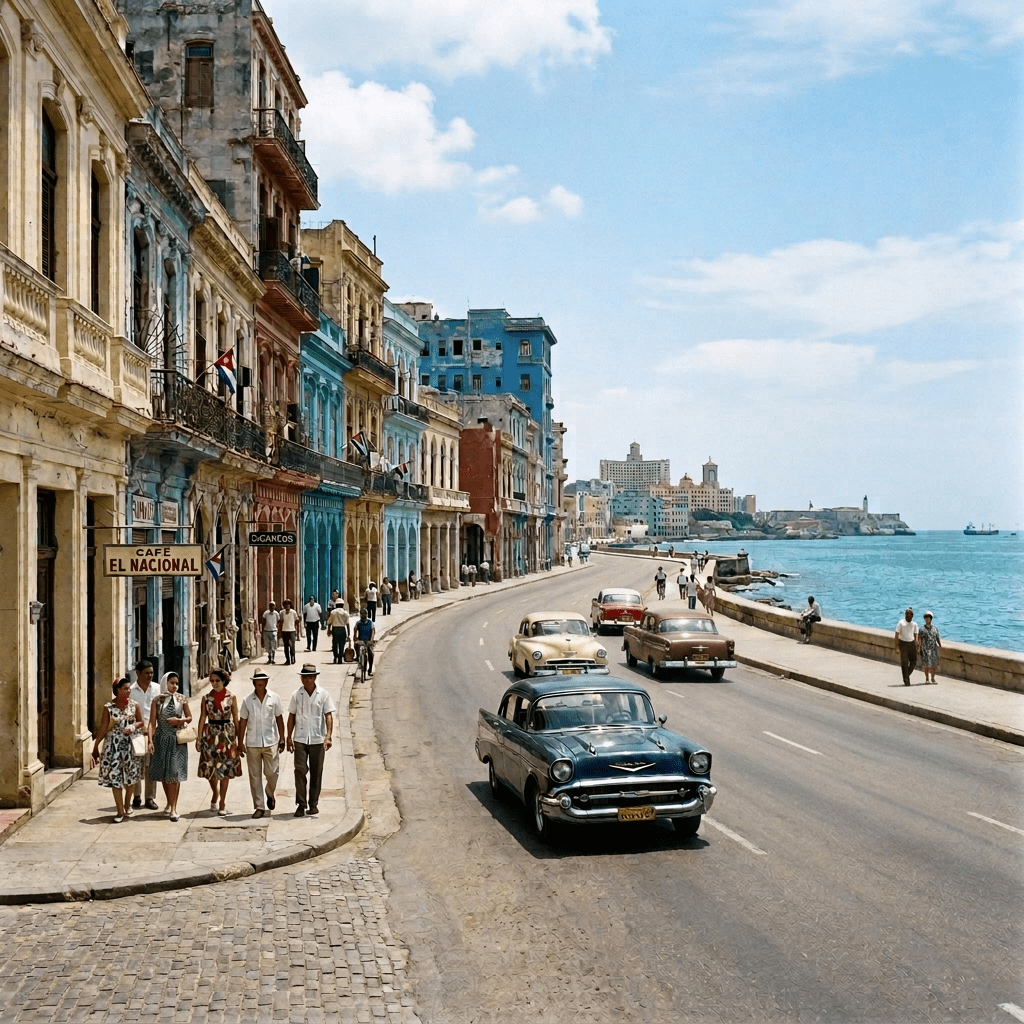
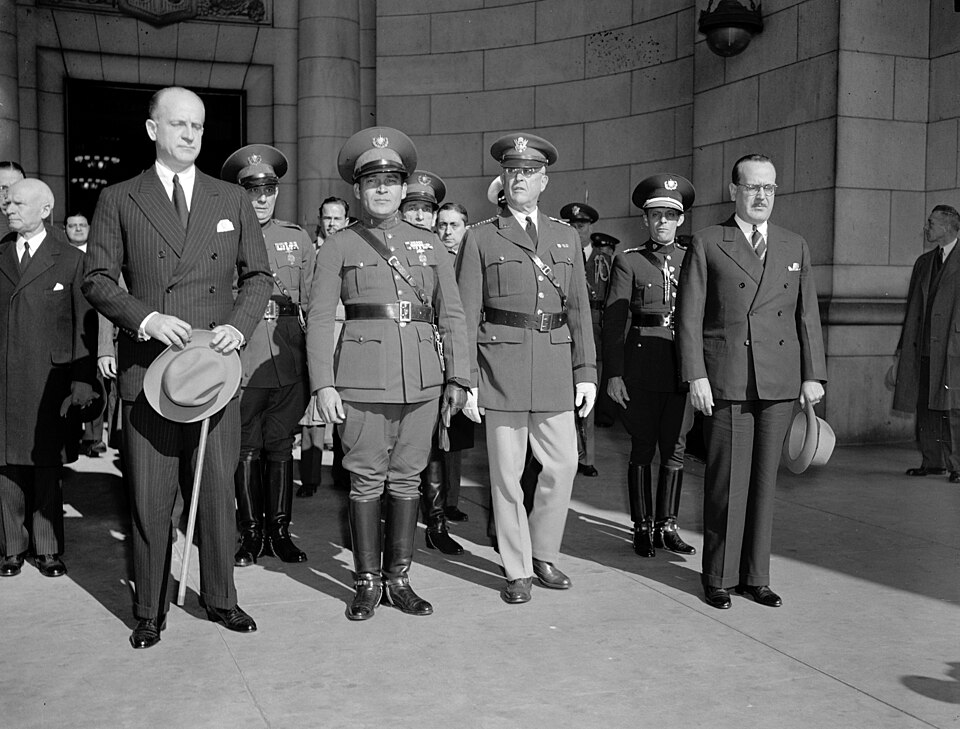
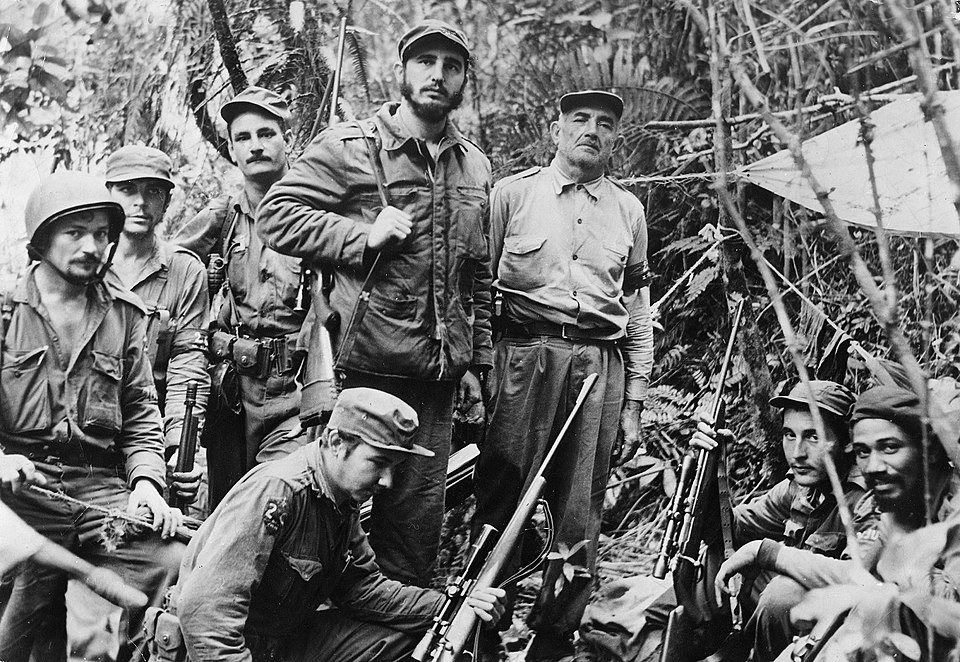
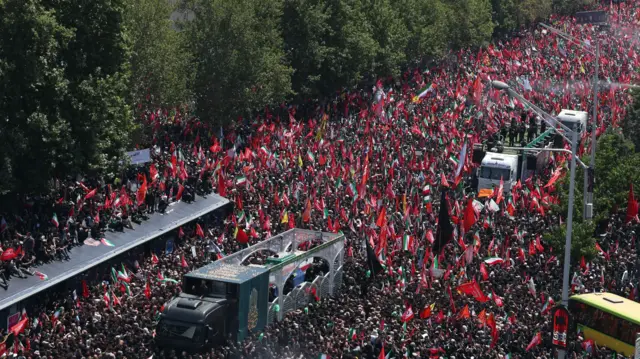
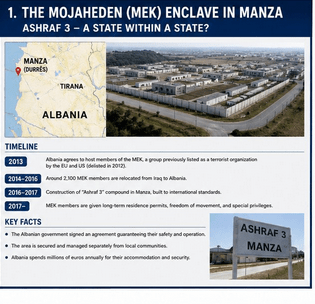

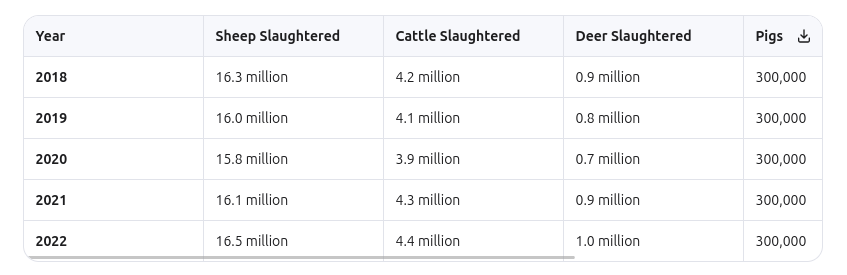
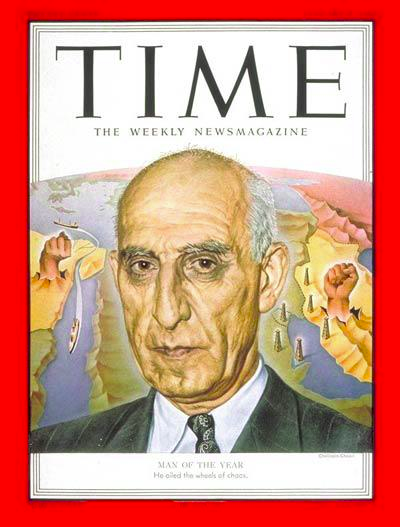
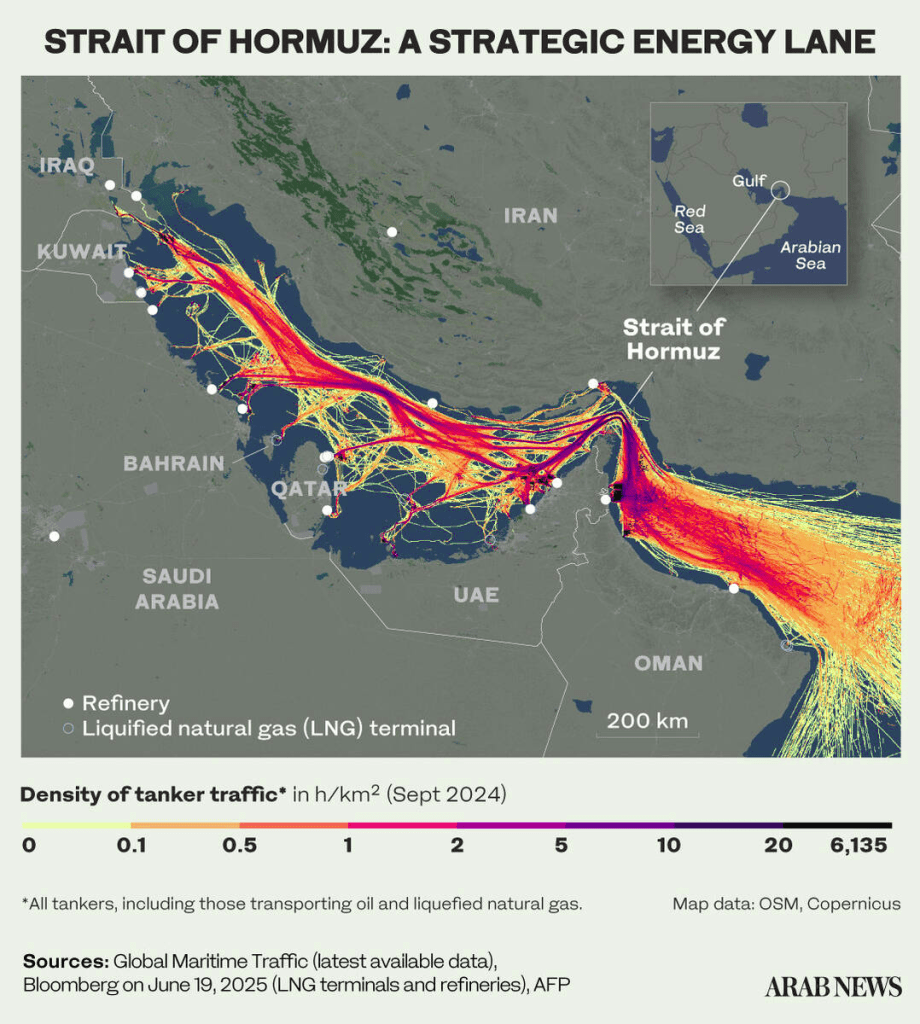
 New Antarctica