Western Journalistic Integrity

An analysis based on the author’s New Zealand experiences of foreign affairs journalistic reporting and resultant complaints.

  An Overview of the Complaint History

Seven separate complaints were filed by  the author to New Zealand’s TVNZ Complaints Committee, plus one referral to the Broadcasting Standards Authority (BSA).

These complaints span from January 2026 to May 2026 and cover reporting on Iran (three complaints), Venezuela (one complaint), the Korean War (one complaint), an online article on the Strait of Hormuz (one complaint), and an Israel-Lebanon ceasefire report (one complaint). Of these seven complaints,   six were declined and  one was upheld  .

     1. Pattern of Declining Complaints Despite Acknowledged Shortcomings

A striking pattern across the responses is that while TVNZ’s Complaints Committee frequently acknowledges that the reporting lacked depth, nuance, or broader context, it consistently declines to find a breach of the relevant standards.

       a. The Korean War / Gapeyeong Complaint (22 May 2026)

The author complained that the OneNews segment on the 75th anniversary of the Battle of Gapeyeong omitted critical historical context, including that New Zealand “was really helping to support one of the most brutal dictators in Asia — Syngman Rhee in South Korea as well as supporting the US mass-murder of North Koreans (one fifth of its population including gas and germ warfare) and NZ’s own war crimes of shelling North Korean fishing villages.” He further noted that OneNews has stated North Korea never signed a peace treaty, rather than “the US refused to sign a peace treaty and continued to threaten North Korea with nuclear weapons.”

TVNZ’s response acknowledged that the framing “could have been more nuanced” but stated that the 75th anniversary commemorations “cannot reasonably be considered a ‘controversial issue of public importance'” and that “viewers would not reasonably have expected a detailed interrogation of competing narratives around the Korean War.” The Committee found the story was “mainly concerned with the commemoration of a battle in which New Zealand troops were involved.”

The Committee’s acknowledgment that “the framing could have been more nuanced” is significant. It concedes, in effect, that the one-sided framing existed. However, the standard applied — whether the topic constitutes a “controversial issue of public importance” — allowed the Committee to sidestep the substance of the complaint. The complainant’s point was not that every nuance of the Korean War needed to be explored, but that the narrative presented — of New Zealand “protecting freedom” — omitted well-documented facts that fundamentally alter the viewer’s understanding. By characterising the piece as a “commemoration” rather than a news analysis, the Committee effectively shielded the broadcast from accountability for its selective framing.

       b. The Venezuela / Maduro Complaint (12 February 2026)

 The author complained that the extensive coverage of Maduro’s capture by the US military was “ridiculous farcical reporting” that failed to mention “25 years of brutal sanctions against Venezuela,” the “previous kidnapping of Chavez,” the role of US-funded electoral analysis groups in discrediting the 2024 election, or that the operation was fundamentally about “stealing Venezuela’s oil.”

The Committee acknowledged that the US operation was “clearly framed in the story, and in previous OneNews coverage, as of dubious legality if not a flagrant breach of international law.” It noted that Maduro’s own claim that he had been “kidnapped” was included. On the question of describing Maduro as a “dictator,” the Committee provided evidence from what it described as “credible sources” — including accusations about blocking opposition candidates and the UN’s condemnation of the 2024 election results — and stated that   the author’s claim that the 2024 election was “free and fair” did “not appear to be accurate.”

The Committee’s response is notable for several reasons. First, while it acknowledges that the broadcast included some balancing perspectives (Maduro’s own statements, questions about legality), it accepts the framing of Maduro as a “dictator” based on evidence it selects as credible. The complainant’s point was that the broadcast provided no context about the broader geopolitical dynamics — decades of sanctions, the US’s well-documented history of intervention in both  Venezuela and wider Latin America, and the economic motivations tied to Venezuelan oil reserves. The Committee stated that “the accusation that the Venezuelan Government was complicit in narco-terrorism were addressed by OneNews in the previous evening’s bulletin, as was the matter of Venezuela’s abundant oil reserves,” effectively distributing the required context across multiple broadcasts rather than ensuring it was present in the complained-about item itself.

Second, the Committee’s assertion that   the author’s claim about the 2024 election being “free and fair” does “not appear to be accurate” is a notable editorial judgment embedded within what is supposed to be an impartial assessment of a complaint about bias. The Committee is, in effect, taking a position on a contested geopolitical question while adjudicating a complaint about failure to present contested geopolitical positions.

       c. The Iran Protests / Reza Pahlavi Complaint (13 February 2026)

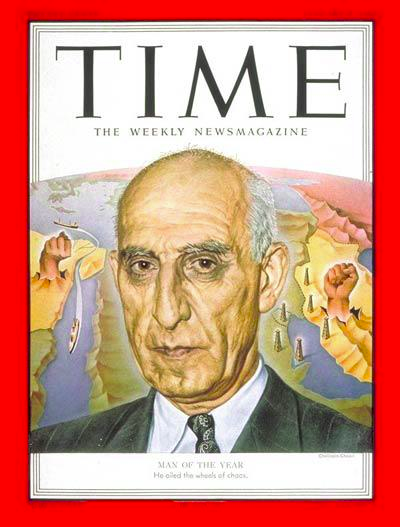
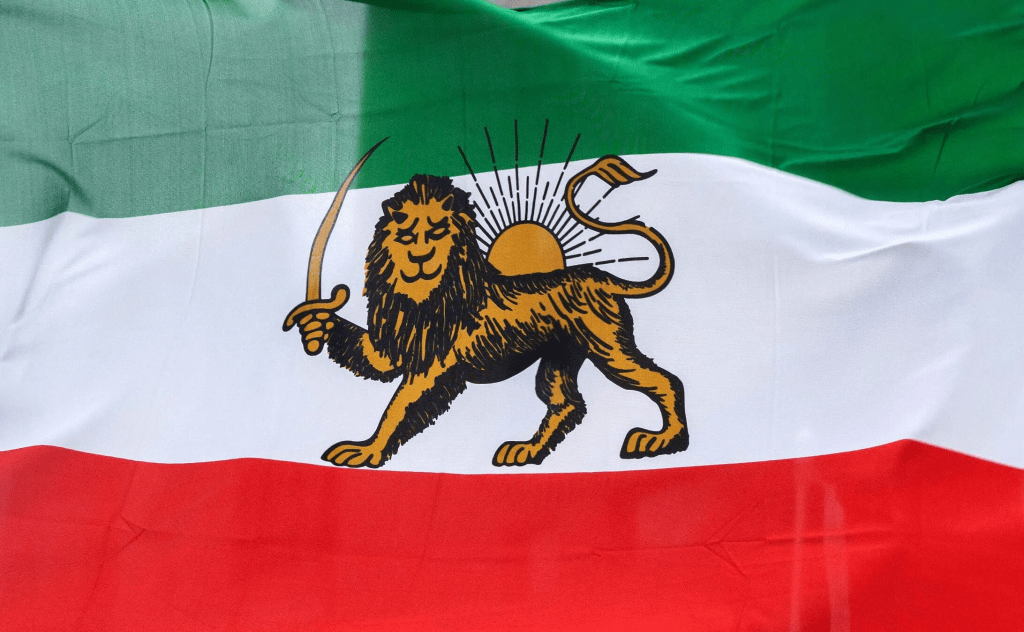
The author complained that the 1News report on protests in Iran and the Auckland rally in support of Reza Pahlavi omitted critical context: that Reza Pahlavi’s father the Shah “was himself appointed Shah by the US and UK after they overthrew the democratically elected prime minister of Iran Mohammad Mosaddegh in 1953,” that the Shah’s SAVAK secret police were brutal, that Pahlavi has “very minimal support within Iran,” and that the segment failed to address “50 years of brutal sanctions by the West.”

The Committee responded that the item “concerned the continuing protests in Iran, Reza Pahlavi’s call to ‘carry on the fight,’ and Kiwi Iranians’ reactions to this call. The history of the region was not being discussed.” On Pahlavi’s support within Iran, the Committee cited multiple reputable sources indicating that his support levels were “difficult to gauge” and referenced a 2022 poll showing 32.8% support among respondents for a transitional solidarity council role.

The Committee’s defence that “the history of the region was not being discussed” directly illustrates the complainant’s core concern. Presenting Reza Pahlavi as a credible democratic alternative — with his face “plastered on the signs” of protesters, described as “their only hope” and “a symbol of democracy” — without any mention of the historical context that produced the Pahlavi dynasty (the 1953 CIA/MI6 coup against Mosaddegh, the SAVAK, the Shah’s autocratic rule) creates a fundamentally incomplete picture. The Committee treats this as acceptable because the item had a “defined focus,” but the defined focus itself — lionising an exiled crown prince without historical context — is precisely what the complainant identified as problematic.

       d. The Strait of Hormuz Article Complaint (8 May 2026)

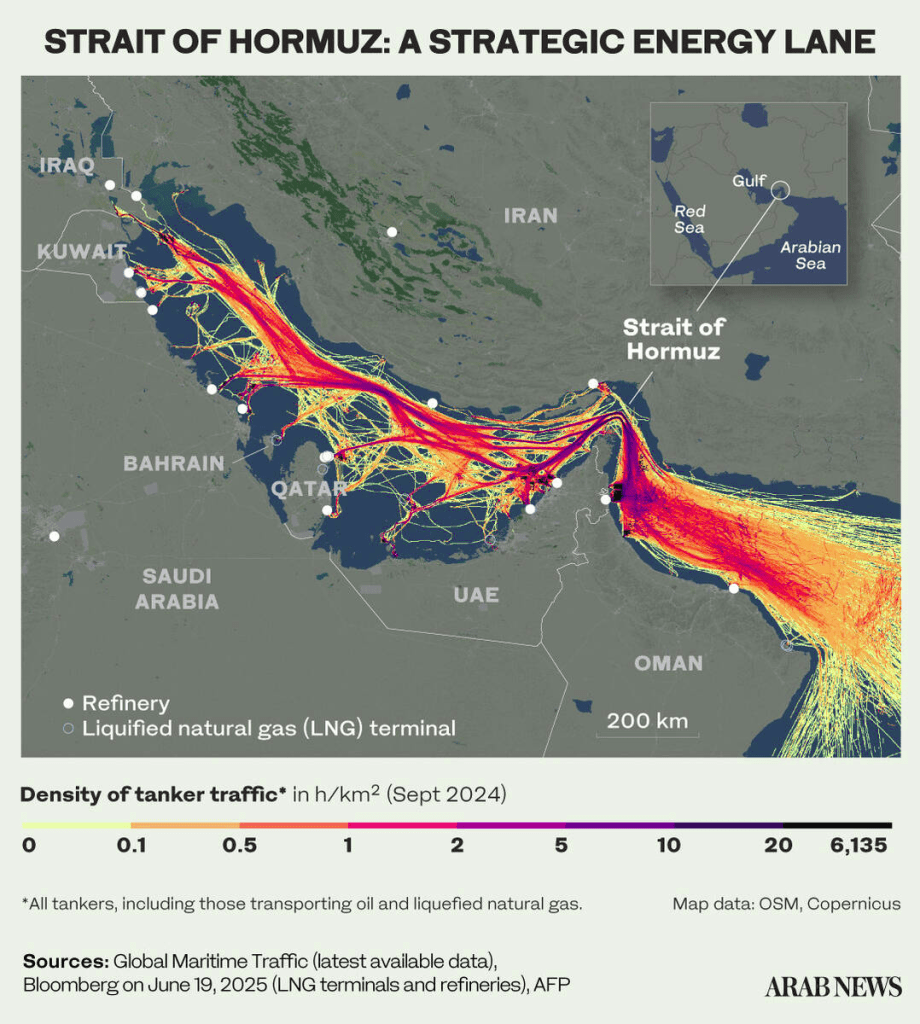
The author complained about a 1News website article (syndicated from the Associated Press) about Iran’s proposal to end its restriction on the Strait of Hormuz. He objected to the use of “unnamed officials” and to the description of the conflict as “[Iran’s] war against Israel and the United States.”

The Committee responded that the Associated Press is “an independent, trusted and reliable news agency” and that “there was no reason for 1News to have doubted the veracity of the information.” It stated that anonymous sourcing is common because “the person providing the information might be endangered.” On the framing of the war, the Committee stated: “We understand that the war was started by the US and Israel, and this fact has been repeatedly acknowledged by 1News, but it is nevertheless accurate to say Iran is in a war against Israel and the United States.”

This response is again revealing. The Committee characterises the Associated Press as “independent, trusted and reliable” without qualification — a characterisation the complainant would dispute given AP’s operational base within the Western media ecosystem. On the description of the conflict as Iran’s war against Israel and the US, the Committee concedes that “the war was started by the US and Israel” but argues it is “nevertheless accurate” to frame it from the opposing direction. This is technically true — Iran is indeed at war with both nations — but the complainant’s point was about the cumulative effect of consistently framing the conflict from a perspective that positions Iran as the aggressor rather than the target of unprovoked military action. The Committee’s reasoning does not address this concern about cumulative framing.

       e. The Iran Protests BSA Referral (Decision No. 2026-006, 10 June 2026)

  the author referred his January 2026 complaint about the Iran protests broadcast to the New Zealand Broadcasting Standards Authority(BSA) . The BSA also did not uphold the complaint, finding that “the omission of the factors identified in the original complaint did not render the broadcast unbalanced or misleading.” The BSA noted that the broadcast “was clearly focused on the current protest situation” and that the perspective of those at the Auckland gathering was presented.

The BSA’s decision reinforces the same pattern seen in TVNZ’s internal responses: the acceptance that a news item may have a narrow focus and that omitted context does not constitute a breach so long as the item’s purpose is clear and balancing information is available elsewhere. The BSA cited its own precedent that “a programme can be an advocacy piece and it can be unbalanced and it can give information that is incomplete, so long as the nature of the programme and its purpose is obvious, and there is other balancing information available to the viewer or listener.” This precedent effectively permits one-sided reporting as long as alternative perspectives theoretically exist in the broader media landscape — a standard that, as the complainant pointed out, is undermined when the broader media landscape itself consistently omits the same context.

       f. The Iran Conflict / BBC Segment Complaint (12 June 2026)

The author complained about a OneNews segment sourced from the BBC about conditions inside Iran during the ongoing conflict. He called it “an anti-Iranian piece of propaganda exercise” making “completely unsubstantiated allegations,” noting that the footage of women mourning was of people “murdered by the US and Israel” rather than by the Iranian regime, and that the presenter’s statement about 21 executions failed to mention that those executed “were deemed to be Israeli Mossad agents.”

The Committee acknowledged that the segment was a “short, narrative-driven report” that “predominantly reflected a critical portrayal of the Iranian regime and did not explicitly include alternative viewpoints within the broadcast itself,” but considered “this acceptable in the context of a brief news item addressing a widely reported international conflict.” The Committee stated that   the author had “not cited evidence of ‘huge support’ for the Iranian regime” and that “support for the Iranian regime appears to remain in the minority.” (Note that Khomeini’s recent funeral was estimated to attract between 10 to 15 million mourners as quoted by Western media)
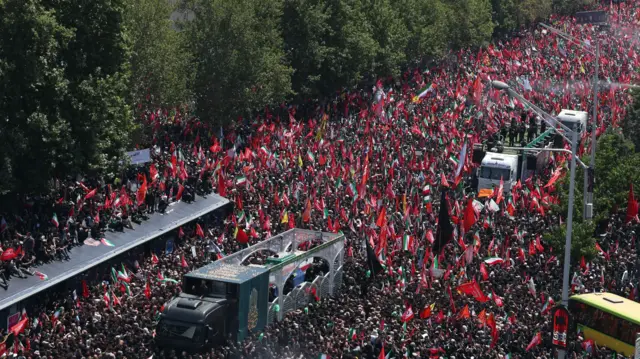
The Committee’s finding that “support for the Iranian regime appears to remain in the minority” is itself an editorial position taken within an adjudication on bias — paralleling the approach taken in the Venezuela complaint. The Committee is making a factual determination about Iranian public opinion in order to dismiss a complaint about failure to represent Iranian perspectives, without acknowledging the inherent difficulty of assessing public opinion in a country under active military attack with disrupted communications. The complainant’s point about the BBC footage — that the mourning women were grieving victims of US/Israeli air strikes, not regime repression — was addressed by the Committee with the observation that the reporter stated “Families of all political persuasions are mourning their dead and missing” and referenced “air strikes.” While this is technically accurate, the broader segment’s framing — focused on regime repression, executions, and fear — created an overall impression that the Committee did not adequately scrutinise.

  2. The Use of BBC and Other Western News Agencies

A recurring theme in  the author’s complaints is the reliance on the BBC and other Western news agencies as sources. This is relevant in at least three of the complaints:

The   Iran protests   broadcast incorporated a pre-recorded BBC report that the complainant characterised as one-sided.

– The   Iran conflict   segment (12 June 2026) was sourced from BBC reporting.

– The   Strait of Hormuz   article was syndicated from the Associated Press.

The Committee’s treatment of these sources is consistently deferential:

For the AP article, the Committee stated: “The Article was syndicated from the Associated Press, an independent, trusted and reliable news agency. There was no reason for 1News to have doubted the veracity of the information contained in the Article.”

-For BBC-sourced content, the Committee did not address the complainant’s specific concerns about BBC bias but instead assessed the content against broadcasting standards.

The complainant’s argument — that the BBC “acts for UK interests who are ever hopeful of getting back ‘ownership’ of Iranian oil by BP” and is “a source of propaganda for their government” — was not substantively engaged with by the Committee. The Committee treated the BBC and AP as inherently reliable sources without addressing the systemic concerns about Western media institutions’ coverage of geopolitical conflicts involving Western interests.

The Committee’s uncritical acceptance of the BBC and AP as authoritative sources is a significant gap in its analysis. While these agencies are widely respected, the complainant’s concern is not about individual factual errors but about systematic framing — the selection of which facts to include, which perspectives to foreground, and which context to omit. The BBC, funded by the UK license fee and operating under a Royal Charter, and the AP, headquartered in the United States, both operate within institutional frameworks that produce structurally biased coverage of conflicts involving Western powers. The Committee’s failure to engage with this argument — even to disagree with it on substantive grounds — leaves the complainant’s core concern unaddressed.

 3. The Single Upheld Complaint: The Israel-Lebanon Ceasefire Error (2 July 2026)

The only complaint that was upheld concerned a factual error in which 1News stated that Israel had “attacked Lebanon for the first time since its ceasefire with Hezbollah.” The author pointed out that Israel had committed 220 ceasefire violations between April 17 and April 19 alone, and that Israeli attacks on southern Lebanon had killed at least 28 people.

1News acknowledged the error, stating that “the broadcast should have described this attack as the first attack on Beirut since the April 16 ceasefire came into effect, rather than Lebanon.” The Committee confirmed the breach of Standard 6 (Accuracy) and stated that 1News had “discussed the issue with the staff member involved” and was “actively taking steps to ensure editorial processes are more robust.”

This upheld complaint is instructive for several reasons:

1.   It was a clear, binary factual error   — the word “Lebanon” should have been “Beirut.” This is the type of inaccuracy that the standards framework is most comfortable addressing: a discrete, verifiable factual mistake with a clear correction.

2.   The broader implication was not addressed.  The author’s complaint pointed to 220 ceasefire violations and 28 deaths in southern Lebanon — facts that fundamentally alter the viewer’s understanding of the ceasefire’s reality. The Committee’s correction (changing “Lebanon” to “Beirut”) addresses the technical error but does not engage with the complainant’s underlying point: that the original framing — presenting this as the “first attack since the ceasefire” — created a misleading impression that the ceasefire had been broadly respected, when in fact it had been extensively violated.

3.   The correction was narrow.   The upheld breach was limited to the geographical error. The Committee did not find that the overall framing — which minimised Israel’s documented ceasefire violations — constituted a material inaccuracy or misleading impression under Standard 6.

     4. Structural and Systemic Observations

  a. The “Defined Focus” Defence

Across multiple complaints, the Committee defended narrow framing by stating that the item had a “defined focus” and that viewers would not have expected the inclusion of historical context or competing narratives. This defence is applied selectively: the broadcast is permitted to frame a story from one perspective (e.g., the Iranian regime as repressive, Maduro as a dictator, the Korean War as a fight for freedom) without context, because the “focus” was on something more specific. However, the choice of focus is itself an editorial decision that shapes the viewer’s understanding, and the Committee does not examine whether the defined focus was itself biased.

b. The “Available Elsewhere” Standard

The Committee repeatedly invoked the principle that balancing information is available from other sources — NZ Herald, Stuff, RadioNZ, or “the universe of information.” This effectively transfers the broadcaster’s responsibility for balance to the audience, who are expected to independently seek out counter-narratives. The complainant’s concern — that the same omissions characterise Western mainstream media broadly — directly challenges the assumption that alternative perspectives are readily available elsewhere.

c. The “Controversial Issue of Public Importance” Threshold

The Committee’s determination of whether a topic constitutes a “controversial issue of public importance” is a gatekeeping function that prevents many complaints from being substantively evaluated under the Balance Standard. In the Korean War complaint, the Committee found that the commemorations themselves were not controversial. In the Iran protests complaint (by TVNZ’s internal review), the Committee found that while the protests were of “interest and concern,” they did not constitute an issue about which there had been “ongoing debate.” This threshold is inherently subjective and consistently operates to the disadvantage of complainants who argue that the lack of debate is itself a product of inadequate media coverage.

d. Editorial Judgments Embedded in Adjudications

In both the Venezuela and Iran complaints, the Committee made substantive editorial judgments within its adjudications — stating that Maduro’s characterisation as a “dictator” was “reasonably available” and that support for the Iranian regime “appears to remain in the minority.” These are not neutral procedural determinations; they are factual and analytical claims about contested geopolitical realities. By embedding these positions within complaint adjudications, the Committee assumes the role of arbiter of geopolitical truth while ostensibly adjudicating compliance with broadcasting standards.

5. Journalistic Standards and the Provision of Context

The core of   the author’s complaints is not that individual facts are wrong (with the exception of the Israel-Lebanon ceasefire error), but that the   cumulative effect of selective reporting, omitted context, and reliance on Western sources  produces a systematically distorted picture of international conflicts involving Western powers.

The relevant broadcasting standards — particularly Standard 5 (Balance), Standard 6 (Accuracy), and Standard 8 (Fairness) — as applied by TVNZ’s Complaints Committee, are structured to assess   individual broadcasts in isolation   rather than   patterns of coverage over time  . The Committee assesses whether a single item is materially inaccurate, not whether a pattern of items consistently omits the same types of context. This structural limitation means that:

  • A single broadcast that omits decades of sanctions, historical interventions, or geopolitical motivations can be deemed compliant because it had a “defined focus.”
  • The same type of omission repeated across multiple broadcasts on the same topic does not trigger a cumulative assessment.
  • The availability of alternative perspectives in other media outlets is treated as sufficient, even when those outlets share the same structural omissions.

The Committee’s approach effectively permits a broadcaster to produce a consistent narrative across many broadcasts — each individually compliant — that cumulatively shapes public understanding in a direction the complainant identifies as propagandistic, without any single broadcast meeting the threshold for a standards breach.

6. The Role of the BBC as a Source

The complainant’s specific concern about the BBC deserves particular attention. In the complaints about Iran, the BBC served as the primary source for at least two of the contested broadcasts:

– The January 2026 Iran protests segment incorporated a BBC reporter’s package.

– The May 2026 Iran conflict segment was sourced from BBC reporting.

The Committee did not engage with the argument that the BBC, as a state-funded broadcaster of the United Kingdom with institutional interests in the Middle East, might produce coverage that reflects those interests. The Committee’s treatment of the BBC implicitly positions it as a neutral, authoritative source — the same treatment afforded to the Associated Press. This is a significant assumption that the Committee does not justify or defend; it simply takes it as given.

For a complainant who views the BBC as a vehicle for British foreign policy interests, the Committee’s failure to even acknowledge this argument — let alone address it — represents a significant gap in the adjudication process.

7. Conclusion on Complaints

Based on the reference content, the TVNZ Complaints Committee’s responses to  the author’s complaints reveal several consistent patterns:

1.   Acknowledged shortcomings without breach findings.   The Committee repeatedly conceded that reporting could have been “more nuanced” or that it “did not explicitly include alternative viewpoints,” while finding no breach of broadcasting standards.

2.   Structural defences that limit accountability.   The “defined focus,” “available elsewhere,” and “controversial issue of public importance” frameworks consistently operate to shield broadcasts from substantive evaluation of their cumulative framing.

3.   Uncritical acceptance of Western news agencies.   The BBC and AP are treated as inherently reliable without engagement with systemic bias concerns.

4.   Editorial positions within adjudications.   The Committee makes substantive geopolitical claims (e.g., about Maduro’s legitimacy, Iranian public opinion) within what should be procedural assessments.

5.   One upheld complaint — limited to a narrow factual error.   The sole upheld complaint concerned a geographical inaccuracy (Beirut vs. Lebanon), not the broader framing issues that characterise the majority of   the author’s concerns.

6.   Consistent omission of context regarding Western actions.   Across all complaints — whether about Iran, Venezuela, or the Korean War — the pattern of omitting historical and geopolitical context about Western interventions, sanctions, and military actions persists without being found to breach standards.

The overall picture that emerges is of a complaints framework that is designed to address discrete factual errors rather  than systemic patterns of selective framing — and of a Complaints Committee that applies that framework in a way that consistently finds in favour of the broadcaster’s editorial choices, even when it acknowledges those choices could have been more balanced or nuanced.

Western Media Framing of Foreign Affairs: Systemic Biases, Institutional Agendas, and the Erosion of Journalistic Standards

The complaints filed by  the author against TVNZ’s 1News, and the Complaints Committee’s responses to those complaints, are not merely an isolated dispute between a viewer and a New Zealand broadcaster. They are a microcosm of a far larger and well-documented phenomenon: the systematic failure of Western media to provide accurate, contextualised, and balanced coverage of foreign affairs — particularly when those affairs involve nations in conflict with Western governments. The patterns identified in the TVNZ adjudications — selective framing, omitted context, uncritical reliance on Western news agencies, editorial positions disguised as impartial adjudication, and structural standards frameworks that permit cumulative bias — are replicated across the Western media landscape with remarkable consistency.

This analysis examines these patterns as they manifest globally, using the TVNZ complaints as a starting point and expanding outward to identify the institutional, structural, and ideological mechanisms that produce and sustain them.

   1. The Architecture of Selective Framing

    1.1 The “Defined Focus” as a Tool of Exclusion

The TVNZ Complaints Committee’s recurring defence — that a news item had a “defined focus” and therefore was not required to include historical or geopolitical context — is not unique to New Zealand broadcasting. It is the default justification used across Western media to explain the omission of context that would fundamentally alter the audience’s understanding of an event.

When Western media covers a protest in Iran, the “defined focus” is on the protest itself — its scale, its grievances, the regime’s response. What is excluded from that focus is the half-century of sanctions that devastated Iran’s economy, the 1953 CIA/MI6 coup that overthrew Iran’s democratically elected government, the Western support for Saddam Hussein’s war against Iran in the 1980s, and the ongoing covert operations by Israeli and Western intelligence services inside Iran. Each of these facts is independently documented and publicly available. Their systematic omission from coverage of Iran is not an oversight; it is a structural feature of how Western media defines what is “relevant” to a story.

The same pattern applies to coverage of Venezuela. The “defined focus” is on Maduro’s government — its alleged authoritarianism, its economic failures, its narcotics charges. What is excluded is the decades of US sanctions that crippled Venezuela’s economy, the repeated US-backed coup attempts (including the 2002 attempt against Chávez), the freezing of Venezuelan assets, and the seizure of CITGO, Venezuela’s most valuable foreign asset. Without this context, the audience is left with the impression that Venezuela’s crises are the product of internal mismanagement and dictatorship — an impression that serves the foreign policy interests of the governments imposing the sanctions.

When the Korean War is commemorated, the “defined focus” is on New Zealand’s sacrifice and the battle itself. What is excluded is that the war was fought to preserve the rule of Syngman Rhee — a US-installed dictator whose security forces killed tens of thousands of South Korean civilians — and that the US bombing campaign destroyed virtually every structure in North Korea, killing approximately one-fifth of its population. These facts are not contested by serious historians. Their omission transforms a complex and morally ambiguous conflict into a simple narrative of freedom versus tyranny.

1.2 The Selection of Victims and Villains

Western media consistently applies asymmetric moral framing to international conflicts. The same actions — military strikes, civilian casualties, suppression of dissent, acquisition of weapons — are described in fundamentally different language depending on whether the actor is a Western ally or a Western adversary.

The presenter’s statement that “North Korea is more of a threat than ever” was defended as factually accurate. But the same standard would never be applied to the United States — the only country to have used nuclear weapons in war, which maintains a first-use nuclear doctrine, which has withdrawn from the Anti-Ballistic Missile Treaty and the Intermediate-Range Nuclear Forces Treaty, and which has conducted military operations in dozens of countries since World War II. The US is never described by Western media as “more of a threat than ever,” despite the objective basis for such a claim being at least as strong as the basis for applying it to North Korea.

Similarly, in the Venezuela complaint, the Committee accepted the description of Maduro as a “dictator” based on evidence it selected as credible. The same evidentiary standard — contested elections, suppression of opposition, concentration of executive power — could be applied to numerous US allies (Saudi Arabia, Egypt, the UAE) without those leaders ever being described as “dictators” in Western media. The word is reserved for adversaries.

1.3 The Passive Voice of Western Violence

One of the most pervasive linguistic patterns in Western media coverage of foreign affairs is the use of passive voice and agentless constructions when describing Western military actions.

– “The war that has killed thousands” — not “the US-Israeli strikes that killed thousands”

– “The conflict between the US, Israel and Iran” — not “the US-Israeli attack on Iran”

– “Air strikes have put added strain on the under-resourced health system” — not “US and Israeli air strikes have destroyed Iran’s health infrastructure”

– “The standoff between Iran and the US” — not “the US naval blockade of Iran”

The TVNZ Complaints Committee acknowledged in the Strait of Hormuz complaint that “the war was started by the US and Israel, and this fact has been repeatedly acknowledged by 1News,” yet defended the description of the conflict as “Iran’s war against Israel and the United States.” This linguistic framing — positioning the victim of an unprovoked attack as the primary belligerent — is not an accident. It is a systematic feature of Western media grammar that consistently obscures Western agency in the violence it reports.

2. The Institutional Ecosystem of Western News Production

    2.1 The News Agency Monopoly

The TVNZ Complaints Committee’s characterisation of the Associated Press as “an independent, trusted and reliable news agency” reveals a fundamental assumption embedded in Western media production: that the major Western news agencies — AP, Reuters, Agence France-Presse (AFP) — are neutral arbiters of fact rather than institutional actors with their own biases, limitations, and structural relationships with Western power.

These three agencies, together with the BBC World Service and CNN International, constitute the primary information infrastructure through which most of the Western world’s news is produced, filtered, and distributed. The vast majority of international news consumed by audiences in New Zealand, Australia, the UK, Canada, and much of Europe originates from one or more of these sources. When TVNZ broadcasts a story about Iran, Venezuela, or North Korea, it is overwhelmingly relying on reporting from these agencies or from its own correspondents who operate within the same institutional ecosystem.

The structural bias of this system is not a matter of conspiracy or deliberate manipulation. It is a product of:

  • Geographic concentration: AP is headquartered in New York. Reuters is headquartered in London. AFP is headquartered in Paris. Their editorial cultures, institutional assumptions, and primary audiences are Western. Stories are framed for Western audiences with Western assumptions about what constitutes news, who constitutes a credible source, and what constitutes a legitimate government.
  • Source selection: Western news agencies rely disproportionately on sources that are accessible, English-speaking, and institutionally sanctioned — Western diplomats, Western-aligned analysts and think-tanks, Western-funded NGOs, and diaspora communities in Western countries. The TVNZ complaints repeatedly illustrate this: the Iran protests coverage relied on the BBC, Reza Pahlavi, and the Auckland diaspora; the Venezuela coverage relied on US legal analysts, US prosecutors, and US correspondents; the Korean War coverage relied on NZDF personnel and a Victoria University strategic studies expert. No Iranian officials, Venezuelan government representatives, or North Korean perspectives were sought or included.
  • Structural access: Western news agencies have extensive networks of correspondents in Western capitals and allied nations, but limited access to nations that are adversaries of the West. This means that coverage of countries like Iran, North Korea, Venezuela, Cuba, Syria, and Russia is often produced from outside those countries — from neighbouring nations, from Western capitals, or from diaspora communities — and relies heavily on intelligence sources, satellite imagery, and social media rather than direct reporting. This structural limitation is rarely disclosed to audiences.

2.2 The BBC as a Case Study in State-Aligned Broadcasting

The BBC occupies a unique position in the global media ecosystem. It is the world’s largest broadcaster by reach, with services in over 40 languages reaching an estimated 400 million people weekly. It is funded primarily by the UK licence fee — a mandatory tax on television ownership — and operates under a Royal Charter that requires it to serve the public interest as defined by the UK government.

The author’s complaints specifically raised the BBC’s role as a source of TVNZ’s Iran coverage, arguing that the BBC “acts for UK interests who are ever hopeful of getting back ‘ownership’ of Iranian oil by BP.” The TVNZ Committee did not engage with this argument, treating the BBC as a neutral source.

The BBC’s institutional relationship with the British state is well-documented:

  • framework that has structural alignments with UK foreign policy interests — interests that, in the case of Iran, include the historical role of BP (formerly Anglo-Persian Oil Company, then Anglo-Iranian Oil Company) in Iranian oil, the 1953 coup jointly organised by MI6 and the CIA, and the UK’s ongoing alignment with US policy toward Iran.
    2.3 Think Tanks, Analysts, and the Illusion of ‘Independent Journalism’
    Western media routinely presents commentary from think tanks, strategic studies centres, and policy analysts as independent expert opinion. The TVNZ coverage of the Korean War included David Capie from the Victoria University Strategic Studies Center. The Venezuela coverage included the ABC’s Chief Legal Analyst, a former Federal Prosecutor, and a Criminal Defence Lawyer. The Iran protests coverage included a “Middle East commentator.”
    What is rarely disclosed to audiences is the funding, institutional affiliations, and ideological orientations of these analysts. Many of the most frequently cited think tanks in Western media — the Council on Foreign Relations, the Brookings Institution, the International Institute for Strategic Studies, the Atlantic Council, the Royal United Services Institute — receive significant funding from Western governments, defence contractors, and corporations with direct interests in the outcomes of the conflicts being analysed. Their analysts are not neutral observers; they are participants in a policy ecosystem that has predetermined conclusions about which nations are threats, which governments are legitimate, and which military actions are justified.
    The cumulative effect is that audiences receive what appears to be independent expert analysis but is, in practice, analysis produced within a narrow band of acceptable opinion that reflects the assumptions and interests of Western power structures.
    The Structural Deficiencies of Broadcasting Standards Frameworks
    3.1 Standards That Protect the Broadcaster, Not the Audience
    The TVNZ complaints process reveals a standards framework that is structurally incapable of addressing the type of bias the author identified. The relevant standards — Balance (Standard 5), Accuracy (Standard 6), and Fairness (Standard 8) — are designed to assess individual broadcasts against narrow criteria:
    ‘Balance’’ requires the inclusion of significant viewpoints on “controversial issues of public importance” — but the determination of what constitutes such an issue is made by the Committee, and the standard does not apply to topics the Committee determines are not controversial or where the issue was raised in a “relatively brief and peripheral way.”
    ‘Accuracy’ is concerned with “material points of fact” and whether the audience was “materially misled” — but the standard explicitly excludes “technical or unimportant points unlikely to significantly affect the audience’s understanding.” The systematic omission of historical context, sanctions, and geopolitical motivations is treated as a matter of editorial focus rather than material accuracy.
    ‘Fairness’ protects “individuals or organisations” referred to in broadcasts — but the Committee determined that nation-states are not “organisations” for the purposes of this standard, meaning that the fairness standard cannot be invoked on behalf of countries like Iran, Venezuela, or North Korea.
    These structural limitations mean that:
    3.2 The “Available Elsewhere” Doctrine
    a) A broadcaster can produce a consistently one-sided narrative across dozens of broadcasts without any single broadcast breaching the standards.
    b) The omission of context that would fundamentally alter audience understanding is treated as an editorial choice rather than an accuracy issue.
    c) The fairness standard cannot protect nations from unfair coverage.
    d) The balance standard only applies if the Committee determines the topic is controversial — a determination that is itself subjective and consistently made in the broadcaster’s favour.
    Perhaps the most insidious feature of the standards framework is the doctrine – applied by both TVNZ and the BSA — that balancing information need not be included in the broadcast itself so long as it is “available to the viewer or listener” from “other sources” or from “the universe of information.”
    This doctrine effectively transfers the broadcaster’s responsibility for balance to the audience. The viewer is expected to independently seek out the historical context, alternative perspectives, and geopolitical background that the broadcast omitted. This expectation is unreasonable for several reasons:
    ‘The audience does not know what it does not know.’ If a viewer watches a report about protests in Iran that omits the history of Western sanctions and intervention, that viewer has no basis for knowing that this context exists, let alone for seeking it out.
    ‘The same omissions characterise the broader media landscape.’ The author repeatedly pointed out that the same contextual omissions he identified in TVNZ’s reporting were present across Western mainstream media. If the BBC, AP, Reuters, CNN, and TVNZ all omit the same context, the “available elsewhere” doctrine is meaningless — there is no “elsewhere” within the mainstream media ecosystem where this context is reliably available.
    ‘Alternative sources are marginalised.’ Media outlets and analysts who provide the context that mainstream Western media omits — former intelligence analysts, independent journalists, non-Western media outlets — are systematically marginalised, discredited, or simply not cited. The complainant in the Iran protests case cited “an ex CIA analyst” as a source; such sources, when they diverge from mainstream Western narratives, are not treated as credible by the institutions adjudicating complaints.
    3.3 The Adjudicator as Editor
    The TVNZ Complaints Committee’s responses reveal that the adjudication process itself functions as an extension of editorial judgment. When the Committee stated that Maduro’s characterisation as a “dictator” was “a reasonably available description supported by evidence from credible sources,” it was not merely assessing whether the broadcast met the accuracy standard — it was affirming the broadcast’s editorial position. When the Committee stated that support for the Iranian regime “appears to remain in the minority,” it was making a factual claim about Iranian public opinion in order to dismiss a complaint about the omission of Iranian perspectives.
    This conflation of adjudication and editorial judgment means that the complaints process does not function as an independent check on media bias. It functions as a ratification of existing editorial choices, with the veneer of procedural legitimacy.
    The Geopolitical Function of Western Media Framing
    4.1 Manufacturing Consent for Western Foreign Policy
    The patterns identified in the TVNZ complaints — selective framing, omitted context, asymmetric moral standards, uncritical reliance on Western sources — do not exist in a vacuum. They serve a specific geopolitical function: the manufacture of public consent for Western foreign policy actions.
    When Western media covers Iran without mentioning sanctions, it removes the economic dimension of the conflict from public understanding, making Iran’s government appear solely responsible for the suffering of its people. When Western media covers Venezuela without mentioning the US-backed coup attempts, it frames the crisis as a product of socialist mismanagement rather than external aggression. When Western media covers North Korea without mentioning the destruction of the Korean War and the ongoing US military presence on its border, it frames North Korea’s nuclear programme as irrational aggression rather than a rational response to existential threats.
    In each case, the omission of context serves to align public understanding with the foreign policy positions of Western governments. This is not necessarily the result of direct government instruction — though such instruction has been documented in historical cases. It is more often the product of shared institutional assumptions, source networks, career incentives, and ideological frameworks that produce aligned outcomes without requiring explicit coordination.
    4.2 The Double Standard as Systemic Feature
    The most visible manifestation of Western media bias is the application of double standards — the consistent use of different criteria to evaluate the actions of Western allies and Western adversaries. This is not a matter of occasional inconsistency; it is a systemic feature that operates across every dimension of coverage:
    Dimension
    Western Allies
    Western Adversaries
    ‘Civilian casualties
    “Defence,” “intervention,” “stabilisation”
    “Aggression,” “provocation,” “threats” |
    Civilian casualties
    “Collateral damage,” incidental, minimised
    Emphasised, attributed to deliberate policy |
    ‘Elections
    Accepted as legitimate even when flawed
    Dismissed as “sham” or “rigged
    Political prisoners
    Rarely reported or framed as “security detainees
    Political prisoners,” “prisoners of conscience” |
    ‘Nuclear weapons
    “Deterrence,” “security umbrella
    Threat,” “proliferation,” “arms race
    Sanctions
    “Targeted measures,” “pressure
    Rarely mentioned as a cause of suffering
    Regime change
    Democracy promotion,” “transition”
    “Interference,” “coup”
    Protests
    Pro-democracy movements
    Rioters,” “foreign-backed destabilisation
    This double standard is so pervasive that it is largely invisible to audiences habituated to Western media. It operates at the level of word choice, source selection, headline framing, image selection, and story placement — the micro-decisions that, cumulatively, construct an audience’s understanding of the world.
    4.3 Historical Precedents
    The patterns identified in the TVNZ complaints have direct historical precedents in Western media coverage of major international events:
    Iraq (2003): Western media overwhelmingly accepted and amplified the claim that Iraq possessed weapons of mass destruction, providing the informational foundation for public support of the invasion. The subsequent discovery that no WMDs existed — and that the intelligence had been manipulated — resulted in significant self-reflection within some media organisations but no structural change in the source relationships and institutional assumptions that produced the failure.
    Libya (2011): Western media uncritically amplified claims that Gaddafi’s forces were committing genocide against civilians in Benghazi — claims that were subsequently found to be significantly exaggerated. The media framing provided cover for a NATO intervention that destroyed the Libyan state and produced a decade of civil war, slave markets, and regional destabilisation.
    Syria (2011–present): Western media consistently framed the Syrian conflict as a democratic uprising against a tyrannical regime, while under-reporting the role of foreign-funded armed groups, the sectarian composition of the opposition, and the devastating impact of Western sanctions on the Syrian civilian population.
    In each case, the patterns are the same: selective framing that aligns with Western government positions, omission of context that would complicate those positions, reliance on sources aligned with Western interests, and a standards framework that treats each individual broadcast as compliant even when the cumulative effect is misleading.
    The Consequences for Democratic Society
    5.1 The Informed Citizenry Problem
    Democratic theory rests on the premise that citizens make political decisions based on accurate information. When the media ecosystem that provides that information systematically distorts public understanding of international affairs — through selective framing, omitted context, and asymmetric moral standards — the capacity of citizens to make informed judgments about their governments’ foreign policies is fundamentally compromised.
    One of the author’s complaint letters stated: “Honesty and balance to ensure viewers can make up their OWN minds about a given global situation is vital if we are to be truly a democratic country.” This is not a radical proposition; it is a restatement of the foundational premise of both journalism and democracy. The TVNZ Complaints Committee’s consistent refusal to find breaches of broadcasting standards, even while acknowledging that reporting “could have been more nuanced,” suggests that the standards framework as currently constituted is insufficient to fulfil this democratic function.
    5.2 The Erosion of Trust
    The cumulative effect of sustained media bias is not public enlightenment but public cynicism. When audiences perceive — as the author clearly does — that their media is systematically distorting their understanding of the world, trust in journalism erodes. This erosion does not produce a more sophisticated public that seeks out alternative sources; it produces a public that either uncritically accepts the dominant narrative or rejects all media as untrustworthy. Neither outcome serves democracy.
    5.3 The Silencing of Dissent
    When the institutional mechanisms for challenging media bias — complaint processes, standards frameworks, regulatory bodies — consistently fail to address systemic issues, the message to concerned citizens is that the system is not designed to be corrected from within. the author filed seven complaints and received six rejections and one narrow correction for a geographical error. The structural issues he identified — omitted context, asymmetric framing, reliance on biased sources — remain unaddressed after each complaint. This outcome does not encourage continued engagement; it teaches citizens that their concerns will be procedurally acknowledged and substantively ignored.
    Toward a More Honest Journalism
    The purpose of this analysis is not to argue that Western media is uniquely biased — all media operates within institutional, cultural, and political frameworks that shape its output. Nor is it to argue that the governments of Iran, Venezuela, North Korea, or any other country are beyond criticism — they are not, and many of them engage in serious abuses that warrant rigorous reporting.
    The argument is that ‘ ‘Western media’s coverage of foreign affairs is systematically distorted in ways that align with the foreign policy interests of Western governments ‘ ‘, and that this distortion is produced by identifiable structural mechanisms — institutional concentration, source networks, linguistic conventions, double standards, and inadequate accountability frameworks — rather than by isolated editorial failures.
    Addressing this distortion would require:
    ‘ ‘Genuine source diversification ‘ ‘ — actively seeking perspectives from non-Western governments, non-Western analysts, and non-Western media outlets, rather than treating Western sources as default authorities.
    ‘ ‘Mandatory contextualisation ‘ ‘ — requiring that coverage of international conflicts include the historical and geopolitical context necessary for audiences to understand the origins and dynamics of the conflict, not just its current manifestations.
    ‘ ‘Transparent sourcing ‘ ‘ — disclosing the funding, institutional affiliations, and potential conflicts of interest of analysts, think tanks, and expert commentators.
    ‘ ‘Symmetric moral standards ‘ ‘ — applying the same language, the same scrutiny, and the same moral framework to the actions of Western governments and their allies as to their adversaries.
    ‘ ‘Structural reform of complaints processes ‘ ‘ — creating accountability mechanisms capable of assessing patterns of coverage over time, not just individual broadcasts in isolation, and ensuring that adjudicators do not embed editorial judgments within their decisions.
    ‘ ‘Critical engagement with Western news agencies ‘ ‘ — recognising that AP, Reuters, AFP, and the BBC are institutional actors with their own limitations and biases, not neutral conduits of objective truth.
    Conclusion
    The TVNZ complaints examined in the analysis above are a window into a global phenomenon. The patterns they reveal — selective framing, omitted context, institutional deference to Western sources, structural impunity for systematic bias — are not unique to a single New Zealand broadcaster. They are the product of an international media ecosystem in which the production, distribution, and adjudication of news about foreign affairs is structurally aligned with the interests and assumptions of Western governments.
    The author’s complaints did not fail because they lacked merit. They failed because the system against which they were filed is not designed to address the type of bias he identified. The standards frameworks assess trees, not forests. They evaluate individual broadcasts, not patterns of coverage.
    They accept Western sources as authoritative without scrutiny. They treat omission of context as editorial discretion rather than material inaccuracy. And they embed substantive editorial judgments within procedural adjudications, ensuring that the outcome reinforces rather than challenges the dominant narrative.
    The consequence is a public that is simultaneously over-informed about the failings of Western adversaries and under-informed about the actions of its own governments — a public that is, in the most precise sense of the word, misinformed. And a public that is misinformed about the world its government is acting upon cannot meaningfully hold that government to account. This is not a failure of journalism. It is journalism functioning exactly as its institutional structures compel it to function.
    References for International Journalistic Standards
    Society of Professional Journalists (SPJ) — Code of Ethics
    URL: https://www.spj.org/ethicscode.asp
    The SPJ Code of Ethics is one of the most widely referenced journalistic standards documents globally. It is built around four principles:
    Seek truth and report it — “Journalists should be honest, fair and courageous in gathering, reporting and interpreting information.”
    Minimize harm — “Ethical journalists treat sources, subjects, colleagues and members of the public as human beings deserving of respect.”
    Act independently — “The highest and primary obligation of ethical journalism is to serve the public.”
    Be accountable and transparent — “Ethical journalism means taking responsibility for one’s work and explaining one’s decisions to the public.”
    This code is directly relevant to the article’s discussion of omitted context, source independence, and accountability.
    International Federation of Journalists (IFJ) — Global Charter of Ethics for Journalists
    URL: https://www.ifj.org/who/rules-and-policy/global-charter-of-ethics-for-journalists
    The IFJ Global Charter of Ethics, adopted in 2019, is the most comprehensive international articulation of journalistic ethical standards. It was adopted at the 30th IFJ World Congress in Tunis. Key principles include:
    Article 1 — Right to information, freedom of expression and criticism. States that journalism’s first obligation is to the public’s right to know.
    Article 2 — Independence. “Independence of media, of journalists and of editorial staff is essential… The journalist shall not accept any form of intimidation or pressure.”
    Article 3 — Honesty, accuracy and responsibility. “The journalist shall ensure that the information delivered is accurate, verified and presented in a balanced manner.”
    Article 4 — Integrity. “The journalist shall not confuse the profession with other activities such as advertising, propaganda or entertainment.”
    Article 7 — Protection of sources. Addresses the confidentiality of sources.
    Article 9 — Solidarity. Addresses mutual support among journalists globally.
    This charter is directly relevant to the article’s discussion of accuracy, context, source independence, and the distinction between journalism and propaganda.
    BBC Editorial Guidelines
    URL: https://www.bbc.co.uk/editorialguidelines/guidelines
    The BBC Editorial Guidelines are publicly available and represent one of the most detailed sets of editorial standards in global broadcasting. They are particularly relevant given the article’s discussion of the BBC as a source for TVNZ’s Iran coverage. Key sections include:
    Section 3: Accuracy — “The BBC must not knowingly and materially mislead its audiences.”
    Section 4: Impartiality — “Impartiality must be applied to all subjects… The approach and tone of news reporting in the UK and internationally should not be different.”
    Section 5: Fairness — “Fairness is an essential part of the BBC’s relationship with its audiences.”
    The BBC’s own guidelines on impartiality are particularly relevant when examining whether the BBC’s output — when used as a source by other broadcasters — meets the standards it sets for itself.
    Reuters Handbook of Journalism
    URL: https://www.thomsonreuters.com/en/about-us/trust-principles
    Reuters operates under its Trust Principles, which state that Reuters shall:
    “Supply unbiased and reliable news services”
    “Uphold freedom of expression”
    “Operate with integrity and independence”
    The Trust Principles were established in 1941 and are the foundational editorial framework for Reuters content. They are relevant to the article’s discussion of the Associated Press and Reuters as structurally embedded within Western media ecosystems.
    For the broader Reuters Handbook of Journalism, https://www.mediareform.org.uk/wp-content/uploads/2015/12/Reuters_Handbook_of_Journalism.pdf
    Associated Press — Statement of News Values and Principles
    URL: https://www.ap.org/about/news-values-and-principles
    The AP’s Statement of News Values and Principles governs the editorial standards of the world’s largest news agency. It covers:
    Accuracy and fairness
    Speed versus accuracy
    Standards for sourcing
    Corrections policy
    This is directly relevant to the article’s examination of the TVNZ Committee’s characterisation of the AP as “an independent, trusted and reliable news agency.”
    Munich Declaration of the Rights and Obligations of Journalists (1971)
    URL:This document is available through the IFJ and various journalism reference sites.
    https://resources.rsf.org/appendix-iii-declaration-of-rights-and-obligations-of-journalists
    The Munich Declaration (formally the “Declaration of the Rights and Obligations of Journalists”) was adopted by the International Federation of Journalists in Munich on 24-25 November 1971. Its first article states:
    “The right to information, to freedom of expression and criticism is one of the fundamental rights of man. All rights and duties of a journalist originate from this right of the public to be informed of events and opinions.”
    It is the foundational European/international statement of journalistic duties and is widely referenced in media ethics literature.
    UNESCO — Media and Information Literacy / Indicators for Media Development
    URL: https://en.unesco.org/themes/media-development
    UNESCO has published extensive resources on journalistic standards, media independence, and press freedom. Key publications include:
    Model Curriculum for Journalism Education — Addresses ethical frameworks and professional standards
    Media Development Indicators — Provides a framework for assessing media independence and pluralism
    International Programme for the Development of Communication (IPDC) — Focuses on press freedom and media development globally
    UNESCO’s work is particularly relevant to the article’s discussion of structural media bias and the relationship between media institutions and state power.
    Broadcasting Standards Authority (BSA) — New Zealand
    URL: https://www.bsa.govt.nz
    The BSA website contains the ‘Free-to-Air Television Code of Broadcasting Practice’, which includes the standards (5, 6, and 8) cited in the TVNZ complaints. It also contains the BSA’s published decisions, including ‘Decision No. 2026-006’ referenced in the complaint documents.
    The Chatham House Rules and Media Ethics Academic Resources
    For academic analysis of Western media bias in foreign affairs coverage, several scholarly sources are widely referenced:
    Herman, E.S. and Chomsky, N. — “Manufacturing Consent: The Political Economy of the Mass Media” (1988, updated 2002) — The foundational academic work on structural bias in Western media, proposing the “propaganda model” of media function. While not available as a single URL, it is referenced extensively at: https://chomsky.info/ and is published by Pantheon Books.
    Media Lens (UK) — An independent media analysis organisation that critically examines UK media coverage of foreign affairs: https://www.medialens.org
    Fairness and Accuracy in Reporting (FAIR, US) — A US-based media criticism organisation: https://fair.org
    The Glasgow University Media Group— Has published extensive research on media framing of international conflicts:https://www.gla.ac.uk/research/az/gumg/During the lead-up to the 2003 Iraq War, the BBC’s coverage was the subject of the Hutton Inquiry, which examined (among other things) the BBC’s reporting on the government’s claim that Iraq could deploy weapons of mass destruction within 45 minutes. The affair revealed the complex and often contentious relationship between the BBC and the UK government, but also the BBC’s structural alignment with British foreign policy assumptions.
  • The BBC World Service was, for decades, directly funded by the UK Foreign and Commonwealth Office (now the Foreign, Commonwealth and Development Office), a relationship that was only formally changed in 2014 when funding was moved to the licence fee. The institutional culture cultivated during decades of Foreign Office funding has not been erased by a change in the funding line.
  • Academic studies of BBC coverage of the Israeli-Palestinian conflict, the Iraq War, the Libya intervention, and the Syrian civil war have consistently found patterns of framing that align with British foreign policy positions, including disproportionate reliance on Western and Israeli sources, under-representation of Palestinian and Arab perspectives, and asymmetric language when describing violence by different parties.

When TVNZ broadcasts BBC-sourced content about Iran, it is not importing neutral journalism. It is importing journalism produced within an institutional framework that has structural alignments with UK foreign policy interests — interests that, in the case of Iran, include the historical role of BP (formerly Anglo-Persian Oil Company, then Anglo-Iranian Oil Company) in Iranian oil, the 1953 coup jointly organised by MI6 and the CIA, and the UK’s ongoing alignment with US policy toward Iran.

2.3 Think Tanks, Analysts, and the Illusion of ‘Independent Journalism’

Western media routinely presents commentary from think tanks, strategic studies centres, and policy analysts as independent expert opinion. The TVNZ coverage of the Korean War included David Capie from the Victoria University Strategic Studies Center. The Venezuela coverage included the ABC’s Chief Legal Analyst, a former Federal Prosecutor, and a Criminal Defence Lawyer. The Iran protests coverage included a “Middle East commentator.”

What is rarely disclosed to audiences is the funding, institutional affiliations, and ideological orientations of these analysts. Many of the most frequently cited think tanks in Western media — the Council on Foreign Relations, the Brookings Institution, the International Institute for Strategic Studies, the Atlantic Council, the Royal United Services Institute — receive significant funding from Western governments, defence contractors, and corporations with direct interests in the outcomes of the conflicts being analysed. Their analysts are not neutral observers; they are participants in a policy ecosystem that has predetermined conclusions about which nations are threats, which governments are legitimate, and which military actions are justified.

The cumulative effect is that audiences receive what appears to be independent expert analysis but is, in practice, analysis produced within a narrow band of acceptable opinion that reflects the assumptions and interests of Western power structures.

3. The Structural Deficiencies of Broadcasting Standards Frameworks

    3.1 Standards That Protect the Broadcaster, Not the Audience

The TVNZ complaints process reveals a standards framework that is structurally incapable of addressing the type of bias   the author identified. The relevant standards — Balance (Standard 5), Accuracy (Standard 6), and Fairness (Standard 8) — are designed to assess individual broadcasts against narrow criteria:

‘Balance’’ requires the inclusion of significant viewpoints on “controversial issues of public importance” — but the determination of what constitutes such an issue is made by the Committee, and the standard does not apply to topics the Committee determines are not controversial or where the issue was raised in a “relatively brief and peripheral way.”

‘Accuracy’ is concerned with “material points of fact” and whether the audience was “materially misled” — but the standard explicitly excludes “technical or unimportant points unlikely to significantly affect the audience’s understanding.” The systematic omission of historical context, sanctions, and geopolitical motivations is treated as a matter of editorial focus rather than material accuracy.

‘Fairness’ protects “individuals or organisations” referred to in broadcasts — but the Committee determined that nation-states are not “organisations” for the purposes of this standard, meaning that the fairness standard cannot be invoked on behalf of countries like Iran, Venezuela, or North Korea.

These structural limitations mean that:

  3.2 The “Available Elsewhere” Doctrine

a) A broadcaster can produce a consistently one-sided narrative across dozens of broadcasts without any single broadcast breaching the standards.

b) The omission of context that would fundamentally alter audience understanding is treated as an editorial choice rather than an accuracy issue.

c) The fairness standard cannot protect nations from unfair coverage.

d) The balance standard only applies if the Committee determines the topic is controversial — a determination that is itself subjective and consistently made in the broadcaster’s favour.

Perhaps the most insidious feature of the standards framework is the doctrine – applied by both TVNZ and the BSA — that balancing information need not be included in the broadcast itself so long as it is “available to the viewer or listener” from “other sources” or from “the universe of information.”

This doctrine effectively transfers the broadcaster’s responsibility for balance to the audience. The viewer is expected to independently seek out the historical context, alternative perspectives, and geopolitical background that the broadcast omitted. This expectation is unreasonable for several reasons:

1.  ‘The audience does not know what it does not know.’ If a viewer watches a report about protests in Iran that omits the history of Western sanctions and intervention, that viewer has no basis for knowing that this context exists, let alone for seeking it out.

2.  ‘The same omissions characterise the broader media landscape.’ The author repeatedly pointed out that the same contextual omissions he identified in TVNZ’s reporting were present across Western mainstream media. If the BBC, AP, Reuters, CNN, and TVNZ all omit the same context, the “available elsewhere” doctrine is meaningless — there is no “elsewhere” within the mainstream media ecosystem where this context is reliably available.

3.  ‘Alternative sources are marginalised.‘ Media outlets and analysts who provide the context that mainstream Western media omits — former intelligence analysts, independent journalists, non-Western media outlets — are systematically marginalised, discredited, or simply not cited. The complainant in the Iran protests case cited “an ex CIA analyst” as a source; such sources, when they diverge from mainstream Western narratives, are not treated as credible by the institutions adjudicating complaints.

3.3 The Adjudicator as Editor

The TVNZ Complaints Committee’s responses reveal that the adjudication process itself functions as an extension of editorial judgment. When the Committee stated that Maduro’s characterisation as a “dictator” was “a reasonably available description supported by evidence from credible sources,” it was not merely assessing whether the broadcast met the accuracy standard — it was affirming the broadcast’s editorial position. When the Committee stated that support for the Iranian regime “appears to remain in the minority,” it was making a factual claim about Iranian public opinion in order to dismiss a complaint about the omission of Iranian perspectives.

This conflation of adjudication and editorial judgment means that the complaints process does not function as an independent check on media bias. It functions as a ratification of existing editorial choices, with the veneer of procedural legitimacy.

4. The Geopolitical Function of Western Media Framing

    4.1 Manufacturing Consent for Western Foreign Policy

The patterns identified in the TVNZ complaints — selective framing, omitted context, asymmetric moral standards, uncritical reliance on Western sources — do not exist in a vacuum. They serve a specific geopolitical function: the manufacture of public consent for Western foreign policy actions.

When Western media covers Iran without mentioning sanctions, it removes the economic dimension of the conflict from public understanding, making Iran’s government appear solely responsible for the suffering of its people. When Western media covers Venezuela without mentioning the US-backed coup attempts, it frames the crisis as a product of socialist mismanagement rather than external aggression. When Western media covers North Korea without mentioning the destruction of the Korean War and the ongoing US military presence on its border, it frames North Korea’s nuclear programme as irrational aggression rather than a rational response to existential threats.

In each case, the omission of context serves to align public understanding with the foreign policy positions of Western governments. This is not necessarily the result of direct government instruction — though such instruction has been documented in historical cases. It is more often the product of shared institutional assumptions, source networks, career incentives, and ideological frameworks that produce aligned outcomes without requiring explicit coordination.

4.2 The Double Standard as Systemic Feature

The most visible manifestation of Western media bias is the application of double standards — the consistent use of different criteria to evaluate the actions of Western allies and Western adversaries. This is not a matter of occasional inconsistency; it is a systemic feature that operates across every dimension of coverage:

DimensionWestern AlliesWestern Adversaries
‘Civilian casualties“Defence,” “intervention,” “stabilisation”“Aggression,” “provocation,” “threats” |
Civilian casualties“Collateral damage,” incidental, minimisedEmphasised, attributed to deliberate policy |
‘ElectionsAccepted as legitimate even when flawedDismissed as “sham” or “rigged
Political prisonersRarely reported or framed as “security detaineesPolitical prisoners,” “prisoners of conscience” |
‘Nuclear weapons“Deterrence,” “security umbrellaThreat,” “proliferation,” “arms race
Sanctions“Targeted measures,” “pressureRarely mentioned as a cause of suffering
Regime changeDemocracy promotion,” “transition”“Interference,” “coup”
ProtestsPro-democracy movementsRioters,” “foreign-backed destabilisation

This double standard is so pervasive that it is largely invisible to audiences habituated to Western media. It operates at the level of word choice, source selection, headline framing, image selection, and story placement — the micro-decisions that, cumulatively, construct an audience’s understanding of the world.

  4.3 Historical Precedents

The patterns identified in the TVNZ complaints have direct historical precedents in Western media coverage of major international events:

Iraq (2003): Western media overwhelmingly accepted and amplified the claim that Iraq possessed weapons of mass destruction, providing the informational foundation for public support of the invasion. The subsequent discovery that no WMDs existed — and that the intelligence had been manipulated — resulted in significant self-reflection within some media organisations but no structural change in the source relationships and institutional assumptions that produced the failure.

Libya (2011): Western media uncritically amplified claims that Gaddafi’s forces were committing genocide against civilians in Benghazi — claims that were subsequently found to be significantly exaggerated. The media framing provided cover for a NATO intervention that destroyed the Libyan state and produced a decade of civil war, slave markets, and regional destabilisation.

Syria (2011–present): Western media consistently framed the Syrian conflict as a democratic uprising against a tyrannical regime, while under-reporting the role of foreign-funded armed groups, the sectarian composition of the opposition, and the devastating impact of Western sanctions on the Syrian civilian population.

In each case, the patterns are the same: selective framing that aligns with Western government positions, omission of context that would complicate those positions, reliance on sources aligned with Western interests, and a standards framework that treats each individual broadcast as compliant even when the cumulative effect is misleading.

  5. The Consequences for Democratic Society

    5.1 The Informed Citizenry Problem

Democratic theory rests on the premise that citizens make political decisions based on accurate information. When the media ecosystem that provides that information systematically distorts public understanding of international affairs — through selective framing, omitted context, and asymmetric moral standards — the capacity of citizens to make informed judgments about their governments’ foreign policies is fundamentally compromised.

One of the author’s complaint letters stated: “Honesty and balance to ensure viewers can make up their OWN minds about a given global situation is vital if we are to be truly a democratic country.” This is not a radical proposition; it is a restatement of the foundational premise of both journalism and democracy. The TVNZ Complaints Committee’s consistent refusal to find breaches of broadcasting standards, even while acknowledging that reporting “could have been more nuanced,” suggests that the standards framework as currently constituted is insufficient to fulfil this democratic function.

5.2 The Erosion of Trust

The cumulative effect of sustained media bias is not public enlightenment but public cynicism. When audiences perceive — as   the author clearly does — that their media is systematically distorting their understanding of the world, trust in journalism erodes. This erosion does not produce a more sophisticated public that seeks out alternative sources; it produces a public that either uncritically accepts the dominant narrative or rejects all media as untrustworthy. Neither outcome serves democracy.

5.3 The Silencing of Dissent

When the institutional mechanisms for challenging media bias — complaint processes, standards frameworks, regulatory bodies — consistently fail to address systemic issues, the message to concerned citizens is that the system is not designed to be corrected from within.   the author filed seven complaints and received six rejections and one narrow correction for a geographical error. The structural issues he identified — omitted context, asymmetric framing, reliance on biased sources — remain unaddressed after each complaint. This outcome does not encourage continued engagement; it teaches citizens that their concerns will be procedurally acknowledged and substantively ignored.

6. Toward a More Honest Journalism

The purpose of this analysis is not to argue that Western media is uniquely biased — all media operates within institutional, cultural, and political frameworks that shape its output. Nor is it to argue that the governments of Iran, Venezuela, North Korea, or any other country are beyond criticism — they are not, and many of them engage in serious abuses that warrant rigorous reporting.

The argument is that  ‘ ‘Western media’s coverage of foreign affairs is systematically distorted in ways that align with the foreign policy interests of Western governments ‘ ‘, and that this distortion is produced by identifiable structural mechanisms — institutional concentration, source networks, linguistic conventions, double standards, and inadequate accountability frameworks — rather than by isolated editorial failures.

Addressing this distortion would require:

1.  ‘ ‘Genuine source diversification ‘ ‘ — actively seeking perspectives from non-Western governments, non-Western analysts, and non-Western media outlets, rather than treating Western sources as default authorities.

2.  ‘ ‘Mandatory contextualisation ‘ ‘ — requiring that coverage of international conflicts include the historical and geopolitical context necessary for audiences to understand the origins and dynamics of the conflict, not just its current manifestations.

3.  ‘ ‘Transparent sourcing ‘ ‘ — disclosing the funding, institutional affiliations, and potential conflicts of interest of analysts, think tanks, and expert commentators.

4.  ‘ ‘Symmetric moral standards ‘ ‘ — applying the same language, the same scrutiny, and the same moral framework to the actions of Western governments and their allies as to their adversaries.

5.  ‘ ‘Structural reform of complaints processes ‘ ‘ — creating accountability mechanisms capable of assessing patterns of coverage over time, not just individual broadcasts in isolation, and ensuring that adjudicators do not embed editorial judgments within their decisions.

6.  ‘ ‘Critical engagement with Western news agencies ‘ ‘ — recognising that AP, Reuters, AFP, and the BBC are institutional actors with their own limitations and biases, not neutral conduits of objective truth.

Conclusion

The TVNZ complaints examined in the analysis above are a window into a global phenomenon. The patterns they reveal — selective framing, omitted context, institutional deference to Western sources, structural impunity for systematic bias — are not unique to a single New Zealand broadcaster. They are the product of an international media ecosystem in which the production, distribution, and adjudication of news about foreign affairs is structurally aligned with the interests and assumptions of Western governments.

The author’s complaints did not fail because they lacked merit. They failed because the system against which they were filed is not designed to address the type of bias he identified. The standards frameworks assess trees, not forests. They evaluate individual broadcasts, not patterns of coverage.

They accept Western sources as authoritative without scrutiny. They treat omission of context as editorial discretion rather than material inaccuracy. And they embed substantive editorial judgments within procedural adjudications, ensuring that the outcome reinforces rather than challenges the dominant narrative.

The consequence is a public that is simultaneously over-informed about the failings of Western adversaries and under-informed about the actions of its own governments — a public that is, in the most precise sense of the word, misinformed. And a public that is misinformed about the world its government is acting upon cannot meaningfully hold that government to account. This is not a failure of journalism. It is journalism functioning exactly as its institutional structures compel it to function.

References for International Journalistic Standards

   1. Society of Professional Journalists (SPJ) — Code of Ethics

  URL:   https://www.spj.org/ethicscode.asp

The SPJ Code of Ethics is one of the most widely referenced journalistic standards documents globally. It is built around four principles:

–   Seek truth and report it   — “Journalists should be honest, fair and courageous in gathering, reporting and interpreting information.”

–   Minimize harm   — “Ethical journalists treat sources, subjects, colleagues and members of the public as human beings deserving of respect.”

–   Act independently   — “The highest and primary obligation of ethical journalism is to serve the public.”

–   Be accountable and transparent   — “Ethical journalism means taking responsibility for one’s work and explaining one’s decisions to the public.”

This code is directly relevant to the article’s discussion of omitted context, source independence, and accountability.

2. International Federation of Journalists (IFJ) — Global Charter of Ethics for Journalists 

URL:   https://www.ifj.org/who/rules-and-policy/global-charter-of-ethics-for-journalists

The IFJ Global Charter of Ethics, adopted in 2019, is the most comprehensive international articulation of journalistic ethical standards. It was adopted at the 30th IFJ World Congress in Tunis. Key principles include:

–   Article 1 — Right to information, freedom of expression and criticism.   States that journalism’s first obligation is to the public’s right to know.

–   Article 2 — Independence.   “Independence of media, of journalists and of editorial staff is essential… The journalist shall not accept any form of intimidation or pressure.”

–   Article 3 — Honesty, accuracy and responsibility.   “The journalist shall ensure that the information delivered is accurate, verified and presented in a balanced manner.”

–   Article 4 — Integrity.   “The journalist shall not confuse the profession with other activities such as advertising, propaganda or entertainment.”

–   Article 7 — Protection of sources.   Addresses the confidentiality of sources.

– Article 9 — Solidarity. Addresses mutual support among journalists globally.

This charter is directly relevant to the article’s discussion of accuracy, context, source independence, and the distinction between journalism and propaganda.

3. BBC Editorial Guidelines

URL: https://www.bbc.co.uk/editorialguidelines/guidelines

The BBC Editorial Guidelines are publicly available and represent one of the most detailed sets of editorial standards in global broadcasting. They are particularly relevant given the article’s discussion of the BBC as a source for TVNZ’s Iran coverage. Key sections include:

– Section 3: Accuracy — “The BBC must not knowingly and materially mislead its audiences.”

– Section 4: Impartiality — “Impartiality must be applied to all subjects… The approach and tone of news reporting in the UK and internationally should not be different.”

– Section 5: Fairness — “Fairness is an essential part of the BBC’s relationship with its audiences.”

The BBC’s own guidelines on impartiality are particularly relevant when examining whether the BBC’s output — when used as a source by other broadcasters — meets the standards it sets for itself.

4. Reuters Handbook of Journalism

URL: https://www.thomsonreuters.com/en/about-us/trust-principles

Reuters operates under its  Trust Principles, which state that Reuters shall:

– “Supply unbiased and reliable news services”

– “Uphold freedom of expression”

– “Operate with integrity and independence”

The Trust Principles were established in 1941 and are the foundational editorial framework for Reuters content. They are relevant to the article’s discussion of the Associated Press and Reuters as structurally embedded within Western media ecosystems.

For the broader Reuters Handbook of Journalism, https://www.mediareform.org.uk/wp-content/uploads/2015/12/Reuters_Handbook_of_Journalism.pdf

5. Associated Press — Statement of News Values and Principles

URL: https://www.ap.org/about/news-values-and-principles

The AP’s Statement of News Values and Principles governs the editorial standards of the world’s largest news agency. It covers:

– Accuracy and fairness

– Speed versus accuracy

– Standards for sourcing

– Corrections policy

This is directly relevant to the article’s examination of the TVNZ Committee’s characterisation of the AP as “an independent, trusted and reliable news agency.”

6. Munich Declaration of the  Rights and Obligations of Journalists (1971)

URL:This document is available through the IFJ and various journalism reference sites.

https://resources.rsf.org/appendix-iii-declaration-of-rights-and-obligations-of-journalists

The Munich Declaration (formally the “Declaration of the Rights  and Obligations of Journalists”) was adopted by the International Federation of Journalists in Munich on 24-25 November 1971. Its first article states:

“The right to information, to freedom of expression and criticism is one of the fundamental rights of man. All rights and duties of a journalist originate from this right of the public to be informed of events and opinions.”

It is the foundational European/international statement of journalistic duties and is widely referenced in media ethics literature.

7. UNESCO — Media and Information Literacy / Indicators for Media Development

URL: https://en.unesco.org/themes/media-development

UNESCO has published extensive resources on journalistic standards, media independence, and press freedom. Key publications include:

Model Curriculum for Journalism Education — Addresses ethical frameworks and professional standards

Media Development Indicators — Provides a framework for assessing media independence and pluralism

International Programme for the Development of Communication (IPDC) — Focuses on press freedom and media development globally

UNESCO’s work is particularly relevant to the article’s discussion of structural media bias and the relationship between media institutions and state power.

8. Broadcasting Standards Authority (BSA) — New Zealand

URL: https://www.bsa.govt.nz

The BSA website contains the ‘Free-to-Air Television Code of Broadcasting Practice’, which includes the standards (5, 6, and 8) cited in the TVNZ complaints. It also contains the BSA’s published decisions, including ‘Decision No. 2026-006’ referenced in the complaint documents.

9. The Chatham House Rules and Media Ethics Academic Resources

For academic analysis of Western media bias in foreign affairs coverage, several scholarly sources are widely referenced:

Herman, E.S. and Chomsky, N. — “Manufacturing Consent: The Political Economy of the Mass Media” (1988, updated 2002) — The foundational academic work on structural bias in Western media, proposing the “propaganda model” of media function. While not available as a single URL, it is referenced extensively at:  https://chomsky.info/ and is published by Pantheon Books.

Media Lens (UK) — An independent media analysis organisation that critically examines UK media coverage of foreign affairs:  https://www.medialens.org

Fairness and Accuracy in Reporting (FAIR, US) — A US-based media criticism organisation:  https://fair.org

The Glasgow University Media Group— Has published extensive research on media framing of international conflicts:https://www.gla.ac.uk/research/az/gumg/
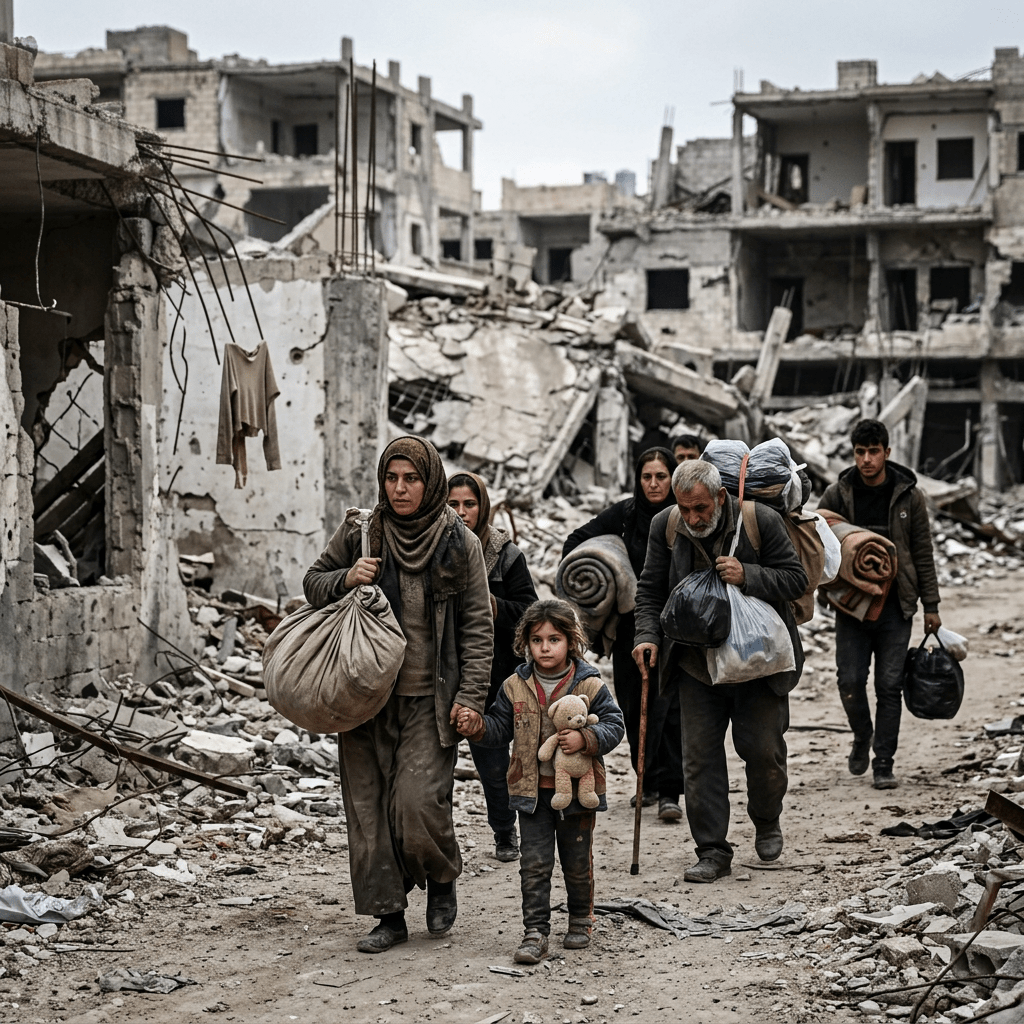
Israel’s Murderous Collective Psychosis


Expulsion: How Israel’s Undefined Borders, Messianic Ideology, and Permanent War Economy Manufacture Consent for Genocide

The 82%

In March 2025, a Penn State University survey published in Israel’s Haaretz newspaper delivered the following article: 82% of Israeli Jews support the forced expulsion of Palestinians from Gaza, with 47% endorsing the killing of all inhabitants in conquered enemy cities—referencing biblical conquest narratives .

A separate Israel Democracy Institute poll found that over 80% of Israeli Jews believe Israel should consider Palestinian civilian suffering in Gaza only “to a very small extent” when planning military operations .

These figures represent not a spontaneous reaction to October 7, 2023, but the culmination of a 76-year project since the Nakba of 1948 of historical erasure, legalized discrimination, and ideological indoctrination.

Israel’s refusal to define its borders, its dependence on permanent war, the systematic theft of Palestinian land, and the rise of messianic religious extremism have all converged to create what researchers call a “state of permanent potential expansion”—where ethnic cleansing is not an aberration but a structural necessity. A murderous ideology combining white supremacism , ancient Yiddish messianist texts , the collective trauma response to the Holocaust and extreme violence and sadism.


Part I: The Foundation of Erasure—1948 and the Nakba

The Template of Dispossession

The Nakba—the 1948 expulsion of over 700,000 Palestinians—established the blueprint for Israeli land acquisition that continues today. Immediately after that expulsion, Israel controlled 20 million dunams (20,000 km²) of Palestinian land—over three-quarters of all land in Palestine . This was not merely military occupation but the beginning of a legalized system of dispossession.

The “Transfer Committee,” headed by Jewish National Fund (JNF) director Yosef Weitz and approved by David Ben-Gurion, implemented a plan to destroy Palestinian villages and prevent refugee return . Between 360-429 villages were destroyed, with 345 new Jewish communities established on refugee land by 1953 .

The 1950 Absentee Property Law transformed de facto seizure into de jure ownership. This law defined “absentees” so broadly that it included Palestinians who were inside Israeli-controlled territory but temporarily away from their homes . The law allowed the Custodian of Absentee Property to sell confiscated land to the Development Authority, which then transferred it to the Jewish National Fund (JNF)—whose charter restricts land to Jewish ownership only .

The Absence of Borders: A Strategic Choice

When David Ben-Gurion declared Israel’s establishment on May 14, 1948, he deliberately refused to specify borders . This was not administrative negligence but strategic design. To this day, Israel has never defined its international borders beyond those with Egypt and Jordan, while state maps—including those presented by Prime Minister Netanyahu at the United Nations—show Israel covering the full expanse from the Jordan River to the Mediterranean Sea .

The 1949 Armistice Lines were explicitly designated as “without prejudice to future territorial settlements” , creating legal ambiguity that Israel has exploited for 76 years. This refusal to define borders creates what scholars call a “state of permanent potential expansion”—where territory is never finally acquired, only temporarily held, with further expansion always justified as security necessity.


Part II: The Architecture of Discrimination—Legal Apartheid from 1948 to Present

Phase 1: Military Rule (1948-1966)

Palestinian citizens of Israel were subjected to military government until 1966, living under the same British Mandate Defense Laws that Zionists had previously denounced as “inhuman and unjust” . During this period, Israel stripped Palestinian Arabs of a further estimated one million dunams of land through “security” designations and cultivation laws .

Phase 2: The Dual Legal System (1967-Present)

After 1967, Israel described capturing the West Bank and Gaza as “finishing the job”—the job being the ethnic cleansing begun in 1948 . The same pattern of dispossession was repeated, but without even the pretense of equality:

  • Jewish settlers in the West Bank live under Israeli civil law with full rights and protections
  • Palestinians are governed by over 1,800 military orders enforced through military courts with conviction rates exceeding 99%
  • This meets the legal definition of apartheid: an institutionalized regime of systematic racial oppression

The JNF’s Role in Structural Discrimination

The Jewish National Fund(JNF) owns 13% of Israeli land and manages another 80% through the Israel Land Administration, giving it control over 93% of all land in Israel . Its policies explicitly restrict land to Jews only. A 1961 Covenant between the JNF and Israeli government formalized this apartheid structure . Even when the Israeli Supreme Court ruled in 2000 that this discrimination was illegal (Katzir-Qaadan case), the state simply offered to compensate the JNF with equal amounts of land to maintain Jewish-only ownership .

The 2018 Nation-State Law: ‘Legalising’ Supremacy

The “Basic Law: Israel as the Nation-State of the Jewish People” (2018) constitutionalised the hierarchy established in 1948.

The Basic Law:

  • Declares Jewish settlement a national value that the state must encourage and promote
  • States that “the right to exercise national self-determination in the State of Israel is unique to the Jewish people”
  • This makes racially segregated housing official state policy, completing the trajectory from the 1950 Absentee Property Law to constitutional apartheid

Part III: The Permanent War Economy

Israel’s economy is structurally dependent on military conflict.

  • Military spending reached 30.46% of GDP in 1975 and averaged 11.8% from 1960-2024—nearly triple the world average of 2.2%
  • In 2024, military spending hit $46.5 billion (8.78% of GDP), second only to Ukraine globally
  • Defense exports reached $13.1 billion in 2023, representing 2.5% of total GDP and 100% growth since 2018

The Gaza Laboratory

Gaza serves a dual economic function: testing ground and showroom for Israeli military technology. As one analysis notes, “Gaza has become the world’s largest laboratory for drone assassinations and mass killing,” where Palestinians serve as “human test subjects” for commercialized cruelty . Each military offensive—from Operation Cast Lead (2008-2009) to Operation Protective Edge (2014) to the current genocide—acts as a product demonstration for international buyers.

Weapon Diplomacy

Arms exports function as foreign policy tools. Between 2014-2018, Israel was the world’s 8th largest weapons exporter (3.1% of global arms exports) . After the 2020 Abraham Accords, military exports to Arab states surged, reaching record highs of $12.5 billion in 2022 . This creates a feedback loop: military operations against Palestinians generate “combat-proven” technologies that are exported globally, with profits funding further military development.

The Constant War Machine

Israel has maintained continuous military operations since 1948, with major invasions and campaigns occurring in every decade:

Lebanon: Six Invasions in 50 Years :

  • 1978: Operation Litani—20,000 troops occupied southern Lebanon
  • 1982: “Peace for Galilee”—full invasion reaching Beirut, 60,000 troops, 800 tanks
  • 1993: Operation Accountability—displacing 500,000 civilians
  • 1996: Operation Grapes of Wrath—Qana massacre killed 106 civilians in UN compound
  • 2006: July War—34-day conflict with Hezbollah
  • 2024: Third Lebanon War—ground invasion following pager attacks
  • 2025/2026 Current ground invasion with recent temporary cease-fire (April 2026)

Gaza: The Never-Ending Campaign:
Since Hamas’s 2006 election, Israel has conducted Operation Cast Lead (2008-2009), Operation Pillar of Defense (2012), Operation Protective Edge (2014), Operation Guardian of the Walls (2021), Operation Breaking Dawn (2022), and Operation Swords of Iron (2023-present—ongoing genocide).


Part IV: Paramilitary Settler Violence

Settler violence is not random criminality but systematic, politically-motivated terrorism designed to expand territorial control and increasingly formally supported by Israeli Defence Force personel and weaponry.

Historical Evolution:

  • 1980s: Settler violence emerged as a “key factor undermining Palestinian security and livelihoods”
  • 2005-2008: The “price tag” strategy emerged after Israel’s Gaza disengagement, with settlers exacting “prices” against Palestinians in retaliation for any restrictions on settlement expansion
  • 2023-2024: Massive surge in violence. Since October 2023, The United Nations Office for the Coordination of Humanitarian Affairs (OCHA) has documented 1,536 settler attacks resulting in 152 Palestinian casualties and 1,226 property damage incidents

The Pattern of Violence:
Settler attacks follow a clear template: physical assaults, arson of homes and mosques, uprooting olive trees, stealing harvests, and blocking access to land. Between January and October 2024, settlers vandalized over 26,100 Palestinian-owned trees . In March 2024 alone, at least seven Palestinians were shot and killed by settlers—the highest monthly fatality count in a decade .

State Complicity:
Israeli forces are frequently present during attacks but refuse to intervene until Palestinians defend themselves . The Israeli government has accelerated the legalization of outposts that serve as bases for violence—regulating 30 illegal outposts in a single day in March 2025 . Finance Minister Bezalel Smotrich has explicitly called for annexation and dismantling the Palestinian Authority, which has unsurprisingly emboldened settler groups who view displacement as a religious duty .


Part V: The Rise of Messianic Power—Theological Extremism as State Policy

The Demographic and Political Transformation

Over the past ten years Israel has experienced a profound demographic and political shift driven by the explosive growth of religious populations:

Ultra-Orthodox (Haredi) Growth:

  • The Haredi community numbers 1,335,000 (13.6% of the population) with a 4% annual growth rate—nearly triple the general Jewish population’s 1.4%
  • Due to a fertility rate of 6.4 children per woman, half of the Haredi sector is under age 16
  • Projections indicate Haredim will constitute 16% of Israel’s population by 2030, and 32% of all Israelis by 2065

Religious Zionist Radicalization:
While Haredim are growing demographically, Religious Zionism has undergone ideological radicalization. The movement that began with Rabbi Zvi Yehuda Kook’s messianic theology has transformed from a moderate political force into the driver of relentless territorial expansion .

From Fringe to Mainstream: The Messianic Takeover

The January 28, 2024 “Victory Conference” marked a watershed moment. At Jerusalem’s International Convention Center, 10 cabinet ministers and 27 Knesset members (nearly one-quarter of parliament) gathered to call for:

  • The conquest of Gaza
  • Expulsion of its Palestinian population
  • Renewal of Jewish settlement in Gaza and Northern Samaria

Speakers quoted the Book of Numbers: “Then you shall drive out all the inhabitants of the land”—a Blibical Old Testament ‘commandment’ interpreted literally to justify ethnic cleansing .

Netanyahu’s Transformation of Likud:
Benjamin Netanyahu deliberately transformed Likud from a secular nationalist party into a vehicle for religious extremism. As Hebrew University political scientist Gayil Talshir documents, Netanyahu “took a right-wing, national-oriented, liberal party and pulled it hard to the edge,” introducing “extremist religious and messianic elements into the heart of Likud” .

The Temple Mount Movement: Eschatology as Foreign Policy

The Temple Mount movement exemplifies how messianic ideology has been weaponized for territorial expansion. Once considered radical fringe, it has become mainstream through government support:

Ideological Evolution:

  • Pre-1967: Visiting the Temple Mount was forbidden by all leading rabbis as violating Jewish law
  • 1996: The Committee of Yesha Rabbis ruled that Jews “are permitted and even encouraged to enter the Temple Mount” to prevent territorial compromise
  • 2005: The Gaza disengagement caused “the final breakdown of the Kookist interpretation,” making the Temple a “substitute for the messianic vision”
  • 2020s: Support among Likud MKs grew “from virtually nil to almost half”

Government Funding and Support:

  • The Temple Institute received approximately $361,000 from the Ministry of Education and $210,000 from the Ministry of Culture and Sports between 2010-2015
  • Israeli public schools “indoctrinate children” into the movement, “forcefully exposing students to the Temple movements’ versions of history, ideology and Jewish law regarding the Temple Mount”
  • By 2016, Israel’s Chief Ashkenazi Rabbi David Lau publicly declared he wanted to see a temple built in the Noble Sanctuary

Itamar Ben-Gvir’s Ascent:
The appointment of Itamar Ben-Gvir (former disciple of Meir Kahane) as Minister of National Security represents the ultimate fusion of messianic ideology and state power. Ben-Gvir, who was convicted of supporting terrorism and inciting racism, now oversees the police force that once investigated him .

In June 2024, Ben-Gvir declared: “We say in the simplest way, it’s ours” regarding the Temple Mount, adding “We are the masters of Jerusalem and all of the land of Israel” . This is not religious fundamentalism but ultra-nationalism using religion as justification—what scholar Motti Inbari calls “theocratic post-Zionism” .


Part VI: Manufacturing Consent—Education, Media, and the Psychology of Denial

Educational Indoctrination

Israeli education systematically suppresses the Nakba and cultivates militarized nationalism:

  • Military jargon penetration: Classrooms use military terminology that “trivializes military discourse and mode of thinking”
  • Pseudo-military memorial services for fallen soldiers socialize children into militarized nationalism
  • School excursions to military bases and the “Next Generation” (HaDor HaBa) programs cultivate “civilian soft militarism”
  • Textbooks that mention massacres like Deir Yassin justify them because “the slaughter of friendly Palestinians brought about the flight of other Palestinians which enabled the establishment of a coherent Jewish state”
  • The 2011 Nakba Law criminalizes historical truth in educational settings

State-Sponsored Historical Revisionism

Benny Morris, the Israeli historian who documented Nakba atrocities, revealed that Israel’s Defense Ministry operates a secret department (Malmab) that systematically removes historical documents from archives to prevent documentation of 1948 atrocities . Morris himself was denied access to documents he had previously quoted, with archivists stating simply: “now the documents are closed” . This represents what scholars term “memoricide”—the systematic destruction of collective memory .

Media Manufacturing Consent

Research from UCLA’s Study of Hate demonstrates how media framing reinforces educational indoctrination :

  • British media used emotive terms like “atrocities,” “slaughter,” and “massacre” 11 times more frequently for Israeli victims than Palestinian victims, despite disproportionate death tolls
  • 80% of British media articles framed the conflict as “Israel-Hamas war,” aligning with Israeli-preferred narratives that obscure the occupation’s structural violence
  • Israeli attacks were described vaguely while Palestinian actions included weaponry specifications in 99.3% of articles versus 20.5% for IDF attacks

Israeli domestic media has become even more extreme. Channel 14 has been accused by human rights organizations of “incitement to genocide, war crimes and crimes against humanity” .

The Psychological Mechanism of Selective Trauma

The system operates through what researchers call “competing historical truths” where empathy is systematically directed toward one group and denied to another . By suppressing the Nakba and framing Palestinians as eternal enemies, Israeli society maintains what psychologist Vamik Volkan terms “chosen trauma”—the selection of historical wounds (the Holocaust) that justify present aggression, while denying the other’s trauma (the Nakba) .

The Penn State study found that 65% of Israeli Jews believe in a modern-day “Amalek” (biblical enemy), with 93% believing the commandment to “wipe out the memory of Amalek” applies today . This transforms ethnic cleansing from a historical crime into a divine obligation, with Palestinians cast as successors to biblical enemies.


Part VII: The Self-Perpetuating Cycle—Connecting All Threads

Each element of Israeli/Zionist ‘lore’ reinforces the others:

1. Undefined Borders Enable Constant Expansion

Without defined borders, every military operation can be framed as border security rather than foreign invasion. The messianic belief in “Greater Land of Israel” sanctifies the entire territory from the Jordan River to the Mediterranean as divine judgement, making border definition not just politically difficult but theologically impossible .

2. Permanent War Requires Permanent Enemies

The military economy requires constant conflict to maintain funding and test technologies. As the Security in Context analysis notes, “Israel has positioned itself as a global exemplar in urban militarism and securitization, leveraging its experience in the Palestinian territories” . This creates an incentive for military escalation rather than diplomatic resolution or de-escalation.

3. Discrimination Legitimizes Dispossession

The 82% support for expelling Palestinians connects directly to the economic system. When Finance Minister Smotrich states that Ben-Gurion’s “mistake” was not “finishing the job” in 1948 , he articulates the logical conclusion of the permanent war economy: complete territorial control requires demographic transformation.

4. Settler Violence as Paramilitary Enforcement

Systematic settler attacks are used as irregular forces for territorial expansion, operating with state complicity. The 1,536 attacks since October 2023 are not aberrations but policy implementation by other means.

5. Messianism Provides Theological Justification

The messianist right has captured the education system, media, and legal structures to produce the 82% consensus. As Gayil Talshir, professor of political science at Hebrew University observes, Netanyahu has become both master and marionette of this system—using messianists for political survival while being forced to conform to their agenda .

6. The Feedback Loop to Maintain the Murderous Onslaught

The feedback loop is complete: military operations generate “combat-proven” technologies for export → export revenues fund further military R&D (4.5% of GDP—highest in OECD) → military service socializes citizens into militarized nationalism → this produces public support (82%) for further military operations → which justify further territorial expansion under “security” pretexts.


The Unbroken Chain from 1948 to 2024

The 82% support for expulsion, the settler violence, the media complicity, and the educational indoctrination are not aberrations but the logical culmination of a system established in 1948. The Nakba was not a historical event but a template for ongoing dispossession—legalized through the Absentee Property Law, normalized through education, justified through religious ideology, and enforced through settler violence.

As the Penn State researchers noted, October 7 “unleashed demons that have been nurtured over decades in the media and in the legal and educational systems” . Those demons were born in 1948, when Israel chose not to define its borders, and have been fed by every military operation, every land confiscation, and every act of discrimination since.

The “Victory Conference” warning was clear: if Netanyahu compromises on territory, he will be replaced by someone who won’t. The messianists have “cracked the genetic code of how to control the political system in Israel,” offering Netanyahu “great respect and the role of leader of the people” while receiving “dramatic control of the deeper structures of society: the education system, the media, the judiciary, the economy and of course the occupied territories” .

The 82% are not naturally evil individuals. They are the product of a system that has, for three generations, taught them that Palestinian suffering is instrumental to Jewish security, that ethnic cleansing is divine commandment, and that permanent war is the only possible condition.

Until this system is dismantled—its borders defined, its military economy transformed, its messianist ideology challenged, and its historical truths acknowledged—the cycle of dispossession will continue, with each generation finding new justifications for the ancient crime of 1948.

While the U.N. and the West push for a ‘two-state solution” and a return to the 1967 borders, the reality is that a new Palestine is no longer a viable economic or security option because of the destruction caused by Israel in the intervening years. Only a single state solution is now possible. A state where Palestinians and Israelis live side by side in peace, and where democratic rights for all citizens are respected and upheld.

That will require a comprehensive re-education programme for the 80% Israelis who currently favour genocide to learn how to respect those who they have been conditioned to consider as ‘other”. It can be done, and post-apartheid South Africa can serve as a somewhat imperfect model for this process.


Sources and Further Reading

Polling Data and Public Opinion:

Historical Documentation:

Economic Analysis:

Messianism and Politics:

Education and Media:

Settler Violence:

Demographic Data:


This article synthesizes peer-reviewed research, UN reports, and investigative journalism to present a comprehensive analysis of the structural factors behind current Israeli public opinion. All statistics and claims are linked to verifiable sources.

Racism and the Iran War


How White Supremacy Fuels the West’s Assault on Iran

From the 1953 Coup to the 2026 War—A Pattern of Racialized Resource Theft

The bombs falling on Iranian schools, hospitals, and residential neighborhoods in early 2026 are not merely acts of war. They are the violent expression of a centuries-old ideology: white supremacy. The United States and Israel’s assault on Iran represents the latest chapter in a colonial playbook where non-white nations are systematically dehumanized, their sovereignty violated, and their resources plundered—all under the guise of “democracy,” “security,” or “civilization.”

To understand the current conflict, we must strip away the propaganda and examine the racial and economic architecture that has driven Western policy toward Iran for over seven decades.


The Original Sin: 1953 and the Birth of Modern Iran Policy

The template was set in August 1953, when the CIA and MI6 orchestrated a coup against Iran’s democratically elected Prime Minister Mohammad Mossadegh. His crime? Nationalizing Iran’s oil industry to free his people from British Petroleum’s colonial extraction. The response from London and Washington was not diplomacy—it was regime change through terror.

Operation Ajax deployed “paid terrorists within Iran to stir up trouble,” as CIA agent Kermit Roosevelt arrived with suitcases of cash to bribe newspaper editors, manufacture protests, and create a sham communist threat . The Shah was restored, Savak (his brutal secret police) was trained by the CIA, and 40% of Iran’s oil fields were signed over to U.S. companies . Some 300 Iranians died in the streets so that white-controlled corporations could maintain their grip on Persian oil.

This was not about communism. It was about race and resources. As the Zinn Education Project notes, American textbooks still sanitize this history, claiming the CIA merely “backed” a coup rather than orchestrating a terrorist campaign against a democratic government .


The “Regime” Label: 47 Years of Racialized Delegitimization

Since the 1979 revolution, Western media has religiously referred to Iran’s government as a “regime”—a term rarely applied to Western allies like Saudi Arabia, despite its absolute monarchy and routine beheadings. This linguistic violence serves a purpose: it transforms a sovereign nation into a rogue entity requiring “management” by civilized (white) powers.

The double standard is stark. The Gulf States are “kingdoms” despite being hereditary dictatorships. Israel is a “democracy” despite maintaining an apartheid system over millions of Palestinians. But Iran—whose people have participated in more genuine electoral contests than most U.S. allies in the region—is perpetually a “regime.”

This vocabulary reflects what scholar Vijay Prashad calls “the darker nations” thesis: the global South exists in the Western imagination only as a problem to be solved, never as equals with legitimate interests.


The 2025-2026 Wars and School Children

The Twelve-Day War of June 2025 and the subsequent 2026 conflict have revealed the true character of Western-Israeli military doctrine. When Israeli and U.S. forces bombed the Shajareh Tayyebeh Girls’ Elementary School in Minab on February 28, 2026, killing at least 168 people including scores of children, they were continuing a tradition of racialized warfare .

Satellite imagery confirmed the strike was likely conducted by a U.S. Tomahawk cruise missile. The Pentagon’s response? “We’re investigating.” President Trump suggested Iran bombed its own school. This is the logic of supremacy: brown children’s lives are collateral damage in a game where only white strategic interests matter .

The pattern is deliberate. DAWN (Democracy for the Arab World Now) documented scores of schools, health facilities, and fuel depots bombed by U.S. and Israeli forces, with white phosphorus dropped on civilian communities . These are not accidents. They are war crimes rooted in the belief that Iranian lives are expendable.

As DAWN’s Omar Shakir stated: “The international community’s failure to act when the most fundamental norms of international law are being challenged risks plunging the world further into a lawless era” . But this “lawlessness” is selective—it applies only when non-white nations assert sovereignty over their resources.


The Chosen People Narrative: Israel’s Racial Theology

Central to this conflict is Israel’s self-conception as “the chosen people”—a theological framework that has been weaponized into a license for ethnic cleansing. The “Greater Israel” project, stretching from the Euphrates to the Nile, requires the removal or subjugation of non-Jewish populations. This is not ancient history; it is current Israeli government policy. Israel is the only country in the world that does not have defined borders; since its inception in 1948, it has constantly expanded its borders in order to fulfil its founders’ messianistic dream of a Greater Israel

The genocidal attacks on Palestinians—documented by the UN Commission of Inquiry as war crimes and crimes against humanity—are the laboratory for techniques now being deployed against Iran . When Israeli forces disguised themselves as medical personnel to kill 41 civilians in Lebanon in March 2026, they were demonstrating that perfidy is permissible against non-white enemies .

The infantile belief in divine selection—used to justify the maiming, murder, and terrorizing of non-Israelis—finds its parallel in American exceptionalism. Both ideologies depend on the fundamental dehumanization of the Other. Both require the constant manufacturing of existential threats to maintain racial hierarchy.


The Real Target: Oil, Hormuz, and the Anxiety of White Decline

Strip away the rhetoric about Iranian nuclear weapons—despite Ayatollah Khomeini’s fatwa against them—and the true object of Western aggression becomes visible: oil and strategic control.

Iran’s insistence on uranium enrichment is not about bombs; it is about energy sovereignty. The West Asian region contains the world’s most critical petroleum reserves, and the Strait of Hormuz is the chokepoint through which global capitalism breathes. When Iran asserts control over its own energy destiny, it threatens the white-dominated global order.

The 1953 coup was about oil. The decades of sanctions are about oil. The current war is about oil. The “white supremacist view that these other non-white people are inferior” serves to legitimize the theft of their resources. As one analyst noted, even “precision warfare” against Iranian targets killed thousands of civilians—a “stark reminder” that technological sophistication does not erase racialized brutality .


The Complicity of the “International Community”

The West’s Gulf allies—Saudi Arabia, UAE, Qatar—play their assigned roles in this racialized hierarchy. These “kingdoms” (never “regimes”) provide cover for the assault on Iran, their own populations suppressed by the same security apparatuses supplied by Washington and London. They are the house managers of the white supremacist estate in West Asia.

Meanwhile, Western media continues its 47-year project of manufacturing consent. The war is framed as “defensive,” Iranian retaliation as “terrorism,” and civilian casualties as unfortunate necessities. When Iranian missiles strike military targets in Israel, it is an outrage; when U.S. missiles destroy Iranian schools, they are “tragic mistakes” .

Forty-seven years of Western and UN sanctions on Iran have also resulted in many Iranian deaths through loss of access to essential services and increasing poverty. The supposed rationale for the sanctions was that Iran was developing a nuclear weapon- something that Iran has consistently declared it was not going to do. It is abundantly clear that Iran, with its very sophisticated academic and industrial capacity, could have developed nuclear weapons decades ago if it had wished to.

This is the epistemic violence that accompanies physical violence—the systematic erasure of non-white agency, pain, and legitimate grievance.


Breaking the Cycle

The war on Iran is not an aberration. It is the continuation of a colonial modernity that divides the world into civilized (white/aligned) and barbaric (non-white/independent) nations. From the 1953 coup to the 2026 bombing of schoolchildren, the through-line is clear: the West will not tolerate resource sovereignty in the hands of non-white peoples.

To oppose this war requires more than anti-war activism. It requires the dismantling of the ideological architecture that makes such wars thinkable—the racial hierarchies, the exceptionalist theologies, the media frameworks that render some children worthy of mourning and others merely statistics.

The closure of the Strait of Hormuz under international law, the breaking of international law by Israel and the U.S., the bombing of universities and hospitals—these are not separate issues. They are facets of a single system of domination that must be named, confronted, and dismantled.

The war is not about nuclear weapons. It is about who has the right to exist, to govern, and to benefit from the planet’s energy source. Until we confront the white supremacy at its core, the bombs will continue to fall.


For the children of Shajareh Tayyebeh Elementary School. For the memory of Mossadegh. For a world where sovereignty is not determined by skin color.

AI generated audio version of this post, below..

Resources

For accurate and largely dispassionate analyses of the Iran war and international affairs generally, try Youtube interviews with Prof. Jeffrey Sachs, Alastair Crooke, Prof. John Mearscheimer, Prof. Glenn Diesen, Colonel Larry Wilkerson, and Larry Johnson.

False Outrage

Western commentators continue to express outrage about Trump’s latest international adventures: Nigeria, Venezuela and more particularly Ukraine and Greenland ( because they have ‘good white’ populations.

I was struck by an Australian Broadcasting analysis of 11th January 2026 which stated, without a hint of irony, that Trump had assaulted the ‘once enshrined concept of national sovereignty, overthrowing eight decades of rigidly enforced global order.

Obviously the analyst didnt understand the concept of history, or perhaps was born less than decade ago. The United States since its inception has been launching wars of extreme savagery and brutality ( something the Israelis seem to have inherited from them and the UK) . From the extermination of North American Indians, the Phillipines genocide in 1898, the many many wars in South America over the past 200 years to install compliant dictatorships, to the post second world war killing spree, with CIA endless covert murders across the world, the Korean War genocide, then on to the wars in Vietnam, Cambodia, Iraq, Afghanistan, Libya, Syria, there has most certainly not been 8 decades of peace because of the West’s global world order!! (or the ‘International Rule Based Order ‘ if you prefer (i.e. the US rules and you obey)

Trump’s attempts at a land-grab of Greenland, along with trying to plunder Venezuelan oil and supporting Israel’s imminent (second) war against Iran are simply just a continuation of America’s foreign (and internal) policy since its inception in 1792.

U.S. analysts decry Trump and his coterie for undermining democracy and freedom and not wanting to be an empire like the 19th century European powers, frequently quoting statements made by the U.S.’s founding fathers like Jefferson and Washington. Those analysts use the founding fathers statements and quotes from the American Constitution as proof that the US is essentially a ‘good’ nation.

What analysts in the US particularly object to about Trump and his thuggish entourage, is that they are saying the things that they have themselves always really believed in, OUT LOUD.

Perhaps those founding Fathers believed in the things they were saying, but the evidence suggests they were trying to create a country where the wealthy and landowning civilised ‘white’ (really pink) class could live in peace without threats from the uncivilised darker peoples of the world. And naturally, because those peoples were uncivilised it made perfect sense for the US military to treat them as sub-human.’Humanity’ was reserved for the white-skinned folks. Trump and his racist coterie and oligarchs are therefore, the continuation of a long lineage of theft and thuggery.

We should be careful though to emphasise that the other pink ‘ruling classes” of the world also subscribe to this obscene and absurd view. The EU ex head of EU ‘diplomacy’ Josep Borrell’s statement in 2022 that “Europe is a garden. Most of the rest of the world is a jungle. The jungle could invade the garden” is a classic example of this racist ignorant ideology.

Borrell seemed to have forgotten that the only reason Europe had had- up till then at least, been a ‘garden’ is because it had murdered and plundered its way through most of the global south over the past 500 years and used those resources to create Europe’s safe and pretty garden. Ironically, Europe now relies economically on the non-pink migrants it has brutally forced from their homelands for its cheap labour and maintaining its GDP.

Similarly and with great irony, what helped to make “America Great” in previous times was the enormous number of immigrants from ‘pink’ Europe.

Trump and his ‘administration’ are now attempting, with great lawless brutality, to cut off that very lifeblood of immigration to US simply because they are now the wrong colour. In Trump’s desperate attempt to ‘Make America White Again’, that cheap labour, which as of late 2025, made up approximately 19% of the total U.S. labour force, is now under threat, thus undermining the very basis of US agriculture and industry. One is reminded of Australia’s attempts for 50 years to to keep Australia ( besides the ‘sub-human’ indigenous aboriginal population) ‘safe’ for Europeans using their “White Australia” policies.

With the meteoric rise of China as a global economic power and its vastly superior research and industrial base, the West is under massive threat to its global dominance. China expands its opportunities for wealth, not through Western-style theft and subjugation, but through contracts and mutual agreements. The Belt and Road initiative is a classic example of this practice.

In theory the US and the West could realign their foreign policies to work alongside China and the Global South to develop cooperative and mutually beneficial trade, while reducing the threat of war.

This however does not seem to be an option for the US or the rest of the West. 500 years of exploitation and murder have paralysed Western decision-making and innovative thinking.

The Role of Racism in Western Colonialism: A Historical & Contemporary Analysis

Racism was not a side-effect of empire—it was its operating system. From the 15th-century “Age of Discovery” to 21st-century border regimes, racial hierarchies have justified land theft, slavery, resource extraction and permanent war.

We outline how racism powered colonialism—and why it still shapes our world, as we see in the large recent populist responses in Europe and the US to immigration from non-white countries.

I would argue that we are, as human beings, inherently racist. We cherish the human group we belong to; the way we look, the way our group behaves, the things that are important to us. Those that look, and/or behave differently to us are therefore not ‘one of us”- they are outsiders, a threat to us and our group’s safety and wellbeing. Who we are is ‘normal’ – those ‘others’ are not normal.

That defensiveness against ‘others’, I would argue, is the root of racism. While that fear response may be deeply imbedded in our psyche, it can, and must be rooted out with clear rationality and understanding for those ‘others’. If we are to be truly human, we must treat all other living things with the kindness and compassion we expect for ourselves.

Conquest Begins with Name-Calling: “Savage” as a Licence to Kill

Greek and Roman writers already labelled outsiders “barbarians”, but the Atlantic world turned prejudice into policy. English colonisers depicted the Gaelic Irish as dark-skinned degenerates; Spaniards painted Indigenous Americans as cannibals; Dutch and Portuguese traders recast West Africans as “beasts of burden”. Once economic incentives for plantation slavery exploded, stereotypes hardened: Africans were now naturally servile, sexually voracious, mentally inferior—and therefore made for slavery. The perjorative demeaning language used to describe non-whites by ‘white’ people across the world is no accident. Language defines..

In the 21st Century, non-white immigrants to Western countries are seen as a threat to European ‘values’ culture and economic wellbeing. Current immigrant levels to the US and Europe are a direct result of economic and safety destabilisations caused by earlier extractive colonial policies and the West’s immensely destructive wars in those countries. In addition, Western governments, as opposed to their ‘white’ populations, have welcomed these new cheap labour immigrants to bolster their GDPs.

“Scientific” Racism: Empire in a White Lab-Coat

19-century European universities measured skulls, mapped skin tones and coined terms like “Caucasoid” to give racism the veneer of objectivity. The Dawinian science of evolution was used to delineate some human ‘races’ as less genetically evolved, with of course the white races at the top! This absurd and unscientific use of evolution were used by many in the West and exploited in the eugenics movement, and in its extreme form by the Nazis, and latterly the Zionists.

3. Britain’s ‘Liberal’ Empire

“Violence was not a one-off occurrence… it was systemic and part and parcel of Britain’s liberal imperialism.”– ‘Legacy of Violence-
A History of the British Empire’ Caroline Elkins (2023)

In the 19th century, Medical journals warned that “negro lungs” were unfit for cold climates to help justify keeping indentured labourers on Caribbean sugar plantations. Anthropology museums displayed colonised peoples alongside fauna. These ‘scientific’ findings were incorporated into colonial legal codes: the 1885 Berlin Conference carved up Africa on the assumption that Whites could best steward African land and bodies. Britain’s ‘protectorates’ listed below are a ‘sublime’ example of the racist mentality of the British Foreign Office. Why these populations would need ‘protecting’ from themselves was never adequately explained…

TerritoryProtectorate proclaimedToday part of …
Malta1800Malta
Ionian Islands1815Greece
Mosquito Coast1838Nicaragua / Honduras
Aden (W. & E. Protectorates)1872Yemen
Cyprus1878Cyprus
Sultanate of Zanzibar1890Tanzania
Bechuanaland1885Botswana
British Somaliland1884Somalia
North Borneo1888Malaysia (Sabah)
Brunei1888Brunei
Sarawak1888Malaysia
Maldives1887Maldives
Sikkim1861India
Barotseland1900Zambia
East Africa Protectorate1895Kenya
Uganda Protectorate1894Uganda
Nyasaland1893Malawi
Northern Rhodesia1924Zambia
Swaziland1903Eswatini
Basutoland1868Lesotho
Gambia Protectorate1894The Gambia
Sierra Leone Protectorate1896Sierra Leone
Nigeria (N. & S. protectorates)1900Nigeria
Qatar1916Qatar
Bahrain1861Bahrain
Trucial Oman1887UAE
Cook Islands1888New Zealand (self-governing)
Niue1900New Zealand (self-governing)
Tokelau1889New Zealand
British Solomon Is.1893Solomon Islands
Gilbert & Ellice Is.1892Kiribati & Tuvalu
Tonga1879Tonga
Oman (Muscat & Oman)1800Oman
Bhutan1911Bhutan

From Kenya’s “Pipeline” detention camps to Malaya’s New Villages, London cast mass incarceration, forced labour and sexual violence as “rehabilitation” for racially suspect subjects. Files were then sealed for decades under the Colonial Papers Destruction Policy.

Comparative Brutality: France, Belgium, Germany


  • French Algeria: Settler colonialism embedded in the département system; with 1.5 million Algerians killed during the 1954-62 war of independence (Al-Jazeera retrospective).

  • Belgian Congo: Leopold II’s rubber regime caused an estimated 10 million deaths—A BBC investigation calls it “one of the greatest mass murders in history”.

  • German South-West Africa: 1904-08 extermination order against the Herero and Nama is now officially recognised by Germany as genocide.

British India: current scholarship puts the excess-mortality death toll attributable to British colonial policy in India between 1881-1920 alone at roughly 50–165 million people.

Racism after the Empires Recede

Decolonisation brought new flags, but not justice. The UN confirms that “colonialism lives on” in racial profiling, poverty and unequal trade. Former plantation economies still dominate global commodity chains, even while end-use processing for value addition to those raw commodities continues to happen in the Global North. France’s banlieues, Britain’s Windrush deportations, and the U.S. racial wealth gap all map precisely onto old imperial shipping routes.

Environment Impacts of Racism

The climate crisis is driven by the same extractive logic that cleared forests for sugar and cotton. Former colonies already suffer temperature increases twice the global average—a direct legacy of shipping carbon to Europe while deforesting the colonies’ natural environment- that same natural world many indigenous populations relied upon for their survival.

Towards Reparatory Justice

  • Unveiling the Truth: Ensure that all colonial archives are opened to the public and for research (UK still classifies this information under the “migrated archives” rule).
  • Reparations: From debt cancellation to technology transfers—see UN-DESA Policy Brief #96 along with fair funding reparations from ex colonial powers for their brutality and economic extraction.
  • Education: Develop truthful, accurate and non-ideologically driven curricula for each ex-colonial country and its coloniser which explains the rationales and impacts of racism and consequent colonialism from each side.

Palestine 2023-25: A Live-Streamed Genocide Enabled by Racialised Imperial Logic

The same racial logic that once classified Indigenous peoples as “savages” and Africans as “natural slaves” is now redeployed to portray Palestinians—especially in Gaza—as irredeemable terrorists whose lives are expendable. Western diplomatic, financial and military support for Israel’s 2023-25 assault is therefore not an aberration; it is the continuity of a 500-year-old pattern in which white-majority states licence settler violence against racialised “others” while declaring themselves civilised.

Genocide is apparently what “non-white” actors commit; white or white-allied states are presumed incapable of it. Western media highlights Israeli “security” and terrorists’ ‘hostages’ while Palestinian deaths are counted in opaque “casualty” statistics, stripped of names, faces, context, and their 70 + years living under Israeli colonisation completely ignored. Bizarrely, peaceful protesters against Israeli savagery in Gaza in France, Germany, Britain and the US, among many, have themselves been labelled as terrorists and arrested.


France banned pro-Palestine demonstrations within days; police invoked emergency powers against students wearing the keffiyeh. The UK Home Secretary equated Palestinian flags with “support for terrorism”. Germany’s Berlin Senate excluded Palestinian speakers under the IHRA definition. These measures show how racialised imperial violence abroad is coupled with shrinking anti-racist space at home.

Trump’s ‘War’ on Immigration

The role of racism in Donald Trump’s immigration agenda is not incidental—it is the engine. From his 2015 campaign launch to the executive orders signed on Day 1 of his second term, Trump has consistently racialised immigrants, fused white-nationalist grievance with policy, and leveraged state power to punish Black, Brown and Muslim communities. Bizarrely the United States economic growth has historically largely been fuelled by immigration- but only immigration from the ‘right’ places; from Western Europe.

Trump’s language about immigrants betrays the racist underpinnings of his anti-immigration policies -‘“These aren’t people. These are animals” (referring to Central-American migrants), “Shithole countries” (Jan 2018): Trump asked why the US admits people from Haiti, El Salvador or Africa instead of Norway..

Such statements activate what scholars call “demographobia”: the fear among whites that they are being “replaced” by higher-fertility non-white minorities.

The Great Replacement theory—the belief that elites are deliberately replacing whites with non-white immigrants—moved from far-right chatrooms to Trump’s 2025 National Emergency declaration, which frames migration as an “invasion” threatening “national character”.

Further Reading & Tools

All links open in a new tab. Bookmark this list for classroom or activist use.

Feel free to republish under Creative Commons CC-BY-SA 4.0 with attribution to the author and a live link to this post.

Demonic Israel and the Savage West

Israel has only 3 months till September to launch a new aerial attack on Iran.In September Iraqi airspace will be closed to the US and its allies, as US troops are required to leave Iraq by then. Given that Israel and the US clearly did not achieve it s objectives in this most recent attack on Iran, we can expect further surprise attacks on Iran in the near future.

Will Iran finally go nuclear? will they have learnt their lesson and build a full military alliance with Russia China and North Korea? – we shall have to wait and see…

There is clear evidence of the UK, Germany and France providing the air-refuelling tankers for Israeli F35s to reach the Iranian border, fire their missiles, and return to base. Undoubtedly Five Eyes (Australia, New Zealand, Canada, UK and US) have also provided the intelligence targeting data for the Israelis both for the Iran war and for the Gaza genocide.

Germany France and UK have thus been intimately involved in supporting this unprovoked war while they and the EU have continued to pretend such an attack is legal in international law.

International law is very clear-Israel had absolutely no legal grounds to attack . Its excuse was that Iran was about to possess nuclear weapons- a claim Netanyahu has been making for 40 years. Alistair Crooke (below) however claims that Palantir’s AI predictive software created a false impression of a sudden surge in Iranian enrichment, which contributed to the urgency to attack by the Americans and Israel.

80% of Israelis support Palestinian genocide- its Jewish citizens have been indoctrinated into a bizarre ideology that says they are the chosen ones and therefore they have the right to act with total impunity- sadistic brutal murder torture and starvation- any thing goes- and the US and the rest of the West have fostered and enabled that savagery to blossom and erupt into its demonic current state. Over $150 billion in mostly military aid from the US alone since 1948, has enabled Israel to continuously expand its territories.

Israel has violated at least 30 UN Security Council resolutions and over 100 resolutions from other UN bodies, totalling more than 130 violations of international consensus.

Nevertheless it is very clear- despite an Israeli security blackout, that Israel’s economy, already fragile, has been significantly impacted by Iranian missile strikes. Bloomberg estimates the economic costs alone to Israel caused by Iran’s missile strikes at $3.5 billion. Although Finance Minister Bezalel Smotrich told a press conference the total cost of war could be as high as $12 billion. The Israeli Haifa oil refinery will take at least a month to repair and its major shipping port, Haifa, significantly damaged and a number of military facilities either destroyed or damaged.

Unlike Israel with its drone terror attacks in Iran, its assassinations of Iranian civilians and terror bombings in Iranian cities, Iran has displayed remarkable circumspection in its attacks-minimal civilian Israeli deaths (despite the repeated images from Israeli propaganda of little Israeli children unscathed and perfectly clean, being held by Israeli soldiers after being ‘rescued” from the rubble) have been very small- indicating Iranian precise targeting of military targets.

Clearly this was a regime change operation. The West expected the Islamic regime in Tehran to fold quickly and rapturous joy would break out in the streets at Iran’s ‘liberation”. In fact, most (but not all) Iranians rallied round the flag and its likely that -despite 40 years of Western sanctions , Iranian infrastructure will be quickly rebuilt -especially with Chinese assistance (Iran is a vital node in China’s Belt and Road transport network to and from the West to China with a major rail network recently completed from China).

Iranian International, with enormous funding from the US and Israel (and likely other funding sources in European governments) had been poised to insert the Shah of Iran’s son Reza Pahlavi as the new “king” of Iran once the regime capitulated. The fact that Reza Pahlavi was heir to his father’s bizarre and corrupt reign (with his brutal SAVAK secret police trained by Mossad, Mi6 and CIA in torture techniques), and is entirely in the pocket of the genocidal Israelis and corrupt Americans and British who would then steal Iranian oil, wasn’t deemed to be a problem somehow. Israel’s title for their war with Iran , ‘Rising Lion’ is both a reference to Talmud texts, but also to the flag of the late Shah.

https://commons.wikimedia.org/wiki/Atlas_of_Israel

Like everything associated with the state of Palestine and the history of Israel since the Nakba , Zionists have attempted to revise history and pretend that Palestinians never occupied or owned the land that was stolen from them by the Zionists, starting with the Nakba of 1948 and progressing to the present day. aijac.org.au

Thankfully, Trump’s bombasity, lies and stupidity have fed into the perception of many in the South of a steady decline in American power and influence. The recent bizarre events at the NATO Summit in the Netherlands of Trump being called ‘Daddy ‘and all the NATO states kowtowing to Trump in pledging 5% military spending by 2035, a pledge which would undoubtedly bankrupt many of the EU states.

America and Israel and NATO/Five Eyes had expected an easy victory over Iran- decapitate the military leaders through assassinations, disable the Iranian neural networks for their missile defence systems and radars , blitz Tehran and then demand capitulation. The assassinations were largely successful, the hacking of the networks worked- but only for 8 hours-( the West had not anticipated how fast Iranian engineers could get the system back up and running)- and then the Iranian missile response began..

Indisputably Iran has suffered major but not irreparable losses in this war; the assassinations of some key military leadership and nuclear scientists, military facilities and missile systems destroyed.

However the genocide in Gaza by the Israeli “Defence” Forces (IDF) continues at the same brutal pace- with continued support form the US and the West. Every day Palestinians are being shot and killed by snipers , tanks and artillery as they try and negotiate the gate-pens to get some food ‘ provided’ through Israeli and US agencies for their starving families . While condemned by the UN and many in the South, Western nations are silent and complicit in this total inhumanity: a massive indictment of all that the West has pretended to stand for in the last 70 years- freedom, safety, democracy and the rule of law.

And for those who would like to believe this total absence of humanity and human rights for Palestinians is a recent phenomenon, please look at the following data below of the deaths and displacements by Israel since the Nakba of 1948. The state of Israel is an abomination, a pariah state fully supported by the West.


1. Displacement and Refugees

  • 1948 Arab-Israeli War (Nakba) :
    • Approximately 700,000 Palestinians were displaced or became refugees, including many women and children.
    • The UN estimates that 75% of Palestinian refugees today are women and children.
  • 1967 Six-Day War :
    • Another 300,000+ Palestinians fled or were expelled from the West Bank, Gaza, and East Jerusalem.
    • Women and children made up a significant portion of these refugees.
  • Total Palestinian Refugees Today :
    • Over 7 million Palestinians are registered as refugees or displaced persons globally (UNRWA and UNHCR data).
    • The majority are women and children due to generational displacement and high birth rates.

2. Casualties in Conflicts

  • Major Conflicts Since 1948 :
    • 1948–1956 : Exact numbers for women and children are unclear but likely high due to mass displacement.
    • 1967 & 1973 Wars : Limited data exists, but civilian casualties included many women and children.
    • First Intifada (1987–1993) : ~1,000 Palestinian children killed; women’s deaths unrecorded.
    • Second Intifada (2000–2005) : Over 3,000 Palestinian children killed; women also died in airstrikes and shootings.
    • Gaza Wars (2008–2009, 2012, 2014, 2021, 2023–2024) :
      • 2023–2024 Gaza War : As of April 2024, over 10,000 women and 18,000 children reported killed (Palestinian Health Ministry). Independent experts warn underreporting due to chaos and blocked aid.
      • 2014 Gaza War : ~2,200 Palestinians killed, half of them children (UN OCHA).

3. Incarceration and Detention

  • Since 1967 , Israel has detained thousands of Palestinians, including:
    • Women and Children :
      • Over 10,000 Palestinian women have been imprisoned since 1967 (Addameer, a Palestinian rights group).
      • Children : Thousands detained annually for alleged “security offenses.” In 2023 alone, over 8,000 children were arrested (UNICEF and DCIP reports).

4. Demographic Impact

  • Population Growth : Despite displacement and casualties, Palestinian populations in the West Bank, Gaza, and refugee camps have grown due to high birth rates.
  • Vulnerability : Women and children face disproportionate risks in poverty, restricted movement, and limited access to healthcare/education.

CategoryApproximate Numbers (since 1948)
Refugees/displacedMillions (majority women/children)
Casualties (conflicts)Hundreds of thousands (exact numbers disputed)
IncarceratedTens of thousands of women/children

Resources

  • United Nations Relief and Works Agency (UNRWA)
  • Office for the Coordination of Humanitarian Affairs (OCHA)
  • Palestinian Central Bureau of Statistics
  • Israeli human rights groups (e.g., B’Tselem)
  • Reports from Al Jazeera, BBC, and Reuters

https://www.moonofalabama.org/2025/06/mark-sleboda-what-the-hell-just-happened-in-the-middle-east-you-may-ask.html#more

The Yemen Tragedy

Now that Trump ( as of May 2025) has made the decision not to continue U.S. air attacks on targets in Yemen (for now), the following semi-legal analysis of the strikes below is perhaps somewhat moot. However it does provide a glimpse into the legalities of the multiple aggressions by Western countries in the past 75 years since World War 2.

After an almost shootdown of an ‘invisible’ US F35 aircraft, and the loss of 2 (possibly 3) F18s (valued at $70 million each) that had ‘fallen off’ US aircraft carriers in the Gulf, along with about 10, 30 million dollar MQ9 drones shot down by Ansar-allah (what the West MSM as one voice like to call “Iran backed rebel Houthis”-all in one breath), it must have been clearly apparent, even to Trump, that the billion dollar US bombing campaign against Yemen was going nowhere.

Additionally, because the US had (and has) very little accurate information on where Ansarallah weapons and military was on the ground they were in fact predominantly (and accidentally?) hitting civilians. In addition the long-standing U.K air support for the Americans on the Arabian peninsula was entirely without targeting or strategy, but largely an attempt to try and demonstrate that Britain was still a force to be reckoned with in the Gulf.

One cannot however be so charitable about Israeli bombings of civilian Yemen targets-(civilian ports and airports), who used their traditional methods of terror and brutality to try and intimidate Ansarallah.

What follows is an analysis of the legalities of this bombing campaign, supposedly initiated by first Biden and then Trump, to stop Ansarallah closing the Gulf of Aden and Red Sea to shipping bound for the Israeli Red Sea port of Eilat (top right hand section of map)

Legal Analysis of US/UK Strikes in Yemen and Potential Violations of International Humanitarian Law (IHL)

The US and UK military interventions in Yemen, particularly against Houthi targets, raise significant legal questions under international humanitarian law (IHL)—also known as the laws of war. Below is a deeper examination of their compliance with key legal principles.


Analysis of the Legal Framework Governing US Strikes against Yemen

A. Applicable Law

  • Geneva Conventions (1949) & Additional Protocol I (1977): Govern the conduct of hostilities, including distinction, proportionality, and precautions in attack.
  • UN Charter (Article 2(4) & Article 51): Prohibits the use of force except in self-defense or with UN Security Council authorization.
  • Customary IHL: Binding on all parties, including non-state actors like the Houthis.

B. Justifications for US/UK Strikes

  • Self-Defense Argument (Article 51, UN Charter): The US and UK argue strikes are necessary to protect maritime security (Houthi attacks on Red Sea shipping).
  • Legal Debate: Some scholars argue this stretches self-defense doctrine, as Houthi attacks may not constitute an “armed attack” justifying unilateral force.
  • Collective Self-Defense (Supporting Saudi Arabia & UAE): Previously invoked, but less relevant post-2022 since the Saudi-Houthi truce.

2. Key IHL Principles & Potential Violations

A. Principle of Distinction (Civilian vs. Military Targets)

  • Rule: Attacks must only target military objectives, not civilians or civilian infrastructure.
  • Concerns in Yemen:
  • Urban Warfare: Houthis embed military assets in densely populated areas, increasing civilian risk.
  • Reports of Civilian Harm: NGOs (e.g., Mwatana, Amnesty) allege US/UK strikes hit homes, farms, and markets, suggesting possible indiscriminate targeting.

B. Principle of Proportionality

  • Rule: Civilian harm must not be excessive relative to the concrete and direct military advantage anticipated.
  • Challenges:
  • “Double-Tap” Strikes: Some reports suggest follow-up strikes hit first responders, which could be a war crime if deliberate.
  • High Civilian Toll in Past Strikes: Even if targets are legitimate, large-scale civilian casualties (e.g., 2022 Saada prison strike by Saudi coalition) raise proportionality concerns.

C. Precautions in Attack

  • Rule: Parties must take all feasible measures to verify targets and minimize civilian harm.
  • US/UK Practices:
  • Use of precision-guided munitions (reduces but does not eliminate risk).
  • Lack of Transparency: Few public investigations into alleged civilian harm, unlike in Iraq/Syria.

3. Accountability & Legal Consequences

A. Mechanisms for Accountability

  1. Domestic Investigations (US/UK):
  • The US has a Civilian Harm Mitigation and Response Action Plan (CHMR-AP) but rarely discloses Yemen investigations.
  • The UK has no independent Yemen strike review body, unlike its Iraq/Syria oversight.
  1. International Criminal Court (ICC):
  • Yemen is not an ICC member, but if nationals of member states commit crimes on Yemeni soil, the ICC could theoretically investigate.
  1. Universal Jurisdiction:
  • Third countries could prosecute war crimes under universal jurisdiction (e.g., Germany’s case against Syrian officials).

B. State Responsibility & Reparations

  • Under IHL, states must provide reparations for unlawful strikes, but neither the US nor UK has a compensation program for Yemeni victims.
  • Contrast with US payments for civilian harm in Afghanistan/Iraq.

4. Broader Implications & Legal Precedents

  • Escalation Risks: If strikes are seen as disproportionate, they could fuel further Houthi attacks, creating a cycle of violence.
  • Erosion of IHL Norms: Repeated civilian harm without accountability weakens global adherence to laws of war.
  • Potential for Future Cases: If evidence of systematic violations emerges, legal challenges could arise in international courts or via sanctions.

Conclusion: Are US/UK Strikes Lawful?

  • Legally Defensible? The US/UK can argue self-defense and military necessity, but civilian harm incidents raise serious IHL concerns.
  • Accountability Gap: Lack of transparent investigations and reparations undermines claims of compliance.
  • Future Risks: If civilian casualties continue unchecked, legal challenges (e.g., ICC petitions, universal jurisdiction cases) could follow.

The demise of the U.S. ‘rule based order’?

The following is an AI Qwen based analysis of the impact of the U.S. ‘rule based international order’ and the reality of the chaos, wars and destruction its supposed ‘rules’ exert on the world.

The development of this post was promoted by the overwhelming number of New Zealand international political ‘analysts’ who quote the ‘U.S. rule based order’, (not the U.N. set of obligations) as some kind of golden age of civilisation , peace and freedom. -the reality could not be more stark. They fear that the new Trump administration-cum-oligarchy will no longer adhere to that ‘rule based order’ .

So why are these ‘analysts’ referring so enthusiastically to these great ‘rules’ that have caused so much suffering in the world?

It has recently been revealed (Feb.2025) via Wikileaks that the US government’s USAID ‘programme’ has been funding a US ‘non-government’ agency Internews Network, with millions upon millions of dollars to ensure Western media around the world regurgitate media messages ‘consistent’ (tell-tale identical phrasing in news items on issues from Covid responses to the Ukraine war and Russia), with US foreign policy objectives. Could it be that Western university international affairs ‘analysts’ (and politicians) have been similarly compromised over a long period of time?

I leave it to you to judge where their ‘influences’ come from.

AI analysis follows:

The concept of a “rules-based international order” is often invoked by the United States and its allies to describe a system of global governance that emphasizes adherence to international laws, norms, and institutions such as the United Nations, international treaties, and trade agreements. Proponents argue that this order promotes peace, stability, and cooperation among nations by providing a framework for resolving disputes and fostering mutual interests.

However, critics argue that the U.S.-led “rules-based order” has been selectively applied, often serving as a justification for military interventions, economic sanctions, and other forms of coercion that have led to significant human suffering, including mass murder, wars, and violence.

1. Selective Enforcement of Rules

  • Double Standards: Critics argue that the U.S. and its allies have frequently violated the very principles they claim to uphold. For example, the U.S. has engaged in military interventions without UN Security Council approval (e.g., the 2003 invasion of Iraq), while condemning other countries for similar actions. This selective enforcement undermines the legitimacy of the “rules-based order” and can lead to conflicts where weaker states feel justified in acting outside the system.
  • Regime Change and Destabilization: The U.S. has supported or directly engaged in regime change operations in countries like Iraq, Libya, and Syria, often under the guise of promoting democracy or protecting human rights. These interventions have frequently resulted in prolonged civil wars, state collapse, and mass civilian casualties. In Iraq, for instance, the 2003 invasion led to hundreds of thousands of deaths, widespread displacement, and the rise of extremist groups like ISIS.

2. Economic Warfare and Sanctions

  • Sanctions as a Tool of Coercion: The U.S. has frequently used economic sanctions as a tool to punish or pressure countries that defy its interests. While sanctions are often framed as a “non-violent” alternative to war, they can have devastating humanitarian consequences. For example, U.S. sanctions on Iraq in the 1990s contributed to the deaths of hundreds of thousands of civilians due to lack of access to food, medicine, and clean water. Similarly, sanctions on countries like Venezuela and Iran have exacerbated economic crises, leading to widespread poverty and suffering.
  • Weaponizing Global Institutions: The U.S. has also been accused of weaponizing international financial institutions like the International Monetary Fund (IMF) and the World Bank to impose structural adjustment programs on developing countries, which often result in austerity measures, increased inequality, and social unrest. This economic violence can indirectly fuel conflict and instability.

3. Proxy Wars and Arms Sales

  • Arming Conflicts: The U.S. is the world’s largest arms exporter, supplying weapons to both state and non-state actors around the globe. These arms sales often fuel conflicts in regions like the Middle East, Africa, and South Asia. For example, U.S. arms supplied to Saudi Arabia have been used in the Yemeni Civil War, resulting in one of the worst humanitarian crises in the world, with tens of thousands of civilians killed and millions facing famine.
  • Proxy Wars: During the Cold War, the U.S. engaged in numerous proxy wars, supporting anti-communist forces in places like Vietnam, Afghanistan, and Central America. These conflicts often involved backing authoritarian regimes or insurgent groups that committed atrocities against civilian populations. In Afghanistan, for example, U.S. support for the mujahideen during the Soviet-Afghan War helped create conditions that eventually led to the rise of the Taliban and Al-Qaeda.

4. Militarization and the “War on Terror”

  • Global War on Terror: Following the September 11, 2001 attacks, the U.S. launched the “Global War on Terror,” which has been used to justify military interventions, drone strikes, and indefinite detentions in countries like Afghanistan, Pakistan, Somalia, and Yemen. These operations have often been conducted with little regard for international law or civilian casualties. Drone strikes, in particular, have been criticized for causing significant collateral damage, killing thousands of civilians, and radicalizing local populations.
  • Normalization of Violence: The rhetoric of the “rules-based order” often masks the normalization of violence as a means of achieving foreign policy objectives. The U.S. military-industrial complex benefits from perpetual warfare, and the language of “humanitarian intervention” or “counterterrorism” is sometimes used to legitimize aggressive military actions that result in mass death and destruction.

5. Undermining Sovereignty and Self-Determination

  • Imperialism and Neocolonialism: Critics argue that the U.S.-led “rules-based order” often serves as a cover for imperialist policies that undermine the sovereignty of weaker states. By imposing economic and political conditions on countries through institutions like the IMF, World Bank, and World Trade Organization (WTO), the U.S. and its allies have been accused of perpetuating a form of neocolonialism that stifles self-determination and exacerbates inequality.
  • Resistance and Blowback: When countries resist U.S. hegemony or attempt to assert their independence, they are often subjected to punitive measures, including coups, invasions, or covert operations. This resistance can lead to cycles of violence, as seen in cases like Iran (1953 coup), Chile (1973 coup), and more recently, Venezuela and Syria. The blowback from these interventions can manifest in the form of terrorism, insurgency, and regional instability.

Conclusion

While the U.S. and its allies present the “rules-based international order” as a framework for peace and stability, critics argue that it has often been used to justify interventions, sanctions, and other forms of coercion that result in mass violence and human suffering. The selective application of rules, the militarization of foreign policy, and the prioritization of U.S. strategic interests over international law have contributed to a legacy of wars, destabilization, and humanitarian crises. In many cases, the very principles of sovereignty, self-determination, and human rights that the “rules-based order” claims to uphold are undermined by the actions of those who enforce it.

The Ongoing Tragedy for Venezuela

The Venezuelan presidential elections of July 2024 have, not unexpectedly, created more controversy, violence, recriminations and threats.

The US attempt to destablise the Venezulan government through undermining the economy have persisted and intensifed progressively since 2014 . As noted by Alex in the youtube video below- sanctions almost completely destroyed the oil industry that Venezuela relied on for over 80% of its income. The pretence that ‘socialism’ and President Chavez and then President Maduro’s corruption destroyed Venezula rather than the sanctions is a constant repeated trope in Western mainstream media . As noted below Venezuela prior to Chavez was already a failed violent state.

The current constantly repeated trope in mainstream media is that a US funded election surveyer, Edison Research with strong links to the US government and intelligence services, had constructed an exit poll which showed the opposition presidential hopeful Gonzalez, winning by 65%. This sole exit poll has been repeated over and over in ALL Western media in the last few days as proof that the election was fixed by Maduro.

While it is possible that the Maduro government did fix the election, we need more information before we can make that accusation.

The West well knows that extreme external pressure on a nation-such as the Western sanctions and multiple US supported attempted coups that Venezuelans have endured for the past 10 years, can provoke a country to respond with ever tighter internal repression and brutality to control externally controlled dissident forces, and Venezula appears to be no exception to that rule; although the extent of that repression in Venezuela is of course amplified and exagerated by Western media. Current Western media reports of huge demonstrations against Madura in Vernezual’s capital Caracas and beyond appear to be vastly exaggerated.

The US, its Western allies, and those South American states in the Organisation of American States (OAS), despite their chorus of accusations, obviously have no way to know what really happened in the polls, without that information. As Mexico President AMLO states: “Before any results were known, the Organization of American States director had already recognized one of the candidates, with no evidence of ANYTHING… ENOUGH interventionism… they keep meddling from abroad!”

And given Western mainstream media’s historic and ongoing complicity in supporting US sponsored coups in Venezuela, one should take their accusations with a large grain of salt.

Perhaps the most ridiculous of those attempted coups and Western media support for it, was the attempt by an almost completely unknown Venezuelan member of Congress Juan Guido, with US backing, to pretend that he was in fact the rightful President of Venezuela. The fact that Western governments enthusiastically supported Guido’s outrageous claims despite any evidence, is proof positive of the anti-democratic attempts to once again control Venezuelan’s oil resources at any cost.

That the UK was prepared to compromise what remained of the Bank of England and the City of London’s integrity as a global financial centre by appropriating Venezuala’s gold on the excuse that the gold belonged to Guido’s pretend regime, indicates the extent to which every Western nation is prepared to do whatever the US requires them to.

Postscript

The announcement on 2nd August by the US Secretary of State Antony Blinken that there is ‘overwhelming evidence’ González beat Nicolás Maduro in the presidential election, without there actually being any ‘overwhelming evidence’ one way or the other at all at that stage, once again demonstrates how the US will go to any lengths to get ‘their’ person ‘elected’. (which obviously tells you a lot about the US’s own electoral process)

A great article by Counterpunch validating many of the arguments above

and

Systemic Disorder’s in depth assessment of the Venezuelan elections

_________________________________________

Links

https://www.thecanary.co/global/world-analysis/2024/07/30/venezuela-elections-propaganda

https://geopoliticaleconomy.com/2024/07/29/us-government-edison-poll-venezuela-election/

https://hannity.com/media-room/poll-firm-that-provides-election-data-to-cnn-claims-error-yet-again/

https://edition.cnn.com/2022/07/29/world/venezuelan-leader-juan-guaido-sovereign-gold-dispute-intl-scli/index.html

https://www.aljazeera.com/news/2023/4/25/venezuelan-opposition-leader-guaido-expelled-from-colombia–

https://edition.cnn.com/2022/07/29/world/venezuelan-leader-juan-guaido-sovereign-gold-dispute-intl-scli/index.html

https://www.aljazeera.com/news/2023/4/25/venezuelan-opposition-leader-guaido-expelled-from-colombia–

https://www.vox.com/2020/5/11/21249203/venezuela-coup-jordan-goudreau-maduro-guaido-explain

https://www.globaltimes.cn/page/202407/1316986.shtml

https://www.reuters.com/world/china-venezuela-sign-agreements-economy-trade-tourism-2023-09-13/

https://www.aljazeera.com/news/2024/7/29/stark-split-in-world-reactions-to-disputed-venezuela-election

https://edition.cnn.com/2021/02/12/world/us-venezuela-sanctions-alina-douhan-intl/index.html

https://www.ohchr.org/en/documents/country-reports/ahrc4859add2-visit-bolivarian-republic-venezuela-report-special

https://news.antiwar.com/2024/07/29/us-accuses-venezuela-of-election-manipulation-after-maduro-victory-threatens-sanctions/

https://www.telesurenglish.net/president-nicolas-maduro-denounces-violent-acts-perpetrated-by-the-far-right-in-venezuela/

https://daniellarison.substack.com/p/abandon-the-failed-venezuela-policy

https://cepr.net/press-release/report-finds-us-sanctions-on-venezuela-are-responsible-for-tens-of-thousands-of-deaths/

https://www.theguardian.com/world/article/2024/aug/02/venezuela-election-us-edmundo-gonzalez-maduro-results-disputed

https://www.counterpunch.org/2024/08/12/media-coverage-of-venezuelas-presidential-election-normalizes-us-interference

The Striking Stupidity of Western Leaders

15/4/24

I am writing this blog post the day after Iran’s retaliatory attack on Israel after Israel’s missile attack on the Iranian legation in Damascus which killed several high-ranking IRGC officers. It is worth noting that one of rationales given by Iran for its subsequent attack on Israel was the fact that-despite the UK, France and the US knowing full well that Israel’s Damascus missile attack was a blatant and unique (at that point) breach of both the 1961 Vienna Convention on Diplomatic Relations and the 1963 Vienna Convention on Consular Relations, they refused to endorse a UN Security Council resolution condemning the attacks. By doing so, the US, UK and France have acknowledged that they and their Israeli proxy do not choose to abide by the international rule of law or human decency.

While Israel and the West claims that most Iranian drones and missiles were shot down and that there was minimal damage; there are other reports from Iran, Hezbollah and military analysts that there was significant damage to two Israeli airforce bases and a command post in the Golan Heights– all of those Israeli military sites had been used in the Israeli Damascus attack.

Given that there appear to be no casualties from the Iranian attack, it would seem that Iran has taken some care to avoid deaths-in contrast to current and historical Israeli genocidal actions in Palestine and, to a lesser degree, Lebanon.

There are also unverified reports that Iran notified the US of its intentions before the attacks, which then allowed the US , the UK and the Jordanian Army to shoot down many of the Iranian drones before they reached Israel. However there are strong indications that Iranian high velocity/hypersonic missiles did get through and hit the 3 Israeli bases.

Washington reports that President Biden persuaded the Israeli Prime Minister Netanyahu not to launch a further reprisal attack on Iran despite Netanyahu’s earleir threats to do so. That’s a possible reason for the current uncharacteristic restraint from Israel, but in my view the more likely reason is that Israel’s military advised Netanyahu that a further attack on Iran would be suicidal, given Iran’s capacity to break through Israel’s much vaunted ‘Iron Dome” anti missile shield.

In addition,Washington on both the Republican and Democrat wings, have been itching to attack Iran ever since the Iranian revolution in 1979 which threw out the US and UK intelligence agencies supporting the brutal Shah’s Savak secret police, invaded the US embassy in Iran and nationalised the Iranian oil industry. This most recent Iranian attack comes after Iran’s previous attack on America’s illegal military bases in Iraq in response to President Trump’s decision to murder General Solomeini, Iran’s chief commander coordinating the destruction of ISIS in Iraq and Syria. That previous precisely targetted Iranian attack- despite again giving the US fore-warning, resulted in some considerable destruction and injuries at several American air force bases in Iraq.

Washington is thus now well aware that Iran can and will respond to further aggression from the US or Israel. The US’s multiple military bases in the Middle East are highly vulnerable to Iranian missile attacks, as are its navy and its commercial shipping in the Gulf of Iran. Sky-rocketing oil prices caused by blazing oil tankers in the Gulf would not improve Joe Biden’s chances of re-election for one thing!

So, predictably the West will further sanction Iran for responding to Israel’s major breach of international conventions when it bombed Iran’s Damascus embassy.

All of this action comes on the back of 6 months of the most depraved genocidal attacks on the Palestinian population in Gaza by the Israeli ‘Defence’ Force. The accuracy of that genocidal description has been confirmed by both the International Court of Justice and the UN, despite the denials from Israel’s Western allies, who continue to pretend that Israel’s genocide is a war against terrorism- there is however too much money at stake for the West to back down from their collusion in genocide now. President Biden alone gets enormous ($5.2 million over 34 years) money personally from the Jewish American agency AIPAC, and most of Congress is likewise in the pocket of AIPAC.

And the EU will of course not sanction or condemn Israel for its ongoing murderous savagery in Gaza.

Western media (and particularly my own New Zealand media) works hand in glove to desperately support the illusion of rectitude by America and its allies and reject their complicity in Israel’s genocide . We cannot be informed about the Nakba of 1948 for instance, the international implications of destroying another country’s Embassy, and we are never admitted into the mystery as to how Gazans are somehow dying of starvation- (what could be causing that we wonder?), or why there are many thousands of Palestinian brutalised hostages in Israeli ‘jails’ who might be exchanged for Israeli hostages?

We are not to learn how really depraved and corrupt our Western politicians are..

In Britain there are clear indications that the Jewish lobby funnels huge amounts of money into both the Tory and Labour parties (as Craig Murray notes 40% of Labour’s shadow cabinet, at least, are financed by the zionist lobby)as well as what they bizarrely call the ‘House of Lords’ to ensure both parties unanimously support Israeli mass murder in Palestine, despite their government lawyers acknowledgment of that genocide. Ironically Keir Starmer, the current Labour leader who is likely to sweep to power in the next UK general election, despite his incompetence and corruption, was once a human rights lawyer, so is knowingly complicit in this murder. And let’s not forget their dear ex prime minister Boris Bojo Johnson, whose sabotage of a Ukraine/Russia peace deal in 2022 has now resulted in his having the blood of over 400,000 Ukrainian men on his hands and his non- existent conscience.

I am ever hopeful as the world moves away from this brutal Western ‘rule based order’ to a multipolar world, that these corrupt stooges in the West will be committed to the International Court of Justice and spend the rest of their lives behind bars. It remains a mystery to me how these Western ‘leaders’ can face the world (and the mirror), knowing they have no integrity, no honesty and no compassion. If it were not for their savagery, I would pity them.

And corruption further drives our environmental destruction- government subsidies for oil companies to produce more oil to produce more global heating from CO2 now total more 7 trillion dollars in 2023. Why would politicans do that, knowing full well that global CO2 levels have already passed the 1.5C degree maximum the world agreed on only a few years ago? Follow the money…’There are no pockets in a shroud’ as my grandma used to say…

Critical thinking is clearly not a strong point for a Western ( or any other)politician . The amazing level of simple blind prejudice of Russia for instance allowed the analysts and leaders of the West to assume (contrary to the actual pre-existing evidence) that Russia would collapse under the West’s sanctions , that the ‘brutal dictator Putin’ would fall and be replaced by someone eager to please the West, while Russia would be defeated in Ukraine because NATO’s Western weapons were so much better than Russian ones and their Western military geniuses so much smarter than Russians!

So it was quite ok to fund train and support neonazis and other nationalist crazies in Kiev who believed they were descended from the Nordic master race, whilst the inferior ‘asiatic’ Russian hordes only had outside toilets and stole washing machine chips for their weapons!

Even now the West simply can’t seem to get it into their heads that they are on the wrong side of history and the wrong side of humanity. The Global South wants no more of the West’s brutal exploitation and colonialism and flat-out lies. And for some strange reason the Global South wants a liveable world!

The evidence is unequivocal, our so-called civilisational ‘progress’ has been made on the backs of environmental destruction and ecocide. Politicians across the globe have consistently refused to acknowledge the real costs of energy consumption and human ‘development’ on our planet and ourselves. The charade of the COP meetings fools no-one

Those devastating costs are only now being made manifest and will continue to do so at an accelerating rate for the next 1000 years or more.

But hey!- whose counting?

Postscript

Israel supposedly DID send a few Sparrow small air to ground missiles into Iran in response, and their terrorist proxies in Iran, the MEK, supposedly also sent a few toy quadrocopter drones of Isfahan– so I kind of got my analysis wrong- but not really!

As a sidenote: ‘In 2017, the year before John Bolton became President Trump’s National Security Adviser, Bolton addressed members of the MEK and said that they would celebrate in Tehran before 2019.’-wikipedia