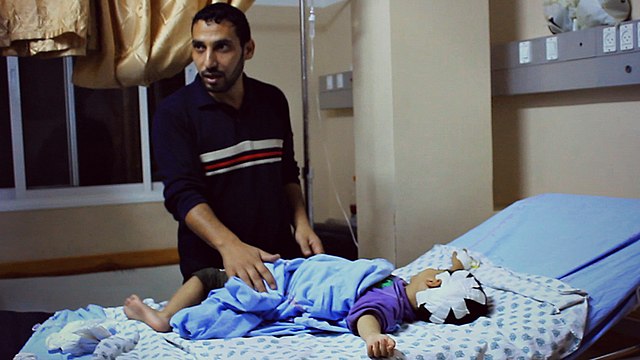

An analysis based on the author’s New Zealand experiences of foreign affairs journalistic reporting and resultant complaints.
An Overview of the Complaint History
Seven separate complaints were filed by the author to New Zealand’s TVNZ Complaints Committee, plus one referral to the Broadcasting Standards Authority (BSA).
These complaints span from January 2026 to May 2026 and cover reporting on Iran (three complaints), Venezuela (one complaint), the Korean War (one complaint), an online article on the Strait of Hormuz (one complaint), and an Israel-Lebanon ceasefire report (one complaint). Of these seven complaints, six were declined and one was upheld .
1. Pattern of Declining Complaints Despite Acknowledged Shortcomings
A striking pattern across the responses is that while TVNZ’s Complaints Committee frequently acknowledges that the reporting lacked depth, nuance, or broader context, it consistently declines to find a breach of the relevant standards.
a. The Korean War / Gapeyeong Complaint (22 May 2026)
The author complained that the OneNews segment on the 75th anniversary of the Battle of Gapeyeong omitted critical historical context, including that New Zealand “was really helping to support one of the most brutal dictators in Asia — Syngman Rhee in South Korea as well as supporting the US mass-murder of North Koreans (one fifth of its population including gas and germ warfare) and NZ’s own war crimes of shelling North Korean fishing villages.” He further noted that OneNews has stated North Korea never signed a peace treaty, rather than “the US refused to sign a peace treaty and continued to threaten North Korea with nuclear weapons.”
TVNZ’s response acknowledged that the framing “could have been more nuanced” but stated that the 75th anniversary commemorations “cannot reasonably be considered a ‘controversial issue of public importance'” and that “viewers would not reasonably have expected a detailed interrogation of competing narratives around the Korean War.” The Committee found the story was “mainly concerned with the commemoration of a battle in which New Zealand troops were involved.”
The Committee’s acknowledgment that “the framing could have been more nuanced” is significant. It concedes, in effect, that the one-sided framing existed. However, the standard applied — whether the topic constitutes a “controversial issue of public importance” — allowed the Committee to sidestep the substance of the complaint. The complainant’s point was not that every nuance of the Korean War needed to be explored, but that the narrative presented — of New Zealand “protecting freedom” — omitted well-documented facts that fundamentally alter the viewer’s understanding. By characterising the piece as a “commemoration” rather than a news analysis, the Committee effectively shielded the broadcast from accountability for its selective framing.
b. The Venezuela / Maduro Complaint (12 February 2026)
The author complained that the extensive coverage of Maduro’s capture by the US military was “ridiculous farcical reporting” that failed to mention “25 years of brutal sanctions against Venezuela,” the “previous kidnapping of Chavez,” the role of US-funded electoral analysis groups in discrediting the 2024 election, or that the operation was fundamentally about “stealing Venezuela’s oil.”
The Committee acknowledged that the US operation was “clearly framed in the story, and in previous OneNews coverage, as of dubious legality if not a flagrant breach of international law.” It noted that Maduro’s own claim that he had been “kidnapped” was included. On the question of describing Maduro as a “dictator,” the Committee provided evidence from what it described as “credible sources” — including accusations about blocking opposition candidates and the UN’s condemnation of the 2024 election results — and stated that the author’s claim that the 2024 election was “free and fair” did “not appear to be accurate.”
The Committee’s response is notable for several reasons. First, while it acknowledges that the broadcast included some balancing perspectives (Maduro’s own statements, questions about legality), it accepts the framing of Maduro as a “dictator” based on evidence it selects as credible. The complainant’s point was that the broadcast provided no context about the broader geopolitical dynamics — decades of sanctions, the US’s well-documented history of intervention in both Venezuela and wider Latin America, and the economic motivations tied to Venezuelan oil reserves. The Committee stated that “the accusation that the Venezuelan Government was complicit in narco-terrorism were addressed by OneNews in the previous evening’s bulletin, as was the matter of Venezuela’s abundant oil reserves,” effectively distributing the required context across multiple broadcasts rather than ensuring it was present in the complained-about item itself.
Second, the Committee’s assertion that the author’s claim about the 2024 election being “free and fair” does “not appear to be accurate” is a notable editorial judgment embedded within what is supposed to be an impartial assessment of a complaint about bias. The Committee is, in effect, taking a position on a contested geopolitical question while adjudicating a complaint about failure to present contested geopolitical positions.
c. The Iran Protests / Reza Pahlavi Complaint (13 February 2026)
The author complained that the 1News report on protests in Iran and the Auckland rally in support of Reza Pahlavi omitted critical context: that Reza Pahlavi’s father the Shah “was himself appointed Shah by the US and UK after they overthrew the democratically elected prime minister of Iran Mohammad Mosaddegh in 1953,” that the Shah’s SAVAK secret police were brutal, that Pahlavi has “very minimal support within Iran,” and that the segment failed to address “50 years of brutal sanctions by the West.”
The Committee responded that the item “concerned the continuing protests in Iran, Reza Pahlavi’s call to ‘carry on the fight,’ and Kiwi Iranians’ reactions to this call. The history of the region was not being discussed.” On Pahlavi’s support within Iran, the Committee cited multiple reputable sources indicating that his support levels were “difficult to gauge” and referenced a 2022 poll showing 32.8% support among respondents for a transitional solidarity council role.
The Committee’s defence that “the history of the region was not being discussed” directly illustrates the complainant’s core concern. Presenting Reza Pahlavi as a credible democratic alternative — with his face “plastered on the signs” of protesters, described as “their only hope” and “a symbol of democracy” — without any mention of the historical context that produced the Pahlavi dynasty (the 1953 CIA/MI6 coup against Mosaddegh, the SAVAK, the Shah’s autocratic rule) creates a fundamentally incomplete picture. The Committee treats this as acceptable because the item had a “defined focus,” but the defined focus itself — lionising an exiled crown prince without historical context — is precisely what the complainant identified as problematic.
d. The Strait of Hormuz Article Complaint (8 May 2026)
The author complained about a 1News website article (syndicated from the Associated Press) about Iran’s proposal to end its restriction on the Strait of Hormuz. He objected to the use of “unnamed officials” and to the description of the conflict as “[Iran’s] war against Israel and the United States.”
The Committee responded that the Associated Press is “an independent, trusted and reliable news agency” and that “there was no reason for 1News to have doubted the veracity of the information.” It stated that anonymous sourcing is common because “the person providing the information might be endangered.” On the framing of the war, the Committee stated: “We understand that the war was started by the US and Israel, and this fact has been repeatedly acknowledged by 1News, but it is nevertheless accurate to say Iran is in a war against Israel and the United States.”
This response is again revealing. The Committee characterises the Associated Press as “independent, trusted and reliable” without qualification — a characterisation the complainant would dispute given AP’s operational base within the Western media ecosystem. On the description of the conflict as Iran’s war against Israel and the US, the Committee concedes that “the war was started by the US and Israel” but argues it is “nevertheless accurate” to frame it from the opposing direction. This is technically true — Iran is indeed at war with both nations — but the complainant’s point was about the cumulative effect of consistently framing the conflict from a perspective that positions Iran as the aggressor rather than the target of unprovoked military action. The Committee’s reasoning does not address this concern about cumulative framing.
e. The Iran Protests BSA Referral (Decision No. 2026-006, 10 June 2026)
the author referred his January 2026 complaint about the Iran protests broadcast to the New Zealand Broadcasting Standards Authority(BSA) . The BSA also did not uphold the complaint, finding that “the omission of the factors identified in the original complaint did not render the broadcast unbalanced or misleading.” The BSA noted that the broadcast “was clearly focused on the current protest situation” and that the perspective of those at the Auckland gathering was presented.
The BSA’s decision reinforces the same pattern seen in TVNZ’s internal responses: the acceptance that a news item may have a narrow focus and that omitted context does not constitute a breach so long as the item’s purpose is clear and balancing information is available elsewhere. The BSA cited its own precedent that “a programme can be an advocacy piece and it can be unbalanced and it can give information that is incomplete, so long as the nature of the programme and its purpose is obvious, and there is other balancing information available to the viewer or listener.” This precedent effectively permits one-sided reporting as long as alternative perspectives theoretically exist in the broader media landscape — a standard that, as the complainant pointed out, is undermined when the broader media landscape itself consistently omits the same context.
f. The Iran Conflict / BBC Segment Complaint (12 June 2026)
The author complained about a OneNews segment sourced from the BBC about conditions inside Iran during the ongoing conflict. He called it “an anti-Iranian piece of propaganda exercise” making “completely unsubstantiated allegations,” noting that the footage of women mourning was of people “murdered by the US and Israel” rather than by the Iranian regime, and that the presenter’s statement about 21 executions failed to mention that those executed “were deemed to be Israeli Mossad agents.”
The Committee acknowledged that the segment was a “short, narrative-driven report” that “predominantly reflected a critical portrayal of the Iranian regime and did not explicitly include alternative viewpoints within the broadcast itself,” but considered “this acceptable in the context of a brief news item addressing a widely reported international conflict.” The Committee stated that the author had “not cited evidence of ‘huge support’ for the Iranian regime” and that “support for the Iranian regime appears to remain in the minority.” (Note that Khomeini’s recent funeral was estimated to attract between 10 to 15 million mourners as quoted by Western media)
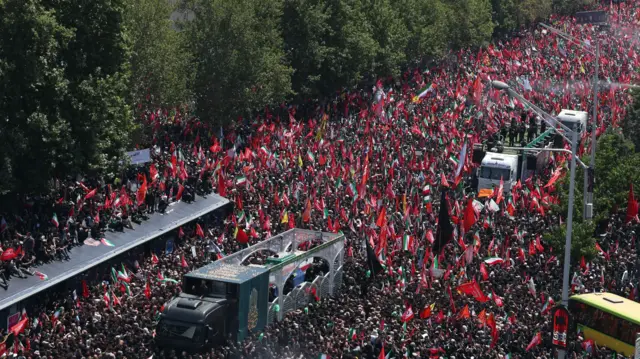
The Committee’s finding that “support for the Iranian regime appears to remain in the minority” is itself an editorial position taken within an adjudication on bias — paralleling the approach taken in the Venezuela complaint. The Committee is making a factual determination about Iranian public opinion in order to dismiss a complaint about failure to represent Iranian perspectives, without acknowledging the inherent difficulty of assessing public opinion in a country under active military attack with disrupted communications. The complainant’s point about the BBC footage — that the mourning women were grieving victims of US/Israeli air strikes, not regime repression — was addressed by the Committee with the observation that the reporter stated “Families of all political persuasions are mourning their dead and missing” and referenced “air strikes.” While this is technically accurate, the broader segment’s framing — focused on regime repression, executions, and fear — created an overall impression that the Committee did not adequately scrutinise.
2. The Use of BBC and Other Western News Agencies
A recurring theme in the author’s complaints is the reliance on the BBC and other Western news agencies as sources. This is relevant in at least three of the complaints:
The Iran protests broadcast incorporated a pre-recorded BBC report that the complainant characterised as one-sided.
– The Iran conflict segment (12 June 2026) was sourced from BBC reporting.
– The Strait of Hormuz article was syndicated from the Associated Press.
The Committee’s treatment of these sources is consistently deferential:
For the AP article, the Committee stated: “The Article was syndicated from the Associated Press, an independent, trusted and reliable news agency. There was no reason for 1News to have doubted the veracity of the information contained in the Article.”
-For BBC-sourced content, the Committee did not address the complainant’s specific concerns about BBC bias but instead assessed the content against broadcasting standards.
The complainant’s argument — that the BBC “acts for UK interests who are ever hopeful of getting back ‘ownership’ of Iranian oil by BP” and is “a source of propaganda for their government” — was not substantively engaged with by the Committee. The Committee treated the BBC and AP as inherently reliable sources without addressing the systemic concerns about Western media institutions’ coverage of geopolitical conflicts involving Western interests.
The Committee’s uncritical acceptance of the BBC and AP as authoritative sources is a significant gap in its analysis. While these agencies are widely respected, the complainant’s concern is not about individual factual errors but about systematic framing — the selection of which facts to include, which perspectives to foreground, and which context to omit. The BBC, funded by the UK license fee and operating under a Royal Charter, and the AP, headquartered in the United States, both operate within institutional frameworks that produce structurally biased coverage of conflicts involving Western powers. The Committee’s failure to engage with this argument — even to disagree with it on substantive grounds — leaves the complainant’s core concern unaddressed.
3. The Single Upheld Complaint: The Israel-Lebanon Ceasefire Error (2 July 2026)
The only complaint that was upheld concerned a factual error in which 1News stated that Israel had “attacked Lebanon for the first time since its ceasefire with Hezbollah.” The author pointed out that Israel had committed 220 ceasefire violations between April 17 and April 19 alone, and that Israeli attacks on southern Lebanon had killed at least 28 people.
1News acknowledged the error, stating that “the broadcast should have described this attack as the first attack on Beirut since the April 16 ceasefire came into effect, rather than Lebanon.” The Committee confirmed the breach of Standard 6 (Accuracy) and stated that 1News had “discussed the issue with the staff member involved” and was “actively taking steps to ensure editorial processes are more robust.”
This upheld complaint is instructive for several reasons:
1. It was a clear, binary factual error — the word “Lebanon” should have been “Beirut.” This is the type of inaccuracy that the standards framework is most comfortable addressing: a discrete, verifiable factual mistake with a clear correction.
2. The broader implication was not addressed. The author’s complaint pointed to 220 ceasefire violations and 28 deaths in southern Lebanon — facts that fundamentally alter the viewer’s understanding of the ceasefire’s reality. The Committee’s correction (changing “Lebanon” to “Beirut”) addresses the technical error but does not engage with the complainant’s underlying point: that the original framing — presenting this as the “first attack since the ceasefire” — created a misleading impression that the ceasefire had been broadly respected, when in fact it had been extensively violated.
3. The correction was narrow. The upheld breach was limited to the geographical error. The Committee did not find that the overall framing — which minimised Israel’s documented ceasefire violations — constituted a material inaccuracy or misleading impression under Standard 6.
4. Structural and Systemic Observations
a. The “Defined Focus” Defence
Across multiple complaints, the Committee defended narrow framing by stating that the item had a “defined focus” and that viewers would not have expected the inclusion of historical context or competing narratives. This defence is applied selectively: the broadcast is permitted to frame a story from one perspective (e.g., the Iranian regime as repressive, Maduro as a dictator, the Korean War as a fight for freedom) without context, because the “focus” was on something more specific. However, the choice of focus is itself an editorial decision that shapes the viewer’s understanding, and the Committee does not examine whether the defined focus was itself biased.
b. The “Available Elsewhere” Standard
The Committee repeatedly invoked the principle that balancing information is available from other sources — NZ Herald, Stuff, RadioNZ, or “the universe of information.” This effectively transfers the broadcaster’s responsibility for balance to the audience, who are expected to independently seek out counter-narratives. The complainant’s concern — that the same omissions characterise Western mainstream media broadly — directly challenges the assumption that alternative perspectives are readily available elsewhere.
c. The “Controversial Issue of Public Importance” Threshold
The Committee’s determination of whether a topic constitutes a “controversial issue of public importance” is a gatekeeping function that prevents many complaints from being substantively evaluated under the Balance Standard. In the Korean War complaint, the Committee found that the commemorations themselves were not controversial. In the Iran protests complaint (by TVNZ’s internal review), the Committee found that while the protests were of “interest and concern,” they did not constitute an issue about which there had been “ongoing debate.” This threshold is inherently subjective and consistently operates to the disadvantage of complainants who argue that the lack of debate is itself a product of inadequate media coverage.
d. Editorial Judgments Embedded in Adjudications
In both the Venezuela and Iran complaints, the Committee made substantive editorial judgments within its adjudications — stating that Maduro’s characterisation as a “dictator” was “reasonably available” and that support for the Iranian regime “appears to remain in the minority.” These are not neutral procedural determinations; they are factual and analytical claims about contested geopolitical realities. By embedding these positions within complaint adjudications, the Committee assumes the role of arbiter of geopolitical truth while ostensibly adjudicating compliance with broadcasting standards.
5. Journalistic Standards and the Provision of Context
The core of the author’s complaints is not that individual facts are wrong (with the exception of the Israel-Lebanon ceasefire error), but that the cumulative effect of selective reporting, omitted context, and reliance on Western sources produces a systematically distorted picture of international conflicts involving Western powers.
The relevant broadcasting standards — particularly Standard 5 (Balance), Standard 6 (Accuracy), and Standard 8 (Fairness) — as applied by TVNZ’s Complaints Committee, are structured to assess individual broadcasts in isolation rather than patterns of coverage over time . The Committee assesses whether a single item is materially inaccurate, not whether a pattern of items consistently omits the same types of context. This structural limitation means that:
- A single broadcast that omits decades of sanctions, historical interventions, or geopolitical motivations can be deemed compliant because it had a “defined focus.”
- The same type of omission repeated across multiple broadcasts on the same topic does not trigger a cumulative assessment.
- The availability of alternative perspectives in other media outlets is treated as sufficient, even when those outlets share the same structural omissions.
The Committee’s approach effectively permits a broadcaster to produce a consistent narrative across many broadcasts — each individually compliant — that cumulatively shapes public understanding in a direction the complainant identifies as propagandistic, without any single broadcast meeting the threshold for a standards breach.
6. The Role of the BBC as a Source
The complainant’s specific concern about the BBC deserves particular attention. In the complaints about Iran, the BBC served as the primary source for at least two of the contested broadcasts:
– The January 2026 Iran protests segment incorporated a BBC reporter’s package.
– The May 2026 Iran conflict segment was sourced from BBC reporting.
The Committee did not engage with the argument that the BBC, as a state-funded broadcaster of the United Kingdom with institutional interests in the Middle East, might produce coverage that reflects those interests. The Committee’s treatment of the BBC implicitly positions it as a neutral, authoritative source — the same treatment afforded to the Associated Press. This is a significant assumption that the Committee does not justify or defend; it simply takes it as given.
For a complainant who views the BBC as a vehicle for British foreign policy interests, the Committee’s failure to even acknowledge this argument — let alone address it — represents a significant gap in the adjudication process.
7. Conclusion on Complaints
Based on the reference content, the TVNZ Complaints Committee’s responses to the author’s complaints reveal several consistent patterns:
1. Acknowledged shortcomings without breach findings. The Committee repeatedly conceded that reporting could have been “more nuanced” or that it “did not explicitly include alternative viewpoints,” while finding no breach of broadcasting standards.
2. Structural defences that limit accountability. The “defined focus,” “available elsewhere,” and “controversial issue of public importance” frameworks consistently operate to shield broadcasts from substantive evaluation of their cumulative framing.
3. Uncritical acceptance of Western news agencies. The BBC and AP are treated as inherently reliable without engagement with systemic bias concerns.
4. Editorial positions within adjudications. The Committee makes substantive geopolitical claims (e.g., about Maduro’s legitimacy, Iranian public opinion) within what should be procedural assessments.
5. One upheld complaint — limited to a narrow factual error. The sole upheld complaint concerned a geographical inaccuracy (Beirut vs. Lebanon), not the broader framing issues that characterise the majority of the author’s concerns.
6. Consistent omission of context regarding Western actions. Across all complaints — whether about Iran, Venezuela, or the Korean War — the pattern of omitting historical and geopolitical context about Western interventions, sanctions, and military actions persists without being found to breach standards.
The overall picture that emerges is of a complaints framework that is designed to address discrete factual errors rather than systemic patterns of selective framing — and of a Complaints Committee that applies that framework in a way that consistently finds in favour of the broadcaster’s editorial choices, even when it acknowledges those choices could have been more balanced or nuanced.
Western Media Framing of Foreign Affairs: Systemic Biases, Institutional Agendas, and the Erosion of Journalistic Standards
The complaints filed by the author against TVNZ’s 1News, and the Complaints Committee’s responses to those complaints, are not merely an isolated dispute between a viewer and a New Zealand broadcaster. They are a microcosm of a far larger and well-documented phenomenon: the systematic failure of Western media to provide accurate, contextualised, and balanced coverage of foreign affairs — particularly when those affairs involve nations in conflict with Western governments. The patterns identified in the TVNZ adjudications — selective framing, omitted context, uncritical reliance on Western news agencies, editorial positions disguised as impartial adjudication, and structural standards frameworks that permit cumulative bias — are replicated across the Western media landscape with remarkable consistency.
This analysis examines these patterns as they manifest globally, using the TVNZ complaints as a starting point and expanding outward to identify the institutional, structural, and ideological mechanisms that produce and sustain them.
1. The Architecture of Selective Framing
1.1 The “Defined Focus” as a Tool of Exclusion
The TVNZ Complaints Committee’s recurring defence — that a news item had a “defined focus” and therefore was not required to include historical or geopolitical context — is not unique to New Zealand broadcasting. It is the default justification used across Western media to explain the omission of context that would fundamentally alter the audience’s understanding of an event.
When Western media covers a protest in Iran, the “defined focus” is on the protest itself — its scale, its grievances, the regime’s response. What is excluded from that focus is the half-century of sanctions that devastated Iran’s economy, the 1953 CIA/MI6 coup that overthrew Iran’s democratically elected government, the Western support for Saddam Hussein’s war against Iran in the 1980s, and the ongoing covert operations by Israeli and Western intelligence services inside Iran. Each of these facts is independently documented and publicly available. Their systematic omission from coverage of Iran is not an oversight; it is a structural feature of how Western media defines what is “relevant” to a story.
The same pattern applies to coverage of Venezuela. The “defined focus” is on Maduro’s government — its alleged authoritarianism, its economic failures, its narcotics charges. What is excluded is the decades of US sanctions that crippled Venezuela’s economy, the repeated US-backed coup attempts (including the 2002 attempt against Chávez), the freezing of Venezuelan assets, and the seizure of CITGO, Venezuela’s most valuable foreign asset. Without this context, the audience is left with the impression that Venezuela’s crises are the product of internal mismanagement and dictatorship — an impression that serves the foreign policy interests of the governments imposing the sanctions.
When the Korean War is commemorated, the “defined focus” is on New Zealand’s sacrifice and the battle itself. What is excluded is that the war was fought to preserve the rule of Syngman Rhee — a US-installed dictator whose security forces killed tens of thousands of South Korean civilians — and that the US bombing campaign destroyed virtually every structure in North Korea, killing approximately one-fifth of its population. These facts are not contested by serious historians. Their omission transforms a complex and morally ambiguous conflict into a simple narrative of freedom versus tyranny.
1.2 The Selection of Victims and Villains
Western media consistently applies asymmetric moral framing to international conflicts. The same actions — military strikes, civilian casualties, suppression of dissent, acquisition of weapons — are described in fundamentally different language depending on whether the actor is a Western ally or a Western adversary.
The presenter’s statement that “North Korea is more of a threat than ever” was defended as factually accurate. But the same standard would never be applied to the United States — the only country to have used nuclear weapons in war, which maintains a first-use nuclear doctrine, which has withdrawn from the Anti-Ballistic Missile Treaty and the Intermediate-Range Nuclear Forces Treaty, and which has conducted military operations in dozens of countries since World War II. The US is never described by Western media as “more of a threat than ever,” despite the objective basis for such a claim being at least as strong as the basis for applying it to North Korea.
Similarly, in the Venezuela complaint, the Committee accepted the description of Maduro as a “dictator” based on evidence it selected as credible. The same evidentiary standard — contested elections, suppression of opposition, concentration of executive power — could be applied to numerous US allies (Saudi Arabia, Egypt, the UAE) without those leaders ever being described as “dictators” in Western media. The word is reserved for adversaries.
1.3 The Passive Voice of Western Violence
One of the most pervasive linguistic patterns in Western media coverage of foreign affairs is the use of passive voice and agentless constructions when describing Western military actions.
– “The war that has killed thousands” — not “the US-Israeli strikes that killed thousands”
– “The conflict between the US, Israel and Iran” — not “the US-Israeli attack on Iran”
– “Air strikes have put added strain on the under-resourced health system” — not “US and Israeli air strikes have destroyed Iran’s health infrastructure”
– “The standoff between Iran and the US” — not “the US naval blockade of Iran”
The TVNZ Complaints Committee acknowledged in the Strait of Hormuz complaint that “the war was started by the US and Israel, and this fact has been repeatedly acknowledged by 1News,” yet defended the description of the conflict as “Iran’s war against Israel and the United States.” This linguistic framing — positioning the victim of an unprovoked attack as the primary belligerent — is not an accident. It is a systematic feature of Western media grammar that consistently obscures Western agency in the violence it reports.
2. The Institutional Ecosystem of Western News Production
2.1 The News Agency Monopoly
The TVNZ Complaints Committee’s characterisation of the Associated Press as “an independent, trusted and reliable news agency” reveals a fundamental assumption embedded in Western media production: that the major Western news agencies — AP, Reuters, Agence France-Presse (AFP) — are neutral arbiters of fact rather than institutional actors with their own biases, limitations, and structural relationships with Western power.
These three agencies, together with the BBC World Service and CNN International, constitute the primary information infrastructure through which most of the Western world’s news is produced, filtered, and distributed. The vast majority of international news consumed by audiences in New Zealand, Australia, the UK, Canada, and much of Europe originates from one or more of these sources. When TVNZ broadcasts a story about Iran, Venezuela, or North Korea, it is overwhelmingly relying on reporting from these agencies or from its own correspondents who operate within the same institutional ecosystem.
The structural bias of this system is not a matter of conspiracy or deliberate manipulation. It is a product of:
- Geographic concentration: AP is headquartered in New York. Reuters is headquartered in London. AFP is headquartered in Paris. Their editorial cultures, institutional assumptions, and primary audiences are Western. Stories are framed for Western audiences with Western assumptions about what constitutes news, who constitutes a credible source, and what constitutes a legitimate government.
- Source selection: Western news agencies rely disproportionately on sources that are accessible, English-speaking, and institutionally sanctioned — Western diplomats, Western-aligned analysts and think-tanks, Western-funded NGOs, and diaspora communities in Western countries. The TVNZ complaints repeatedly illustrate this: the Iran protests coverage relied on the BBC, Reza Pahlavi, and the Auckland diaspora; the Venezuela coverage relied on US legal analysts, US prosecutors, and US correspondents; the Korean War coverage relied on NZDF personnel and a Victoria University strategic studies expert. No Iranian officials, Venezuelan government representatives, or North Korean perspectives were sought or included.
- Structural access: Western news agencies have extensive networks of correspondents in Western capitals and allied nations, but limited access to nations that are adversaries of the West. This means that coverage of countries like Iran, North Korea, Venezuela, Cuba, Syria, and Russia is often produced from outside those countries — from neighbouring nations, from Western capitals, or from diaspora communities — and relies heavily on intelligence sources, satellite imagery, and social media rather than direct reporting. This structural limitation is rarely disclosed to audiences.
2.2 The BBC as a Case Study in State-Aligned Broadcasting
The BBC occupies a unique position in the global media ecosystem. It is the world’s largest broadcaster by reach, with services in over 40 languages reaching an estimated 400 million people weekly. It is funded primarily by the UK licence fee — a mandatory tax on television ownership — and operates under a Royal Charter that requires it to serve the public interest as defined by the UK government.
The author’s complaints specifically raised the BBC’s role as a source of TVNZ’s Iran coverage, arguing that the BBC “acts for UK interests who are ever hopeful of getting back ‘ownership’ of Iranian oil by BP.” The TVNZ Committee did not engage with this argument, treating the BBC as a neutral source.
The BBC’s institutional relationship with the British state is well-documented:
- framework that has structural alignments with UK foreign policy interests — interests that, in the case of Iran, include the historical role of BP (formerly Anglo-Persian Oil Company, then Anglo-Iranian Oil Company) in Iranian oil, the 1953 coup jointly organised by MI6 and the CIA, and the UK’s ongoing alignment with US policy toward Iran.
2.3 Think Tanks, Analysts, and the Illusion of ‘Independent Journalism’
Western media routinely presents commentary from think tanks, strategic studies centres, and policy analysts as independent expert opinion. The TVNZ coverage of the Korean War included David Capie from the Victoria University Strategic Studies Center. The Venezuela coverage included the ABC’s Chief Legal Analyst, a former Federal Prosecutor, and a Criminal Defence Lawyer. The Iran protests coverage included a “Middle East commentator.”
What is rarely disclosed to audiences is the funding, institutional affiliations, and ideological orientations of these analysts. Many of the most frequently cited think tanks in Western media — the Council on Foreign Relations, the Brookings Institution, the International Institute for Strategic Studies, the Atlantic Council, the Royal United Services Institute — receive significant funding from Western governments, defence contractors, and corporations with direct interests in the outcomes of the conflicts being analysed. Their analysts are not neutral observers; they are participants in a policy ecosystem that has predetermined conclusions about which nations are threats, which governments are legitimate, and which military actions are justified.
The cumulative effect is that audiences receive what appears to be independent expert analysis but is, in practice, analysis produced within a narrow band of acceptable opinion that reflects the assumptions and interests of Western power structures.
The Structural Deficiencies of Broadcasting Standards Frameworks
3.1 Standards That Protect the Broadcaster, Not the Audience
The TVNZ complaints process reveals a standards framework that is structurally incapable of addressing the type of bias the author identified. The relevant standards — Balance (Standard 5), Accuracy (Standard 6), and Fairness (Standard 8) — are designed to assess individual broadcasts against narrow criteria:
‘Balance’’ requires the inclusion of significant viewpoints on “controversial issues of public importance” — but the determination of what constitutes such an issue is made by the Committee, and the standard does not apply to topics the Committee determines are not controversial or where the issue was raised in a “relatively brief and peripheral way.”
‘Accuracy’ is concerned with “material points of fact” and whether the audience was “materially misled” — but the standard explicitly excludes “technical or unimportant points unlikely to significantly affect the audience’s understanding.” The systematic omission of historical context, sanctions, and geopolitical motivations is treated as a matter of editorial focus rather than material accuracy.
‘Fairness’ protects “individuals or organisations” referred to in broadcasts — but the Committee determined that nation-states are not “organisations” for the purposes of this standard, meaning that the fairness standard cannot be invoked on behalf of countries like Iran, Venezuela, or North Korea.
These structural limitations mean that:
3.2 The “Available Elsewhere” Doctrine
a) A broadcaster can produce a consistently one-sided narrative across dozens of broadcasts without any single broadcast breaching the standards.
b) The omission of context that would fundamentally alter audience understanding is treated as an editorial choice rather than an accuracy issue.
c) The fairness standard cannot protect nations from unfair coverage.
d) The balance standard only applies if the Committee determines the topic is controversial — a determination that is itself subjective and consistently made in the broadcaster’s favour.
Perhaps the most insidious feature of the standards framework is the doctrine – applied by both TVNZ and the BSA — that balancing information need not be included in the broadcast itself so long as it is “available to the viewer or listener” from “other sources” or from “the universe of information.”
This doctrine effectively transfers the broadcaster’s responsibility for balance to the audience. The viewer is expected to independently seek out the historical context, alternative perspectives, and geopolitical background that the broadcast omitted. This expectation is unreasonable for several reasons:
‘The audience does not know what it does not know.’ If a viewer watches a report about protests in Iran that omits the history of Western sanctions and intervention, that viewer has no basis for knowing that this context exists, let alone for seeking it out.
‘The same omissions characterise the broader media landscape.’ The author repeatedly pointed out that the same contextual omissions he identified in TVNZ’s reporting were present across Western mainstream media. If the BBC, AP, Reuters, CNN, and TVNZ all omit the same context, the “available elsewhere” doctrine is meaningless — there is no “elsewhere” within the mainstream media ecosystem where this context is reliably available.
‘Alternative sources are marginalised.’ Media outlets and analysts who provide the context that mainstream Western media omits — former intelligence analysts, independent journalists, non-Western media outlets — are systematically marginalised, discredited, or simply not cited. The complainant in the Iran protests case cited “an ex CIA analyst” as a source; such sources, when they diverge from mainstream Western narratives, are not treated as credible by the institutions adjudicating complaints.
3.3 The Adjudicator as Editor
The TVNZ Complaints Committee’s responses reveal that the adjudication process itself functions as an extension of editorial judgment. When the Committee stated that Maduro’s characterisation as a “dictator” was “a reasonably available description supported by evidence from credible sources,” it was not merely assessing whether the broadcast met the accuracy standard — it was affirming the broadcast’s editorial position. When the Committee stated that support for the Iranian regime “appears to remain in the minority,” it was making a factual claim about Iranian public opinion in order to dismiss a complaint about the omission of Iranian perspectives.
This conflation of adjudication and editorial judgment means that the complaints process does not function as an independent check on media bias. It functions as a ratification of existing editorial choices, with the veneer of procedural legitimacy.
The Geopolitical Function of Western Media Framing
4.1 Manufacturing Consent for Western Foreign Policy
The patterns identified in the TVNZ complaints — selective framing, omitted context, asymmetric moral standards, uncritical reliance on Western sources — do not exist in a vacuum. They serve a specific geopolitical function: the manufacture of public consent for Western foreign policy actions.
When Western media covers Iran without mentioning sanctions, it removes the economic dimension of the conflict from public understanding, making Iran’s government appear solely responsible for the suffering of its people. When Western media covers Venezuela without mentioning the US-backed coup attempts, it frames the crisis as a product of socialist mismanagement rather than external aggression. When Western media covers North Korea without mentioning the destruction of the Korean War and the ongoing US military presence on its border, it frames North Korea’s nuclear programme as irrational aggression rather than a rational response to existential threats.
In each case, the omission of context serves to align public understanding with the foreign policy positions of Western governments. This is not necessarily the result of direct government instruction — though such instruction has been documented in historical cases. It is more often the product of shared institutional assumptions, source networks, career incentives, and ideological frameworks that produce aligned outcomes without requiring explicit coordination.
4.2 The Double Standard as Systemic Feature
The most visible manifestation of Western media bias is the application of double standards — the consistent use of different criteria to evaluate the actions of Western allies and Western adversaries. This is not a matter of occasional inconsistency; it is a systemic feature that operates across every dimension of coverage:
Dimension
Western Allies
Western Adversaries
‘Civilian casualties
“Defence,” “intervention,” “stabilisation”
“Aggression,” “provocation,” “threats” |
Civilian casualties
“Collateral damage,” incidental, minimised
Emphasised, attributed to deliberate policy |
‘Elections
Accepted as legitimate even when flawed
Dismissed as “sham” or “rigged
Political prisoners
Rarely reported or framed as “security detainees
Political prisoners,” “prisoners of conscience” |
‘Nuclear weapons
“Deterrence,” “security umbrella
Threat,” “proliferation,” “arms race
Sanctions
“Targeted measures,” “pressure
Rarely mentioned as a cause of suffering
Regime change
Democracy promotion,” “transition”
“Interference,” “coup”
Protests
Pro-democracy movements
Rioters,” “foreign-backed destabilisation
This double standard is so pervasive that it is largely invisible to audiences habituated to Western media. It operates at the level of word choice, source selection, headline framing, image selection, and story placement — the micro-decisions that, cumulatively, construct an audience’s understanding of the world.
4.3 Historical Precedents
The patterns identified in the TVNZ complaints have direct historical precedents in Western media coverage of major international events:
Iraq (2003): Western media overwhelmingly accepted and amplified the claim that Iraq possessed weapons of mass destruction, providing the informational foundation for public support of the invasion. The subsequent discovery that no WMDs existed — and that the intelligence had been manipulated — resulted in significant self-reflection within some media organisations but no structural change in the source relationships and institutional assumptions that produced the failure.
Libya (2011): Western media uncritically amplified claims that Gaddafi’s forces were committing genocide against civilians in Benghazi — claims that were subsequently found to be significantly exaggerated. The media framing provided cover for a NATO intervention that destroyed the Libyan state and produced a decade of civil war, slave markets, and regional destabilisation.
Syria (2011–present): Western media consistently framed the Syrian conflict as a democratic uprising against a tyrannical regime, while under-reporting the role of foreign-funded armed groups, the sectarian composition of the opposition, and the devastating impact of Western sanctions on the Syrian civilian population.
In each case, the patterns are the same: selective framing that aligns with Western government positions, omission of context that would complicate those positions, reliance on sources aligned with Western interests, and a standards framework that treats each individual broadcast as compliant even when the cumulative effect is misleading.
The Consequences for Democratic Society
5.1 The Informed Citizenry Problem
Democratic theory rests on the premise that citizens make political decisions based on accurate information. When the media ecosystem that provides that information systematically distorts public understanding of international affairs — through selective framing, omitted context, and asymmetric moral standards — the capacity of citizens to make informed judgments about their governments’ foreign policies is fundamentally compromised.
One of the author’s complaint letters stated: “Honesty and balance to ensure viewers can make up their OWN minds about a given global situation is vital if we are to be truly a democratic country.” This is not a radical proposition; it is a restatement of the foundational premise of both journalism and democracy. The TVNZ Complaints Committee’s consistent refusal to find breaches of broadcasting standards, even while acknowledging that reporting “could have been more nuanced,” suggests that the standards framework as currently constituted is insufficient to fulfil this democratic function.
5.2 The Erosion of Trust
The cumulative effect of sustained media bias is not public enlightenment but public cynicism. When audiences perceive — as the author clearly does — that their media is systematically distorting their understanding of the world, trust in journalism erodes. This erosion does not produce a more sophisticated public that seeks out alternative sources; it produces a public that either uncritically accepts the dominant narrative or rejects all media as untrustworthy. Neither outcome serves democracy.
5.3 The Silencing of Dissent
When the institutional mechanisms for challenging media bias — complaint processes, standards frameworks, regulatory bodies — consistently fail to address systemic issues, the message to concerned citizens is that the system is not designed to be corrected from within. the author filed seven complaints and received six rejections and one narrow correction for a geographical error. The structural issues he identified — omitted context, asymmetric framing, reliance on biased sources — remain unaddressed after each complaint. This outcome does not encourage continued engagement; it teaches citizens that their concerns will be procedurally acknowledged and substantively ignored.
Toward a More Honest Journalism
The purpose of this analysis is not to argue that Western media is uniquely biased — all media operates within institutional, cultural, and political frameworks that shape its output. Nor is it to argue that the governments of Iran, Venezuela, North Korea, or any other country are beyond criticism — they are not, and many of them engage in serious abuses that warrant rigorous reporting.
The argument is that ‘ ‘Western media’s coverage of foreign affairs is systematically distorted in ways that align with the foreign policy interests of Western governments ‘ ‘, and that this distortion is produced by identifiable structural mechanisms — institutional concentration, source networks, linguistic conventions, double standards, and inadequate accountability frameworks — rather than by isolated editorial failures.
Addressing this distortion would require:
‘ ‘Genuine source diversification ‘ ‘ — actively seeking perspectives from non-Western governments, non-Western analysts, and non-Western media outlets, rather than treating Western sources as default authorities.
‘ ‘Mandatory contextualisation ‘ ‘ — requiring that coverage of international conflicts include the historical and geopolitical context necessary for audiences to understand the origins and dynamics of the conflict, not just its current manifestations.
‘ ‘Transparent sourcing ‘ ‘ — disclosing the funding, institutional affiliations, and potential conflicts of interest of analysts, think tanks, and expert commentators.
‘ ‘Symmetric moral standards ‘ ‘ — applying the same language, the same scrutiny, and the same moral framework to the actions of Western governments and their allies as to their adversaries.
‘ ‘Structural reform of complaints processes ‘ ‘ — creating accountability mechanisms capable of assessing patterns of coverage over time, not just individual broadcasts in isolation, and ensuring that adjudicators do not embed editorial judgments within their decisions.
‘ ‘Critical engagement with Western news agencies ‘ ‘ — recognising that AP, Reuters, AFP, and the BBC are institutional actors with their own limitations and biases, not neutral conduits of objective truth.
Conclusion
The TVNZ complaints examined in the analysis above are a window into a global phenomenon. The patterns they reveal — selective framing, omitted context, institutional deference to Western sources, structural impunity for systematic bias — are not unique to a single New Zealand broadcaster. They are the product of an international media ecosystem in which the production, distribution, and adjudication of news about foreign affairs is structurally aligned with the interests and assumptions of Western governments.
The author’s complaints did not fail because they lacked merit. They failed because the system against which they were filed is not designed to address the type of bias he identified. The standards frameworks assess trees, not forests. They evaluate individual broadcasts, not patterns of coverage.
They accept Western sources as authoritative without scrutiny. They treat omission of context as editorial discretion rather than material inaccuracy. And they embed substantive editorial judgments within procedural adjudications, ensuring that the outcome reinforces rather than challenges the dominant narrative.
The consequence is a public that is simultaneously over-informed about the failings of Western adversaries and under-informed about the actions of its own governments — a public that is, in the most precise sense of the word, misinformed. And a public that is misinformed about the world its government is acting upon cannot meaningfully hold that government to account. This is not a failure of journalism. It is journalism functioning exactly as its institutional structures compel it to function.
References for International Journalistic Standards
Society of Professional Journalists (SPJ) — Code of Ethics
URL: https://www.spj.org/ethicscode.asp
The SPJ Code of Ethics is one of the most widely referenced journalistic standards documents globally. It is built around four principles:
Seek truth and report it — “Journalists should be honest, fair and courageous in gathering, reporting and interpreting information.”
Minimize harm — “Ethical journalists treat sources, subjects, colleagues and members of the public as human beings deserving of respect.”
Act independently — “The highest and primary obligation of ethical journalism is to serve the public.”
Be accountable and transparent — “Ethical journalism means taking responsibility for one’s work and explaining one’s decisions to the public.”
This code is directly relevant to the article’s discussion of omitted context, source independence, and accountability.
International Federation of Journalists (IFJ) — Global Charter of Ethics for Journalists
URL: https://www.ifj.org/who/rules-and-policy/global-charter-of-ethics-for-journalists
The IFJ Global Charter of Ethics, adopted in 2019, is the most comprehensive international articulation of journalistic ethical standards. It was adopted at the 30th IFJ World Congress in Tunis. Key principles include:
Article 1 — Right to information, freedom of expression and criticism. States that journalism’s first obligation is to the public’s right to know.
Article 2 — Independence. “Independence of media, of journalists and of editorial staff is essential… The journalist shall not accept any form of intimidation or pressure.”
Article 3 — Honesty, accuracy and responsibility. “The journalist shall ensure that the information delivered is accurate, verified and presented in a balanced manner.”
Article 4 — Integrity. “The journalist shall not confuse the profession with other activities such as advertising, propaganda or entertainment.”
Article 7 — Protection of sources. Addresses the confidentiality of sources.
Article 9 — Solidarity. Addresses mutual support among journalists globally.
This charter is directly relevant to the article’s discussion of accuracy, context, source independence, and the distinction between journalism and propaganda.
BBC Editorial Guidelines
URL: https://www.bbc.co.uk/editorialguidelines/guidelines
The BBC Editorial Guidelines are publicly available and represent one of the most detailed sets of editorial standards in global broadcasting. They are particularly relevant given the article’s discussion of the BBC as a source for TVNZ’s Iran coverage. Key sections include:
Section 3: Accuracy — “The BBC must not knowingly and materially mislead its audiences.”
Section 4: Impartiality — “Impartiality must be applied to all subjects… The approach and tone of news reporting in the UK and internationally should not be different.”
Section 5: Fairness — “Fairness is an essential part of the BBC’s relationship with its audiences.”
The BBC’s own guidelines on impartiality are particularly relevant when examining whether the BBC’s output — when used as a source by other broadcasters — meets the standards it sets for itself.
Reuters Handbook of Journalism
URL: https://www.thomsonreuters.com/en/about-us/trust-principles
Reuters operates under its Trust Principles, which state that Reuters shall:
“Supply unbiased and reliable news services”
“Uphold freedom of expression”
“Operate with integrity and independence”
The Trust Principles were established in 1941 and are the foundational editorial framework for Reuters content. They are relevant to the article’s discussion of the Associated Press and Reuters as structurally embedded within Western media ecosystems.
For the broader Reuters Handbook of Journalism, https://www.mediareform.org.uk/wp-content/uploads/2015/12/Reuters_Handbook_of_Journalism.pdf
Associated Press — Statement of News Values and Principles
URL: https://www.ap.org/about/news-values-and-principles
The AP’s Statement of News Values and Principles governs the editorial standards of the world’s largest news agency. It covers:
Accuracy and fairness
Speed versus accuracy
Standards for sourcing
Corrections policy
This is directly relevant to the article’s examination of the TVNZ Committee’s characterisation of the AP as “an independent, trusted and reliable news agency.”
Munich Declaration of the Rights and Obligations of Journalists (1971)
URL:This document is available through the IFJ and various journalism reference sites.
https://resources.rsf.org/appendix-iii-declaration-of-rights-and-obligations-of-journalists
The Munich Declaration (formally the “Declaration of the Rights and Obligations of Journalists”) was adopted by the International Federation of Journalists in Munich on 24-25 November 1971. Its first article states:
“The right to information, to freedom of expression and criticism is one of the fundamental rights of man. All rights and duties of a journalist originate from this right of the public to be informed of events and opinions.”
It is the foundational European/international statement of journalistic duties and is widely referenced in media ethics literature.
UNESCO — Media and Information Literacy / Indicators for Media Development
URL: https://en.unesco.org/themes/media-development
UNESCO has published extensive resources on journalistic standards, media independence, and press freedom. Key publications include:
Model Curriculum for Journalism Education — Addresses ethical frameworks and professional standards
Media Development Indicators — Provides a framework for assessing media independence and pluralism
International Programme for the Development of Communication (IPDC) — Focuses on press freedom and media development globally
UNESCO’s work is particularly relevant to the article’s discussion of structural media bias and the relationship between media institutions and state power.
Broadcasting Standards Authority (BSA) — New Zealand
URL: https://www.bsa.govt.nz
The BSA website contains the ‘Free-to-Air Television Code of Broadcasting Practice’, which includes the standards (5, 6, and 8) cited in the TVNZ complaints. It also contains the BSA’s published decisions, including ‘Decision No. 2026-006’ referenced in the complaint documents.
The Chatham House Rules and Media Ethics Academic Resources
For academic analysis of Western media bias in foreign affairs coverage, several scholarly sources are widely referenced:
Herman, E.S. and Chomsky, N. — “Manufacturing Consent: The Political Economy of the Mass Media” (1988, updated 2002) — The foundational academic work on structural bias in Western media, proposing the “propaganda model” of media function. While not available as a single URL, it is referenced extensively at: https://chomsky.info/ and is published by Pantheon Books.
Media Lens (UK) — An independent media analysis organisation that critically examines UK media coverage of foreign affairs: https://www.medialens.org
Fairness and Accuracy in Reporting (FAIR, US) — A US-based media criticism organisation: https://fair.org
The Glasgow University Media Group— Has published extensive research on media framing of international conflicts:https://www.gla.ac.uk/research/az/gumg/During the lead-up to the 2003 Iraq War, the BBC’s coverage was the subject of the Hutton Inquiry, which examined (among other things) the BBC’s reporting on the government’s claim that Iraq could deploy weapons of mass destruction within 45 minutes. The affair revealed the complex and often contentious relationship between the BBC and the UK government, but also the BBC’s structural alignment with British foreign policy assumptions. - The BBC World Service was, for decades, directly funded by the UK Foreign and Commonwealth Office (now the Foreign, Commonwealth and Development Office), a relationship that was only formally changed in 2014 when funding was moved to the licence fee. The institutional culture cultivated during decades of Foreign Office funding has not been erased by a change in the funding line.
- Academic studies of BBC coverage of the Israeli-Palestinian conflict, the Iraq War, the Libya intervention, and the Syrian civil war have consistently found patterns of framing that align with British foreign policy positions, including disproportionate reliance on Western and Israeli sources, under-representation of Palestinian and Arab perspectives, and asymmetric language when describing violence by different parties.
When TVNZ broadcasts BBC-sourced content about Iran, it is not importing neutral journalism. It is importing journalism produced within an institutional framework that has structural alignments with UK foreign policy interests — interests that, in the case of Iran, include the historical role of BP (formerly Anglo-Persian Oil Company, then Anglo-Iranian Oil Company) in Iranian oil, the 1953 coup jointly organised by MI6 and the CIA, and the UK’s ongoing alignment with US policy toward Iran.
2.3 Think Tanks, Analysts, and the Illusion of ‘Independent Journalism’
Western media routinely presents commentary from think tanks, strategic studies centres, and policy analysts as independent expert opinion. The TVNZ coverage of the Korean War included David Capie from the Victoria University Strategic Studies Center. The Venezuela coverage included the ABC’s Chief Legal Analyst, a former Federal Prosecutor, and a Criminal Defence Lawyer. The Iran protests coverage included a “Middle East commentator.”
What is rarely disclosed to audiences is the funding, institutional affiliations, and ideological orientations of these analysts. Many of the most frequently cited think tanks in Western media — the Council on Foreign Relations, the Brookings Institution, the International Institute for Strategic Studies, the Atlantic Council, the Royal United Services Institute — receive significant funding from Western governments, defence contractors, and corporations with direct interests in the outcomes of the conflicts being analysed. Their analysts are not neutral observers; they are participants in a policy ecosystem that has predetermined conclusions about which nations are threats, which governments are legitimate, and which military actions are justified.
The cumulative effect is that audiences receive what appears to be independent expert analysis but is, in practice, analysis produced within a narrow band of acceptable opinion that reflects the assumptions and interests of Western power structures.
3. The Structural Deficiencies of Broadcasting Standards Frameworks
3.1 Standards That Protect the Broadcaster, Not the Audience
The TVNZ complaints process reveals a standards framework that is structurally incapable of addressing the type of bias the author identified. The relevant standards — Balance (Standard 5), Accuracy (Standard 6), and Fairness (Standard 8) — are designed to assess individual broadcasts against narrow criteria:
‘Balance’’ requires the inclusion of significant viewpoints on “controversial issues of public importance” — but the determination of what constitutes such an issue is made by the Committee, and the standard does not apply to topics the Committee determines are not controversial or where the issue was raised in a “relatively brief and peripheral way.”
‘Accuracy’ is concerned with “material points of fact” and whether the audience was “materially misled” — but the standard explicitly excludes “technical or unimportant points unlikely to significantly affect the audience’s understanding.” The systematic omission of historical context, sanctions, and geopolitical motivations is treated as a matter of editorial focus rather than material accuracy.
‘Fairness’ protects “individuals or organisations” referred to in broadcasts — but the Committee determined that nation-states are not “organisations” for the purposes of this standard, meaning that the fairness standard cannot be invoked on behalf of countries like Iran, Venezuela, or North Korea.
These structural limitations mean that:
3.2 The “Available Elsewhere” Doctrine
a) A broadcaster can produce a consistently one-sided narrative across dozens of broadcasts without any single broadcast breaching the standards.
b) The omission of context that would fundamentally alter audience understanding is treated as an editorial choice rather than an accuracy issue.
c) The fairness standard cannot protect nations from unfair coverage.
d) The balance standard only applies if the Committee determines the topic is controversial — a determination that is itself subjective and consistently made in the broadcaster’s favour.
Perhaps the most insidious feature of the standards framework is the doctrine – applied by both TVNZ and the BSA — that balancing information need not be included in the broadcast itself so long as it is “available to the viewer or listener” from “other sources” or from “the universe of information.”
This doctrine effectively transfers the broadcaster’s responsibility for balance to the audience. The viewer is expected to independently seek out the historical context, alternative perspectives, and geopolitical background that the broadcast omitted. This expectation is unreasonable for several reasons:
1. ‘The audience does not know what it does not know.’ If a viewer watches a report about protests in Iran that omits the history of Western sanctions and intervention, that viewer has no basis for knowing that this context exists, let alone for seeking it out.
2. ‘The same omissions characterise the broader media landscape.’ The author repeatedly pointed out that the same contextual omissions he identified in TVNZ’s reporting were present across Western mainstream media. If the BBC, AP, Reuters, CNN, and TVNZ all omit the same context, the “available elsewhere” doctrine is meaningless — there is no “elsewhere” within the mainstream media ecosystem where this context is reliably available.
3. ‘Alternative sources are marginalised.‘ Media outlets and analysts who provide the context that mainstream Western media omits — former intelligence analysts, independent journalists, non-Western media outlets — are systematically marginalised, discredited, or simply not cited. The complainant in the Iran protests case cited “an ex CIA analyst” as a source; such sources, when they diverge from mainstream Western narratives, are not treated as credible by the institutions adjudicating complaints.
3.3 The Adjudicator as Editor
The TVNZ Complaints Committee’s responses reveal that the adjudication process itself functions as an extension of editorial judgment. When the Committee stated that Maduro’s characterisation as a “dictator” was “a reasonably available description supported by evidence from credible sources,” it was not merely assessing whether the broadcast met the accuracy standard — it was affirming the broadcast’s editorial position. When the Committee stated that support for the Iranian regime “appears to remain in the minority,” it was making a factual claim about Iranian public opinion in order to dismiss a complaint about the omission of Iranian perspectives.
This conflation of adjudication and editorial judgment means that the complaints process does not function as an independent check on media bias. It functions as a ratification of existing editorial choices, with the veneer of procedural legitimacy.
4. The Geopolitical Function of Western Media Framing
4.1 Manufacturing Consent for Western Foreign Policy
The patterns identified in the TVNZ complaints — selective framing, omitted context, asymmetric moral standards, uncritical reliance on Western sources — do not exist in a vacuum. They serve a specific geopolitical function: the manufacture of public consent for Western foreign policy actions.
When Western media covers Iran without mentioning sanctions, it removes the economic dimension of the conflict from public understanding, making Iran’s government appear solely responsible for the suffering of its people. When Western media covers Venezuela without mentioning the US-backed coup attempts, it frames the crisis as a product of socialist mismanagement rather than external aggression. When Western media covers North Korea without mentioning the destruction of the Korean War and the ongoing US military presence on its border, it frames North Korea’s nuclear programme as irrational aggression rather than a rational response to existential threats.
In each case, the omission of context serves to align public understanding with the foreign policy positions of Western governments. This is not necessarily the result of direct government instruction — though such instruction has been documented in historical cases. It is more often the product of shared institutional assumptions, source networks, career incentives, and ideological frameworks that produce aligned outcomes without requiring explicit coordination.
4.2 The Double Standard as Systemic Feature
The most visible manifestation of Western media bias is the application of double standards — the consistent use of different criteria to evaluate the actions of Western allies and Western adversaries. This is not a matter of occasional inconsistency; it is a systemic feature that operates across every dimension of coverage:
| Dimension | Western Allies | Western Adversaries |
| ‘Civilian casualties | “Defence,” “intervention,” “stabilisation” | “Aggression,” “provocation,” “threats” | |
| Civilian casualties | “Collateral damage,” incidental, minimised | Emphasised, attributed to deliberate policy | |
| ‘Elections | Accepted as legitimate even when flawed | Dismissed as “sham” or “rigged |
| Political prisoners | Rarely reported or framed as “security detainees | Political prisoners,” “prisoners of conscience” | |
| ‘Nuclear weapons | “Deterrence,” “security umbrella | Threat,” “proliferation,” “arms race |
| Sanctions | “Targeted measures,” “pressure | Rarely mentioned as a cause of suffering |
| Regime change | Democracy promotion,” “transition” | “Interference,” “coup” |
| Protests | Pro-democracy movements | Rioters,” “foreign-backed destabilisation |
This double standard is so pervasive that it is largely invisible to audiences habituated to Western media. It operates at the level of word choice, source selection, headline framing, image selection, and story placement — the micro-decisions that, cumulatively, construct an audience’s understanding of the world.
4.3 Historical Precedents
The patterns identified in the TVNZ complaints have direct historical precedents in Western media coverage of major international events:
Iraq (2003): Western media overwhelmingly accepted and amplified the claim that Iraq possessed weapons of mass destruction, providing the informational foundation for public support of the invasion. The subsequent discovery that no WMDs existed — and that the intelligence had been manipulated — resulted in significant self-reflection within some media organisations but no structural change in the source relationships and institutional assumptions that produced the failure.
Libya (2011): Western media uncritically amplified claims that Gaddafi’s forces were committing genocide against civilians in Benghazi — claims that were subsequently found to be significantly exaggerated. The media framing provided cover for a NATO intervention that destroyed the Libyan state and produced a decade of civil war, slave markets, and regional destabilisation.
Syria (2011–present): Western media consistently framed the Syrian conflict as a democratic uprising against a tyrannical regime, while under-reporting the role of foreign-funded armed groups, the sectarian composition of the opposition, and the devastating impact of Western sanctions on the Syrian civilian population.
In each case, the patterns are the same: selective framing that aligns with Western government positions, omission of context that would complicate those positions, reliance on sources aligned with Western interests, and a standards framework that treats each individual broadcast as compliant even when the cumulative effect is misleading.
5. The Consequences for Democratic Society
5.1 The Informed Citizenry Problem
Democratic theory rests on the premise that citizens make political decisions based on accurate information. When the media ecosystem that provides that information systematically distorts public understanding of international affairs — through selective framing, omitted context, and asymmetric moral standards — the capacity of citizens to make informed judgments about their governments’ foreign policies is fundamentally compromised.
One of the author’s complaint letters stated: “Honesty and balance to ensure viewers can make up their OWN minds about a given global situation is vital if we are to be truly a democratic country.” This is not a radical proposition; it is a restatement of the foundational premise of both journalism and democracy. The TVNZ Complaints Committee’s consistent refusal to find breaches of broadcasting standards, even while acknowledging that reporting “could have been more nuanced,” suggests that the standards framework as currently constituted is insufficient to fulfil this democratic function.
5.2 The Erosion of Trust
The cumulative effect of sustained media bias is not public enlightenment but public cynicism. When audiences perceive — as the author clearly does — that their media is systematically distorting their understanding of the world, trust in journalism erodes. This erosion does not produce a more sophisticated public that seeks out alternative sources; it produces a public that either uncritically accepts the dominant narrative or rejects all media as untrustworthy. Neither outcome serves democracy.
5.3 The Silencing of Dissent
When the institutional mechanisms for challenging media bias — complaint processes, standards frameworks, regulatory bodies — consistently fail to address systemic issues, the message to concerned citizens is that the system is not designed to be corrected from within. the author filed seven complaints and received six rejections and one narrow correction for a geographical error. The structural issues he identified — omitted context, asymmetric framing, reliance on biased sources — remain unaddressed after each complaint. This outcome does not encourage continued engagement; it teaches citizens that their concerns will be procedurally acknowledged and substantively ignored.
6. Toward a More Honest Journalism
The purpose of this analysis is not to argue that Western media is uniquely biased — all media operates within institutional, cultural, and political frameworks that shape its output. Nor is it to argue that the governments of Iran, Venezuela, North Korea, or any other country are beyond criticism — they are not, and many of them engage in serious abuses that warrant rigorous reporting.
The argument is that ‘ ‘Western media’s coverage of foreign affairs is systematically distorted in ways that align with the foreign policy interests of Western governments ‘ ‘, and that this distortion is produced by identifiable structural mechanisms — institutional concentration, source networks, linguistic conventions, double standards, and inadequate accountability frameworks — rather than by isolated editorial failures.
Addressing this distortion would require:
1. ‘ ‘Genuine source diversification ‘ ‘ — actively seeking perspectives from non-Western governments, non-Western analysts, and non-Western media outlets, rather than treating Western sources as default authorities.
2. ‘ ‘Mandatory contextualisation ‘ ‘ — requiring that coverage of international conflicts include the historical and geopolitical context necessary for audiences to understand the origins and dynamics of the conflict, not just its current manifestations.
3. ‘ ‘Transparent sourcing ‘ ‘ — disclosing the funding, institutional affiliations, and potential conflicts of interest of analysts, think tanks, and expert commentators.
4. ‘ ‘Symmetric moral standards ‘ ‘ — applying the same language, the same scrutiny, and the same moral framework to the actions of Western governments and their allies as to their adversaries.
5. ‘ ‘Structural reform of complaints processes ‘ ‘ — creating accountability mechanisms capable of assessing patterns of coverage over time, not just individual broadcasts in isolation, and ensuring that adjudicators do not embed editorial judgments within their decisions.
6. ‘ ‘Critical engagement with Western news agencies ‘ ‘ — recognising that AP, Reuters, AFP, and the BBC are institutional actors with their own limitations and biases, not neutral conduits of objective truth.
Conclusion
The TVNZ complaints examined in the analysis above are a window into a global phenomenon. The patterns they reveal — selective framing, omitted context, institutional deference to Western sources, structural impunity for systematic bias — are not unique to a single New Zealand broadcaster. They are the product of an international media ecosystem in which the production, distribution, and adjudication of news about foreign affairs is structurally aligned with the interests and assumptions of Western governments.
The author’s complaints did not fail because they lacked merit. They failed because the system against which they were filed is not designed to address the type of bias he identified. The standards frameworks assess trees, not forests. They evaluate individual broadcasts, not patterns of coverage.
They accept Western sources as authoritative without scrutiny. They treat omission of context as editorial discretion rather than material inaccuracy. And they embed substantive editorial judgments within procedural adjudications, ensuring that the outcome reinforces rather than challenges the dominant narrative.
The consequence is a public that is simultaneously over-informed about the failings of Western adversaries and under-informed about the actions of its own governments — a public that is, in the most precise sense of the word, misinformed. And a public that is misinformed about the world its government is acting upon cannot meaningfully hold that government to account. This is not a failure of journalism. It is journalism functioning exactly as its institutional structures compel it to function.
References for International Journalistic Standards
1. Society of Professional Journalists (SPJ) — Code of Ethics
URL: https://www.spj.org/ethicscode.asp
The SPJ Code of Ethics is one of the most widely referenced journalistic standards documents globally. It is built around four principles:
– Seek truth and report it — “Journalists should be honest, fair and courageous in gathering, reporting and interpreting information.”
– Minimize harm — “Ethical journalists treat sources, subjects, colleagues and members of the public as human beings deserving of respect.”
– Act independently — “The highest and primary obligation of ethical journalism is to serve the public.”
– Be accountable and transparent — “Ethical journalism means taking responsibility for one’s work and explaining one’s decisions to the public.”
This code is directly relevant to the article’s discussion of omitted context, source independence, and accountability.
2. International Federation of Journalists (IFJ) — Global Charter of Ethics for Journalists
URL: https://www.ifj.org/who/rules-and-policy/global-charter-of-ethics-for-journalists
The IFJ Global Charter of Ethics, adopted in 2019, is the most comprehensive international articulation of journalistic ethical standards. It was adopted at the 30th IFJ World Congress in Tunis. Key principles include:
– Article 1 — Right to information, freedom of expression and criticism. States that journalism’s first obligation is to the public’s right to know.
– Article 2 — Independence. “Independence of media, of journalists and of editorial staff is essential… The journalist shall not accept any form of intimidation or pressure.”
– Article 3 — Honesty, accuracy and responsibility. “The journalist shall ensure that the information delivered is accurate, verified and presented in a balanced manner.”
– Article 4 — Integrity. “The journalist shall not confuse the profession with other activities such as advertising, propaganda or entertainment.”
– Article 7 — Protection of sources. Addresses the confidentiality of sources.
– Article 9 — Solidarity. Addresses mutual support among journalists globally.
This charter is directly relevant to the article’s discussion of accuracy, context, source independence, and the distinction between journalism and propaganda.
3. BBC Editorial Guidelines
URL: https://www.bbc.co.uk/editorialguidelines/guidelines
The BBC Editorial Guidelines are publicly available and represent one of the most detailed sets of editorial standards in global broadcasting. They are particularly relevant given the article’s discussion of the BBC as a source for TVNZ’s Iran coverage. Key sections include:
– Section 3: Accuracy — “The BBC must not knowingly and materially mislead its audiences.”
– Section 4: Impartiality — “Impartiality must be applied to all subjects… The approach and tone of news reporting in the UK and internationally should not be different.”
– Section 5: Fairness — “Fairness is an essential part of the BBC’s relationship with its audiences.”
The BBC’s own guidelines on impartiality are particularly relevant when examining whether the BBC’s output — when used as a source by other broadcasters — meets the standards it sets for itself.
4. Reuters Handbook of Journalism
URL: https://www.thomsonreuters.com/en/about-us/trust-principles
Reuters operates under its Trust Principles, which state that Reuters shall:
– “Supply unbiased and reliable news services”
– “Uphold freedom of expression”
– “Operate with integrity and independence”
The Trust Principles were established in 1941 and are the foundational editorial framework for Reuters content. They are relevant to the article’s discussion of the Associated Press and Reuters as structurally embedded within Western media ecosystems.
For the broader Reuters Handbook of Journalism, https://www.mediareform.org.uk/wp-content/uploads/2015/12/Reuters_Handbook_of_Journalism.pdf
5. Associated Press — Statement of News Values and Principles
URL: https://www.ap.org/about/news-values-and-principles
The AP’s Statement of News Values and Principles governs the editorial standards of the world’s largest news agency. It covers:
– Accuracy and fairness
– Speed versus accuracy
– Standards for sourcing
– Corrections policy
This is directly relevant to the article’s examination of the TVNZ Committee’s characterisation of the AP as “an independent, trusted and reliable news agency.”
6. Munich Declaration of the Rights and Obligations of Journalists (1971)
URL:This document is available through the IFJ and various journalism reference sites.
https://resources.rsf.org/appendix-iii-declaration-of-rights-and-obligations-of-journalists
The Munich Declaration (formally the “Declaration of the Rights and Obligations of Journalists”) was adopted by the International Federation of Journalists in Munich on 24-25 November 1971. Its first article states:
“The right to information, to freedom of expression and criticism is one of the fundamental rights of man. All rights and duties of a journalist originate from this right of the public to be informed of events and opinions.”
It is the foundational European/international statement of journalistic duties and is widely referenced in media ethics literature.
7. UNESCO — Media and Information Literacy / Indicators for Media Development
URL: https://en.unesco.org/themes/media-development
UNESCO has published extensive resources on journalistic standards, media independence, and press freedom. Key publications include:
Model Curriculum for Journalism Education — Addresses ethical frameworks and professional standards
Media Development Indicators — Provides a framework for assessing media independence and pluralism
International Programme for the Development of Communication (IPDC) — Focuses on press freedom and media development globally
UNESCO’s work is particularly relevant to the article’s discussion of structural media bias and the relationship between media institutions and state power.
8. Broadcasting Standards Authority (BSA) — New Zealand
The BSA website contains the ‘Free-to-Air Television Code of Broadcasting Practice’, which includes the standards (5, 6, and 8) cited in the TVNZ complaints. It also contains the BSA’s published decisions, including ‘Decision No. 2026-006’ referenced in the complaint documents.
9. The Chatham House Rules and Media Ethics Academic Resources
For academic analysis of Western media bias in foreign affairs coverage, several scholarly sources are widely referenced:
Herman, E.S. and Chomsky, N. — “Manufacturing Consent: The Political Economy of the Mass Media” (1988, updated 2002) — The foundational academic work on structural bias in Western media, proposing the “propaganda model” of media function. While not available as a single URL, it is referenced extensively at: https://chomsky.info/ and is published by Pantheon Books.
Media Lens (UK) — An independent media analysis organisation that critically examines UK media coverage of foreign affairs: https://www.medialens.org
Fairness and Accuracy in Reporting (FAIR, US) — A US-based media criticism organisation: https://fair.org
The Glasgow University Media Group— Has published extensive research on media framing of international conflicts:https://www.gla.ac.uk/research/az/gumg/