
The Role of Racism in Western Colonialism: A Historical & Contemporary Analysis

Racism was not a side-effect of empire—it was its operating system. From the 15th-century “Age of Discovery” to 21st-century border regimes, racial hierarchies have justified land theft, slavery, resource extraction and permanent war.

We outline how racism powered colonialism—and why it still shapes our world, as we see in the large recent populist responses in Europe and the US to immigration from non-white countries.

I would argue that we are, as human beings, inherently racist. We cherish the human group we belong to; the way we look, the way our group behaves, the things that are important to us. Those that look, and/or behave differently to us are therefore not ‘one of us”- they are outsiders, a threat to us and our group’s safety and wellbeing. Who we are is ‘normal’ – those ‘others’ are not normal.

That defensiveness against ‘others’, I would argue, is the root of racism. While that fear response may be deeply imbedded in our psyche, it can, and must be rooted out with clear rationality and understanding for those ‘others’. If we are to be truly human, we must treat all other living things with the kindness and compassion we expect for ourselves.

Conquest Begins with Name-Calling: “Savage” as a Licence to Kill

Greek and Roman writers already labelled outsiders “barbarians”, but the Atlantic world turned prejudice into policy. English colonisers depicted the Gaelic Irish as dark-skinned degenerates; Spaniards painted Indigenous Americans as cannibals; Dutch and Portuguese traders recast West Africans as “beasts of burden”. Once economic incentives for plantation slavery exploded, stereotypes hardened: Africans were now naturally servile, sexually voracious, mentally inferior—and therefore made for slavery. The perjorative demeaning language used to describe non-whites by ‘white’ people across the world is no accident. Language defines..

In the 21st Century, non-white immigrants to Western countries are seen as a threat to European ‘values’ culture and economic wellbeing. Current immigrant levels to the US and Europe are a direct result of economic and safety destabilisations caused by earlier extractive colonial policies and the West’s immensely destructive wars in those countries. In addition, Western governments, as opposed to their ‘white’ populations, have welcomed these new cheap labour immigrants to bolster their GDPs.

“Scientific” Racism: Empire in a White Lab-Coat

19-century European universities measured skulls, mapped skin tones and coined terms like “Caucasoid” to give racism the veneer of objectivity. The Dawinian science of evolution was used to delineate some human ‘races’ as less genetically evolved, with of course the white races at the top! This absurd and unscientific use of evolution were used by many in the West and exploited in the eugenics movement, and in its extreme form by the Nazis, and latterly the Zionists.

3. Britain’s ‘Liberal’ Empire

“Violence was not a one-off occurrence… it was systemic and part and parcel of Britain’s liberal imperialism.”– ‘Legacy of Violence-
A History of the British Empire’ Caroline Elkins (2023)

In the 19th century, Medical journals warned that “negro lungs” were unfit for cold climates to help justify keeping indentured labourers on Caribbean sugar plantations. Anthropology museums displayed colonised peoples alongside fauna. These ‘scientific’ findings were incorporated into colonial legal codes: the 1885 Berlin Conference carved up Africa on the assumption that Whites could best steward African land and bodies. Britain’s ‘protectorates’ listed below are a ‘sublime’ example of the racist mentality of the British Foreign Office. Why these populations would need ‘protecting’ from themselves was never adequately explained…

TerritoryProtectorate proclaimedToday part of …
Malta1800Malta
Ionian Islands1815Greece
Mosquito Coast1838Nicaragua / Honduras
Aden (W. & E. Protectorates)1872Yemen
Cyprus1878Cyprus
Sultanate of Zanzibar1890Tanzania
Bechuanaland1885Botswana
British Somaliland1884Somalia
North Borneo1888Malaysia (Sabah)
Brunei1888Brunei
Sarawak1888Malaysia
Maldives1887Maldives
Sikkim1861India
Barotseland1900Zambia
East Africa Protectorate1895Kenya
Uganda Protectorate1894Uganda
Nyasaland1893Malawi
Northern Rhodesia1924Zambia
Swaziland1903Eswatini
Basutoland1868Lesotho
Gambia Protectorate1894The Gambia
Sierra Leone Protectorate1896Sierra Leone
Nigeria (N. & S. protectorates)1900Nigeria
Qatar1916Qatar
Bahrain1861Bahrain
Trucial Oman1887UAE
Cook Islands1888New Zealand (self-governing)
Niue1900New Zealand (self-governing)
Tokelau1889New Zealand
British Solomon Is.1893Solomon Islands
Gilbert & Ellice Is.1892Kiribati & Tuvalu
Tonga1879Tonga
Oman (Muscat & Oman)1800Oman
Bhutan1911Bhutan

From Kenya’s “Pipeline” detention camps to Malaya’s New Villages, London cast mass incarceration, forced labour and sexual violence as “rehabilitation” for racially suspect subjects. Files were then sealed for decades under the Colonial Papers Destruction Policy.

Comparative Brutality: France, Belgium, Germany


  • French Algeria: Settler colonialism embedded in the département system; with 1.5 million Algerians killed during the 1954-62 war of independence (Al-Jazeera retrospective).

  • Belgian Congo: Leopold II’s rubber regime caused an estimated 10 million deaths—A BBC investigation calls it “one of the greatest mass murders in history”.

  • German South-West Africa: 1904-08 extermination order against the Herero and Nama is now officially recognised by Germany as genocide.

British India: current scholarship puts the excess-mortality death toll attributable to British colonial policy in India between 1881-1920 alone at roughly 50–165 million people.

Racism after the Empires Recede

Decolonisation brought new flags, but not justice. The UN confirms that “colonialism lives on” in racial profiling, poverty and unequal trade. Former plantation economies still dominate global commodity chains, even while end-use processing for value addition to those raw commodities continues to happen in the Global North. France’s banlieues, Britain’s Windrush deportations, and the U.S. racial wealth gap all map precisely onto old imperial shipping routes.

Environment Impacts of Racism

The climate crisis is driven by the same extractive logic that cleared forests for sugar and cotton. Former colonies already suffer temperature increases twice the global average—a direct legacy of shipping carbon to Europe while deforesting the colonies’ natural environment- that same natural world many indigenous populations relied upon for their survival.

Towards Reparatory Justice

  • Unveiling the Truth: Ensure that all colonial archives are opened to the public and for research (UK still classifies this information under the “migrated archives” rule).
  • Reparations: From debt cancellation to technology transfers—see UN-DESA Policy Brief #96 along with fair funding reparations from ex colonial powers for their brutality and economic extraction.
  • Education: Develop truthful, accurate and non-ideologically driven curricula for each ex-colonial country and its coloniser which explains the rationales and impacts of racism and consequent colonialism from each side.

Palestine 2023-25: A Live-Streamed Genocide Enabled by Racialised Imperial Logic

The same racial logic that once classified Indigenous peoples as “savages” and Africans as “natural slaves” is now redeployed to portray Palestinians—especially in Gaza—as irredeemable terrorists whose lives are expendable. Western diplomatic, financial and military support for Israel’s 2023-25 assault is therefore not an aberration; it is the continuity of a 500-year-old pattern in which white-majority states licence settler violence against racialised “others” while declaring themselves civilised.

Genocide is apparently what “non-white” actors commit; white or white-allied states are presumed incapable of it. Western media highlights Israeli “security” and terrorists’ ‘hostages’ while Palestinian deaths are counted in opaque “casualty” statistics, stripped of names, faces, context, and their 70 + years living under Israeli colonisation completely ignored. Bizarrely, peaceful protesters against Israeli savagery in Gaza in France, Germany, Britain and the US, among many, have themselves been labelled as terrorists and arrested.


France banned pro-Palestine demonstrations within days; police invoked emergency powers against students wearing the keffiyeh. The UK Home Secretary equated Palestinian flags with “support for terrorism”. Germany’s Berlin Senate excluded Palestinian speakers under the IHRA definition. These measures show how racialised imperial violence abroad is coupled with shrinking anti-racist space at home.

Trump’s ‘War’ on Immigration

The role of racism in Donald Trump’s immigration agenda is not incidental—it is the engine. From his 2015 campaign launch to the executive orders signed on Day 1 of his second term, Trump has consistently racialised immigrants, fused white-nationalist grievance with policy, and leveraged state power to punish Black, Brown and Muslim communities. Bizarrely the United States economic growth has historically largely been fuelled by immigration- but only immigration from the ‘right’ places; from Western Europe.

Trump’s language about immigrants betrays the racist underpinnings of his anti-immigration policies -‘“These aren’t people. These are animals” (referring to Central-American migrants), “Shithole countries” (Jan 2018): Trump asked why the US admits people from Haiti, El Salvador or Africa instead of Norway..

Such statements activate what scholars call “demographobia”: the fear among whites that they are being “replaced” by higher-fertility non-white minorities.

The Great Replacement theory—the belief that elites are deliberately replacing whites with non-white immigrants—moved from far-right chatrooms to Trump’s 2025 National Emergency declaration, which frames migration as an “invasion” threatening “national character”.

Further Reading & Tools

All links open in a new tab. Bookmark this list for classroom or activist use.

Feel free to republish under Creative Commons CC-BY-SA 4.0 with attribution to the author and a live link to this post.

When the Last Tree Falls

The vital importance of humans connecting to nature: for themselves and for the planet

“In every walk with nature one receives far more than he seeks.”
—John Muir

Muir’s century-old observation now reads like a medical prescription. A growing body of research shows that regular contact with living, biodiverse ecosystems is a non-negotiable pillar of human health—and the fastest way to make people care about the twin crises of biodiversity loss and climate change.

This post unpacks (1) what happens to our bodies and minds when we lose everyday nature, (2) how collapsing ecosystems ricochet back on us, and (3) the personal and collective actions that turn concern into meaningful response.

As the world’s rapidly expanding human population increasingly no longer lives in proximity to our living world- but instead is surrounded by concrete, tar and walled environments, and enclosed within self-defined technological walls of social media, AI and self-selected ‘entertainment’, we are losing both our vital connection with the rest of the natural world we are intrinsically part of, along with our unconscious understanding of its importance to us.

In doing so, we become less and less aware how the natural world is shrinking inexorably year by year, decade by decade, day by day, and what that means for both ourselves and our world, in terms of our wellbeing and our very survival.

Each new generation of humans normalise a poorer natural baseline, lowering conservation ambition and stabilising acceptance of biodiversity loss as the ‘norm’. Along with those changes of what is ‘naturally normal’, cultural definitions of ‘nature’ shift over time ( e.g. Wordsworth’s early 19th century poems vs. today’s TikTok hiking videos).

Reduced biodiversity means millions of people face a future where food supplies are more vulnerable to pests and disease, and where fresh water is in problematic supply.

As climate extremes intensify with climate change, the impacts of both floods and droughts are magnified from loss of tree cover.


The 30-Minute Cure: How Daily Green & Blue (aquatic)Time Rewires Us

DomainEvidence-Based Benefits of Frequent Nature Contact
PhysicalLower cortisol, heart-rate variability, blood pressure; stronger immunity (natural killer-cell activity up 50 % after a 3-day forest trip) .
MentalReduced risk of depression, anxiety and ADHD; restored “directed attention” capacity (Attention Restoration Theory) .
SocialHigher empathy, pro-social behavior, lower crime rates in neighborhoods with tree cover .
Spiritual / CulturalSense of identity and belonging, especially for Indigenous and rural communities tied to specific species and landscapes .

Dose–response sweet spot: Two hours per week in green or blue spaces (parks, coastlines, riverbanks) delivers optimal well-being gains .

The Flip Side: Nature-Deficit Disorder

When that contact disappears, we see the inverse—rising obesity, Type-2 diabetes, myopia in children, loneliness, and eco-anxiety. Urban populations already spend 90 % of their time indoors; in lower-income areas, unequal access to safe nature is a new axis of health inequity. Little data is available on the impact of nature deprivation in the Global South.

In countries where daily life is entangled with nature (smallholder farming, forest reliance), disconnection manifests differently—often as loss of traditional ecological knowledge (TEK) rather than park visits.


What Biodiversity Loss Actually Costs Us

Biodiversity is the planet’s operating system. Every lost species is a deleted line of code.

Every living thing: every individual fish, every insect, every bird every mammal, has its own intrinsic worth. Its ‘value’ is simply in its existence.

A. Health & Medicine

  • 70 % of anti-cancer drugs are natural or bio-inspired; 60 % of all new infectious diseases are zoonotic and surge when habitat edges fragment .
  • Traditional medicine—used by 80 % of people in developing countries—depends on intact ecosystems .

B. Food & Water Security

  • Pollinator decline already threatens crops worth US $235 billion annually .
  • Wetlands loss (35 % since 1970) has left >2 billion people with declining water quality and rising water-borne disease .

C. Climate Stability

  • Forests, peatlands and mangroves store more carbon than all human emissions from 2009–2018 combined. When biodiversity unravels, these sinks flip to sources, accelerating extreme weather that in turn wipes out more species .

D. Positive Impacts of Human Skin Contact with Soil

Regular, safe skin contact with biodiverse, uncontaminated soil—gardening, barefoot walking, forest play etc, rewilds the human microbiome, trains the immune system and supports mental well-being.

1. Immune-System Maturation
Finnish daycare study: children playing on forest-floor (soil-rich) yards had more diverse skin & gut microbiota and stronger immune regulation two years later. Nature 2024
2. Anti-inflammatory Response
Urban adults handling microbially-rich indoor potting soil for one month showed ↑ plasma IL-10 (anti-inflammatory cytokine) and ↑ skin bacterial diversity (Proteobacteria, Bacteroidetes, etc.). Environment International 2024
3. Immediate Skin Microbiome Boost
Just two minutes of rubbing hands with soil & plant materials produced an instant increase in skin microbial richness (Actinobacteria, Acidobacteria, etc.) that lasted several hours. Frontiers 2025
4. Gut Microbiome Support
Mice exposed to non-sterile soil developed higher gut microbial diversity than those on sterile soil, indicating that dermal/oral transfer of soil microbes reaches the intestine. NIH PMC 2019
5. Vaccine Response Enhancement
Adults with daily soil-moss skin contact mounted stronger cell-mediated responses to pneumococcal vaccine (higher IFN-γ, IL-17), suggesting soil exposure can improve vaccine efficacy.
Nature 2024
6. Mental-Health & Stress Reduction
Soil bacterium Mycobacterium vaccae triggers anti-neuroinflammatory pathways, lowers stress hormones and may improve mood via the gut-brain axis. New York Times 2024

E. Mental & Cultural Resilience

  • Coastal or forest communities displaced by fires, floods or coral bleaching lose livelihoods and ancestral stories, triggering inter-generational trauma .

Turning Contact into Commitment: The Feedback Loop That Matters

Every exposure to a thriving wild patch biophilically primes the brain. Here’s how to restore that effect:

Personal Practice

  1. Micro-dose daily: 10 minutes of exposure to tree canopy or moving water (even street trees count).
  2. Citizen science: Log birds, insects or plants on iNaturalist—data that feeds real conservation maps.
  3. Nature journaling: Sketching or photographing a leaf or shell deepens attention and memory encoding.

Community Action

  • Green prescriptions: Doctors in the U.K., New Zealand and Japan now write “green prescriptions” alongside statins . National pilots of green prescriptions in Scotland (2021) and Canada (2022).
  • Schoolyard biodiversity: Converting asphalt to mini-forests improves test scores and doubles local insect diversity within three years .
  • Urban rewilding: Pocket meadows, living walls and daylighted streams cool cities, cut AC demand and give residents daily wildlife encounters. Barcelona’s “Green Axes” programme is a great initiative.
  • Biodiverse botanic parks where people of all ages and ability can explore and learn about our natural green world.
  • Plant native trees in your own backyard- replace that lawn you mow!

Policy & Economy

Why the biodiversity decline matters for climate action

PathwayMechanismEvidence
Environmental behaviourHigher NCI (Nature Connection Index) predicts pro-environmental choices (diet, transport, donations).Martin et al., 2020, J. Environ. Psychol.
Biophilic policy supportIndividuals with strong nature connection are 2× more likely to back ambitious conservation funding.Mackay & Schmitt, 2019, Conserv. Lett.
Psychological resilienceNature connection buffers eco-anxiety; enables sustained activism.Whitburn et al., 2020, Climatic Change
Feedback loopShifting baseline syndrome: each generation normalises a poorer natural baseline, lowering conservation ambition.Papworth et al., 2009, Trends Ecol. Evol.

A Thought Experiment

Imagine the last dawn chorus on Earth: no birds, no insects, just human-made noise.
Now rewind the tape. Plant one native tree outside your window this month. Spend 30 undistracted minutes beside it each week. Listen.

Your nervous system will notice the difference within days.
Your neurons will start lobbying your choices.
And the planet will register one more caretaker.

When we experience how nature heals us, we finally understand that healing nature is self-defense.


References

Richardson, M., Dobson, J., Abson, D. J., Lumber, R., Hunt, A., & Young, R. (2020) Nature connectedness in decline: Evidence from 5000 English adults 2013-2019. People and Nature, 2(3), 821–835. https://doi.org/10.1002/pan3.10146

Richardson, M., Hunt, A., Hinds, J., Bragg, R., Fido, D., Petronzi, D., … & White, M. P. (2019) A measure of nature connectedness for children and adults: Validation, reliability and associations with well-being. PLoS ONE, 14(7), e0218641. https://doi.org/10.1371/journal.pone.0218641

7 Consequences of Biodiversity Loss for Humans: gaiacompany.io.

WWF: How does Biodiversity loss affect me and everyone else? Reduced biodiversity means millions of people face a future where food supplies are more vulnerable to pests and disease, and where fresh water is in irregular

Royal Society: What is the human impact on biodiversity? How do humans affect biodiversity? · Deforestation. · Habitat loss through pervasive, incremental encroachment such as that caused by urban sprawl.

thrivabilitymatters.org 2023/04/14: How do humans affect biodiversity? The Importance Of Contact With Nature For Well-Being. Spending time in nature, or mingling with a natural element has tremendous effects on physical, mental, social and spiritual wellness.

United Nations Foundation 2023/05/18: How Biodiversity Loss Harms Human Health. A higher risk of infectious outbreaks is just one of the many repercussions of biodiversity loss on human health.

Biodiversity loss can have significant direct health impacts if ecosystem services no longer meet societal needs.

World Health Organization (WHO) 2023/10/12: Climate change is directly contributing to humanitarian emergencies from heatwaves, wildfires, floods, tropical storms and hurricanes.

Mental Health Foundation(U.K.): How connecting with nature benefits our mental health. Research shows that people who are more connected with nature are usually happier in life and more likely to report feeling their lives are worthwhile.

US EPA impacts to human health: Climate Change; City of Chicago: Overview – Temperature Impacts – Air Quality Impacts – Extreme Events – Vector-borne Diseases – Water-Related Illnesses – Food Safety and Nutrition – Mental Health – Populations of Concern – Other Health Impacts.

American Psychological Association 2020/04/01: Nurtured by nature. Exposure to nature has been linked to a host of benefits, including improved attention, lower stress, better mood, & reduced risk of psychiatric disorders.

U.S. Environmental Protection Agency; Climate Change and Human Health | US EPA: This includes increasing the risk of extreme heat events and heavy storms, increasing the risk of asthma attacks and changing the spread of certain diseases .

LOSS OF BIODIVERSITY: THE BURGEONING THREAT TO HUMAN HEALTH: O Adebayo · 2019 · Mencionado — the loss of biological biodiversity appears to affect significantly human health.

Impact of Contact With Nature on the Wellbeing and Nature Connectedness Indicators After a Desertic Outdoor Experience on Isla Del Tiburon by G Garza-Terán · 2022 · Cited by 23 — Results show that both wellbeing and Nature Connectedness are positively influenced by performing activities out in the natural environment.nih.gov2024/05/24

Climate change impacts on health across the life course: The climate crisis results in new disorders such as eco-anxiety and solastalgia. Older people also experience adverse brain effects

Effects of Climate Change on Health – CDC: The health effects of these disruptions include increased respiratory and cardiovascular disease, injuries and premature deaths related to extreme weather .

UC Davis Health2023/05/03: 3 ways getting outside into nature helps improve your health. Research continues to show that being outside and experiencing nature can improve our mental health and increase our ability to focus.

Arizona Health Sciences2023/04/03: A look at the cost of climate change on human health. The evidence is clear – climate change is having a negative effect on our physical and mental health.

ScienceDirect: Natural environments improve parent-child communication by T Cameron-Faulkner · 2018 · Cited by 84 — In this study, natural environments influenced social interactions between parents and children by increasing connected, responsive communication.

The global human impact on biodiversity F Keck · 2025 · Mencionado por 37 — We show that human pressures distinctly shift community composition and decrease local diversity across terrestrial, freshwater and marine ecosystems.

Benefits for emotional regulation of contact with nature by ML Ríos-Rodríguez · 2024 · Cited by 15 — Exposure to natural environments, such as parks, forests, and green areas, is often linked to a decrease in stress, anxiety and depression.

National Oceanic and Atmospheric Administration: Climate change impacts –

Climate change impacts our society in many different ways. Drought can harm food production and human health. Flooding can lead to spread of disease, death, …

Universidad Veracruzana: Biodiversity loss and its impact on humanity. The impacts of diversity loss on ecological processes might be sufficiently large to rival the impacts of many other global drivers of environmental change.

Friends of the Earth2020/09/23Importance of nature. For children and adults alike, daily contact with nature is linked to better health, less stress, better mood, reduced obesity – an amazing list ..

U.S. Environmental Protection Agency Climate Change Impacts on Health | US EPA Climate change can disrupt access to health care services, threaten infrastructure, and pose physical and mental health risks.

United Nations: Five ways the climate crisis impacts human security

United Nations University2024/05/16: Understanding Humanity’s Role in Biodiversity Loss Losing species threatens our well-being. As we lose species, our ecosystems also lose genetic diversity.

Science Mission Directorate2024/10/23: The Causes of Climate Change – NASA Science. The greenhouse effect is essential to life on Earth, but human-made emissions in the atmosphere are trapping and slowing heat loss to space.

ScienceDirect: Modelling human influences on biodiversity at a global scale–A human ecology perspective M Cepic · 2022 · Mencionado — Globalised human interventions cause most biodiversity losses.


gaiacompany.io

7 Consequences of Biodiversity Loss for Humans – Gaia

1. Food Insecurity · 2. Health Impacts · 3. Loss of Medicinal Resources · 4. Reduced Ecosystem Services · 5. Economic Losses · 6. Climate Instability.WWFHow does Biodiversity loss affect me and everyone else?Reduced biodiversity means millions of people face a future where food supplies are more vulnerable to pests and disease, and where fresh water is in irregular …Royal SocietyWhat is the human impact on biodiversity?How do humans affect biodiversity? · Deforestation. · Habitat loss through pervasive, incremental encroachment such as that caused by urban sprawl · Pollution such …thrivabilitymatters.org2023/04/14The Importance Of Contact With Nature For Well-BeingSpending time in nature, or mingling with a natural element has tremendous effects on physical, mental, social and spiritual wellness.United Nations Foundation2023/05/18How Biodiversity Loss Harms Human HealthA higher risk of infectious outbreaks is just one of the many repercussions of biodiversity loss on human health. By disrupting the delicate …WHO2025/02/18BiodiversityBiodiversity loss can have significant direct health impacts if ecosystem services no longer meet societal needs. Changes in ecosystems can …WHO2023/10/12Climate change – World Health Organization (WHO)Climate change is directly contributing to humanitarian emergencies from heatwaves, wildfires, floods, tropical storms and hurricanes and …Mental Health FoundationNature: How connecting with nature benefits our mental healthResearch shows that people who are more connected with nature are usually happier in life and more likely to report feeling their lives are worthwhile.US EPAimpacts to human health – Climate Change – City of ChicagoOn This Page: – Overview – Temperature Impacts – Air Quality Impacts – Extreme Events – Vectorborne Diseases – Water-Related Illnesses – Food Safety and Nutrition – Mental Health – Populations of Concern – Other Health Impacts — Overview The impacts of climate change include warming temperatures, changes in precipitation, increases in the frequency or intensity of some extreme weather events, and rising sea levels. These impacts threaten our health by affecting the food we eat, the water we drink, the air we breathe, and the weather we experience. The severity of these health risks will depend on the ability of public health and safety systems to address or prepare for these changing threats, as well as factors such as an individual’s behavior, age, gender, and economic status. Impacts will vary based on a where a person lives, how sensitive they are to health threats, how much they are exposed to climate change impacts, and how well they andAmerican Psychological Association2020/04/01Nurtured by natureExposure to nature has been linked to a host of benefits, including improved attention, lower stress, better mood, reduced risk of psychiatric disorders and …U.S. Environmental Protection AgencyClimate Change and Human Health | US EPAThis includes increasing the risk of extreme heat events and heavy storms, increasing the risk of asthma attacks and changing the spread of certain diseases …nih.govLOSS OF BIODIVERSITY: THE BURGEONING THREAT TO HUMAN HEALTHpor O Adebayo · 2019 · Mencionado por 28 — While the loss of biological biodiversity appears to affect significantly human health, it has also been opined to be a significant threat to the attainment of …nih.govImpact of Contact With Nature on the Wellbeing and Nature Connectedness Indicators After a Desertic Outdoor Experience on Isla Del Tiburonby G Garza-Terán · 2022 · Cited by 23 — Results show that both wellbeing and Nature Connectedness are positively influenced by performing activities out in the natural environment.nih.gov2024/05/24Climate change impacts on health across the life course – PMCThe climate crisis results in new disorders such as eco-anxiety and solastalgia. Older people also experience adverse brain effects from the …CDC2024/02/29Effects of Climate Change on Health – CDCThe health effects of these disruptions include increased respiratory and cardiovascular disease, injuries and premature deaths related to extreme weather …UC Davis Health2023/05/033 ways getting outside into nature helps improve your healthResearch continues to show that being outside and experiencing nature can improve our mental health and increase our ability to focus.UArizona Health Sciences2023/04/03A look at the cost of climate change on human healthThe evidence is clear – climate change is having a negative effect on our physical and mental health. The scale of the impact is vast, with …ScienceDirectNatural environments improve parent-child communicationby T Cameron-Faulkner · 2018 · Cited by 84 — In this study, natural environments influenced social interactions between parents and children by increasing connected, responsive communication. These …NatureThe global human impact on biodiversitypor F Keck · 2025 · Mencionado por 37 — We show that human pressures distinctly shift community composition and decrease local diversity across terrestrial, freshwater and marine ecosystems.nih.govBenefits for emotional regulation of contact with natureby ML Ríos-Rodríguez · 2024 · Cited by 15 — Exposure to natural environments, such as parks, forests, and green areas, is often linked to a decrease in stress, anxiety and depression.National Oceanic and Atmospheric AdministrationClimate change impacts – NOAAClimate change impacts our society in many different ways. Drought can harm food production and human health. Flooding can lead to spread of disease, death, …Universidad VeracruzanaBiodiversity loss and its impact on humanity. Nature PDFThe impacts of diversity loss on ecological processes might be sufficiently large to rival the impacts of many other global drivers of environmental change.Friends of the Earth2020/09/23Importance of natureFor children and adults alike, daily contact with nature is linked to better health, less stress, better mood, reduced obesity – an amazing list …U.S. Environmental Protection AgencyClimate Change Impacts on Health | US EPAClimate change can disrupt access to health care services, threaten infrastructure, and pose physical and mental health risks.Naciones UnidasFive ways the climate crisis impacts human security | United Nations1. Climate change intensifies competition over land and water · 2. Climate change affects food production and drives up hunger · 3. Climate change forces people …United Nations University2024/05/16Understanding Humanity’s Role in Biodiversity LossLosing species threatens our well-being. As we lose species, our ecosystems also lose genetic diversity. This often negatively impacts the …Science Mission Directorate2024/10/23The Causes of Climate Change – NASA ScienceThe greenhouse effect is essential to life on Earth, but human-made emissions in the atmosphere are trapping and slowing heat loss to space.ScienceDirectModelling human influences on biodiversity at a global scale–A human ecology perspectivepor M Cepic · 2022 · Mencionado por 62 — Globalised human interventions cause most biodiversity losses.

Demonic Israel and the Savage West

Israel has only 3 months till September to launch a new aerial attack on Iran.In September Iraqi airspace will be closed to the US and its allies, as US troops are required to leave Iraq by then. Given that Israel and the US clearly did not achieve it s objectives in this most recent attack on Iran, we can expect further surprise attacks on Iran in the near future.

Will Iran finally go nuclear? will they have learnt their lesson and build a full military alliance with Russia China and North Korea? – we shall have to wait and see…

There is clear evidence of the UK, Germany and France providing the air-refuelling tankers for Israeli F35s to reach the Iranian border, fire their missiles, and return to base. Undoubtedly Five Eyes (Australia, New Zealand, Canada, UK and US) have also provided the intelligence targeting data for the Israelis both for the Iran war and for the Gaza genocide.

Germany France and UK have thus been intimately involved in supporting this unprovoked war while they and the EU have continued to pretend such an attack is legal in international law.

International law is very clear-Israel had absolutely no legal grounds to attack . Its excuse was that Iran was about to possess nuclear weapons- a claim Netanyahu has been making for 40 years. Alistair Crooke (below) however claims that Palantir’s AI predictive software created a false impression of a sudden surge in Iranian enrichment, which contributed to the urgency to attack by the Americans and Israel.

80% of Israelis support Palestinian genocide- its Jewish citizens have been indoctrinated into a bizarre ideology that says they are the chosen ones and therefore they have the right to act with total impunity- sadistic brutal murder torture and starvation- any thing goes- and the US and the rest of the West have fostered and enabled that savagery to blossom and erupt into its demonic current state. Over $150 billion in mostly military aid from the US alone since 1948, has enabled Israel to continuously expand its territories.

Israel has violated at least 30 UN Security Council resolutions and over 100 resolutions from other UN bodies, totalling more than 130 violations of international consensus.

Nevertheless it is very clear- despite an Israeli security blackout, that Israel’s economy, already fragile, has been significantly impacted by Iranian missile strikes. Bloomberg estimates the economic costs alone to Israel caused by Iran’s missile strikes at $3.5 billion. Although Finance Minister Bezalel Smotrich told a press conference the total cost of war could be as high as $12 billion. The Israeli Haifa oil refinery will take at least a month to repair and its major shipping port, Haifa, significantly damaged and a number of military facilities either destroyed or damaged.

Unlike Israel with its drone terror attacks in Iran, its assassinations of Iranian civilians and terror bombings in Iranian cities, Iran has displayed remarkable circumspection in its attacks-minimal civilian Israeli deaths (despite the repeated images from Israeli propaganda of little Israeli children unscathed and perfectly clean, being held by Israeli soldiers after being ‘rescued” from the rubble) have been very small- indicating Iranian precise targeting of military targets.

Clearly this was a regime change operation. The West expected the Islamic regime in Tehran to fold quickly and rapturous joy would break out in the streets at Iran’s ‘liberation”. In fact, most (but not all) Iranians rallied round the flag and its likely that -despite 40 years of Western sanctions , Iranian infrastructure will be quickly rebuilt -especially with Chinese assistance (Iran is a vital node in China’s Belt and Road transport network to and from the West to China with a major rail network recently completed from China).

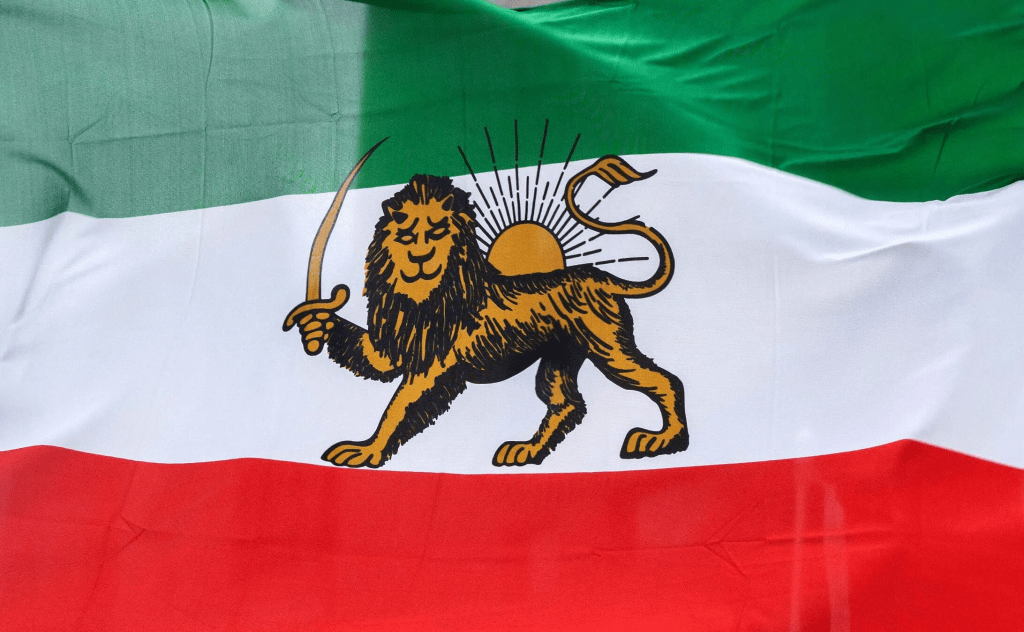
Iranian International, with enormous funding from the US and Israel (and likely other funding sources in European governments) had been poised to insert the Shah of Iran’s son Reza Pahlavi as the new “king” of Iran once the regime capitulated. The fact that Reza Pahlavi was heir to his father’s bizarre and corrupt reign (with his brutal SAVAK secret police trained by Mossad, Mi6 and CIA in torture techniques), and is entirely in the pocket of the genocidal Israelis and corrupt Americans and British who would then steal Iranian oil, wasn’t deemed to be a problem somehow. Israel’s title for their war with Iran , ‘Rising Lion’ is both a reference to Talmud texts, but also to the flag of the late Shah.

https://commons.wikimedia.org/wiki/Atlas_of_Israel

Like everything associated with the state of Palestine and the history of Israel since the Nakba , Zionists have attempted to revise history and pretend that Palestinians never occupied or owned the land that was stolen from them by the Zionists, starting with the Nakba of 1948 and progressing to the present day. aijac.org.au

Thankfully, Trump’s bombasity, lies and stupidity have fed into the perception of many in the South of a steady decline in American power and influence. The recent bizarre events at the NATO Summit in the Netherlands of Trump being called ‘Daddy ‘and all the NATO states kowtowing to Trump in pledging 5% military spending by 2035, a pledge which would undoubtedly bankrupt many of the EU states.

America and Israel and NATO/Five Eyes had expected an easy victory over Iran- decapitate the military leaders through assassinations, disable the Iranian neural networks for their missile defence systems and radars , blitz Tehran and then demand capitulation. The assassinations were largely successful, the hacking of the networks worked- but only for 8 hours-( the West had not anticipated how fast Iranian engineers could get the system back up and running)- and then the Iranian missile response began..

Indisputably Iran has suffered major but not irreparable losses in this war; the assassinations of some key military leadership and nuclear scientists, military facilities and missile systems destroyed.

However the genocide in Gaza by the Israeli “Defence” Forces (IDF) continues at the same brutal pace- with continued support form the US and the West. Every day Palestinians are being shot and killed by snipers , tanks and artillery as they try and negotiate the gate-pens to get some food ‘ provided’ through Israeli and US agencies for their starving families . While condemned by the UN and many in the South, Western nations are silent and complicit in this total inhumanity: a massive indictment of all that the West has pretended to stand for in the last 70 years- freedom, safety, democracy and the rule of law.

And for those who would like to believe this total absence of humanity and human rights for Palestinians is a recent phenomenon, please look at the following data below of the deaths and displacements by Israel since the Nakba of 1948. The state of Israel is an abomination, a pariah state fully supported by the West.


1. Displacement and Refugees

  • 1948 Arab-Israeli War (Nakba) :
    • Approximately 700,000 Palestinians were displaced or became refugees, including many women and children.
    • The UN estimates that 75% of Palestinian refugees today are women and children.
  • 1967 Six-Day War :
    • Another 300,000+ Palestinians fled or were expelled from the West Bank, Gaza, and East Jerusalem.
    • Women and children made up a significant portion of these refugees.
  • Total Palestinian Refugees Today :
    • Over 7 million Palestinians are registered as refugees or displaced persons globally (UNRWA and UNHCR data).
    • The majority are women and children due to generational displacement and high birth rates.

2. Casualties in Conflicts

  • Major Conflicts Since 1948 :
    • 1948–1956 : Exact numbers for women and children are unclear but likely high due to mass displacement.
    • 1967 & 1973 Wars : Limited data exists, but civilian casualties included many women and children.
    • First Intifada (1987–1993) : ~1,000 Palestinian children killed; women’s deaths unrecorded.
    • Second Intifada (2000–2005) : Over 3,000 Palestinian children killed; women also died in airstrikes and shootings.
    • Gaza Wars (2008–2009, 2012, 2014, 2021, 2023–2024) :
      • 2023–2024 Gaza War : As of April 2024, over 10,000 women and 18,000 children reported killed (Palestinian Health Ministry). Independent experts warn underreporting due to chaos and blocked aid.
      • 2014 Gaza War : ~2,200 Palestinians killed, half of them children (UN OCHA).

3. Incarceration and Detention

  • Since 1967 , Israel has detained thousands of Palestinians, including:
    • Women and Children :
      • Over 10,000 Palestinian women have been imprisoned since 1967 (Addameer, a Palestinian rights group).
      • Children : Thousands detained annually for alleged “security offenses.” In 2023 alone, over 8,000 children were arrested (UNICEF and DCIP reports).

4. Demographic Impact

  • Population Growth : Despite displacement and casualties, Palestinian populations in the West Bank, Gaza, and refugee camps have grown due to high birth rates.
  • Vulnerability : Women and children face disproportionate risks in poverty, restricted movement, and limited access to healthcare/education.

CategoryApproximate Numbers (since 1948)
Refugees/displacedMillions (majority women/children)
Casualties (conflicts)Hundreds of thousands (exact numbers disputed)
IncarceratedTens of thousands of women/children

Resources

  • United Nations Relief and Works Agency (UNRWA)
  • Office for the Coordination of Humanitarian Affairs (OCHA)
  • Palestinian Central Bureau of Statistics
  • Israeli human rights groups (e.g., B’Tselem)
  • Reports from Al Jazeera, BBC, and Reuters

https://www.moonofalabama.org/2025/06/mark-sleboda-what-the-hell-just-happened-in-the-middle-east-you-may-ask.html#more

Biocentrism (Kaitiakitanga): the only future we have

Bill Mollison , the brilliant developer of the concepts and actions of permaculture once said; “We are not superior to other life-forms; all living things are an expression of Life. If we could see that truth, we would see that everything we do to other life-forms we also do to ourselves. A culture which understands this does not, without absolute necessity, destroy any living thing” .

Biocentrism in environmental ethics emphasizes that all living things have intrinsic value and moral standing. It extends moral consideration beyond human beings to encompass the entire biosphere. This perspective suggests that every living organism, whether sentient or not, possesses a right to exist and be protected. 

Such a human culture, is able to live, sustainably alongside its fellow species. Able to acknowledge that all species are part of the web of life that also supports humans. Without that web, humanity, and most other current species, will inevitably die.

Anthropocentrism: the belief that human beings have superiority over nature has driven 6000 years of human’s ecological destruction, biodiversity loss, and now climate crises. This worldview contrasts sharply with Indigenous perspectives (like kaitiakitanga) and emerging ecological ethics that argue for biocentrism (all life has intrinsic value) or ecocentrism (whole ecosystems matter).

Anthropocentrism’s drivers appear to be derived from humanity’s view that the attributes that humans have- particularly the capacity to manipulate his/her environment, make humans a superior being to all other species on the planet. Our self-defined view of what is superior is derived from our own attributes; rather like an elephant determining that it is superior to all other species because it can reach high places with its trunk.

However our “superior” capacity to manipulate our environment is also our downfall; through 4000 years of manipulation of the natural world around us we have progressively destroyed the living world we rely on to survive.

Many like to think that if we did not have capitalism, we would somehow return to a world where humans could co-habitat in sustainable peace with other species – however it is clear that capitalism is simply one of many manifestations of anthropocentrism. Our belief in our inherent superiority allows us to consider capitalism and the pursuit of ‘wealth” by exploiting and destroying other living things as though that had no cost, as a sane objective.

6000 years ago, humanity’s anthroprocentric view of the world did not impact on the rest of the natural world as it does now. There were perhaps 7 million humans in the world, mainly hunter/gatherers who made use of the environment around them, but whose capacity to create systemic damage to the living world was limited in scale. As our capacity increased to not only defend ourselves against more ‘naturally’ efficient predators but also to kill and destroy other living things, so did the human population. Within two thousand years , the global human population had exploded to 160 million. In 2025 the global human population is estimated at around 8.2 billion people. Most humans now live in towns and cities ( what the Romans called ‘civis” – or ‘civilisation’). Surrounded by an inanimate world of asphalt and concrete we have lost our link with the rest of nature. We do not see its value because we cannot see it- except perhaps to see it as ‘entertainment on a hiking trip in the ‘wilds’.

Many of the world’s religions, particularly but not exclusively, the Abrahamaic religions of Judea, Christ and Mecca instruct their followers to believe in humanity as superior beings before their god.

Perhaps part of that wanton destruction has been because humans not only do not understand the inter-relationships between living things, but are also largely oblivious to the living things around us- the insects, the microbes, the fungi, the birds and mammals that help sustain our lives. We do not see how we are ourselves inextricably woven into that intricate web of life.

This sense of superiority has also led humans to become largely compassion-less for the suffering of others- except perhaps for those people and other animals that we focus our attention on and value for whatever reason. e.g. Cats, dogs, dolphins, whales are somehow living things to be valued- but sheep cattle, rats mice can be killed mercilessly; they do not suit our purposes. Or, as in New Zealand, humans may decide that this living animal is to be exterminated because we value this other living species – it is perhaps cuter, more indigenous, more suitable, more useful for exploitation.

Like most other species on earth, humans do not have the capacity to view the world long-term. We are oblivious to the ever encroaching tide year by year of concrete and asphalt into the living world, or of the one more old growth tree cut down to make way for ‘progress’. We cannot see what we have so tragically lost and the many lives we have destroyed.

If we are to save this planet from ourselves, we must re-learn how to value ALL living things; to see their beauty, their intrinsic value , their importance- and to act with compassion to all living things.

Without that compassion, we may continue to find fine and ultimately futile ways to lower our carbon footprint while we continue to destroy the rest of the living world, but we are nevertheless simply hastening our species’ (and many others) demise.

We can start now. Instead of our media pushing us to buy more and more ‘things’, or to travel here or there-we need our media to begin displaying how it is to become interlinked with our world. To grow trees in every back garden and park, to teach young people that they do not need to be ‘somebody’ important- but instead to be kind and caring to all, to learn how to be at ease with what we have; to ‘need’ less.

Politicians need to understand that GDP is a meaningless piece of garbage that does nothing to improve human’s quality of life and certainaly nothing to sustain our living world.

Politicians also need to be educated to understand the vital importance of bringing an end to anthroprocentrism; that given the destruction we have caused, we must now become true guardians of the natural world or ‘kaitiaki’ as New Zealand’s Maori say. We must make more and more of our living world legislatively sacred -that all of nature itself has rights or ‘personhood’, like the sacred Whanganui River in New Zealand.


Links

Introduction to Permaculture Bill Mollison Tagari Publications Tasmania, (2011) Page 1

Understanding Our Collapsing World- https://open.substack.com/pub/predicament/p/understanding-our-collapsing-world

https://www.theguardian.com/environment/2021/apr/14/rights-of-nature-laws-gaining-momentum

https://www.nature.com/scitable/knowledge/library/intrinsic-value-ecology-and-conservation-25815400/

https://link.springer.com/rwe/10.1007/978-3-319-09483-0_41

The Yemen Tragedy

Now that Trump ( as of May 2025) has made the decision not to continue U.S. air attacks on targets in Yemen (for now), the following semi-legal analysis of the strikes below is perhaps somewhat moot. However it does provide a glimpse into the legalities of the multiple aggressions by Western countries in the past 75 years since World War 2.

After an almost shootdown of an ‘invisible’ US F35 aircraft, and the loss of 2 (possibly 3) F18s (valued at $70 million each) that had ‘fallen off’ US aircraft carriers in the Gulf, along with about 10, 30 million dollar MQ9 drones shot down by Ansar-allah (what the West MSM as one voice like to call “Iran backed rebel Houthis”-all in one breath), it must have been clearly apparent, even to Trump, that the billion dollar US bombing campaign against Yemen was going nowhere.

Additionally, because the US had (and has) very little accurate information on where Ansarallah weapons and military was on the ground they were in fact predominantly (and accidentally?) hitting civilians. In addition the long-standing U.K air support for the Americans on the Arabian peninsula was entirely without targeting or strategy, but largely an attempt to try and demonstrate that Britain was still a force to be reckoned with in the Gulf.

One cannot however be so charitable about Israeli bombings of civilian Yemen targets-(civilian ports and airports), who used their traditional methods of terror and brutality to try and intimidate Ansarallah.

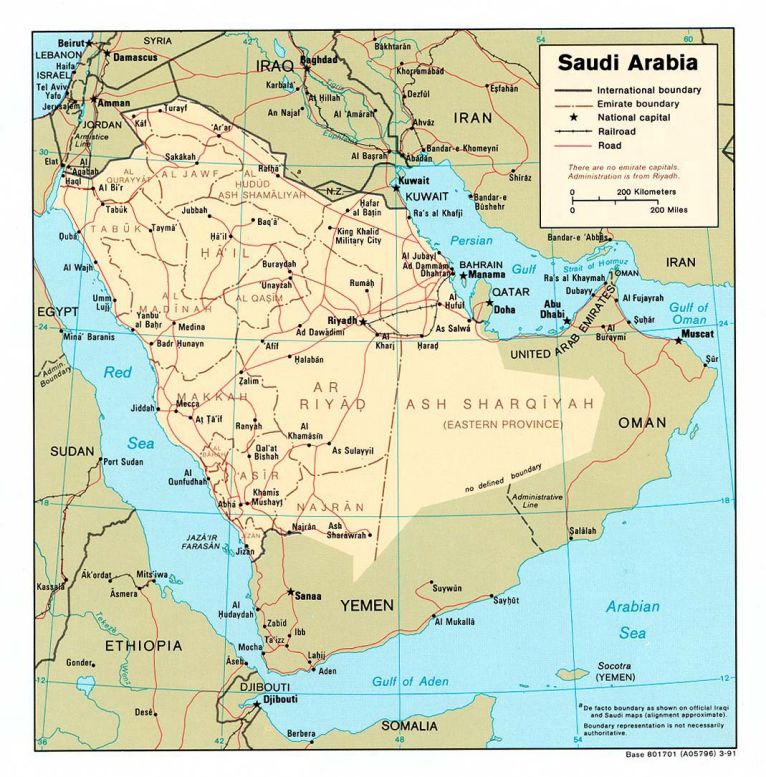
What follows is an analysis of the legalities of this bombing campaign, supposedly initiated by first Biden and then Trump, to stop Ansarallah closing the Gulf of Aden and Red Sea to shipping bound for the Israeli Red Sea port of Eilat (top right hand section of map)

Legal Analysis of US/UK Strikes in Yemen and Potential Violations of International Humanitarian Law (IHL)

The US and UK military interventions in Yemen, particularly against Houthi targets, raise significant legal questions under international humanitarian law (IHL)—also known as the laws of war. Below is a deeper examination of their compliance with key legal principles.


Analysis of the Legal Framework Governing US Strikes against Yemen

A. Applicable Law

  • Geneva Conventions (1949) & Additional Protocol I (1977): Govern the conduct of hostilities, including distinction, proportionality, and precautions in attack.
  • UN Charter (Article 2(4) & Article 51): Prohibits the use of force except in self-defense or with UN Security Council authorization.
  • Customary IHL: Binding on all parties, including non-state actors like the Houthis.

B. Justifications for US/UK Strikes

  • Self-Defense Argument (Article 51, UN Charter): The US and UK argue strikes are necessary to protect maritime security (Houthi attacks on Red Sea shipping).
  • Legal Debate: Some scholars argue this stretches self-defense doctrine, as Houthi attacks may not constitute an “armed attack” justifying unilateral force.
  • Collective Self-Defense (Supporting Saudi Arabia & UAE): Previously invoked, but less relevant post-2022 since the Saudi-Houthi truce.

2. Key IHL Principles & Potential Violations

A. Principle of Distinction (Civilian vs. Military Targets)

  • Rule: Attacks must only target military objectives, not civilians or civilian infrastructure.
  • Concerns in Yemen:
  • Urban Warfare: Houthis embed military assets in densely populated areas, increasing civilian risk.
  • Reports of Civilian Harm: NGOs (e.g., Mwatana, Amnesty) allege US/UK strikes hit homes, farms, and markets, suggesting possible indiscriminate targeting.

B. Principle of Proportionality

  • Rule: Civilian harm must not be excessive relative to the concrete and direct military advantage anticipated.
  • Challenges:
  • “Double-Tap” Strikes: Some reports suggest follow-up strikes hit first responders, which could be a war crime if deliberate.
  • High Civilian Toll in Past Strikes: Even if targets are legitimate, large-scale civilian casualties (e.g., 2022 Saada prison strike by Saudi coalition) raise proportionality concerns.

C. Precautions in Attack

  • Rule: Parties must take all feasible measures to verify targets and minimize civilian harm.
  • US/UK Practices:
  • Use of precision-guided munitions (reduces but does not eliminate risk).
  • Lack of Transparency: Few public investigations into alleged civilian harm, unlike in Iraq/Syria.

3. Accountability & Legal Consequences

A. Mechanisms for Accountability

  1. Domestic Investigations (US/UK):
  • The US has a Civilian Harm Mitigation and Response Action Plan (CHMR-AP) but rarely discloses Yemen investigations.
  • The UK has no independent Yemen strike review body, unlike its Iraq/Syria oversight.
  1. International Criminal Court (ICC):
  • Yemen is not an ICC member, but if nationals of member states commit crimes on Yemeni soil, the ICC could theoretically investigate.
  1. Universal Jurisdiction:
  • Third countries could prosecute war crimes under universal jurisdiction (e.g., Germany’s case against Syrian officials).

B. State Responsibility & Reparations

  • Under IHL, states must provide reparations for unlawful strikes, but neither the US nor UK has a compensation program for Yemeni victims.
  • Contrast with US payments for civilian harm in Afghanistan/Iraq.

4. Broader Implications & Legal Precedents

  • Escalation Risks: If strikes are seen as disproportionate, they could fuel further Houthi attacks, creating a cycle of violence.
  • Erosion of IHL Norms: Repeated civilian harm without accountability weakens global adherence to laws of war.
  • Potential for Future Cases: If evidence of systematic violations emerges, legal challenges could arise in international courts or via sanctions.

Conclusion: Are US/UK Strikes Lawful?

  • Legally Defensible? The US/UK can argue self-defense and military necessity, but civilian harm incidents raise serious IHL concerns.
  • Accountability Gap: Lack of transparent investigations and reparations undermines claims of compliance.
  • Future Risks: If civilian casualties continue unchecked, legal challenges (e.g., ICC petitions, universal jurisdiction cases) could follow.

The Western Media Farce of a Ukraine “Peace”

As of mid -March 2025, Western mainstream media speak as one, saying ‘Putin’ doesn’t want a ceasefire, he wants to continue the war’.

However Putin and the Russian Federation are simply reiterating the conditions for peace they have made for the past 3 years; which would be of course be of no surprise to NATO or to Western media- but they pretend they are. MSM seem to imply that Russia should simply say ‘yes’ to a temporary ceasefire while Ukraine is then rearmed by Europe and the US after its devastating defeat in the Kursk salient and along the line of combat in Eastern Ukraine, continues to plan to be part of NATO and continues to conduct war crimes against Russian-speakers- both within Eastern Ukraine and also recently in the now liberated Russian Kursk salient.

Russia’s conditions thus include the elimination of the well-documented persecution and murder of Russian speakers in Ukraine, (which naturally means the elimination of the Bandera-cult extremists who have attempted to implement their ethnically ‘pure’-Ukraine fiction.) Ukraine is, and has always been over the past 500 years, with its constantly shifting borders, a place where multiple ethnicities have always lived: Romanians, Hungarians, Russians, Jews, Gypsies and Poles.

Strangely the well-documented evidence of Kiev’s assaults on its civilian population in Eastern Ukraine (and particularly the thousands of civilian deaths from shelling in Donetsk City since 2014) never make the Western press.

And while we hear, as we should, about the deaths of Ukrainian civilians at Russian hands, we hear nothing about the missile strikes on civilians in Russia by Ukraine, many of which do not appear to be ‘accidental’ .

Russia has consistently demanded that Ukraine return to its neutral status that it legislatively agreed to when it became independent from the Soviet Union in 1991. Russia has consequently also demanded that Ukraine no longer be massively armed by the West so that it can no longer threaten Russia’s borders.

The fiction by European powers that they can be ‘peacekeepers” on the ground in Ukraine is simply ridiculous. Countries that have aggressively supplied and targeted the other side in a war cannot subsequently become ‘peacekeepers’- they are co-belligerents, and remain so until the war completely ends. A co-belligerent therefore cannot ever be a ‘peace-keeper’ – this is just a simplistic ruse by the Europe to create a backdoor opportunity for Ukraine to become part of NATO and for the Ukraine to continue its fight with Russia. What is also never mentioned in MSM is that Europe does not have the military capacity-either in war-machines or troops, to be a significant threat to Russia. European ‘peacekeepers’ would therefore become a trip-wire for the US to become directly involved militarily if European troops were attacked in Ukraine.

The neocon and very influential in Washington ‘thinktank’: the Atlantic Council has naturally accused Russia of using the NATO issue as an excuse to keep fighting- somehow ignoring the fact that one of Russia’s stated key reasons for starting the war was precisely because of the NATO threat.

We are continually told by Western media that Putin cannot be trusted to make a deal- yet it is indisputably the West who have lied and cheated their way through the Minsk 1 and 2 peace agreements to enable Ukraine to keep fighting, and scuppered the peace agreement agreed to by Ukraine with Russia in Istanbul in 2022.

We are told that the US pouring millions into Ukraine before the Maidan coup in 2014 , and US politicians like Senators John McCain and Chris Murphy  and US Assistant Secretary of State Victoria Nuland explicitly supporting the nationalist extremists on the Maidan, is all a myth. We are also told falsely that the deposed President of Ukraine Viktor Yanukovych was a corrupt dictator, when in fact he was democratically elected; (although indeed corrupt , like EVERY other Ukrainian president since independence).

Such evidence online in Western media’s reports and analysis is strangely hard to come by. Western media have demonstrated that they do not exist to provide bi-partisan evidence to allow people to make up their own minds about the history and current situation in Ukraine, they exist to ensure that the NATO narrative is the only narrative to be heard.

Plainly the ‘needs’ of Western politicians and businesses (and even University ‘analysts’) to explain this ‘unprovoked’ war by Russia in as simplistic and dishonest way as possible to ensure their financial gains and power, outweigh the needs of Western populations to be accurately informed of the realities of this awful war.

___________________________________

Links

https://www.publicinternationallawandpolicygroup.org/lawyering-justice-blog/2024/12/17/the-istanbul-communique-a-blueprint-for-ukraines-capitulation-1

https://www.crisisgroup.org/content/conflict-ukraines-donbas-visual-explainer

https://jacobin.com/2022/02/maidan-protests-neo-nazis-russia-nato-crimea

The Sacredness of Life

Life on our planet is a complex and often invisible intertwining of organisms; each  one dependant on many others for its survival.

The World Wildlife Fund states that half the planet’s wildlife population has vanished since 1970 as a result of human activity.   52 percent of Earth’s mammals, birds, reptiles, amphibians and fish disappeared over those 50 years, 40% of all insects species and 60% of birds are declining globally.

And those figures do not take into account the total populations of the different species of birds, insects and wild mammals that are being killed off or starved from lack of natural habitat. When did the moths last bang themselves against your lighted nightime windows?- when did the smashed insects last cover your windscreen with their bodies on that last holiday in the natural world?- when did you last see the huge flocks of birds that used to be everywhere?

That absence may seem of no  consequence (or even a relief!) to many humans (especially those who live in  urban spaces) but in  fact  we are all reliant on the multiplicity of other species for our survival-whether it be for pollination for our food, the birds that spread the seeds of life, the Mycorrhizal fungi  that  ensure plants and trees grow healthily, or the many predators and ‘pests” who keep life in  balance.

We need to  revive our lost understanding of our linkage to all other life on this planet. Not just  the species that humans ‘like’; our native fauna and flora and our pets, but ALL life. We must begin again to look and listen with respect and compassion to the living world around us and help  rebuild the natural  world that  sustains us. We are perilously close to cutting the remaining  threads that bind us to life on Earth.

Acknowledging that human ‘growth’ is in fact creating more dead spaces, (more concrete sealing over the soil, more trees felled, and fewer wild spaces to name just a few of our nature destruction options) . Planting trees, reviving diverse habitats and nurturing all other species  with compassion are just some of our key steps towards a better and sustainable world.

Sinophobia and Hysteria in the Pacific

The Pacific has long been the playground of European powers. France even now has what the French call patronisingly ‘protectorates’) in the Pacific including French Polynesia ( including Tahiti), New Caledonia, and Wallis. The independence movement in New Caledonia is particularly strong and has resulted in a number of clashes recently with the French occupying force there.

The United States has bases and territories in the Pacific, including Guam, American Samoa, Wake Island and Kwajalein Atoll  and also of course Hawaii which has become a US state. The US also has several naval bases in the Pacific, including Pearl Harbour, Guam, Majuro Atoll San Diego and in American Samoa.

Australia’s primary Pacific territories include, Norfolk Island, the Coral Sea Islands (Including Willis Island) Lord Howe Island and the Torres Strait Islands; with the most notable base and populated territory being Norfolk Island, located roughly 1600km northeast of Sydney. 

New Zealand’s Pacific territories include the semi-independent Cook Islands (whose citizens have dual citizenship with New Zealand), Niue and the Tokelau Islands . The Cook Islands government has recently caused a furore in New Zealand by negotiating a trade agreement with China without first discussing it with New Zealand.

Both New Zealand and Australia are members of Five Eyes the notorious US,UK, Canada, Australia, New Zealand intelligence network , which has for 75 years supported Israel’s genocide in Palestine through information provision and has been directly involved in providing vital intelligence for many of the brutal offensive wars conducted by the US and NATO-including the genocide in Korea , Vietnam, Iraq, Syria, Libya, the current war in Ukraine, and many more..

So perhaps it is perfectly understandable that New Zealand and Australia as part of the U.S. ‘international rule based order’ see their capacity to play their part in maiming and murdering millions for power and profit being threatened by the new kid on the block: China!

New Zealand has also relied on cheap (often illegally so) migrant Pasifika labour for its economy to expand over the past 50 years. Keeping Pacific Island countries therefore in a state of poverty has therefore been a desired outcome for NZ economists, to ensure a good flow of migrants. China’s resurgence is therefore a major threat to this strategy, bringing significant economic benefits via trade to Island nations and the likelihood that their populations will be more inclined to stay put. Having said that, China/Pasifika business ventures like deep sea mining are also a major threat to the environmental sustainability of the Pacific.

Despite the extensive hype from Australian and New Zealand journalists politicians and ‘experts’ , there is no evidence as yet of China establishing naval or air bases in those Pacific countries-unlike Australia and the US. What is curious is the almost total gung-ho support and consistent messaging from New Zealand journalists and ‘experts’ for more China bashing and more pointless New Zealand resources going into New Zealand’s military – on the somewhat ridiculous assumption that New Zealand’s tiny military footprint would have any impact on anything at all in a global conflict between superpowers.

China is now after all, a global super-power; it would indeed be strange if it did not have a presence this far south . China has steadily increased its naval presence in the Indo-Pacific region, including the Tasman Sea over the past few years. This is part of a broader strategy to expand its influence and protect its trading interests from a very belligerent United States and its co-opted allies-particularly Australia who has recently the AUKUS boondoggle deal to have the US build nuclear submarines Australia wont need, at staggering cost. New Zealand ‘experts’ are now saying New Zealand should also be part of this scam, to defend New Zealand from China!.

Rather than Australia and New Zealand acknowledging the new realities of China’s burgeoning global military and economic strength, and working with that (China after all clearly has absolutely no interest in invading Australia or New Zealand), Australia and New Zealand’s ‘experts’ and politicians instead want to hype up their populations for a futile and disastrous conflict with China. Bizarrely China is also Australia and New Zealand’s major trading partner.

It should also be remembered that United States naval forces and their NATO allies have traversed the South China Sea- very close to China’s borders, hundreds of times a year over the past 5 years. Ostensibly the US says that this is to ensure safe maritime passage in the area- but of course the vast majority of trade through the South China Sea is in fact Chinese.

The Chinese are under no allusions that the US is facilitating freedom of transit of this major trade route but are in fact threatening to blockade their vital maritime trade routes to the world..With its 904 military bases around the world, the US and its ‘Allies” are not a force for good in the world!

While New Zealand and Australia should logically be monitoring and preparing for any real military threats that might arise in the future, they also need to be adapting to a new multipolar world order, where the might-is-right rules of the U.S. ‘Rule Based International Order’ will thankfully no longer apply.

The development of open and honest communication channels with the Chinese Government instead of the current belligerency and media confrontation, would also be a helpful start, along with the development of long forgotten diplomacy skills.

——————————————————-

Links

https://www.rnz.co.nz/news/national/542679/china-begins-second-military-exercise-in-tasman-sea

https://www.rnz.co.nz/news/national/542714/expert-says-china-s-military-exercise-in-tasman-sea-serves-as-serious-threat

https://www.1news.co.nz/2025/02/08/analysis-anger-in-cook-islands-at-recent-moves/

https://www.rnz.co.nz/news/political/542733/cook-islands-deal-opens-up-pacific-to-china-expert

https://www.rnz.co.nz/news/political/542760/chinese-ships-in-the-tasman-a-gift-from-beijing-for-defence-spending-expert

The demise of the U.S. ‘rule based order’?

The following is an AI Qwen based analysis of the impact of the U.S. ‘rule based international order’ and the reality of the chaos, wars and destruction its supposed ‘rules’ exert on the world.

The development of this post was promoted by the overwhelming number of New Zealand international political ‘analysts’ who quote the ‘U.S. rule based order’, (not the U.N. set of obligations) as some kind of golden age of civilisation , peace and freedom. -the reality could not be more stark. They fear that the new Trump administration-cum-oligarchy will no longer adhere to that ‘rule based order’ .

So why are these ‘analysts’ referring so enthusiastically to these great ‘rules’ that have caused so much suffering in the world?

It has recently been revealed (Feb.2025) via Wikileaks that the US government’s USAID ‘programme’ has been funding a US ‘non-government’ agency Internews Network, with millions upon millions of dollars to ensure Western media around the world regurgitate media messages ‘consistent’ (tell-tale identical phrasing in news items on issues from Covid responses to the Ukraine war and Russia), with US foreign policy objectives. Could it be that Western university international affairs ‘analysts’ (and politicians) have been similarly compromised over a long period of time?

I leave it to you to judge where their ‘influences’ come from.

AI analysis follows:

The concept of a “rules-based international order” is often invoked by the United States and its allies to describe a system of global governance that emphasizes adherence to international laws, norms, and institutions such as the United Nations, international treaties, and trade agreements. Proponents argue that this order promotes peace, stability, and cooperation among nations by providing a framework for resolving disputes and fostering mutual interests.

However, critics argue that the U.S.-led “rules-based order” has been selectively applied, often serving as a justification for military interventions, economic sanctions, and other forms of coercion that have led to significant human suffering, including mass murder, wars, and violence.

1. Selective Enforcement of Rules

  • Double Standards: Critics argue that the U.S. and its allies have frequently violated the very principles they claim to uphold. For example, the U.S. has engaged in military interventions without UN Security Council approval (e.g., the 2003 invasion of Iraq), while condemning other countries for similar actions. This selective enforcement undermines the legitimacy of the “rules-based order” and can lead to conflicts where weaker states feel justified in acting outside the system.
  • Regime Change and Destabilization: The U.S. has supported or directly engaged in regime change operations in countries like Iraq, Libya, and Syria, often under the guise of promoting democracy or protecting human rights. These interventions have frequently resulted in prolonged civil wars, state collapse, and mass civilian casualties. In Iraq, for instance, the 2003 invasion led to hundreds of thousands of deaths, widespread displacement, and the rise of extremist groups like ISIS.

2. Economic Warfare and Sanctions

  • Sanctions as a Tool of Coercion: The U.S. has frequently used economic sanctions as a tool to punish or pressure countries that defy its interests. While sanctions are often framed as a “non-violent” alternative to war, they can have devastating humanitarian consequences. For example, U.S. sanctions on Iraq in the 1990s contributed to the deaths of hundreds of thousands of civilians due to lack of access to food, medicine, and clean water. Similarly, sanctions on countries like Venezuela and Iran have exacerbated economic crises, leading to widespread poverty and suffering.
  • Weaponizing Global Institutions: The U.S. has also been accused of weaponizing international financial institutions like the International Monetary Fund (IMF) and the World Bank to impose structural adjustment programs on developing countries, which often result in austerity measures, increased inequality, and social unrest. This economic violence can indirectly fuel conflict and instability.

3. Proxy Wars and Arms Sales

  • Arming Conflicts: The U.S. is the world’s largest arms exporter, supplying weapons to both state and non-state actors around the globe. These arms sales often fuel conflicts in regions like the Middle East, Africa, and South Asia. For example, U.S. arms supplied to Saudi Arabia have been used in the Yemeni Civil War, resulting in one of the worst humanitarian crises in the world, with tens of thousands of civilians killed and millions facing famine.
  • Proxy Wars: During the Cold War, the U.S. engaged in numerous proxy wars, supporting anti-communist forces in places like Vietnam, Afghanistan, and Central America. These conflicts often involved backing authoritarian regimes or insurgent groups that committed atrocities against civilian populations. In Afghanistan, for example, U.S. support for the mujahideen during the Soviet-Afghan War helped create conditions that eventually led to the rise of the Taliban and Al-Qaeda.

4. Militarization and the “War on Terror”

  • Global War on Terror: Following the September 11, 2001 attacks, the U.S. launched the “Global War on Terror,” which has been used to justify military interventions, drone strikes, and indefinite detentions in countries like Afghanistan, Pakistan, Somalia, and Yemen. These operations have often been conducted with little regard for international law or civilian casualties. Drone strikes, in particular, have been criticized for causing significant collateral damage, killing thousands of civilians, and radicalizing local populations.
  • Normalization of Violence: The rhetoric of the “rules-based order” often masks the normalization of violence as a means of achieving foreign policy objectives. The U.S. military-industrial complex benefits from perpetual warfare, and the language of “humanitarian intervention” or “counterterrorism” is sometimes used to legitimize aggressive military actions that result in mass death and destruction.

5. Undermining Sovereignty and Self-Determination

  • Imperialism and Neocolonialism: Critics argue that the U.S.-led “rules-based order” often serves as a cover for imperialist policies that undermine the sovereignty of weaker states. By imposing economic and political conditions on countries through institutions like the IMF, World Bank, and World Trade Organization (WTO), the U.S. and its allies have been accused of perpetuating a form of neocolonialism that stifles self-determination and exacerbates inequality.
  • Resistance and Blowback: When countries resist U.S. hegemony or attempt to assert their independence, they are often subjected to punitive measures, including coups, invasions, or covert operations. This resistance can lead to cycles of violence, as seen in cases like Iran (1953 coup), Chile (1973 coup), and more recently, Venezuela and Syria. The blowback from these interventions can manifest in the form of terrorism, insurgency, and regional instability.

Conclusion

While the U.S. and its allies present the “rules-based international order” as a framework for peace and stability, critics argue that it has often been used to justify interventions, sanctions, and other forms of coercion that result in mass violence and human suffering. The selective application of rules, the militarization of foreign policy, and the prioritization of U.S. strategic interests over international law have contributed to a legacy of wars, destabilization, and humanitarian crises. In many cases, the very principles of sovereignty, self-determination, and human rights that the “rules-based order” claims to uphold are undermined by the actions of those who enforce it.

Duplicity Unmasked -2024 and beyond..

2024 was a year when the total duplicity of the Western world and its media was exposed about the state of the world for all the world to see

2024 was a year when the total duplicity of the Western world and its media was exposed about the state of the world for all the world to see -the political machinations and the true state of the environmental crisis…

For the last 70 years and more, the West’s politicians and its media have talked about their fight for freedom justice and democracy against a corrupt and evil non-West. Israel’s genocidal war has changed all of that. The West’s unequivocal ‘moral’ and military backing of the mass-murder in Gaza has exposed the high moral talk as just that- bullshit.

And it is not as if this wasn’t evident 50 years ago with the West’s genocide in Korea, then Iraq, or Libya to name just a few- but Gaza has exposed the true horror of what the West stands for in bloodstained clarity.

And in Ukraine, the West’s portrait of the war has gone from simply being inaccurate and simplistic to downright lies. Somehow we are led to believe that Russia will accept a ceasefire and freeze the fighting because President Trump says so- despite the years of lies to the Russians from the West about signed peace agreements and non expansion of NATO etc. e.g. The BBC’s ridiculous propagandist in Moscow, Steven Rosenberg , reinterprets facts to pretend that Russia’s economy is struggling and that 80% of the Russian public don’t support the war.

https://www.bbc.com/news/videos/ce327we7w7zo

But even though all the evidence points to Russia pushing the Ukrainian forces back by tens of kilometers each day -despite the many billions in Western arms Kiev has received in the past 3 years -Western politicians and military commanders are convinced that Russia is desperate to end the war on any terms. And thus Western politicians and and media continue to pretend that the Russians are somehow primitive, almost sub-human beings, quite unlike those Western sophisticates in the capital of Europe and US. Sadly Ukrainians bought into that well-manufactured European myth, which resulted in the death and injury of more than half a million Ukrainian men to date. And if the reality does not square with our beliefs, we’ll bend reality to suit our beliefs.

In Syria we are told that the ex-Al Qaeda leaders of the new ‘democratic’ Syria are now the good guys, and we can forget all about their head-chopping adventures of the past.

And of course we simply don’t hear in the West how the French brutal colonial military are being pushed out of their African ex-colonial states one by one -as new African leaders expose French exploitation of their countries.(Gabon, Senegal, Cote d,Ivoire, Niger to name a few….)

But by far the biggest brutal silence and lie is the fact that we can continue to pretend its ‘business as usual” with our hedonist consumer lifestyles as the world’s climate continues its ever more rapid descent into total unpredictability and chaos. Our century and a half of ‘normality’-of endless consumerism and abundance in the West, is on its way out-yet the world’s media and politicians continue to pretend everything is just fine– current conditions are just a minor glitch in humanity’s onward march of progress to….. somewhere.

What to me is most disturbing in all of this debacle for the West’s populations and then for the rest of humanity’s global populations, is the total lack of compassion, humanity or kindness in any of the decisions that caused both the rise of the West as brutal and exploitative colonial powers, and its inevitable fall through ideological rigidity and pure stupidity: this insane insistence on making money at any cost to one’s soul and one’s humanity and now for our very survivability on this planet.

When did humanity lose its way? I suspect it arose when man decided he was above all other living things-that those ‘others’ were simply to be exploited for his benefit, rather than co-inhabitants on this planet with equal rights and deserving of equal respect and kindness. Rather than relying on our inate ‘knowledge’ that we must respect all living things to be fully human, we have fabricated ideologies (thought-games) that constructed, and continue to construct, mythologies and rationales for our brutality and savagery against other humans and other species. Those who descend into those mind-games, have indeed lost their souls

___________________________________________

Links

https://www.moonofalabama.org/2024/12/a-year-to-soon-be-forgotten-.html#comments

https://academic.oup.com/bioscience/article/74/12/812/7808595?login=false

https://www.moonofalabama.org/2025/01/ukraine-sitrep.html#more

http://www.defenddemocracy.press/the-scientific-pain-of-climate-change-shifting-narratives-of-acceptance-and-avoidance-in-climatology/