

The Manufactured Self: How Advertising Saturation Creates a Society of Performed Emotions.
We have allowed advertising to visually represent real people, which viewers can then emulate. TV, then computers, internet and smartphones have progressively increased the sophistication and volume of these visually and auditorially ‘realistic” (portraying a person or persons) media-which has magnified the impact on the viewing public to extraordinary levels. What are the consequences?
The first known video advertising featuring a person selling a product, appeared in the US in 1949 advertising a 12 inch Westinghouse Television, which (falsely) claimed that their new television eliminated rolling and static imaging on the screen, whilst conflating the image of the woman and the television set as being ‘easy on the eye’.
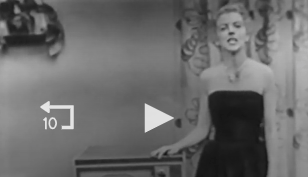
‘Video/archive: 1949 Westinghouse live TV commercial Archive
Timeline
- 1890s-1920s: Early movie advertising using projector slides and narrative product placements in silent films
- 1913: The first movie trailer is produced for a stage show
- 1941: The first licensed television commercial (Bulova watch) airs
- 1949: The first known TV advert featuring a person (Westinghouse)
The development of electronic media over the last 75 years has thus allowed advertising to visually represent ‘real’ people which viewers can then emulate. TV, then computers, the internet and smartphones have progressively increased the sophistication and volume of these visually and auditorially ‘realistic” media (portraying a person or persons)-which has magnified the impact on the viewing public to extraordinary levels.
Thus genuine feeling in social interactions is frequently replaced by rehearsed facial expressions, simplified phrases and ready-made identities.
Only thirty years ago, the current exaggerated open-mouthed expression of pleasure or surprise was rare in advertising and public life. A restrained smile conveyed satisfaction. A raised eyebrow suggested interest. Communication was subtler, more coded, and — critically — more likely to be genuine.
The shift began in the 1990s, driven by fashion photography and advertising, that discovered exaggerated facial expressions sold products more effectively. What followed was a gradual but relentless escalation.
Below is the chain of causation that has created this false world.
A. Advertising has saturated every media environment and increasingly every waking moment of human life.
B. Advertising operates primarily through emotional manipulation rather than truthful and factual representation.
C. This saturation and manipulation establish a kind of cultural template in which exaggeration, emotional performance, and the strategic misrepresentation of reality become normalized — not as aberrations, but as the default mode of social interaction.
D. People, having internalized this template, begin to present emotions they do not feel — in their faces, their voices, their body language, their written words, their social media posts, and their consumer reviews — not because of malice, but because the entire communicative ecosystem has been engineered to reward performed emotion over authentic real emotions and experience.
This is the logical consequence of an advertising ecosystem that spends trillions of dollars annually teaching human beings that how you make people feel matters more than what is true (2), and that ‘like-ability’ is the most predictive measure of commercial and personal success and infuence (2).
A car is associated with freedom. A drink is associated with belonging. A skin-care product is associated with confidence. A bank is associated with security. A fast-food meal is associated with family love. The message is not simply “buy this.” It is also “this is what happiness looks like,” “this is how desire should appear,” and “this is how a successful person responds.”
Marketing research treats emotional appeal as a central mechanism of persuasion because feelings can make a message seem personally relevant and memorable. The research is unambiguous: advertising succeeds not by providing information, but through performance of fake emotion. The University of Southern California’s analysis of advertising psychology found that 31% of emotionally driven ads succeed, compared to only 16% of rationally driven ads (2). The emotional response to an advertisement, ‘rather than the ad’s actual content, produces great influence on the intent of a consumer to buy a product” (2).
This finding is not just a description of what advertising does — it is a framework for how influence works in broader, (particularly Western) culture. When every person in a society is exposed to approximately 5,000 advertisements per day (2), they are receiving 5,000 daily lessons in a single method: make people feel something, and they will do what you want. The product being sold is irrelevant. The technique is transferable.
A person who has absorbed thousands of hours of emotionally manipulative advertising does not leave that training at the door of their workplace, their relationships, or their social media accounts. They have been taught, through relentless repetition, that performed emotion is the most effective tool of persuasion, and they will use it — often without conscious awareness that they are doing so, knowing that it works.
Workplaces already impose display rules on employees who must appear cheerful, calm or grateful regardless of their actual condition. Research on emotional labour shows that managing outward expression to meet such expectations can create strain, frustration and anger, particularly when the displayed feeling is far from the person’s lived experience.
Media and our ‘influencers’ from whatever source increasingly offer a smaller and smaller vocabulary of prefabricated phrases: “living my best life,” “good vibes,” “no negativity,” “you’ve got this,” “choose happy”- ad nauseam. These phrases can be comforting to the user in moderation. But they become emotionally impoverishing when they replace the harder work of identifying what is actually happening.
Look at any magazine cover, advertising campaign, or social media feed today and you’ll see it: the wide-open mouth. The gasp of delight. The hand over the heart. The breathless “Oh my God!” at a meal that is, after all, just a meal.
These expressions have become so ubiquitous that we rarely stop to ask a simple question: does anyone actually feel what they’re displaying?
Advertising Normalizes Exaggeration as Communication
The historical research on advertising reveals that before regulatory oversight, “hyperbole became the norm. Every product was the best, new and improved, the easiest to use, the safest, the most reliable” – Dewey, 2021. Once advertising regulation curbed the most egregious factual claims, the industry shifted to emotional and associative manipulation — techniques that are harder to regulate precisely because they operate through feeling rather than fact.
In consequence, a culture’s dominant communicative mode — the one practiced by its most visible, most funded, most professionally skilled communicators — is one in which saying something better than it is is not a failure of ethics, but a success of the craft.
Advertising professionals do not consider themselves liars; they consider themselves storytellers. And this reframing — from deception to narrative craft — has seeped into wider Western culture, providing a ready-made rationalization and excuse for anyone who wishes to exaggerate, embellish, or perform emotions they do not feel.
The Influencer Culture
Prior to the advent of the smartphone, personalised advertising on TV, Video and Film was acted via paid performers. The viewer was usually aware that the performer was a paid actor and not authentically portraying themselves. Nevertheless, the expert paid performer could (and still can) portray an element of personal authenticity in the delivery of the script.
However with the advent of the smartphone, the most direct mechanism through which advertising’s emotional performance template has colonised everyday social behavior is ‘influencer’ culture. ‘Influencers’ are, functionally, human advertisements — people who have monetized their personal lives opinions, and emotional expressions by making them persuasive to an audience.
Research on influencer authenticity demonstrates how thoroughly the advertising template has been absorbed into the viewers’ personal identity. The study found that perceived authenticity in influencers has a direct and indirect effect on consumer purchase intentions, mediated by trust and credibility (3). The standardized regression coefficient for trust (β = .44) reveals its centrality: audiences must believe an influencer is being genuine before they will be influenced by them (3).
‘Authenticity’ has consequently become a performance metric. Influencers do not simply need to ‘be authentic’; they must perform that authenticity convincingly enough to generate trust, which then generates purchasing behavior.
The research notes that “once the messaging of an influencer has been found to concur with the individual values and lifestyle of the followers, they are considered as intrinsically motivated and not extrinsically motivated by sponsorships, thus increasing the level of trust” (3).
Thus the most commercially valuable thing a person can do in the modern media ecosystem is convince others that their performed emotions are real. ‘Authenticity’ is not a quality to be possessed; it is a skill to be performed. And the better you perform it, the more influence — and money — you accumulate.
The Collapse of the Authentic and the Manufactured
The logical endpoint of this trajectory is visible in the emergence of virtual influencers — computer-generated personas that “replicate human appearance, personality, and social presence” while possessing “no memory, autonomy, or emotion” (4). Virtual influencers like Lil Miquela or imma.gram are entirely fabricated emotional performers. They do not (presumably!) feel anything. They have no bodies, no experiences, no inner space which makes meaning. Yet they engage audiences emotionally, generate trust, and drive purchasing behavior.
The research on virtual influencers reveals the cultural anxiety this produces: participants across multiple national contexts “expressed distinct thresholds for emotional resonance and divergent ethical concerns, particularly regarding disclosure, manipulation, and perceived authenticity” (4). The study introduces the concept of “synthetic mis-recognition” — the phenomenon of mistaking simulated emotion for real emotion — and argues that this mis-recognition has profound implications for “the ethics of simulating relational authenticity” (4).
But virtual influencers are not an aberration. They are the purest expression of what advertising has always taught: that performance of emotion is more valuable than the experience of it. If a computer-generated character with no feelings can sell products by performing feelings convincingly, then the message to every human content creator, social media user, and consumer is clear: your real feelings are less important than your performed ones.
Ordinary People as Advertisers of Themselves
The advertising template has spread beyond influencers and virtual characters to ordinary consumers. Research on inflated consumer testimonials found that psychological and emotional factors — including “self-image, self-enhancement as well as motivations for retribution against service providers” — significantly predict the creation of exaggerated, amplified review content (7).
The researchers frame this within Interpersonal Deception Theory, noting that “certain individuals tend to misrepresent facts and may willingly decide to deceive other persons, in their daily conversations, including in virtual ones” (7). The motivations are not solely selfish; they may include altruistic intentions, constructive criticism, and self-image management — all of which are emotional performances designed to create a particular impression in the minds of others.
What is significant though is that ‘ordinary’ people have adopted the exact techniques that advertising uses: exaggeration, emotional framing, selective emphasis, and the construction of a narrative designed to persuade rather than inform. The consumer writing an inflated review is doing, in miniature, exactly what a television advertisement does — making something sound better, more dramatic, and more emotionally resonant than it actually is. The advertising template has been democratised. Everyone is now their own advertising agency!
However the personal energy required to perform and deceive, rather than to simply express emotion, takes a considerable toll on both the performer and the receiver.
The Demand for Displayed Emotions
The chain of causation now becomes self-reinforcing. In a culture saturated with advertising and advertising-derived content (influencers, branded social media, curated personal narratives), the display of emotion becomes a social requirement. If everyone around you is performing emotion — performing happiness, enthusiasm, gratitude, outrage, desire — then the failure to perform emotion becomes conspicuous. It reads as coldness, disengagement, or social incompetence.
The research on virtual influencers captures this dynamic precisely: their appeal lies in their capacity to “emotionally engage users, often blurring the line between simulation and sincerity” (4). When the dominant mode of social interaction — mediated through screens, platforms, and algorithmically curated feeds — is one of performed emotional engagement, then real authenticity becomes not the natural state but the exception. The baseline expectation of interactions between people becomes performance.
The research on emotional abuse patterns identifies a key dynamic that applies metaphorically to the advertising-saturated culture: “You’re a different person around them. You find yourself doing and saying things you normally wouldn’t do but you have to in order to get through the interaction” (1).
In the advertising-saturated media environment, the “them” is not a single abuser but the person’s entire social ecosystem. People become different versions of themselves — performing emotions they do not feel, saying things they do not believe, presenting images that do not correspond to their reality — because the ecosystem demands it.
The Deceptive Design of Emotional Environments
The research on deceptive design in extended reality environments provides a technological dimension to this argument. XR (extended reality) technologies “enable new deception opportunities that are not present in other digital environments,” including the capacity for companies to “induce artificial emotions and target vulnerable users to influence their purchasing decisions” (6).
The study identifies that XR’s “immersive capabilities and extensive data collection enable subtle and powerful manipulation strategies” (6), and that these technologies can create emotional states in users that are then leveraged for commercial purposes. The concept of “emotional transparency” (from the virtual influencer research) becomes relevant here: in immersive advertising environments, the boundary between genuine emotion and induced emotion dissolves entirely (4). The user does not know whether they are feeling something real or something manufactured — and in a culture that has already normalized emotional performance, they may not care.
The Feedback Loop: Performed Emotion Becomes the Standard
The final link in the chain is the feedback loop.
Advertising teaches emotional performance. 

Technology platforms are designed to induce and reward emotional performance. And at each stage, the threshold for what counts as “authentic” emotion is raised, because the culture has become so saturated with performed emotion that genuine emotional expression becomes indistinguishable from — and often less compelling than — its performed counterpart.
The research on influencer marketing confirms this: audiences rate “authenticity” not as the presence of genuine emotion but as the consistency, transparency, and personal relatability of the influencer’s performance (3).
A perfectly constructed performance of vulnerability will be rated as more “authentic” than a genuine but awkward expression of feeling, because the audience has been trained — by thousands of hours of advertising — to evaluate emotion on the basis of how well it is presented, not on whether it is real.
Emotional Alienation
When a person is required, by the structure of their social and commercial environment, to perform emotions they do not feel, the predictable consequence is a form of emotional alienation — a disconnection from one’s own (and other’s) internal emotional states.
The research on emotional abuse identifies this pattern at the individual level: victims report becoming “a different person” around their abusers, doing and saying things they would not normally do (1).
At the societal level, the same dynamic operates through the advertising-saturated media environment, which requires constant emotional performance and thereby erodes the individual’s connection to their actual feelings.
The Erosion of Trust
The research on inflated testimonials identifies a direct consequence of widespread emotional exaggeration: “A lack of credibility and trustworthiness in online reviews could negatively affect the consumers’ perceptions and attitudes toward the business” (7).
When everyone is performing, no one can be trusted — not because individuals are necessarily malicious, but because the ecosystem makes authentic communication structurally impossible.
The virtual influencer research describes this as a crisis of “emotional transparency” (4), and the deceptive design literature frames it as a problem of “synthetic misrecognition” (4) — the inability to distinguish real from performed emotion.
The Manufacture of Psychopathic Norms
Psychopathy, in clinical terms, is characterized not primarily by violence, but by superficial charm, manipulative behavior, and the absence of genuine emotional experience.
A culture that rewards emotional performance over emotional truth, that monetizes the appearance of authenticity, and that saturates every media environment with manufactured feeling, is a culture that structurally incentivises the behavioural profile of psychopathy — not because its members are all psychopaths, but because the system selects for psychopathic performance. This is especially true for those we deem as ‘leaders:-our politicians, our sports ‘heroes’, our cultural icons…
One of the key issues is that emotional awareness is not an ‘ornamental’ skill. It is vital to help people decide what they need, to communicate boundaries, to seek help, to repair relationships and to regulate others’ and their own behaviour.
It must be acknowledged however, that people differ in how they experience and communicate emotion, and our interpretations of others’, and our own emotions, must respect culture, neurodiversity, trauma history and individual circumstances. Emotional abuse, emotional neglect and physical neglect can have a profound effect on our capacity to express and understand the emotions of others.
The Advertising-Emotion-Deception Nexus
The argument, traced through the available research, can be summarised thusly:
Advertising’s saturation of all media(2) — from television to social media to extended reality environments (6) — has established emotional manipulation as the dominant mode of commercial communication(2).
This mode operates through exaggeration, selective framing, and the construction of inspirational emotional narratives that make products, services, and experiences sound better and more emotionally rewarding than they actually are.
This commercial template has been absorbed into broader culture through more and more sophisticated technology and influencer marketing (3), consumer review culture (7), social media performance, and the design of immersive digital environments (6).
Ordinary people, trained by thousands of daily exposures to emotionally manipulative advertising, have adopted the same techniques in their own self-presentation — performing emotions they do not feel, exaggerating their experiences, and constructing curated emotional narratives designed to persuade others rather than to communicate truthfully (7).
The result is a society in which emotional performance has replaced emotional experience as the default mode of social interaction — a society in which authenticity is a skill to be performed (3), in which computer-generated characters with no feelings can convincingly simulate emotional connection (4), and in which the structural demands of the media ecosystem may be engineering behaviors associated with emotional manipulation and the absence of genuine feeling.
While research remains limited on the issue, the societal frequency and intensity of alexithymia, a behavioural trait characterised by poor emotional awareness and description, may also be compounded by this advertising blitz of fake emotion.
There is a growing unease in modern life. People can be surrounded by messages, images, notifications, opinions and invitations to buy, yet remain strangely unable to say what is happening inside them. We may know that we are “stressed,” “fine,” “triggered” or “happy.” But we may not know whether we are grieving, ashamed, lonely, frightened, resentful, exhausted or morally disturbed.
This is Alexithymia: it is not the absence of emotion. It is a reduced ability to notice, identify and describe one’s own feelings. It is generally understood as a dimensional, subclinical trait rather than a diagnosis in itself. Researchers commonly describe three features: difficulty identifying feelings, difficulty describing them to others, and an externally oriented thinking style that focuses more on facts and events than inner experience.
Are increasing numbers of people becoming alexithymic? The evidence does not yet establish a comparable, population-wide rise across the past several decades. Studies use different samples, cultures, questionnaires and thresholds. Some report high rates in particular groups, especially adolescents, students and people experiencing mental or physical illness. Those findings cannot be converted into a reliable global trend.
Nevertheless, there are good reasons to take the possibility seriously. Modern societies expose people to chronic stress, childhood adversity, loneliness, commercial pressure, digital distraction and a powerful demand to display emotions that are legible, attractive and useful.
Visual displays like fist pumps or wide open mouths become a clearer expression to others when displayed on a small screen, as opposed to the subtle and multiple visual, auditory and chemical transmissions that (can) occur in real social settings.
We may be living in a culture that is increasingly emotionally performative while becoming less emotionally literate.
The Profound Impacts on Younger People
A child learns emotional language through their relationships. A responsive adult helps a child connect bodily states with words: “You are frightened,” “That hurt,” “You are disappointed,” “It is safe to be angry without hurting someone.”
When adults ignore, ridicule, punish or exploit a child’s feelings, the child may learn that inner experience is dangerous, useless or incomprehensible- so much safer and easier then, to just perform the required emotional display.
When feelings remain unnamed and unrecognised, they can be harder to regulate and easier to express indirectly through withdrawal, aggression, compulsive activity, substance use or physical symptoms.
Young people are not simply more vulnerable to advertising because their brains are immature, but advertising-saturated digital environment may also be actively impairing the development of the brain regions that would eventually allow them to resist advertising’s influence (17).
Children learn to identify and express emotions partly through mirroring — observing how the adults around them respond to situations. If those responses are consistently exaggerated or performative, children internalise a distorted model of emotional life.
In addition, younger people are particularly vulnerable to this ‘selling’ onslaught because of their more limited experiences of life, and consequently often model these exaggerated behaviours by ‘influencers’ and other salespeople in the media who are thus deemed to be ‘important’ and of high social status.
Young people are not merely more susceptible to advertising. They are being shaped by it at the neurological, psychological, and identity levels in ways that make performed emotion not a choice but the default response.
That is not to say that we should simply ban young people from accessing ‘social media’. What is needed instead is more effective parental and school-based training on how to educate and support children in safely and honestly engaging in real social settings.
With these skills and confidence, electronic social and other media and advertising becomes far easier and safer to navigate for a young person.
CONCLUSION
Let us not however deceive ourselves that humanity’s capacity to deceive each other and ourselves is somehow a new or unique ‘skill’ brought about by advertising! Propaganda techniques have been around for more than 2000 years!
The capacity to fake, to pretend and to deceive are not just human traits- they are traits exhibited by all species from time immemorial to extend the survival of the individual and the group.
What is unique however, is its current and pervasive prevalency in modern human society- an adaptation from a survival mechanism to a default mechanism for social acceptance and consumption.
Additionally, it has to be said that new communicative styles (a wide open mouth, a fist pump, or an OMG) are not solely the result of media inputs.
The human brain’s insatiable need for ‘more’ has been supercharged through advertising media and the technologies which have enabled saturation advertising.
On a finite planet, humanity’s insatiable need for ‘more” has only one outcome…
A population that cannot name its feelings is easier to manipulate through fear, resentment and commercial desire. Public debate becomes a contest between emotional triggers rather than an effort to understand competing needs. People who are grieving are told to be positive. People who are angry are offered an enemy. People who are lonely are offered a product.
Human societies function on an assumption of trust that others are, predominantly, communicating what they actually feel. Facial expressions evolved as honest signals. A genuine smile — the Duchenne smile, involving the muscles around the eyes — was a reliable indicator of real pleasure. We are neurologically wired to trust these signals.
Without that baseline of trust between its individuals, a community, a society, a culture, or a global culture, become fragmented, distrustful and fearful. Skepticism and social fatigue become the norm. When people cannot easily distinguish genuine emotion from performance, they may withdraw from emotional engagement altogether. And if we assume everyone around us is performing, we become less likely to respond with genuine compassion to someone’s real distress. Manipulation becomes that much easier. When the language of strong emotion is constantly performative, those who genuinely wish to deceive find easy fertile ground.
There is also an ecological consequence. The destruction of forests, rivers, animals and climate systems is not just a technical problem. It is a failure of relationship and moral perception. If people are trained to treat their own inner discomfort as noise, they also become less able to register the suffering of other humans, other species and the wider living world.
We must rebuild our emotional vocabulary and skills, develop and encourage honest communication, trauma-informed care, and revitalise institutions that allow real feeling of expression rather than requiring permanent positivity.
We must begin to make room for experience and emotional states that are less scripted and more honest.
Families and schools can teach children a richer emotional vocabulary without forcing them to perform it. Workplaces can question display rules that require permanent cheerfulness. Health services can ask about emotional awareness without dismissing physical symptoms.
Communities can create places where people are allowed to be uncertain, vulnerable, grieving, or conflicted and still worthy of belonging.
Research Sources and URLs
(1) :Emotional abuse signs and healing, personal testimony: Being “a different person” around others as a sign of manipulation; the pattern of performing emotions to survive an interaction
(2): USC Applied Psychology — “Thinking vs Feeling: The Psychology of Advertising” :31% emotional vs 16% rational ad success; 5,000 ads/day; likeability as the primary predictor of ad effectiveness
(3): Influencer authenticity, trust, and purchase intentions (Gen Z): Perceived authenticity mediates purchase behavior through trust (β = .44) and credibility; authenticity is a performed quality
(4): Virtual influencers: ethical and cultural dimensions (Myanmar, South Korea, Singapore, USA) :Synthetic misrecognition; emotional transparency; VIs simulate emotion without experiencing it; cultural variation in ethical discomfort
(6): Deceptive design in Extended Reality (University of Waterloo, 2024): XR enables “inducing artificial emotions” and targeting vulnerable users; immersive manipulation strategies |
(7): Inflated consumer testimonials: self-image, self-enhancement, retribution motivations: Self-image and self-enhancement predict exaggerated reviews; ordinary consumers adopt advertising’s techniques of exaggeration
(8): Hogeveen & Grafman, 2021, Alexithymia (Handbook of Clinical Neurology; PMC8456171). Alexithymia is a subclinical construct involving disrupted emotional awareness. It is linked to impaired functional outcomes and treatment response; major issues include emotional awareness, communication, interoception, and measurement. URL: https://pmc.ncbi.nlm.nih.gov/articles/PMC8456171/
(9): Kick et al., 2024, Alexithymia as a mediator between adverse childhood events and the development of psychopathology: a meta-analysis (Frontiers in Psychiatry; PMC11246998 ). Meta-analysis found child abuse correlated with alexithymia (r=.26), alexithymia with general psychopathology (r=.44); emotional abuse, emotional neglect, and physical neglect were stronger correlates than physical/sexual abuse. Mediation is partial and correlational. URL: https://pmc.ncbi.nlm.nih.gov/articles/PMC11246998/
(10): Ursoniu et al., 2024, The interconnection between social media addiction, alexithymia and empathy in medical students (Frontiers in Psychiatry; PMC11446739 ). Cross-sectional sample of 649 medical students. 21.42% possible and 14.02% clear alexithymia by TAS-20 thresholds. Model found social-media addiction associated with alexithymia and an indirect association with empathy; only about 11% of empathy variability explained, single-site student sample, no causal inference. URL: https://pmc.ncbi.nlm.nih.gov/articles/PMC11446739/
(11): Tsubaki & Shimizu, 2024, Psychological Treatments for Alexithymia: A Systematic Review (Behavioral Sciences; PMC11673933 ). Review of 18 RCTs / 21 intervention arms / 1,251 participants. Most psychological interventions reduced TAS-20 scores, but studies were heterogeneous and larger, higher-quality trials are needed.URL: https://pmc.ncbi.nlm.nih.gov/articles/PMC11673933/
(12): Advertising evidence: marketing research documents emotional appeals as a central persuasive strategy; research on social-media self-presentation finds expressions are often idealized, exaggerated, and unrealistic. These sources support discussion of a cultural environment of performed and commodified emotion, not proof that advertising causes alexithymia. URLs: https://link.springer.com/article/10.1007/s43039-026-00136-2 ; https://www.nature.com/articles/s41467-020-18539-w
(13): Emotional-labour literature defines display rules as explicit or implicit expectations to show particular emotions, and links inauthentic display to strain/burnout in some settings. This supports a cautious analogy to commercial emotional display, not a direct clinical claim. URL: https://pmc.ncbi.nlm.nih.gov/articles/PMC10863272/

