
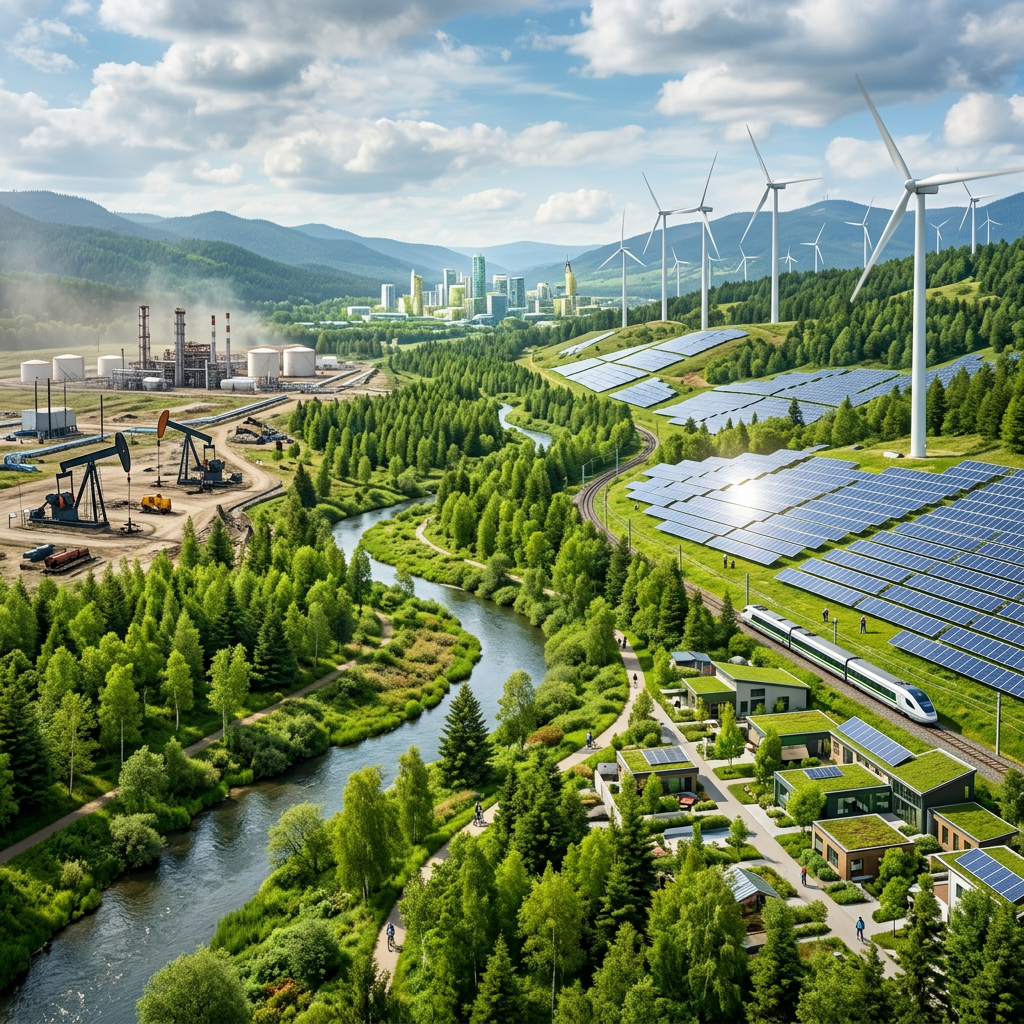
The Global Context: A Crisis Without Precedent
The closure of the Strait of Hormuz has created what the International Energy Agency calls “the largest supply disruption in the history of the global oil market” . Flows through the Strait—normally carrying 20 million barrels daily—have fallen to “a trickle,” with oil exports from Gulf producers dropping from approximately 20 million barrels per day to just 3.8 mb/d in early April .
This isn’t just about crude oil. The crisis has triggered unprecedented price spikes in refined products, with Singapore middle distillate prices reaching all-time highs above $290/barrel . For Australia and New Zealand—nations at the end of global supply chains—the implications are immediate and severe.
Price Forecasts: What to Expect by June 2026
Given that the war against Iran by Israel and the US is an existential one for Iran- i.e. Israel, and likely the US’s intent, is to destroy Iran as a cohesive state and break it into statelets who can no longer pose a threat to Israel’s Greater Israel project or disrupt future US control over Iranian oil, any peace agreement for Iran must include continued control over the State of Hormuz to ensure the state of Iran’s continued viability. It is unlikely that the US will concede to this in the short to medium term, especially given the control that Israel currently has over US foreign policy.
Additionally, should the US attempt further substantial attacks on Iranian infrastructure after the ceasefire likely ends on May 20th 2026, Iran has promised to destroy other Gulf States energy infrastructure.
If the Strait of Hormuz remains closed or severely constrained through June 2026 or longer, energy markets face a prolonged supply crisis with cascading price effects:
Crude Oil and Refined Product Prices
| Product | Current/Recent Price | June 2026 Forecast (Hormuz Closed) | Source |
|---|---|---|---|
| Brent Crude | ~$103/bbl (March avg) | $115+/bbl (EIA peak forecast for Q2 2026) | |
| Singapore Gasoil (Diesel) | $192/bbl (April) | $200-250+/bbl (IEA alternative scenario) | |
| Singapore Jet Fuel | Surged 114% since Feb 28 | $250-300+/bbl (record highs sustained) | |
| VLSFO (Bunker Fuel) | S$2.30/litre (Singapore) | S$2.50-3.00+/litre (competing demand from refiners) | |
| Australian Retail Diesel | AUD $3.20+/litre | AUD $3.50-4.00+/litre (potential doubling if crisis persists) | |
| Australian Retail Petrol | ~$2.20/litre (post-excise cut) | AUD $2.50-3.00/litre | |
| US Retail Diesel | ~$5.80/gallon (April peak) | $6.00-7.00+/gallon |
The International Energy Agency (IEA) has presented two scenarios: a base case assuming gradual resumption of Hormuz flows by mid-year, and an alternative “prolonged conflict” case where “energy markets and economies around the world need to brace for significant disruptions in the months to come”. Under the prolonged conflict scenario, physical crude prices could sustain levels near $150/bbl, with refined products trading at unprecedented premiums .
As of mid-April 2026, oil futures traders are maintaining an almost constant West Texas Intermediate (WTI) crude oil price per barrel of around $100 US, while real Dated oil prices hover around the $140 mark. Futures traders are for some reason responding to oft repeated wild claims by Trump that victory, a peace agreement or at least an opening of the Straits, is imminent.
The IEA estimates it will take 2 years for global oil supplies to return to their previous levels once the Strait is reopened because of the extensive damage to Gulf refineries, storage facilities and docks.
Key Price Drivers
- Diesel shortage structural: The IEA estimates 3-4 million barrels per day of diesel supply loss (5-12% of global consumption) directly tied to Hormuz disruptions
- Refinery capacity offline: Middle East and Asian refineries cut runs by ~6 mb/d in April, tightening global product markets
- Brent-WTI spread widening: The spread reached $12/bbl in March and is projected to peak at $15/bbl in April, reflecting Asian supply anxiety
Australia: The Diesel Nation at Breaking Point
The Dependency Problem
Australia is perhaps the most vulnerable developed nation to a liquid fuel emergency. In FY2021, 91% of all fuel consumed in Australia was imported—including 68% as refined products and imported crude for our remaining refineries .
Over the past 20 years, Australia like many other Western countries has substantially reduced the number of oil refineries on shore, opting instead for those refineries to become solely storage facilities for distilled oil products; predominantly from Asia. Two active refineries remain in Australia with the smaller one recently impacted by a refinery fire.
Australia sits at the end of a complex supply chain stretching thousands of kilometers from Singapore, South Korea, Malaysia, and Japan. While only a small fraction of their diesel imports come directly from the Middle East, almost half of the crude oil for production of that diesel originates in the Middle East when traced back through those Asian refineries.
The Diesel Consumption Profile
Australia’s economy runs on diesel. In 2025, the nation consumed approximately 35 billion litres of diesel—far exceeding the 15 billion litres of petrol and 10 billion litres of aviation fuel . The consumption breakdown reveals critical vulnerabilities:Table
| Sector | Diesel Share | Annual Consumption | Vulnerability Level |
|---|---|---|---|
| Mining | 40% of total diesel | ~14 billion litres | CRITICAL |
| Road Transport/Trucking | 24% | ~8.4 billion litres | HIGH |
| Agriculture | 8% | ~2.8 billion litres | HIGH |
| Manufacturing | 7% | ~2.5 billion litres | MEDIUM |
| Marine/Rail | Significant | ~3+ billion litres | MEDIUM |
| Passenger Vehicles | ~25% of remainder | ~4+ billion litres | MEDIUM |
Australia has one of the highest per capita diesel demands in the world—7.4 barrels per person annually—far exceeding the US and other major economies .
The Refinery Crisis
Australia’s domestic refining capacity has collapsed. Five refineries closed over the last decade, leaving just two operational: Ampol’s Lytton refinery in Brisbane and Viva’s Geelong refinery in Victoria. These facilities were already struggling before the current crisis—and then came the April 2026 fire at Geelong.
The fire at Viva Energy’s Geelong refinery—built in the 1950s—shut down critical units. As analyst Kevin Morrison noted: “This creates the conditions for higher prices, as it pushes up international demand for refined products when supply is massively constrained. It could not happen at a worse time.” Victoria alone consumes 252,000 barrels of fuel daily—41% diesel, 22% jet fuel—and now faces sourcing these volumes from already-tight Asian markets.
The structural problem? Our remaining refineries are configured to produce mostly petrol rather than aviation fuel and diesel—precisely the fuels most critical for agriculture, road freight, mining, and defense .
Stockholding: The 90-Day Myth
Australia has been in breach of International Energy Agency (IEA) obligations since 2012. The IEA requires 90 days of net import coverage; Australia holds just 68 IEA days, and when measured against actual consumption, this equates to roughly 30-34 days of real fuel security .
The government counts “fuel in transit”—on foreign-flagged tankers in foreign ports—toward reserves. But as the Australia Institute notes: “In the event of a global emergency, there is no guarantee that the oil that Australia has been promised access to… would be practically accessible.” These ships are not Australian vessels; they sail under foreign flags and owe no allegiance to Australian fuel security.
With the Strait closed, Australia is now pulling diesel along some of the longest and most expensive trade routes in the world—13,000-mile journeys from the US Gulf Coast taking up to two months .
Mining Sector: The $4.5 Billion Diesel Addiction
The mining industry is Australia’s most diesel-exposed sector, consuming approximately 9.6 billion litres annually—roughly 40% of national diesel consumption and 10% of total national energy use . The sector operates more than 50,000 large diesel-powered trucks, each consuming approximately 900,000 litres annually .
Cost Impact Calculations:
- At pre-crisis diesel prices (~AUD $1.75/litre), a large mine’s annual fuel bill for a 200hp tractor running 1,500 hours was ~$74,000
- At current prices (~AUD $2.25-2.50/litre), that same operation costs $100,000-112,000 annually—a 35-50% increase
- If prices reach $3.50-4.00/litre by June, costs could double from the original baseline
According to S&P Global and BMO estimates using Wood Mackenzie data, every 10% increase in oil prices drives mining cost increases of:
- Iron ore: +4.2% mining costs
- Copper: +3.5% mining costs
- Gold: +2% mining costs
With crude oil potentially averaging $100+/bbl (47% above 2025 average), mining costs could rise 16-20% for bulk commodities .
Operational Risks: The mining industry faces a shutdown timeline measured in weeks if diesel supplies are interrupted:
- Best-positioned mines: 4-8 weeks of operational capacity
- Typical remote diesel-heavy mines: 2-6 weeks before curtailment
- Weakest operations: Days to 2 weeks
The ASX Materials Index has already plunged 20.3% since the conflict began, with fund managers dumping stocks amid fears of fuel shortages forcing production cuts .
Agriculture: Harvest Season Crisis
Australian agriculture consumes approximately 2.5 billion litres of diesel annually, with diesel accounting for 84% of on-farm energy consumption . The crisis has hit at the worst possible time—during harvest season when fuel demand peaks .
Impact on Farm Economics:
- A farm using 80,000 litres annually faced fuel costs of ~$140,000 at $1.75/litre pre-crisis
- At current $2.25+/litre, costs have jumped to $180,000+ annually—a $40,000+ increase per farm
- If diesel reaches $3.50/litre by June, that same farm faces $280,000 annual fuel costs—double pre-crisis levels
Farmers are already making critical decisions about whether to proceed with crops given uncertainty about diesel allocations later in the year . Adding diesel and freight costs means nearly 60% of farmers’ cost base is increasing rapidly .
The Fuel Tax Credits Scheme (FTCS)—which provides AU$4.5 billion annually to mining and AU$1.3 billion to agriculture—has become a critical but increasingly inadequate buffer .
Food Supply Chain: From Farm to Shelf
Australia’s food supply chain is diesel-dependent at every stage:
- Production: Tractors, harvesters, irrigation pumps
- Processing: Generators, machinery
- Distribution: Road trains, trucking (24% of national diesel consumption)
Higher diesel costs cascade through the food system:
- Transport costs increase directly with fuel prices
- Processing costs rise due to diesel-powered equipment
- Retail prices must absorb these increases or face margin compression
The Australian Industry Group warns that disruption to fuel markets creates cascading supply chain impacts, with businesses already reporting fuel-related operational challenges .
Tourism and Aviation
The tourism sector faces a triple hit:
- Jet fuel costs: Singapore jet fuel surged 114% since February 28
- Airfare increases: AirAsia X has increased fares by up to 40% due to fuel costs
- Ground transport: Higher petrol and diesel costs affect rental cars, tour buses, and visitor travel patterns
Air New Zealand has already canceled 1,100 flights impacting over 44,000 passengers between March and early May due to fuel cost pressures .
The Australian Government Response
On March 30, 2026, the Australian National Cabinet activated the National Fuel Security Plan, currently at Level 2 (“Keeping Australia Moving”) . Measures include:
- Halving fuel excise from 52.6 cents to 20.6 cents per litre for three months
- Temporarily reducing minimum stockholding obligations by 20% for diesel and petrol
- Amending fuel quality standards to allow higher sulfur levels, releasing ~100 million litres/month of additional petrol supply
- Appointing a Fuel Security Taskforce Coordinator
- Underwriting additional fuel cargoes and strategic reserves
However, energy analysts question whether the excise cut was optimally targeted. Macquarie University’s Lurion De Mello notes: “Petrol is not the pain point. Diesel is the pain point” . Deakin University’s Samantha Hepburn warns: “Any disruption in diesel supply or sustained high prices… will directly affect production capacity, increase operating costs and ultimately push up food prices” .
The Australia Institute recommends accelerating electric vehicle adoption to reduce petrol demand, thereby freeing refining capacity for diesel and jet fuel security .
New Zealand: The Marsden Point Gamble
The Refinery Closure Decision
New Zealand made a calculated bet in 2022—and now faces the consequences. The Marsden Point refinery, which produced half the country’s petrol, two-thirds of diesel, and most jet fuel, was converted to an import terminal. The rationale was economic: the refinery was inefficient by international standards, and importing refined products from mega-refineries in Asia was cheaper.
The government and industry argued this improved security: “Closing the refinery has actually improved our security of supply, as there is now more than twice as much fuel on the water to replenish domestic stocks than when we produced it locally.”
But this logic contains a fatal flaw. New Zealand no longer imports crude oil—but the Asian refineries we depend on do. In 2024, New Zealand’s top four source countries (Singapore, South Korea, Malaysia, Japan) sourced almost 80% of their crude oil imports from Persian Gulf countries .
As MFAT’s July 2025 analysis states: “In the event of disruption of Middle Eastern supply, Asian refineries would be forced to source crude product from elsewhere, pushing up the global price for oil” . New Zealand faces indirect but severe exposure to Gulf disruptions through our refined product suppliers.
Current stock levels provide approximately 47 days of diesel, 51 days of petrol, and 49 days of jet fuel coverage—better than Australia but still precarious if Asian refining capacity falters .
As of mid-April 2026, the New Zealand government’s sole strategy has been to monitor the volume and consequent days left of the various oil substrates in the country. The reality is that the risks to New Zealand’s economy are the combined factors of stocks available and the cost at the pump of those stocks New Zealand may well find that by June there are still tankers available to supply oil substrates to New Zealand but at a price that is unaffordable to the public.
Already truck operators are warning of hugely increased supermarket food prices in the pipeline because of the massively increased transport costs involved in supplying the supermarkets from New Zealand’s highly centralised grocery supply chain. Decentralisation of essential services across new Zealand is thus a very urgent priority.
Economic Impact Forecasts
ASB Bank has downgraded New Zealand’s growth outlook due to the fuel crisis, forecasting:
- GDP growth slowing through 2026
- Inflation rising toward 4% before easing in 2027
- Households facing $4,000-6,000 annual hit if fuel prices stay elevated
Westpac identifies tourism as particularly vulnerable, forecasting that “the most direct impact of the shock on exports will likely show up in falling visitor numbers” due to flight disruptions, higher airfares, and consumer reluctance to travel internationally during heightened tensions .
Tourism Sector Impact
New Zealand’s tourism sector—still recovering from COVID-19—faces severe headwinds:
- Flight cancellations and route reductions: Air New Zealand has already cut capacity
- Higher airfares: Jet fuel costs have surged 114%, forcing ticket price increases
- Reduced international visitor numbers: Westpac expects reversal of recent strong growth in arrivals
- Domestic tourism pressure: Higher petrol prices reduce Kiwis’ willingness to travel domestically
Regional Variations: Regions dependent on self-drive tourism—West Coast, Tasman, Southland, Gisborne—face particular pressure. These areas already have disproportionate visitor spending on fuel, primarily because of a lack of local international airports, making them vulnerable to petrol price volatility .
Tourism Industry Aotearoa reports businesses are experiencing “sharp increase in business costs as a result of the leap in fuel prices” . The NZX50 fell nearly 6% in March 2026, with travel and tourism stocks—including Serko, Air New Zealand, Tourism Holdings, SkyCity Entertainment, and Auckland International Airport—among the hardest hit .
The Political Reckoning
The Marsden Point closure has become politically contentious. New Zealand First MP Shane Jones, now Associate Energy Minister, has called the previous government’s decision “reckless.” Westpac chief economist Kelly Eckhold has challenged critics: “Would you close it if it was open today?”
Reopening Marsden Point is likely impossible. The refinery was configured to process imported Middle Eastern crude—not New Zealand’s own light, sweet domestic production, which is entirely exported. Even if the infrastructure remained intact (it doesn’t), the facility couldn’t process local oil.
Government Response
New Zealand has activated its Fuel Response Plan 2026, currently in Phase 1: Watchful . The plan outlines four clear phases responding proportionately to fuel security risks, assessed separately for petrol, diesel, and jet fuel. The government is:
- Monitoring fuel stocks and shipments
- Publishing twice-weekly stock updates
- Coordinating with international partners
- Preparing demand reduction measures if needed
MBIE emphasizes: “There is no need to change how you purchase fuel. Sticking to your usual habits helps keep the system running smoothly” .
However this ‘plan” does not seem to acknowledge the high probability of both lack of, and high prices for diesel, jet fuel and bunker oil in the longer term. Strategies that prioritise and create backup storage now for essential fuel service issues such as food transportation and health and emergency services are sadly lacking.
Its also important to acknowledge that for New Zealand to continue to received international shipping and jet flights it needs to have adequate fuel storage for that transport to return to their original port.
The Bunker Fuel Dimension
Both Australia and New Zealand face parallel challenges with marine fuel. Very Low Sulphur Fuel Oil (VLSFO)—the 0.5% sulphur fuel required by IMO 2020 regulations—depends on specific low-sulphur crude grades that are now being competed for by refiners seeking diesel replacements.
Australian and New Zealand ports rely on Singapore and regional refineries for bunker fuel. As Vortexa analysis warns: with Hormuz disruptions, bunkering hubs like Singapore, Malaysia, and the Netherlands could face VLSFO supply shortages as refiners outbid bunker blenders for suitable crude grades .
This threatens not just commercial shipping but coastal trade, fishing fleets, and offshore industries that keep both economies functioning.
Strategic Implications & Recommendations
For Australia:
- Diesel is the vital risk: Agriculture, mining, and road freight depend on diesel. The BADSP program addresses storage but not supply diversity .
- Refining vulnerability: Two aging refineries cannot meet national demand. The Geelong fire demonstrates how quickly capacity can be lost .
- Transit risk: 21+ days of “reserves” exist only on paper—on foreign ships that may never arrive in a crisis .
- US Strategic Petroleum Reserve access: The 2020 agreement to access US reserves sounds reassuring, but fuel would take three weeks to reach Australia—and in a global crisis, American domestic needs would take precedence .
- Mining sector transition: Rio Tinto’s renewable diesel trials at Boron and Kennecott mines show potential, but these transitions were planned for 2030-2050—not 2026 .
For New Zealand:
- Refined product dependency: 100% reliance on Asian refineries creates single-point-of-failure risk .
- Indirect Gulf exposure: While NZ doesn’t import Gulf crude directly, our suppliers do—making us hostage to their sourcing challenges .
- Storage limitations: Current stock levels are adequate for normal operations but insufficient for prolonged disruption .
- No refining fallback: Unlike Australia, New Zealand has zero domestic refining capacity to fall back on .
- Tourism vulnerability: The sector’s recovery from COVID-19 faces reversal due to fuel costs and flight disruptions .
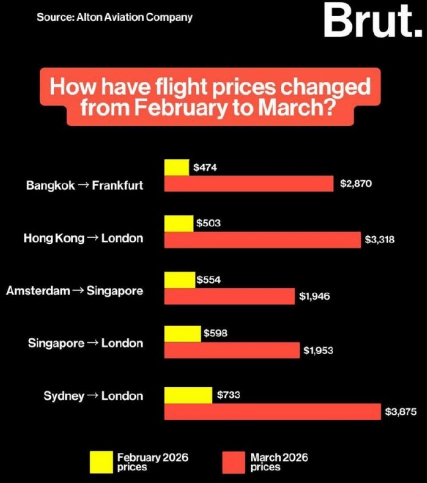
And let us also not forget the hugely significant global impacts of the loss of 20% of the world’s synthetic fertilisers, of sulphuric acid, and of LNG because of the Straits’ closure and the partial destruction of refining in the Gulf states.
The Path Forward
Both nations face the same fundamental challenge: they are price-takers in a volatile market, with limited ability to influence supply or substitute fuels in the short term.
Both Australia and New Zealand have optimised for economic efficiency (Just In Time processes) over energy security. In a world of renewed geopolitical conflict and supply chain fragility, that calculation desperately needs revision.
Increasing frequency and intensity of global weather events will undoubtedly and increasingly put severe pressure on global supply chains . Transitioning to a less oil dependant economy and one which is less dependant on global supply chains for all essential services, is vital.
Sources:
- Australia Institute: “Over a Barrel: Addressing Australia’s Liquid Fuel Security”
- Australian Government: National Fuel Security Plan
- Australian Industry Group: “Fuel Supply and Supply Chain Watch”
- ABC News: “Energy analysts raise concerns on fuel excise cut”
- Commonwealth Bank: “How Aussie farmers are navigating fuel and fertiliser pressures”
- Deloitte Access Economics via Financial Post: “Australian Fuel Supply to Get Even Tighter After Refinery Fire”
- EIA Short-Term Energy Outlook, April 2026
- Fortune: “Oil prices may be falling, but for the wrong reason”
- IEA Oil Market Report, April 2026
- IEEFA: “Mining’s costly diesel addiction must be a budget priority”
- Living More With Less: “Implications of the Iran war on Australia’s Fuel Supplies”
- MFAT: “NZ economy not immune to conflict in the Middle East”
- MBIE: “Middle East conflict and New Zealand’s fuel stocks”
- Newsroom: “Economic growth forecasts downgraded as fuel price rise bites”
- NZ Ministry of Business, Innovation and Employment: “Understanding variability in tourism spend”
- P2P Agri: “Iran Fuel Crisis and Australian Farm Costs”
- RenewEconomy: “Diesel replacement: Australia’s billion-dollar opportunity”
- The Oregon Group: “Strait of Hormuz diesel shock threatens mining industry”
- Transporting NZ: “Energy security – was closing Marsden Point a mistake?”
- Vortexa/IEA analysis on VLSFO supply and bunker fuel markets
- Westpac IQ: “NZ business feedback on recent oil price moves”
- World Socialist Web Site: “War-driven fuel crisis threatens recession in Australia”
- https://energyandresilience.substack.com/p/the-limits-to-the-energy-transition
 New Antarctica