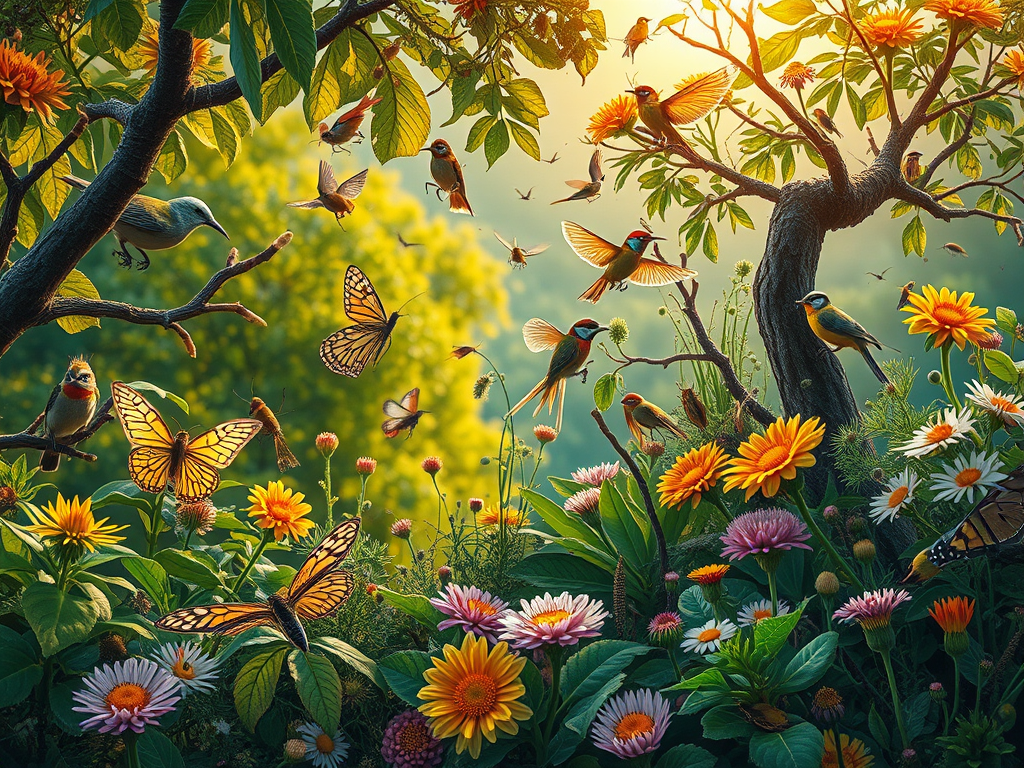
Life on our planet is a complex and often invisible intertwining of organisms; each one dependant on many others for its survival.
The World Wildlife Fund states that half the planet’s wildlife population has vanished since 1970 as a result of human activity. 52 percent of Earth’s mammals, birds, reptiles, amphibians and fish disappeared over those 50 years, 40% of all insects species and 60% of birds are declining globally.
And those figures do not take into account the total populations of the different species of birds, insects and wild mammals that are being killed off or starved from lack of natural habitat. When did the moths last bang themselves against your lighted nightime windows?- when did the smashed insects last cover your windscreen with their bodies on that last holiday in the natural world?- when did you last see the huge flocks of birds that used to be everywhere?
That absence may seem of no consequence (or even a relief!) to many humans (especially those who live in urban spaces) but in fact we are all reliant on the multiplicity of other species for our survival-whether it be for pollination for our food, the birds that spread the seeds of life, the Mycorrhizal fungi that ensure plants and trees grow healthily, or the many predators and ‘pests” who keep life in balance.
We need to revive our lost understanding of our linkage to all other life on this planet. Not just the species that humans ‘like’; our native fauna and flora and our pets, but ALL life. We must begin again to look and listen with respect and compassion to the living world around us and help rebuild the natural world that sustains us. We are perilously close to cutting the remaining threads that bind us to life on Earth.
Acknowledging that human ‘growth’ is in fact creating more dead spaces, (more concrete sealing over the soil, more trees felled, and fewer wild spaces to name just a few of our nature destruction options) . Planting trees, reviving diverse habitats and nurturing all other species with compassion are just some of our key steps towards a better and sustainable world.
 New Antarctica