
The Cognitive Cost of Ideology
Explore scientific research on how racism and religious fanaticism limit human cognitive function.
Religious Fanaticism & Analytic Reasoning
Cognitive Rigidity
Religious dogmatism correlates with reduced analytic reasoning and a bias toward intuitive responses.
Executive Depletion
Exposure to racism depletes executive functions, impairing cognitive flexibility and working memory.
Neural Evidence
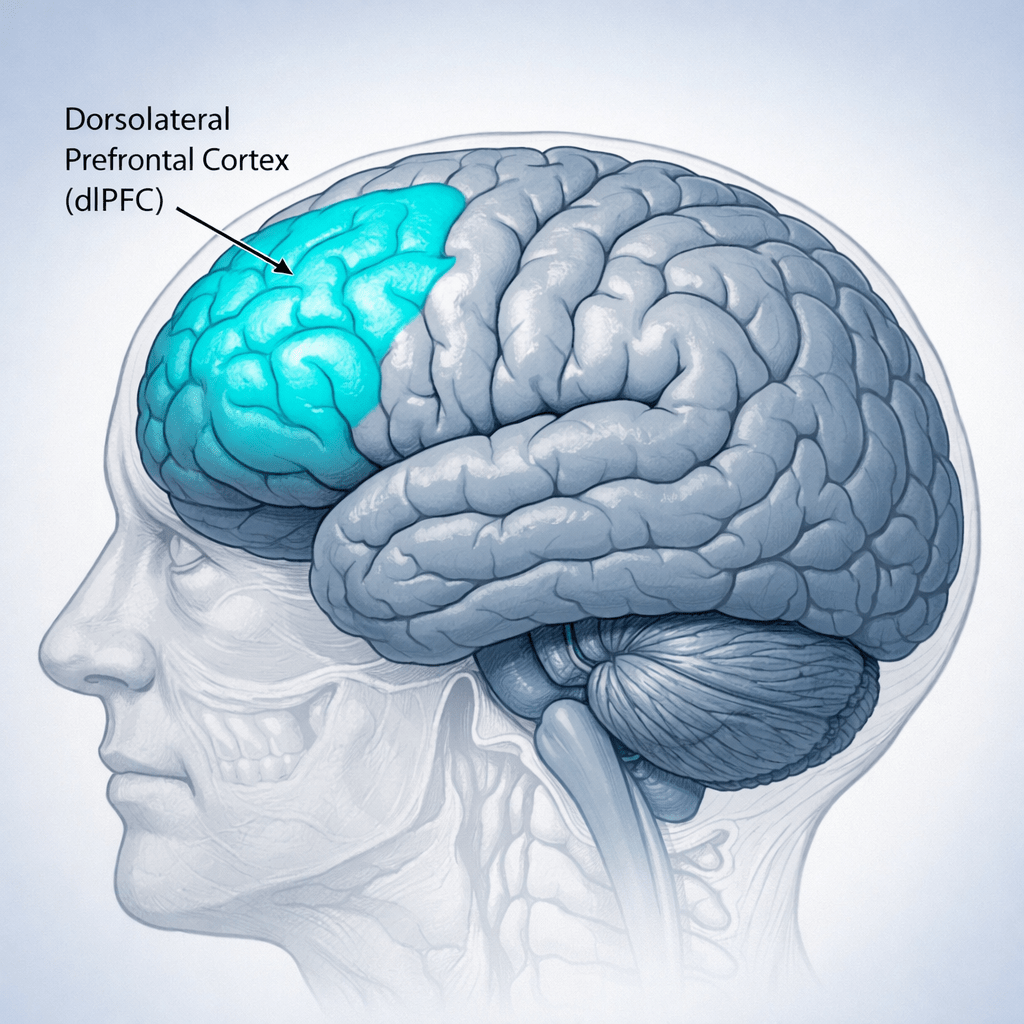
The Dorsolateral Prefrontal Cortex (dlPFC) is critical for cognitive flexibility and openness.
Religious fanaticism, characterized by dogmatism and literal interpretation of sacred texts, is strongly associated with a specific cognitive style that limits flexible thought.
The most robust finding is the inverse correlation between religious dogmatism and analytic reasoning. This relationship is explained by the Dual-Process Hypothesis, which posits that cognition operates through two systems: a fast, intuitive system and a slow, deliberate, analytic system.
Key Finding
Studies show that the negative relationship between religiosity and reasoning is strongest for tasks involving conflict resolution (e.g., Stroop tasks). This suggests the limitation is a behavioral bias against engaging the effortful, analytic system when an intuitive answer is available.
Racism & Executive Function Depletion


The role of racism in limiting cognitive function is two-fold: it imposes a cognitive load on targets of discrimination, and it correlates with lower cognitive ability in those who hold prejudiced views.
For individuals experiencing racial discrimination, the chronic and acute stress acts as a significant stressor that depletes cognitive resources. This leads to measurable impairment of executive functions, specifically cognitive flexibility and working memory.
Cognitive Load Mechanism
Interracial interactions require self-regulation and monitoring, consuming executive attentional resources. White individuals with high racial bias show increased activity in the right Dorsolateral Prefrontal Cortex (DLPFC) when viewing Black faces.
Cognitive Ability Link
Longitudinal studies show that lower childhood cognitive ability is predictive of greater racism in adulthood. This relationship is compounded by endorsement of right-wing socially conservative ideologies.
Neurobiological Evidence
Dorsolateral Prefrontal Cortex (dlPFC)
+This region is crucial for executive functions, including cognitive flexibility and openness to experience. Studies on patients with penetrating traumatic brain injury found that lesions to the dlPFC were associated with increased religious fundamentalism, an effect mediated by decreased cognitive flexibility and openness.
Amygdala & Threat Processing
+The amygdala is involved in processing political ideology and emotional responses to conflicting information. Chronic stress from discrimination impacts the amygdala and hippocampus, brain regions critical for memory and emotional regulation, leading to subjective cognitive decline and age acceleration in brain activity.
Functional Brain Connectivity
+Brain functional connectivity during tasks like retrieval, empathy, and monetary reward is highly predictive of political orientation. People sharing an ideology show similar neural activity when processing political words and information, suggesting a “biased processing” that drives divergent interpretations.
Key Takeaways
The scientific evidence is clear: dogmatic and prejudiced ideologies impose measurable limitations on human cognitive function.
Religious fanaticism limits cognition by promoting a bias toward intuitive thinking and reducing the capacity for analytic reasoning and cognitive flexibility, a process linked to the Dorsolateral Prefrontal Cortex.
Racism limits cognition by imposing a severe cognitive load on its targets, depleting the executive functions necessary for complex thought, and by being correlated with a cognitive style that favors rigid, simplistic ideological frameworks.
In both cases, ideological rigidity acts as a powerful constraint on the brain’s capacity for flexible, adaptive, and high-level cognitive processing.
Academic References
[1]
W. Zhong, I. Cristofori, J. Bulbulia, F. Krueger, J. Grafman. Biological and cognitive underpinnings of religious fundamentalism. Neuropsychologia, 2017. View Paper
[2]
R. E. Daws, A. Hampshire. The Negative Relationship between Reasoning and Religiosity Is Underpinned by a Bias for Intuitive Responses. Frontiers in Psychology, 2017. View Paper
[3]
L. Keating, A. Kaur, M. Mendieta, C. Gleason, G. Basello, A. Roth, E. Brondolo. Racial discrimination and core executive functions. Stress and Health, 2021. View Paper
[4]
J. A. Richeson, A. A. Baird, H. L. Gordon, T. F. Heatherton, C. L. Wyland, S. Trawalter, J. N. Shelton. An fMRI investigation of the impact of interracial contact on executive function.Nature Neuroscience, 2003. View Paper
[5]
K. Dhont, G. Hodson. Does Lower Cognitive Ability Predict Greater Prejudice? Current Directions in Psychological Science, 2014. View Paper
[6]
S. E. Yang, J. D. Wilson, Z. L. Lu, S. Cranmer. Functional connectivity signatures of political ideology. PNAS Nexus, 2022. View Paper
 New Antarctica